
You have probably seen bamboo yoga mats all over Instagram and Amazon. They look sleek. They sound eco-friendly. And they cost more than your regular mat. But here is the question every smart shopper asks — is it actually worth it? Or is it just a trendy green label slapped on a rubber mat to charge you more?
“I spent three weeks testing a bamboo mat before writing this guide. I wanted to give you real answers — not a sales pitch.”
In this guide, you will learn exactly what a bamboo yoga mat is made of. You will understand how it is made, what it actually feels like to use, and who it is best for. Most importantly, you will get the honest downsides nobody else tells you about.
By the end, you will know whether a bamboo mat belongs in your yoga practice — or not.
What Exactly Is a Bamboo Yoga Mat? (Most People Get This Wrong)
Most people picture a mat made from bamboo sticks or bamboo sheets. That is a reasonable guess. But it is not quite right.
A bamboo yoga mat is actually made from bamboo fiber. That fiber comes from processed bamboo pulp. It is then woven into a soft fabric layer. That fabric layer sits on top of a base — usually natural rubber or cork.
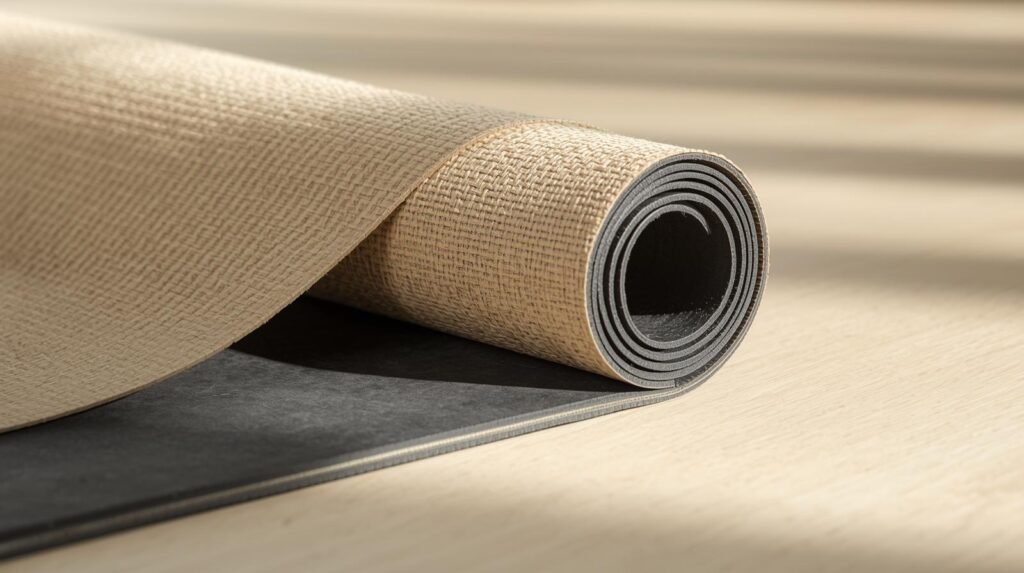
So in simple terms, it is a bamboo fabric top layer bonded to a rubber or cork bottom. The bamboo part gives you softness and breathability. The rubber or cork base gives you grip and cushioning.
The Three Main Types You Will Find
First, there is bamboo with natural rubber. This is the most common type. It grips well and feels soft on your skin. However, it is not suitable for people with latex allergies.
Second, there is bamboo with cork. This is firmer underfoot. It is also naturally antimicrobial. Moreover, it is a great option if you want to avoid rubber entirely.
Third, there is bamboo with cotton. This is the softest option. However, it offers less grip than the other two. It works best for gentle yoga or meditation.
Quick Tip: Always check the full material list before buying. Some mats use the word ‘bamboo’ loosely. We will explain how to spot those later in this guide.
How Is a Bamboo Yoga Mat Made? (From Plant to Practice)
Understanding how a bamboo mat is made helps you buy smarter. It also explains why some mats are genuinely eco-friendly — and others are not.
Here is the simple step-by-step process:
- Bamboo stalks are harvested. Bamboo grows back in 3–5 years. That makes it far more renewable than trees.
- The stalks are crushed and broken down into a pulp.
- The pulp is processed into bamboo fiber. This is where it gets important — see below.
- The fiber is woven into a fabric layer.
- That fabric layer is bonded to the rubber or cork base.
Bamboo Lyocell vs. Bamboo Viscose — Why This Matters
Not all bamboo fiber is processed the same way. And this difference affects both your health and the environment.
Bamboo lyocell uses a closed-loop mechanical process. It recycles water and chemicals. This method is cleaner and produces less waste. Look for this on the label if you want a truly eco-friendly mat.
Bamboo viscose (also called bamboo rayon) uses chemicals to break down the bamboo. The end product is soft. However, the process generates more pollution. Many mats labeled ‘bamboo’ use viscose. It is technically bamboo — but it is not the greener option.
Textile industry data shows that bamboo viscose is chemically similar to other rayon fabrics, meaning its environmental impact depends more on the manufacturing process than the bamboo plant itself.
What to look for: Certifications like OEKO-TEX and FSC are your best friends here. OEKO-TEX means the fabric was tested for harmful chemicals. FSC means the bamboo was sustainably sourced. If a mat has both, it is the real deal.
Is a Bamboo Yoga Mat Actually Good? Here Is the Honest Answer
Yes. A bamboo yoga mat is genuinely good — but only for certain people and certain practices.
Let us break down what actually makes it good, without the marketing fluff.
The Grip Gets Better When You Sweat
This surprises most people. Most standard PVC mats become slippery when wet. A bamboo mat does the opposite — it grips better as you sweat.
The bamboo fiber absorbs moisture rather than repelling it. So the more you sweat, the more secure your hands and feet feel. For hot yoga practitioners, this is a genuine game-changer.
However, grip performance still depends heavily on the quality of the rubber or cork base underneath, not just the bamboo surface layer.
It Is Naturally Antibacterial
Raw bamboo contains a natural bio-agent often referred to as “bamboo kun.” However, most bamboo fibers used in yoga mats are processed into viscose or lyocell, which removes most of those natural antibacterial properties. Your mat may still stay fresh due to moisture absorption — but not because of built-in antimicrobial magic.
In contrast, a standard PVC mat traps sweat and bacteria. It can develop odors quickly without regular cleaning.
“After switching to a bamboo mat, I noticed I needed to clean it far less often. The surface just stayed fresher. That was an unexpected win.”
It Is Non-Toxic and Skin-Friendly
Standard PVC mats off-gas chemicals, especially when new. That new-mat smell is actually your mat releasing VOCs (volatile organic compounds) into the air around your face.
A bamboo mat with a natural rubber base does not do this. The surface is chemical-free and gentle against your skin. This matters especially during floor poses where your face is close to the mat.
It Is Genuinely Eco-Friendly (If You Choose the Right One)
Bamboo grows without pesticides. It regenerates in 3–5 years. It absorbs more CO2 than most plants. When a bamboo mat reaches the end of its life, the bamboo surface and natural rubber base can biodegrade under the right conditions — unlike PVC. However, mats with synthetic bases like TPE will not fully biodegrade.
However, ‘eco-friendly’ claims can be exaggerated. Always check the certifications. We cover this in detail later.
It Lasts 3 to 5 Years With Proper Care
A well-made bamboo mat holds up well over time. With regular light cleaning and proper storage, most users get 3 to 5 years of solid use. That is comparable to a quality rubber mat.
The Real Downsides Nobody Talks About (Be Honest Here)
Every other blog gives you a token ‘cons’ section with two weak points. We are not doing that.
These are the real downsides — the ones that will actually affect your experience.
It Is Heavier Than Most Mats
A bamboo mat with a natural rubber base typically weighs 4 to 6 pounds. That is noticeably heavier than a standard PVC mat. If you carry your mat to a studio regularly, you will feel that difference.
Consequently, bamboo mats work best for home practitioners. They are less ideal for people who commute with their mat daily.
The Initial Rubber Smell Can Be Strong
If your bamboo mat has a natural rubber base, expect a strong smell when you first open it. This is normal. However, it can take 1 to 2 weeks of airing out before the smell fades completely.
Store it unrolled in a well-ventilated space for the first week. That speeds up the process significantly.
Not Suitable for Latex Allergies
Natural rubber contains latex. If you have a latex allergy, a bamboo mat with a rubber base is not safe for you. Look specifically for bamboo mats with a cork or TPE base instead.
The Price Is Higher Than Standard Mats
A quality bamboo yoga mat typically costs between $60 and $130. That is two to three times more than a basic PVC mat from a big box store. The higher price reflects real material and production costs — but it is still a bigger upfront investment.
Some ‘Bamboo’ Mats Are Not Really Bamboo Mats
This is the biggest issue in the entire category. Some manufacturers use the word ‘bamboo’ even when bamboo makes up only a small fraction of the product. You might buy a mostly synthetic mat with a bamboo label.
We cover exactly how to spot this in the next section.
How to Spot a Fake ‘Bamboo’ Yoga Mat Before You Buy
This section could save you $80. Read it carefully.
The bamboo mat market has a greenwashing problem. Some brands use bamboo as a marketing buzzword rather than a primary material. Here is how to protect yourself.
Check the Full Material List
A genuine bamboo mat lists bamboo fiber or bamboo lyocell as the primary surface material. If you see mostly TPE, PVC, or polyester with ‘bamboo blend’ in small print — walk away.
Look for Real Certifications
OEKO-TEX Standard 100 certification means every component of the mat was tested for harmful chemicals. FSC certification means the bamboo was sourced from sustainably managed forests. If neither certification is present, the eco-friendly claim is just marketing.
Be Skeptical of Vague Language
Watch for phrases like ‘eco-friendly bamboo finish,’ ‘infused with bamboo,’ or ‘bamboo-inspired.’ These are red flags. They suggest bamboo is a surface treatment or aesthetic choice — not the actual material.
Simple rule: If the brand cannot tell you exactly what percentage of the mat is bamboo and how it was processed, keep shopping.
Bamboo Yoga Mat vs. Other Eco-Friendly Mats — How Does It Compare?
You have options in the eco-friendly mat market. Here is how bamboo honestly stacks up against the most popular alternatives.
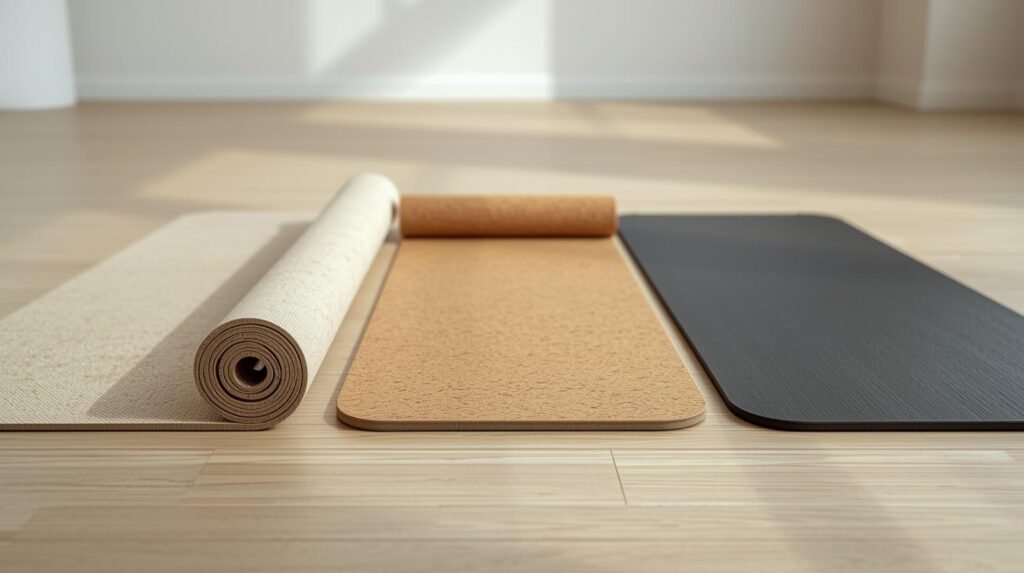
Bamboo vs. Cork
Cork mats and bamboo mats are actually quite similar in one key way — both grip better as you sweat. However, cork is firmer underfoot, which some yogis love and others find uncomfortable for joint-heavy poses.
Cork also tends to be slightly lighter. Therefore, if you travel often, cork might serve you better. Bamboo wins on softness and that familiar fabric-like feel.
Bamboo vs. Natural Rubber
A pure natural rubber mat offers excellent grip right from the start. It does not need to warm up. Furthermore, rubber mats tend to be thicker and offer more cushioning.
On the other hand, bamboo mats feel softer against your skin and are more breathable. If you run hot or sweat heavily, the bamboo surface is more comfortable for long sessions.
Bamboo vs. PVC
PVC mats are cheap, lightweight, and widely available. However, they off-gas chemicals, they are not biodegradable, and they can become slippery during sweaty sessions.
Bamboo wins on every health and environmental measure. The only area where PVC wins is price and portability. If budget is your priority right now, a PVC mat is fine. But if you plan to practice long-term, bamboo is the smarter investment.
Who Is a Bamboo Yoga Mat Actually Best For?
A bamboo mat is not the right choice for everyone. Here is exactly who benefits most — and who should look elsewhere.
A Bamboo Mat Is Great For You If…
- You practice hot yoga or sweat heavily during sessions.
- You have chemical sensitivities or want to avoid synthetic materials.
- You mostly practice at home and do not carry your mat daily.
- You care about environmental impact and want a mat that biodegrades.
- You are a beginner investing in gear that will last 3 to 5 years.
A Bamboo Mat Might Not Be Right For You If…
- You commute to a studio and need something lightweight to carry.
- You have a confirmed latex allergy (unless you choose a cork-based bamboo mat).
- Your budget is under $50, and you need a mat right now.
- You prefer an extremely thick mat (4mm+) for joint support.
How to Take Care of Your Bamboo Yoga Mat So It Lasts
A bamboo mat rewards good care. With the right habits, yours will stay fresh and grippy for years.
After Every Session
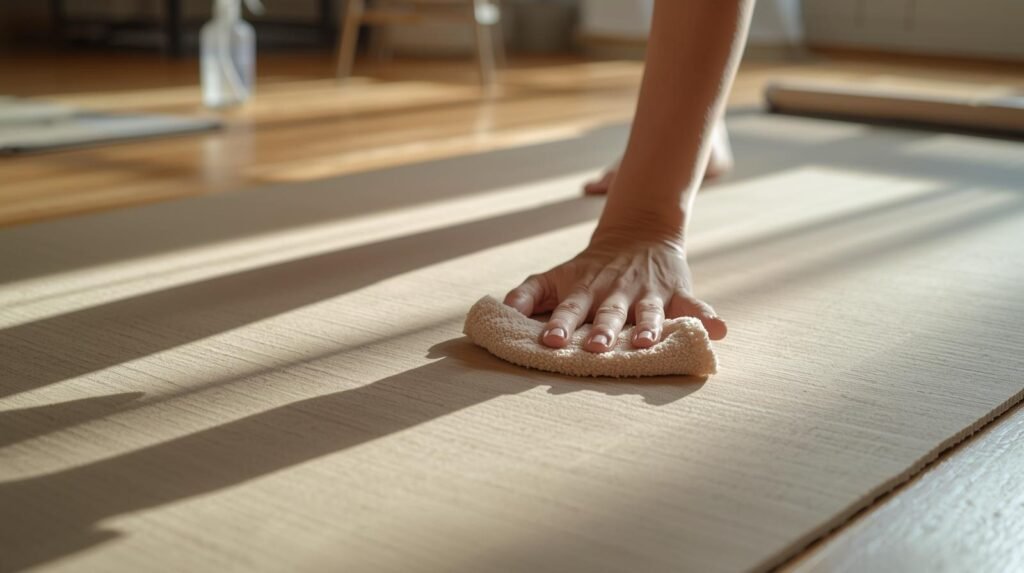
Wipe the surface with a damp cloth after each practice. You do not need soap every time. A light wipe removes sweat and keeps the bamboo fiber healthy.
Then lay it flat or hang it over a chair to air dry. Never roll it up while it is still damp. Trapped moisture breaks down the rubber base over time.
Deep Cleaning Once a Week
Mix a few drops of gentle dish soap with water. Wipe the entire surface lightly. Then wipe again with a clean, damp cloth to remove soap residue. Let it air dry completely before rolling.
Do not use harsh chemicals, bleach, or alcohol-based sprays. These degrade bamboo fiber quickly.
Storage Tips
Store your mat rolled up loosely — never folded. Folding creates creases that weaken the mat over time. Keep it away from direct sunlight and heat. Prolonged UV exposure fades the bamboo fiber and dries out the rubber base.
Pro tip: If your mat starts losing its grip, lightly mist the surface with water before your next session. The moisture reactivates the bamboo fiber and brings the grip right back.
For a full step-by-step cleaning guide, read our dedicated post: How to Clean a Bamboo Yoga Mat Properly.
Frequently Asked Questions About Bamboo Yoga Mats
Does a bamboo yoga mat smell when new?
Yes, most bamboo mats with a natural rubber base have a noticeable smell when first opened. This is the natural rubber smell from volatile compounds released after production. It is generally considered low-risk compared to PVC off-gassing and fades within 1 to 2 weeks. Air it out unrolled in a ventilated room to speed this up.
Is a bamboo yoga mat good for hot yoga?
Absolutely. In fact, hot yoga is one of the best use cases for bamboo mats. The bamboo fiber absorbs sweat and becomes grippier as you heat up. Unlike PVC mats, bamboo mats do not turn into a slip-and-slide during intense sweaty sessions.
Can I use a bamboo yoga mat outdoors?
You can use it outdoors occasionally. However, avoid leaving it in direct sunlight for long periods. UV exposure dries out the bamboo fiber and breaks down the rubber base faster. If you practice outdoors regularly, use a mat cover or choose a mat specifically designed for outdoor use.
Is a bamboo yoga mat really eco-friendly?
It depends on the mat. Bamboo itself is highly sustainable — it grows fast, needs no pesticides, and absorbs CO2. However, the eco-friendliness of your specific mat depends on how the fiber was processed and what the base is made of. Look for OEKO-TEX and FSC certifications to verify real eco credentials.
How long does a bamboo yoga mat last?
With proper care, a quality bamboo mat lasts 3 to 5 years. Daily practice with regular cleaning and proper storage will keep it performing well throughout that period.
Can bamboo mats cause a latex allergy reaction?
If your bamboo mat has a natural rubber base, yes — it contains latex and can trigger a reaction in people with latex allergies. Choose a bamboo mat with a cork or TPE base if you have this allergy.
2026 Bamboo Yoga Mat Comparison Data
| Mat Model | Best For | Material Base | Thickness | Price (USD) | Key Highlight |
| Yoloha Unity | Pro Hot Yoga | Natural Cork | 4.0 mm | $159 | Incredible wet grip |
| Manduka eKO Lite | All-Around Eco | Natural Rubber | 4.0 mm | $100 | High durability |
| Oko Living Herbal | Non-Toxic/Skin | Organic Cotton | 5.0 mm | $120 | Herbal-dyed & soft |
| Mikkoa Travel | Commuters | Natural Rubber | 1.5 mm | $85 | Folds to “jean” size |
| 42 Birds Native | Lightweight | Recycled Cork | 5.0 mm | $82 | Under 2 lbs |
Final Verdict: Is a Bamboo Yoga Mat Worth It?
Here is the straight answer — yes, a bamboo yoga mat is worth it, but only for the right person.
If you sweat heavily, care about what touches your skin, practice mainly at home, and want a mat that lasts and biodegrades responsibly — a bamboo mat delivers on every promise.
However, if you need something lightweight to carry daily, have a latex allergy, or are working with a tight budget right now, there are better options available for your specific situation.
The key is to look past the ‘eco-friendly bamboo’ label and check the actual materials, certifications, and construction. A genuine bamboo mat is a smart long-term investment. A cheap mat with a bamboo label is just a marketing exercise.
Now that you know exactly what a bamboo mat is and who it is best for, your next step is learning how to keep it in top condition. Read our full guide: How to Clean a Bamboo Yoga Mat Properly.