
If you are researching bamboo cutting boards, you are probably trying to answer one of three questions. Is this board actually safe to use on food? Is it non-toxic? And is it more sanitary than plastic?
These are the right questions to ask. And the honest answer to all three is: it depends on the board, not the bamboo.
Bamboo as a raw material is non-toxic, food-safe, and naturally resistant to bacteria. But a finished bamboo cutting board is not just bamboo. It is bamboo strips pressed together with adhesive, finished with oil or lacquer, and sourced from manufacturers with very different standards. The safety of your board depends almost entirely on what is in that adhesive and how transparently the manufacturer communicates it.
This guide covers everything you need to know: what makes a bamboo board safe or unsafe, what the science actually says about bamboo being antibacterial, what carbonized bamboo is and whether it is safe, and how to tell a good board from a risky one before you buy it.
Short answer: A quality bamboo cutting board from a reputable brand is safe, non-toxic, and sanitary. The risks come from cheap boards that use formaldehyde-based adhesives and do not disclose their materials. Know what to look for and you can avoid that problem entirely.
Is Bamboo Itself Safe and Non-Toxic?
Yes, bamboo as a raw plant material is completely non-toxic. It contains no pesticide residue in its fibers, no synthetic chemicals in its natural state, and no harmful compounds as a base material. The USDA and FDA both recognize bamboo as food-safe for kitchen use.
Bamboo is also one of the fastest-renewing natural materials on the planet. It regrows fully within three to five years after harvesting. That is a major reason why it has replaced wood in so many kitchen products over the last two decades.
The plant itself is genuinely safe. The concern with bamboo cutting boards has never been the bamboo. It is what manufacturers add to turn raw bamboo into a finished product that can cause problems. And specifically, it is the adhesive glue used to bond the strips together that deserves the most attention.
The Real Safety Concern: The Glue, Not the Bamboo
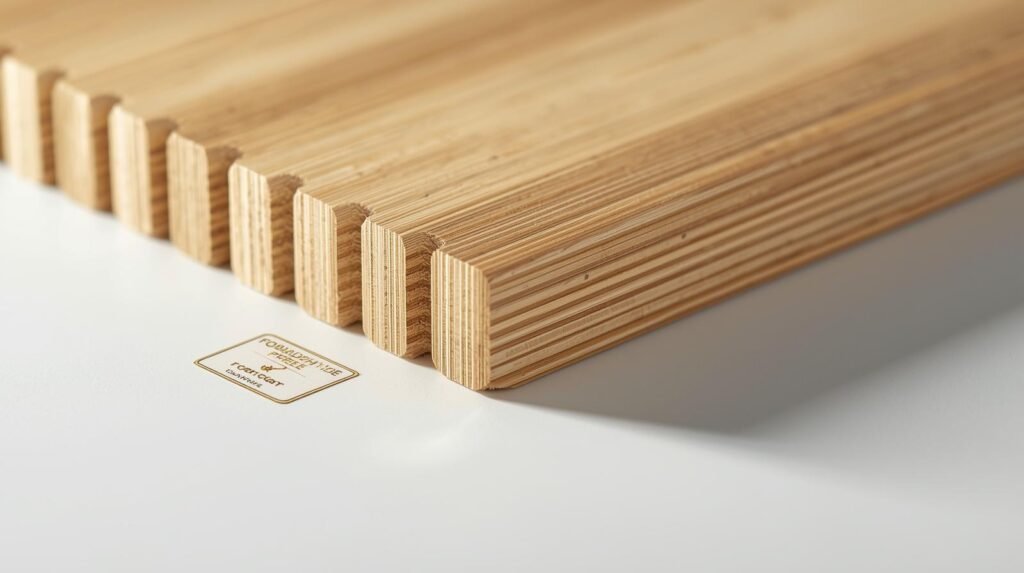
Almost every bamboo cutting board on the market is not a single piece of bamboo. It is dozens of thin strips pressed and glued together under high pressure to form a solid board. That glue is where the safety story gets complicated.
What Is Formaldehyde and Why Does It Matter?
Some manufacturers use adhesives that contain formaldehyde-based resins to bond the bamboo strips. Formaldehyde is a colorless gas classified as a known human carcinogen. At high concentrations it causes respiratory irritation, eye and skin sensitivity, and is linked to certain cancers with prolonged occupational exposure.
In cutting boards, the concern is not that you breathe in formaldehyde gas while chopping vegetables. The concern is off-gassing, which means the adhesive slowly releases small amounts of formaldehyde vapor over time, especially when the board is wet or warm. Budget boards that use low-grade adhesives are the ones most likely to do this.
I have opened budget bamboo boards before and noticed a sharp, slightly chemical smell when first wetting the surface. That smell is almost always a sign of adhesive off-gassing. Quality boards from reputable brands use water-based, formaldehyde-free food-safe adhesives and do not have that smell.
Important distinction: The FDA does regulate food contact materials including cutting boards. When properly cured food-safe adhesives are used, they meet FDA standards. The problem is that not all manufacturers use properly cured food-safe adhesives, and imported products do not always comply with the same standards even when required to.
What Types of Adhesives Are Safe?
Safe bamboo cutting boards use water-based, formaldehyde-free glues. The gold standard in the industry is Titebond III Ultimate Wood Glue, which is FDA-approved for food contact surfaces and contains no hazardous ingredients under OSHA or GHS standards when fully cured.
Reputable brands also use KOYOBOND or similar certified water-based adhesives free from formaldehyde and VOCs. These are the boards worth buying.
What About PVA Glues?
Some boards that claim to be formaldehyde-free use polyvinyl acetate (PVA) adhesives. PVA glues are generally considered food-safe when fully cured. However, some PVA formulations contain phthalates or other plasticizers that can leach over time. Look for brands that specifically state their adhesive is food-grade and FDA-compliant, not just formaldehyde-free.
How to Identify a Potentially Unsafe Adhesive
- A strong chemical or sharp smell when the board is new and wet. Quality boards smell like bamboo, not chemicals.
- No disclosure of adhesive type anywhere on the product listing or packaging.
- A very low price point from a brand with no certifications listed. Formaldehyde-free food-safe adhesives cost more. Extremely cheap boards often cut corners here.
- Country of manufacture with no mention of US or EU food safety compliance. Many low-cost boards imported without certification may not meet the same standards.
What to Check Before Buying: Safety at a Glance
| What to Look For | Safe? | What It Means |
| Formaldehyde-free adhesive label | YES – look for this | Glue used is food-safe and does not off-gas harmful compounds |
| FSC certification | YES – look for this | Bamboo is sustainably sourced and meets forestry standards |
| USDA Biobased certified | YES – good sign | Product verified as a bio-based material meeting USDA standards |
| FDA food contact compliant | YES – look for this | Materials meet US food contact safety regulations |
| “Food safe” with no certification listed | CAUTION | Marketing language with no verification behind it. Ask the manufacturer for specifics |
| No glue or adhesive information at all | AVOID or ask first | Most budget boards skip this disclosure entirely. That is the biggest red flag |
| Strong chemical smell when new and wet | RED FLAG | May indicate formaldehyde-based adhesive off-gassing. Discontinue use if smell persists after several washes |
| Polyurethane or lacquer coating listed | AVOID | Film finishes on cutting surfaces can chip and contaminate food over time |
Are Bamboo Cutting Boards Antibacterial or Antimicrobial?
This is one of the most marketed and most misunderstood claims in the cutting board world. You will see the word “antibacterial” on almost every bamboo board listing. The truth is more nuanced than the marketing suggests, and understanding it actually makes bamboo boards look better than the hype does.
What Is Bamboo Kun?
Bamboo kun is a natural antimicrobial compound found in the living bamboo plant. It is present in the lignin of the plant and helps bamboo resist bacteria, fungi, and insects in nature. Manufacturers love to reference bamboo kun because it sounds impressive and gives them a natural health claim.
Here is the honest reality: research is mixed on whether bamboo kun survives the manufacturing process that turns raw bamboo into a pressed, laminated cutting board. A 2012 study published in the Journal of Family Ecology and Consumer Sciences found that the bacteriostatic rate of natural bamboo fiber against common bacteria was zero in some tests. Other research on extracted bamboo lignin has shown genuine antibacterial activity against E. coli and S. aureus, but this depends heavily on extraction methods.
The bottom line on bamboo kun: The bamboo kun antibacterial claim as it applies to a finished laminated cutting board is not strongly supported by science. Do not buy a bamboo board specifically because it claims to be antibacterial. That is not the reason bamboo boards are safer than plastic.
So Why Are Bamboo Boards Actually Safer Than Plastic?
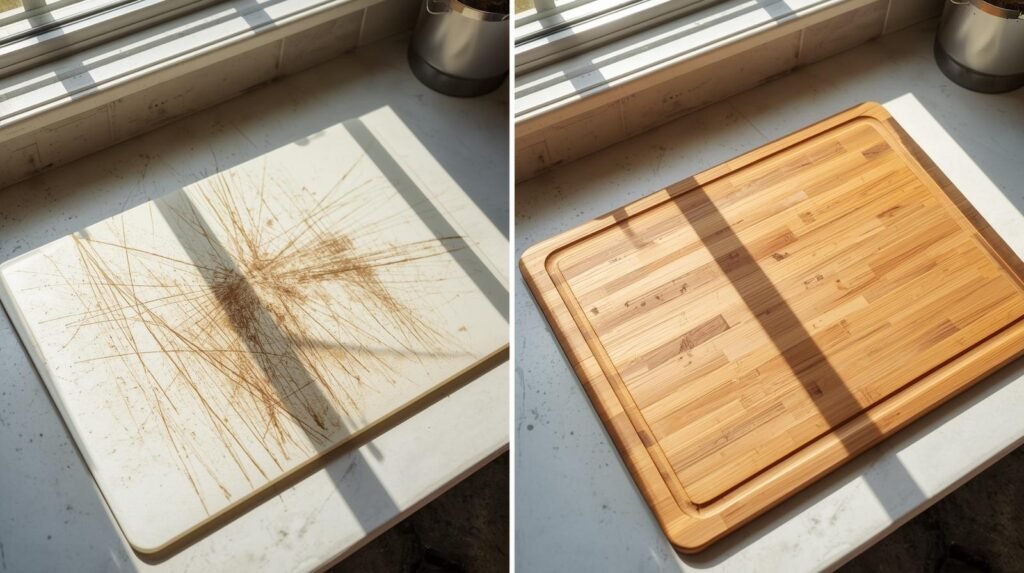
The real advantage of bamboo is physical, not chemical. Bamboo is harder and denser than most wood and far denser than plastic. Because of this density, bamboo resists knife scarring far better than plastic does. It takes longer to develop the deep grooves where bacteria hide and multiply.
The USDA Food Safety and Inspection Service states directly that bamboo absorbs very little moisture and resists scarring from knives, making it more resistant to bacteria than other woods. That endorsement is about physical properties, not bamboo kun.
Additionally, research from UC Davis found that bacteria introduced onto wood and bamboo surfaces actually migrated into the material and died off, rather than surviving and multiplying as they do in the scratches of plastic boards. On plastic, bacteria that enter knife grooves can survive and grow even after washing. On bamboo, they tend not to survive. This is the real antibacterial mechanism at work.
Antibacterial vs. antimicrobial: Antibacterial means the surface inhibits bacteria specifically. Antimicrobial is broader and covers bacteria, fungi, mold, and other microbes. Bamboo has some evidence for both properties via its lignin content and physical density, but neither is as strong as the marketing language suggests. Low porosity is the feature that matters most in daily kitchen use.
Are Bamboo Cutting Boards Sanitary?
Yes, a well-maintained bamboo cutting board is sanitary. But “sanitary” is not a property of the material alone. It is the result of three things working together: the material, the maintenance, and how you use it.
When Bamboo Boards Are Sanitary
- The board is washed with hot soapy water after every use.
- It is dried immediately and completely. A wet board sitting on a counter is a surface where bacteria can multiply regardless of material.
- It is oiled monthly so the surface stays sealed and smooth.
- It has not developed deep knife grooves. When grooves get deep enough to trap food, no material is fully sanitary.
- You use a separate board for raw meat, poultry, and fish. Cross-contamination from raw proteins is a food safety risk on any cutting board material.
When Bamboo Boards Become Unsanitary
- The surface has deep scratches or gouges that trap food particles.
- The board is left wet for extended periods after washing.
- You cut raw chicken and then vegetables on the same surface without washing in between.
- The board smells even after washing. This signals bacteria or mold have penetrated the surface.
The key insight here is that bamboo boards start with a structural advantage over plastic. Bamboo’s hardness means it takes longer to develop the deep grooves that create sanitary problems in the first place. A bamboo board maintained properly stays sanitary far longer than a heavily used plastic board that has been scored with knife marks.
Practical tip: If your board has developed a rough, pitted surface that holds food residue and does not fully clean up with soap and water, it is time to replace it regardless of material. No maintenance routine compensates for a surface that has lost its structural integrity.
Is a Carbonized Bamboo Cutting Board Safe?
Yes, carbonized bamboo cutting boards are safe when made with food-safe adhesives. The carbonization process itself does not introduce any toxic chemicals into the board. But it is worth understanding what carbonization actually is, because some people see the dark color and assume it means chemicals or dyes were used.
What Is Carbonization?
Carbonization is a thermal treatment process. The bamboo is exposed to high heat, typically between 200 and 300 degrees Celsius, in a low-oxygen environment. Some manufacturers use higher temperatures around 260 degrees Celsius or about 500 degrees Fahrenheit.
During this process, the natural sugars present in the bamboo fibers caramelize, which is the same chemical reaction that turns sugar brown when you heat it in a pan. That caramelization is what produces the darker, richer brown color you see in carbonized boards. There are no artificial dyes, no stains, and no added chemicals. The color comes entirely from the bamboo’s own sugars reacting to heat.
The darker color of a carbonized bamboo board is not a sign of chemicals. It is the same caramelization process that browns toast or gives seared meat its color. It is a heat-driven sugar reaction in the bamboo fibers.
What Does Carbonization Do to the Board?
Reduces moisture content. The heat treatment drives out a significant amount of the moisture in the bamboo fibers. This makes the finished board absorb less water during use, which improves both hygiene and durability.
Tightens the fiber structure. The fibers become more compact and dense after treatment, which improves resistance to warping, cracking, and surface staining.
Improves resistance to microbial growth. Lower moisture absorption means less of an environment where bacteria and mold can thrive.
Makes the board slightly softer. This is the one trade-off. The heat treatment that creates these benefits also reduces the hardness of the bamboo slightly compared to untreated natural bamboo. Carbonized boards are still harder than most woods, but they will show knife marks a little sooner than a natural bamboo board of equal quality.
Is the Carbonization Process Food-Safe?
The carbonization process itself is food-safe. Heat treatment does not introduce harmful substances into the bamboo. What you need to check, same as with any bamboo board, is the adhesive used to bond the strips together. A carbonized board with a formaldehyde-based adhesive is just as problematic as a natural bamboo board with the same adhesive. The carbonization does not change the glue situation.
Look for the same certifications on a carbonized board that you would on a natural bamboo board: formaldehyde-free adhesive, FSC certification, and FDA food contact compliance.
Is That Discoloration When Wet Normal?
Some carbonized boards show slight color variation when wet, and the surface may look slightly lighter in spots after oiling and washing. This is normal. The caramelized sugars that create the dark color can behave slightly differently when wet. As long as the board dries back to its normal color and there is no smell or structural problem, this is purely cosmetic.
Are Bamboo Cutting Boards Safe for Raw Meat?
Yes, you can use a bamboo cutting board for raw meat. The material is food-safe and approved by both the USDA and FDA for this purpose. But using it safely requires a consistent routine.
Why Bamboo Works for Raw Meat Prep
Bamboo’s low porosity means that meat juices are less likely to soak deeply into the surface compared to softer, more porous wood. The surface also resists the deep knife scarring that creates bacterial hideouts on plastic boards. These two properties combined make bamboo a reasonable choice for raw protein preparation.
How to Use a Bamboo Board Safely for Raw Meat
- Use a dedicated board for raw meat, fish, and poultry. Do not use the same board for vegetables, bread, or cooked food without washing it thoroughly first. Cross-contamination between raw and ready-to-eat foods is the primary food safety risk in home kitchens.
- Wash the board immediately after raw meat contact. Use hot water and dish soap. Scrub the surface, including any grooves, thoroughly.
- Sanitize occasionally by wiping with a diluted white vinegar solution (one part white vinegar to four parts water) or a very dilute bleach solution (one tablespoon bleach per gallon of water). Rinse well afterward and dry completely.
- Never leave raw meat juices sitting on the board. Wipe excess liquid immediately during prep and wash as soon as you are done.
- Replace your board when it develops deep grooves. On any cutting board material, deep cuts from knife use create channels where bacteria can survive washing. When your board develops grooves that trap food and do not clean up easily, that board has served its purpose.
Food safety note: Salmonella, E. coli, and Listeria are the three bacteria of greatest concern in raw meat prep. All three are killed by thorough washing with hot soapy water followed by drying. Proper cleaning protocol matters more than the board material when it comes to actual food safety.
Bamboo Cutting Boards vs. Plastic: Which Is Actually Safer?
This comparison comes up constantly and the answer is not simple. Both materials have real advantages and real risks. Here is what the research and practical experience show.
The microplastics concern with plastic boards has gained significant attention. When you cut on a plastic board, microscopic plastic particles shed from the surface with every knife stroke and end up in your food. Research has confirmed this effect with common kitchen boards. Bamboo produces no microplastics.
On the other hand, a cheap bamboo board with formaldehyde-based adhesive presents a chemical exposure risk that a clean plastic board does not. So the comparison really comes down to: quality bamboo board versus plastic, not bamboo versus plastic as categories.
Bamboo vs. Plastic: Side-by-Side Comparison
| Factor | Bamboo Board (quality brand) | Plastic Board |
| Bacteria resistance | High. Dense surface traps less moisture. | Moderate. Knife grooves trap bacteria |
| Microplastic risk | Zero | Yes. Sheds microplastics with knife use |
| Chemical concerns | Glue adhesive (if low quality board) | BPA, phthalates in some plastics |
| Dishwasher safe | No | Yes |
| Knife friendliness | Hard surface, dulls knives faster than softer wood | Varies by material |
| Sanitary after deep grooves form | Less of a concern (resists deep scarring) | Major concern (grooves harbor bacteria) |
| Environmental impact | Low. Bamboo renews in 3 to 5 years | High. Petroleum-based, rarely recyclable |
The overall assessment: a certified bamboo board from a quality brand with formaldehyde-free adhesives is safer than plastic for everyday use. The combination of no microplastics, higher density, and resistance to deep knife grooves gives bamboo a genuine edge. But that edge disappears entirely if you buy a cheap uncertified board.
How to Know If a Bamboo Cutting Board Is Safe Before You Buy It
Most people do not research their cutting boards before purchasing. They look at the price and the reviews and call it done. But spending two minutes checking these things before you buy saves you from owning a board that may slowly off-gas adhesive chemicals onto your food prep surface.
Certifications to Look For
- FSC Certified: Confirms the bamboo was sustainably sourced from responsibly managed forests. This is the most common certification you will see and is a good baseline.
- USDA Biobased Certified: Verifies the product is made from bio-based material and meets USDA standards. A positive indicator of quality and accountability.
- FDA Food Contact Compliant: Confirms the materials used meet US regulations for surfaces that contact food. This is the most directly relevant safety certification for a cutting board.
- Formaldehyde-free adhesive explicitly stated: Not a certification body, but a direct claim you want to see in writing. Reputable brands state this clearly on their product page and packaging.
Language That Is Marketing, Not Safety
- “Natural” or “eco-friendly”: These terms mean nothing specific about adhesive safety.
- “Food safe” with no certification: Any manufacturer can print “food safe” on a package. Without a certification body behind it, this phrase is unverified.
- “Antibacterial bamboo”: As covered above, the bamboo kun claim is overstated. This is marketing language, not a safety certification.
- “100% bamboo”: This refers to the bamboo itself, not the adhesive. A board can be 100% bamboo and still use a formaldehyde-based glue to bond those bamboo strips together.
Practical Steps Before Purchasing
- Search the brand name plus “formaldehyde” and “adhesive” to see if they disclose their glue type.
- Check if the brand lists any certifications on their website, not just on the Amazon listing where anyone can write anything.
- Read negative reviews specifically for mentions of chemical smell, strong odor when wet, or discoloration problems.
- Contact the manufacturer directly if you cannot find adhesive information. A company that uses formaldehyde-free food-safe glue will tell you so quickly. One that hedges or does not respond is telling you something.
- If the board arrives with a strong chemical smell that does not dissipate after several washes and a few days of airing out, return it.
Are Bamboo Cutting Boards Healthy to Use?
A quality bamboo cutting board is one of the healthier choices for a cutting surface. Here is why that is true when you buy the right board.
No microplastics: Unlike plastic boards, bamboo does not shed particles into your food. Every time a knife crosses a plastic board, it generates microscopic plastic fragments. Research published in multiple food safety journals has confirmed this. Bamboo does not have this problem.
No synthetic coatings needed: A bamboo board maintained with food-grade mineral oil needs no synthetic lacquers or chemical finishes to protect the surface. The oil is safe, tasteless, and natural.
Naturally dense surface: The density of bamboo means it takes longer to develop the bacterial trapping grooves that make old cutting boards a food safety problem.
Sustainable sourcing: Bamboo’s fast regeneration means choosing bamboo over slow-growth hardwood reduces pressure on forests. That is less a health benefit and more an environmental one, but it matters for people thinking about both.
The healthiest cutting board is the one you maintain well. Any surface that you wash promptly, dry completely, and replace when it wears out is a healthy surface. Bamboo simply gives you a longer window of safe use before the material degrades.
Frequently Asked Questions
Are bamboo cutting boards safe?
Yes, quality bamboo cutting boards made with food-safe, formaldehyde-free adhesives are safe. Bamboo as a material is non-toxic and food-safe. The safety concern is the adhesive used to bond the strips, not the bamboo itself. Choose a board with FSC certification and explicit formaldehyde-free adhesive disclosure.
Are bamboo cutting boards non-toxic?
Bamboo itself is non-toxic. A finished cutting board depends on the adhesive and any finish applied. High-quality boards use water-based food-grade adhesives and mineral oil finishes that are non-toxic. Cheap boards may use adhesives that off-gas formaldehyde. Always check adhesive disclosure before buying.
Are bamboo cutting boards toxic?
Not inherently. But low-quality boards with formaldehyde-based adhesives can off-gas small amounts of formaldehyde over time, particularly when wet or warm. This is a real concern with uncertified budget boards. Boards with food-safe adhesive certifications do not have this problem.
How safe are bamboo cutting boards compared to wood?
Bamboo and well-made hardwood boards are comparable in safety. Both are safer than plastic in terms of microplastics and bacterial groove risk. Bamboo is harder than most woods, which means it resists scarring longer. The adhesive concern applies more to bamboo than to single-piece hardwood boards.
Are bamboo cutting boards sanitary?
Yes, when properly maintained. Sanitary means washing immediately after use, drying completely, oiling monthly, and using a separate board for raw meat. A bamboo board that is washed and dried consistently is one of the more sanitary surfaces you can use in a kitchen.
Are bamboo cutting boards antibacterial?
Partially, and not in the way most marketing suggests. Bamboo contains compounds in its lignin that have shown some antibacterial activity in laboratory extraction studies. But the more important factor is bamboo’s physical density. Its hard, low-porosity surface resists knife scarring and moisture retention, which limits bacterial growth far more reliably than bamboo kun chemistry.
Are bamboo cutting boards antimicrobial?
Bamboo has documented antimicrobial properties from its lignin-based compounds and from its physical density. The USDA endorses bamboo as resistant to bacteria compared to other wood surfaces. However, antimicrobial does not mean sterile. Proper washing and drying remain essential after every use.
Is carbonized bamboo cutting board safe?
Yes. The carbonization process uses high heat to caramelize the bamboo’s natural sugars, creating the darker color. No chemicals or dyes are added. The process makes boards more moisture-resistant and more stable. The same adhesive safety standards apply: look for formaldehyde-free adhesive disclosure regardless of whether the board is natural or carbonized bamboo.
Is bamboo safe for cutting boards in a household with allergies?
Bamboo itself is not a common allergen. The one thing to check is the adhesive. Some food-grade wood glues contain compounds derived from tree nuts or other potential allergens. If someone in your household has severe allergies, contact the manufacturer directly to ask about the adhesive composition.
What certifications should I look for on a bamboo cutting board?
FSC certification for sustainable sourcing, FDA food contact compliance for materials safety, and explicit formaldehyde-free adhesive disclosure from the manufacturer. USDA Biobased certification is also a positive indicator. Skip boards that carry only vague language like “natural” or “eco-friendly” without specific certifications.
Final Thoughts
Bamboo cutting boards are safe, non-toxic, and sanitary when you buy from a brand that discloses its materials and uses food-safe adhesives. The bamboo itself has never been the concern. The industry has a transparency problem, where low-cost manufacturers skip meaningful certification while high-quality brands provide everything you need to make an informed choice.
Spend thirty seconds checking for FSC certification, formaldehyde-free adhesive disclosure, and FDA food contact compliance before purchasing. That check is the difference between a board you can use with full confidence and one that leaves you wondering what is off-gassing onto your vegetables.
A good bamboo board, properly maintained, is one of the safest and most practical cutting surfaces in a home kitchen. It resists bacteria better than plastic, does not shed microplastics into your food, and lasts years with basic monthly oiling. The material earns its reputation. You just have to make sure you are getting the real thing.