
Bamboo floors look stunning when cared for properly. But one wrong move can dull, warp, or stain them fast. Here’s the complete routine that actually works, plus the mistakes almost every guide leaves out.
The Quick Answer
Sweep or vacuum your bamboo floor daily. Use a barely-damp microfiber mop with a pH-neutral cleaner weekly. Always dry the floor right after mopping. Skip steam mops, vinegar, ammonia, wax, and oil-based soaps. That’s the core routine. Now, let’s get into why it works and where most people slip up.
Why Bamboo Floors Need Different Care Than You Think
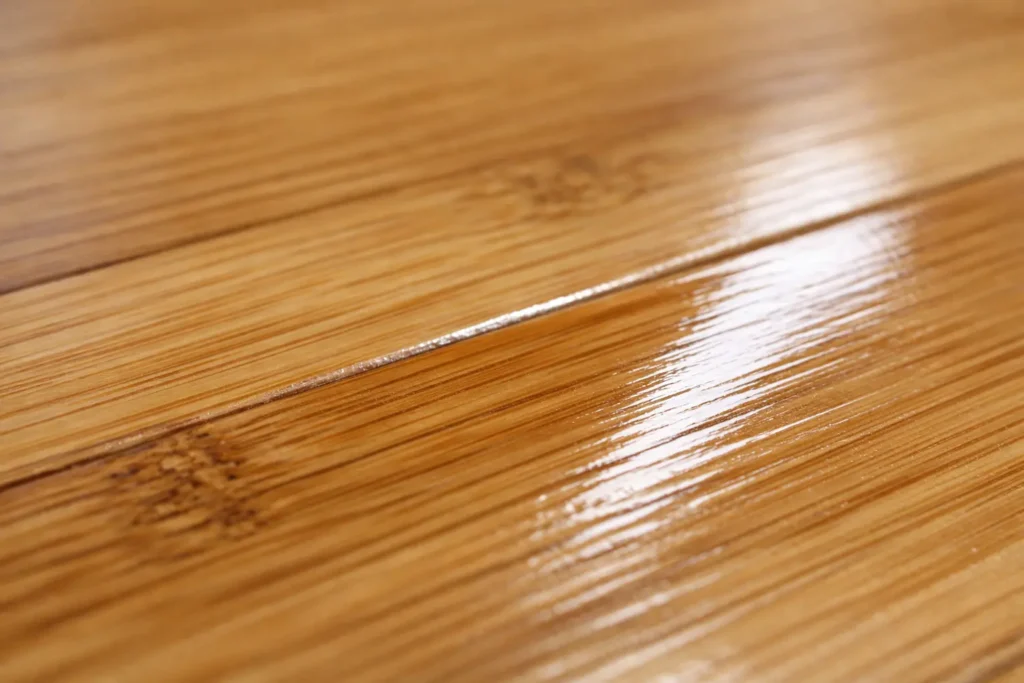
Bamboo isn’t wood. It’s grass. But manufacturers press and glue bamboo strips into planks, then coat them with a polyurethane finish. This finish is what you’re actually cleaning.
That distinction matters. Polyurethane is tough, but it’s not invincible. It scratches under grit. It clouds under the wrong chemicals. It softens under too much moisture.
Most flooring manufacturers specify approved cleaning products in their warranty terms. Using the wrong cleaner can void that coverage, even if the floor looks fine at first.
Once you understand the finish, the cleaning rules stop feeling random. They start making sense.
Your Daily and Weekly Cleaning Routine
Daily: Sweep or Vacuum First
Grit is your floor’s biggest enemy. Dust and dirt act like sandpaper under foot traffic. Over time, they scratch the finish and dull its shine.
Use a soft-bristled broom or a vacuum with a hard-floor attachment. Turn off any beater bar before you start. Beater bars are designed for carpet, not finished wood.
Sweep along the grain, not across it. This lifts debris instead of grinding it deeper into the seams.
Weekly: Damp Mop With the Right Cleaner
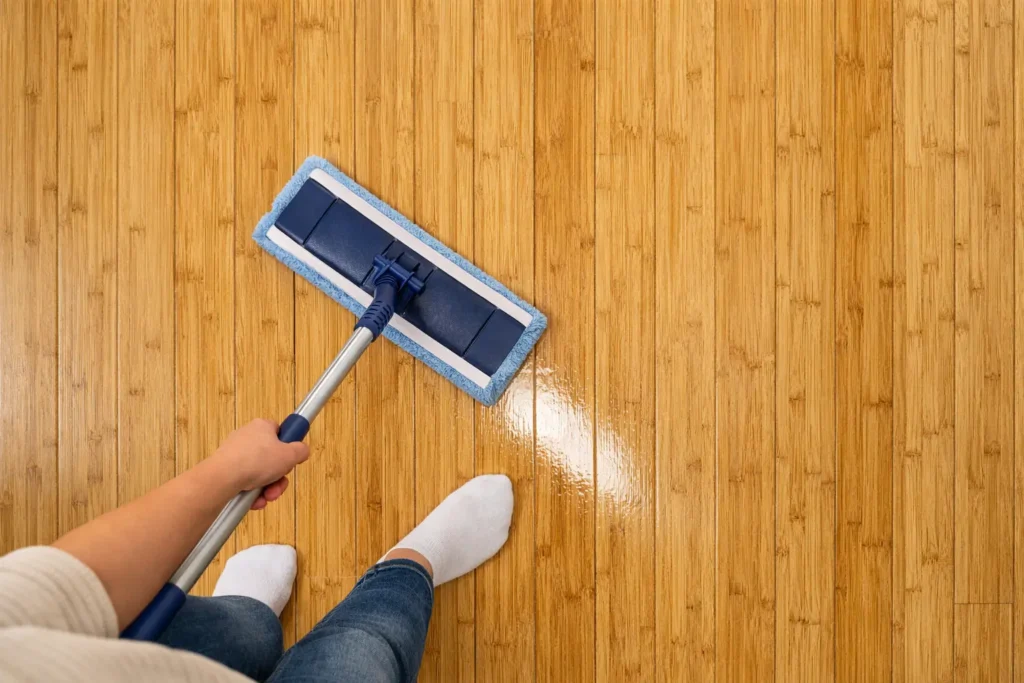
Fill a spray bottle with a pH-neutral cleaner made for hardwood or bamboo. Mist your microfiber mop pad directly. Don’t spray the floor itself.
Wring the mop until it’s barely damp. It shouldn’t drip when you hold it up. Mop in the direction of the grain, working in small sections.
Follow immediately with a dry microfiber cloth. This step matters more than people realize. Standing moisture is what causes long-term damage, not the cleaning itself.
Get the Dilution Right
Most cleaner bottles list a ratio, but here’s a safe general guide. Mix about a quarter cup of pH-neutral cleaner per gallon of warm water.
Too much product doesn’t mean a deeper clean. It means more residue left behind. We’ll get to why that’s a real problem in the next section.
The Problem Almost Nobody Tells You About: Cleaner Haze
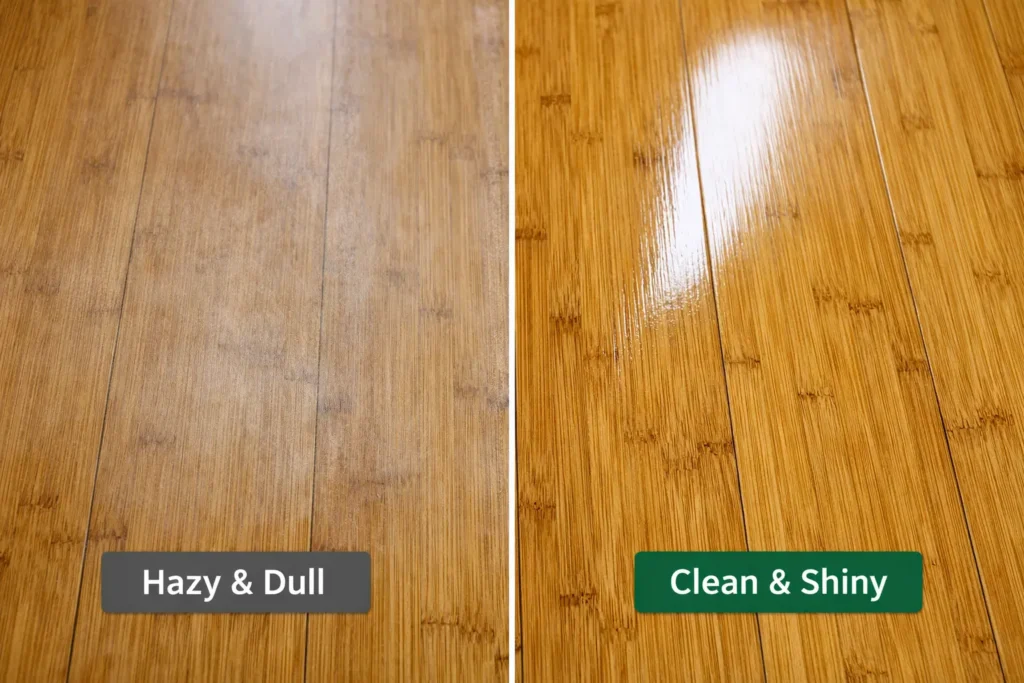
Here’s something most brands won’t admit. Even a pH-neutral, bamboo-safe cleaner can leave a hazy film if you overuse it.
This happens for a simple reason. Cleaning products contain surfactants, which are molecules that lift dirt away from a surface. If you apply too much, or don’t dry the floor fast enough, those surfactants don’t fully lift off. They dry into a thin, cloudy layer instead.
That haze isn’t dirt. It’s leftover product. And no amount of re-mopping with more cleaner fixes it. You need a plain water rinse pass, followed by a dry cloth, to clear it.
This is also why professional cleaners often do a “water-only” final pass. It removes any film the cleaning step left behind.
What to Never Use on Bamboo Flooring (And Why)
Steam Mops
Heat plus moisture is the worst combination for bamboo. Steam forces water vapor into the seams between planks. This causes swelling, cupping, and warping that often can’t be reversed.
Vinegar and Other Acidic Cleaners
Vinegar is acetic acid. Acid breaks down the polyurethane coating over repeated use. Each clean strips a tiny bit more shine until the finish looks permanently dull.
This is why vinegar works fine on some surfaces but not on coated wood floors. The chemistry is just different.
Oil-Based Soaps
Products like Murphy’s Oil Soap were designed for unfinished wood, not sealed floors. On a polyurethane surface, the oil sits on top instead of soaking in.
Over time, that oil builds into a sticky, dust-attracting film. Many flooring refinishers also say it can void a manufacturer’s finish warranty.
The National Wood Flooring Association generally advises against oil-based or wax cleaners on finished wood and bamboo floors. That guidance lines up with what refinishers see in practice.
Ammonia and Bleach
Both are too harsh for a finished surface. They strip the topcoat’s sheen and can leave permanent dull patches behind.
Wax and Furniture Polish
Wax was made for unsealed wood. Your bamboo floor already has a sealed finish. Adding wax on top creates a slippery, streaky layer that attracts grime.
Abrasive Tools
Steel wool and scouring pads will scratch through the finish. Once that happens, moisture can get into the bamboo underneath.
Does Pine-Sol Work on Bamboo Floors?
No, skip it. Pine-Sol isn’t pH-neutral, and many formulas contain oils or solvents. Both can dull a polyurethane finish over time.
Stick to a cleaner specifically labeled for hardwood or bamboo floors instead.
Can You Use Vinegar If You Dilute It Enough?
This question comes up a lot, so let’s address it directly. Heavily diluted vinegar won’t destroy your floor in one mop session.
But repeated use, even diluted, slowly erodes the finish’s shine. Since pH-neutral cleaners cost about the same and carry zero risk, there’s no real reason to gamble with vinegar.
How to Remove Stains, Scuffs, and Sticky Residue
Most cleaning guides stop at daily maintenance. But stains and scuffs are often what send people searching in the first place.
Scuff Marks
Rub gently with a clean tennis ball or a pencil eraser. Both lift scuff marks without scratching the finish.
Sticky Spots or Wax Residue
Dab a small amount of isopropyl alcohol onto a soft cloth. Wipe the spot gently, then dry immediately with a clean towel.
Water Stains or Cloudy Spots
These usually mean moisture sat too long. Try a vinegar-free, pH-neutral deep cleaner formulated for wood floors. Apply sparingly and dry fast.
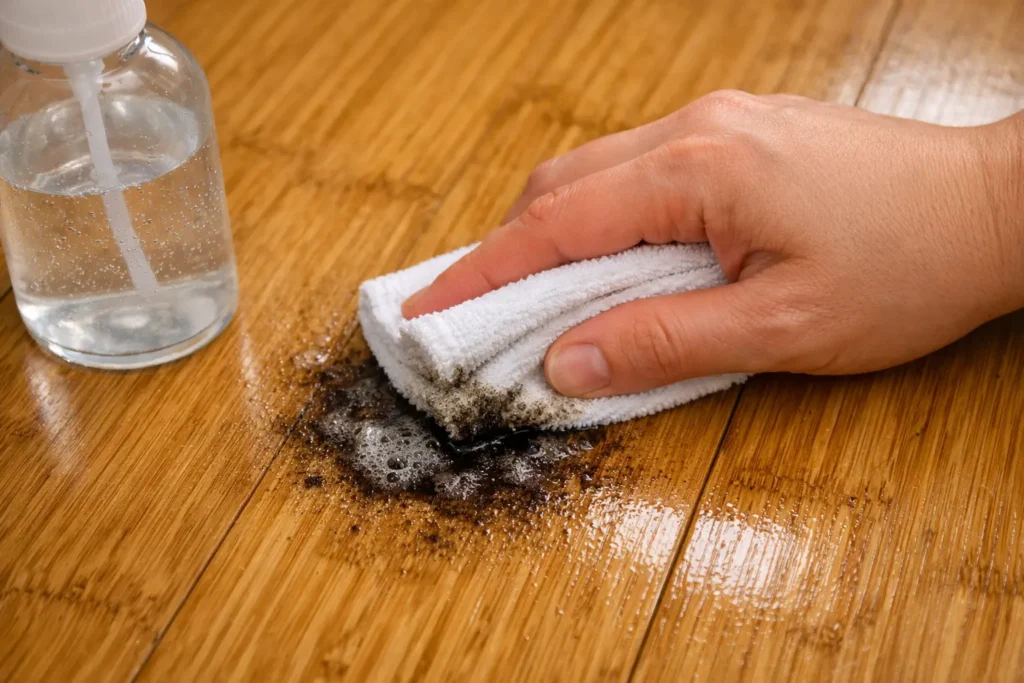
Dark or Black Stains
These are often old water damage that’s penetrated past the finish. A light, gentle approach works best: warm water, a soft non-abrasive cloth, and a pinch of salt worked in gently.
If the stain doesn’t lift, it may sit below the finish layer. At that point, spot refinishing is your only real fix.
Does Bamboo Type Affect How You Clean It?
Not all bamboo flooring is built the same way. This actually changes how careful you need to be.
- Horizontal and vertical bamboo show the natural grain and growth rings. They’re slightly softer than strand-woven and a bit more prone to scratching.
- Strand-woven bamboo is denser and harder, often rated tougher than oak. It handles daily wear better, but it still follows the same moisture rules. Density doesn’t make it waterproof.
If you’re not sure which type you have, check with your installer or flooring manufacturer. The cleaning chemicals stay the same either way. Only your level of caution around scratches shifts slightly.
A Quick Note on Bamboo vs. Laminate
These two get confused often, and the mix-up causes real damage. Laminate is a printed image layer over fiberboard. Bamboo is a real, solid material with a poly finish on top.
Laminate can’t handle any standing water at all. Bamboo has slightly more tolerance, but not by much. If you’re unsure what you have, treat it like bamboo: damp, never wet.
How to Make a Dull Bamboo Floor Shine Again
If your floor looks tired despite regular cleaning, it likely needs a polish, not just a clean.
Apply a hardwood floor polish made for polyurethane finishes every two to six months in high-traffic areas. Low-traffic rooms can stretch to six or twelve months.
Always test polish on a small, hidden section first. Most manufacturers recommend this step, since polish formulas react differently depending on your specific finish.
Long-Term Habits That Protect Your Floor
A few small habits prevent most of the damage people end up Googling about later.
- Place felt pads under every piece of furniture
- Use doormats at every exterior entrance
- Remove shoes before walking on the floor
- Trim pet nails regularly if you have pets
- Avoid dragging heavy furniture across the floor
None of these take much effort. But together, they prevent the scratches and dents that are nearly impossible to fix later.
Frequently Asked Questions
What is the best cleaner for bamboo floors?
A pH-neutral cleaner made specifically for hardwood or bamboo floors works best. Look for one labeled residue-free, and avoid anything with oil, ammonia, or wax listed in the ingredients.
Can bamboo floors be mopped?
Yes, but only with a barely damp microfiber mop. Never use a wet mop, a sponge mop that holds excess water, or a steam mop.
What not to use on bamboo floors?
Avoid vinegar, ammonia, bleach, wax, oil-based soaps, and steam mops. Each one either strips the finish or leaves damaging residue behind.
How can I make my bamboo floor look new again?
Deep clean it first to remove built-up haze and grime. Then apply a polyurethane-safe floor polish to restore shine and protect the surface.
Can you use Pine-Sol on bamboo floors?
No. Pine-Sol isn’t pH-neutral and can dull the polyurethane finish over repeated use. Choose a cleaner made for hardwood or bamboo instead.
How often should you clean bamboo floors?
Sweep or vacuum daily to remove grit. Damp mop once a week, and polish every two to six months depending on foot traffic.