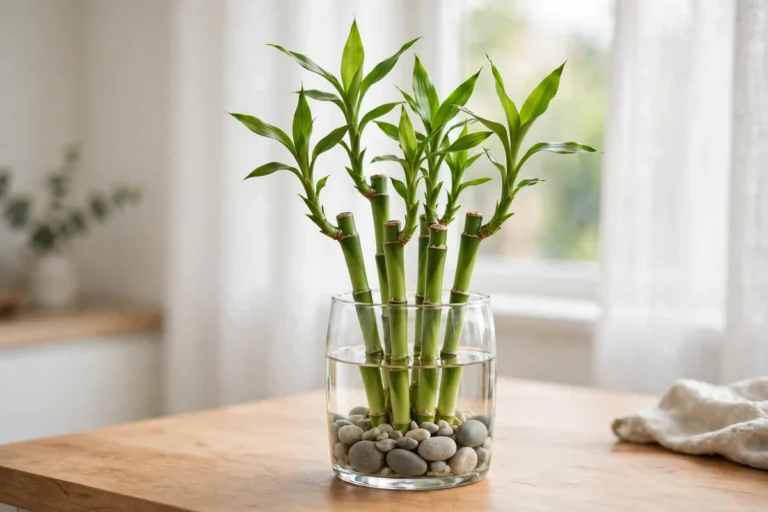

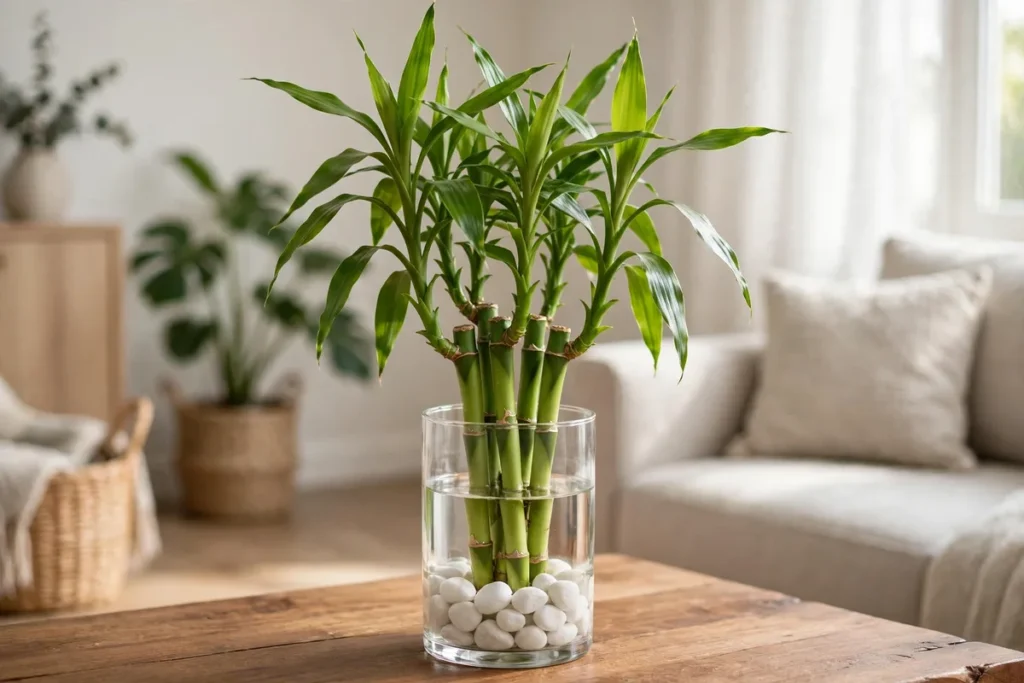
Yes. Lucky Bamboo (Dracaena sanderiana) is toxic to cats. It contains steroidal saponins that cause drooling, vomiting, loss of appetite, weakness, and dilated pupils. The ASPCA and Pet Poison Helpline both list Dracaena species as toxic to cats. If your cat chewed lucky bamboo, remove the plant and call your vet right away.
You bought it because it looked elegant. A graceful stalk in a glass vase, sold as a symbol of good fortune. Then someone mentioned it might not be safe for your cat, and now you are here.
Here is the truth, without sugarcoating: Lucky Bamboo is not bamboo at all, and it is genuinely dangerous for cats. This guide covers exactly why it is toxic, which parts are the worst, what to do if your cat already chewed it, whether dogs are at risk too, and which lookalike plants are actually safe.
What Is Lucky Bamboo, Actually?
Lucky Bamboo is the marketing name for Dracaena sanderiana, a tropical plant native to Central Africa. It belongs to the Dracaena genus, in the asparagus family. It is not related to true bamboo in any way.
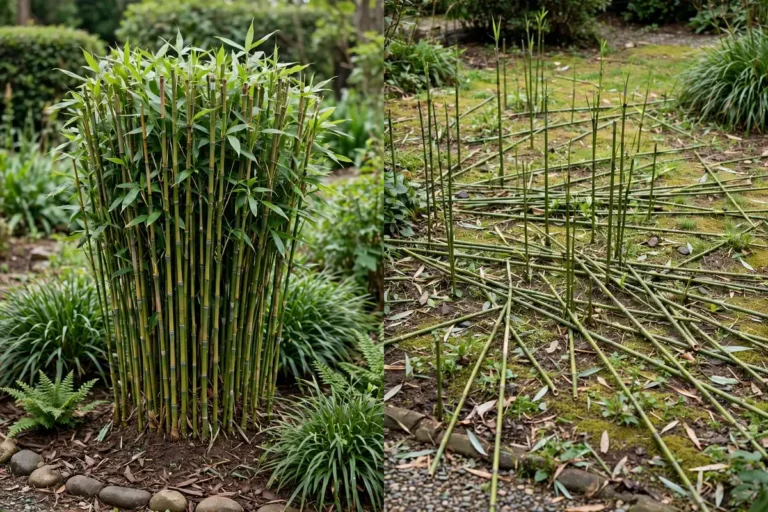
True bamboo is a grass (subfamily Bambusoideae). Lucky Bamboo is a fleshy-stalked Dracaena that happens to look a little bamboo-like when it is cut into cane sections and sold in water. The resemblance ends at the checkout counter.
It became a global houseplant because it is nearly indestructible: it grows in a vase of water with pebbles, needs almost no light, and survives months of neglect. Offices, bathrooms, reception desks, and gift baskets are its natural habitat. That is exactly the problem. It enters homes as a decoration, not as a considered plant purchase, so nobody researches it until a cat starts chewing the leaves.
If you want the full picture on real bamboo around pets, read our guide on whether bamboo is toxic to cats, which separates true bamboo from every impostor.
Is Dracaena Sanderiana the Only “Lucky Bamboo”?
Mostly, but not entirely. This is a detail most guides skip, and it matters.
The lucky bamboo sold in most stores is Dracaena sanderiana. But some retailers sell Dracaena braunii under the same “lucky bamboo” label. The two look nearly identical in a vase: fleshy green stalks, rosette leaves, sold in water with pebbles.
Here is what you need to know: both species contain saponins, and the ASPCA flags Dracaena species as toxic to cats across the board. So the species debate does not change your decision. If the label says Dracaena anything, treat it as toxic.
How to check yours: look at the nursery tag that came with the plant. “Dracaena sanderiana” is the common one. “Dracaena braunii” is the less common twin. No tag? It does not matter for safety purposes. Assume toxic either way.
Why Is Lucky Bamboo Toxic to Cats? What Saponins Actually Do
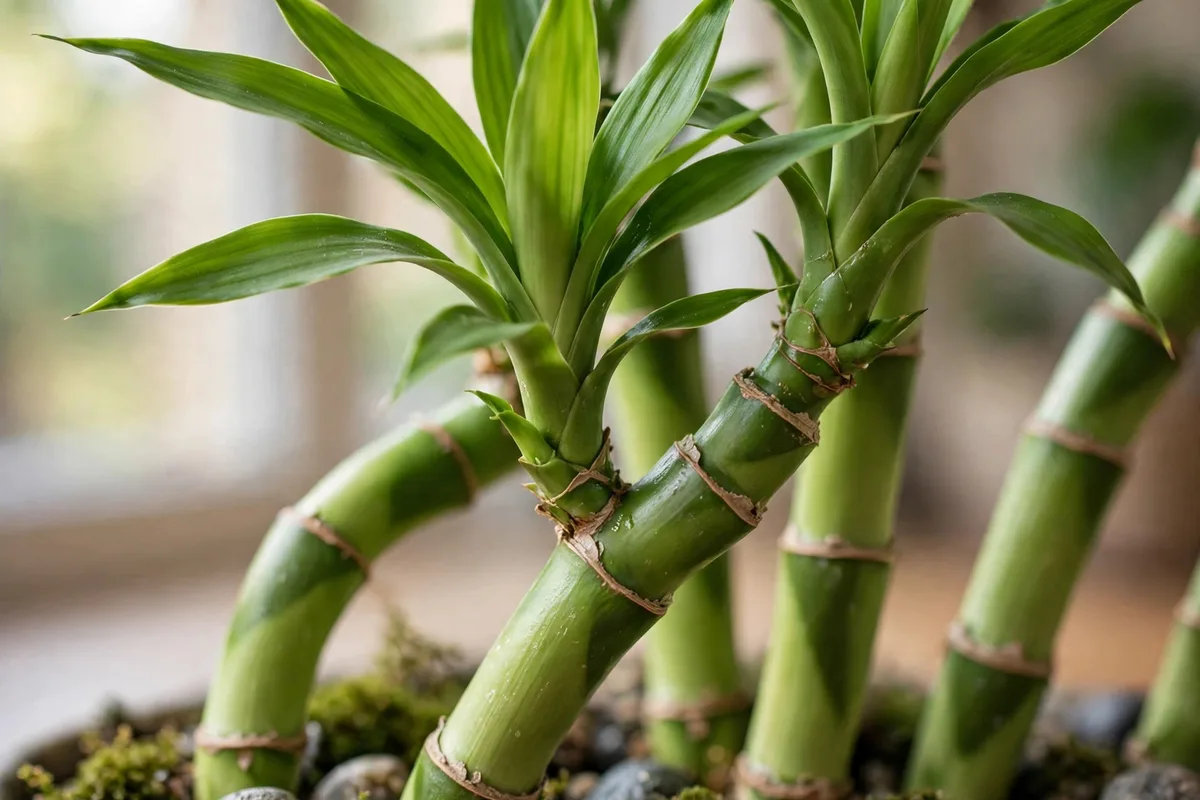
The toxic compounds in lucky bamboo are called steroidal saponins. Understanding them explains every symptom your cat might show.
Saponins are natural chemicals many plants make to deter animals from eating them. They are named for their soap-like behavior: in water they foam, and in a digestive tract they irritate. When a cat chews lucky bamboo, saponins attack on two fronts.
First, they irritate the mouth, throat, and stomach lining on contact. That is why drooling is usually the first sign: the mouth is trying to flush the irritant out. Vomiting follows for the same reason. The body is expelling something it recognizes as harmful.
Second, in larger amounts, steroidal saponins can affect the nervous system. That is where the scarier signs come from: weakness, wobbly walking, dilated pupils, and depression. These do not mean the poisoning is automatically severe, but they do mean the toxin has moved beyond the stomach.
Cats are more sensitive to saponins than humans or dogs. Their livers process certain plant compounds slowly, so a dose that would barely bother a person can make a cat genuinely ill. This is also why “my dog chewed it and was fine” stories mean nothing for your cat.
The ASPCA’s listing for Dracaena (Ribbon Plant) names saponins as the toxic principle and records toxicity to cats, dogs, and horses. The Pet Poison Helpline’s Ribbon Plant page confirms the same mechanism and notes that dilated pupils and unsteady gait have been reported specifically in cats.
Which Parts of Lucky Bamboo Are Toxic?
All of them. This is the mistake that catches people out.
The leaves are the most commonly chewed part. They are long, grass-like, and dangle at exactly cat-whisker height. Every leaf contains saponins.
The stalks contain saponins too. Cats that gnaw the fleshy green cane get the same toxins, plus a mouthful of fibrous plant tissue that is hard to digest.
The roots, if your plant has been growing long enough to develop them in the water, are also toxic. And fallen leaves or cuttings on the table or floor are just as dangerous as the living plant. A dried lucky bamboo leaf does not become safe with age.
One more hidden source: the water in the vase. Saponins leach into it, and many growers add liquid fertilizer to that water. A cat that drinks from the vase gets a dose of both. If your cat is a habitual water-bowl avoider that prefers drinking from vases and glasses, this plant is doubly risky in your home.
Is Lucky Bamboo Water Poisonous to Cats?
The plant itself is the main danger, but the vase water deserves its own warning.
Lucky bamboo lives in standing water, and that water collects whatever the plant sheds: saponins from the stalk surface, decaying leaf bits, algae, bacteria, and any fertilizer the owner added. None of that belongs in a cat’s stomach.
There is no published lethal dose for “lucky bamboo vase water” specifically, and it is unlikely to poison a cat as fast as chewing the leaves. But it can absolutely cause vomiting and diarrhea, and fertilizer additives raise the stakes. If you keep lucky bamboo anywhere a cat can reach, the water is part of the hazard, not a separate safe zone.
Practical rule: if the plant stays, the vase goes behind a closed door. There is no safe way to share a room with a determined cat and an open vase of this plant.
Symptoms of Lucky Bamboo Poisoning in Cats
Memorize these. In an emergency you will not have time to look them up.
- Excessive drooling or foaming at the mouth
- Vomiting, sometimes with blood
- Diarrhea
- Loss of appetite
- Lethargy, weakness, or depression
- Dilated pupils
- Wobbly walking or loss of coordination
- Abdominal pain (crying when the belly is touched)
Symptoms usually start within a few hours of chewing. Drooling and vomiting come first. The neurological signs, wobbliness and dilated pupils, tend to appear with larger ingestions.
In most cases the poisoning stays in the mild to moderate range: a miserable cat, not a dying one. But “mild to moderate” is an average, not a promise. Kittens, senior cats, small breeds, and cats with existing illness face higher risk from the same nibble that a healthy adult cat might shake off.
How Much Lucky Bamboo Is Dangerous for a Cat?
There is no safe amount, and there is no published minimum toxic dose for cats. Do not try to calculate whether “just one leaf” is fine.
Veterinary toxicology for Dracaena in cats is built on case reports, not dose experiments, so nobody can give you a grams-per-kilogram number. What the case history shows is consistent: even small ingestions produce drooling and vomiting, and larger ingestions produce the full neurological picture.
Do not measure risk by portion size. Measure it by access. A cat that can reach the plant will eventually chew enough of it. The only dose that is reliably safe is zero.
My Cat Ate Lucky Bamboo. What Do I Do Right Now?
Act in this order. Do not skip steps.
Step 1: Remove the plant. Get it out of the room, not just onto a higher shelf. Cats climb. Put it behind a closed door or take it out of the house.
Step 2: Clear the mouth. If you can see leaf bits, gently wipe them away with a damp cloth. Do not push material deeper, and do not try to induce vomiting. Forcing a cat to vomit can cause more harm, including aspiration of plant material into the lungs.
Step 3: Call your vet immediately. Say exactly what the plant is (Dracaena sanderiana, sold as lucky bamboo), how much you think was eaten, and when. Bring a photo of the plant or a sample leaf if you can do it safely.
Step 4: If your vet is unavailable, call the ASPCA Animal Poison Control Center at (888) 426-4435. It operates 24 hours. Have your cat’s age, weight, and breed ready. A consultation fee may apply, and it is worth every cent.
Step 5: Watch and document. Note when symptoms started and how they progress. Drooling alone may resolve with observation. Vomiting plus lethargy, wobbliness, or dilated pupils means the vet visit cannot wait.
Do not “wait and see” past the first hour. Saponin effects can be delayed as the compounds absorb, so a cat that looks fine at minute thirty can be vomiting at hour three.
Is Lucky Bamboo Toxic to Dogs?
Yes. Dogs face the same saponin risk, and the ASPCA lists Dracaena as toxic to dogs as well.
The symptom pattern in dogs overlaps heavily with cats: vomiting, drooling, loss of appetite, weakness, and unsteady walking. Dogs are generally less sensitive to saponins than cats, so a large dog that steals one leaf may show milder signs than a cat would. But “less sensitive” is not “safe,” and small dogs face essentially the same risk profile as cats.
The same action plan applies: remove the plant, do not induce vomiting, call the vet. If your household has both cats and dogs, this plant is a two-species hazard and the argument for removing it entirely gets even stronger.
Multi-pet homes should also know that treatment is supportive, not specific. There is no antidote for saponin poisoning. Vets manage it with anti-nausea medication, fluids if dehydration sets in, and monitoring. Early calls make all of that simpler and cheaper.
Is Lucky Bamboo Toxic to Humans and Babies?
For healthy adults, lucky bamboo is considered to have little to no toxicity. You would need to eat a meaningful amount of it to feel effects, and nobody does that on purpose.
Babies and toddlers are a different story. They chew everything, they cannot tell you what they ate, and their small body weight amplifies any dose. Treat all Dracaena species as keep-away-from-toddlers plants: high shelves, closed rooms, never on a coffee table or low plant stand.
If a child eats any part of the plant, call Poison Control at 1-800-222-1222 in the US. Do not wait for symptoms.
Can Cats Be Around Lucky Bamboo If It Is Out of Reach?
This is the question every owner asks, hoping for a yes. The honest answer is: “out of reach” is harder than you think, and the stakes of being wrong are high.
Cats jump to the top of bookshelves. They knock vases off windowsills. They chew fallen leaves you did not notice. A lucky bamboo on a high shelf is safer than one on a coffee table, but it is not safe. The plant sheds leaves. Water sloshes. Curiosity defeats most barriers eventually.
If you are determined to keep both, the minimum standard is a room the cat never enters, with the door kept closed. Not a high shelf in a shared room. A separate room.
The genuinely safe option is replacing the plant. Which brings us to the good news: you do not have to give up the look.
Safe Swaps: Cat-Friendly Plants That Look Like Bamboo
You can keep the aesthetic and lose the risk. These are the best replacements.
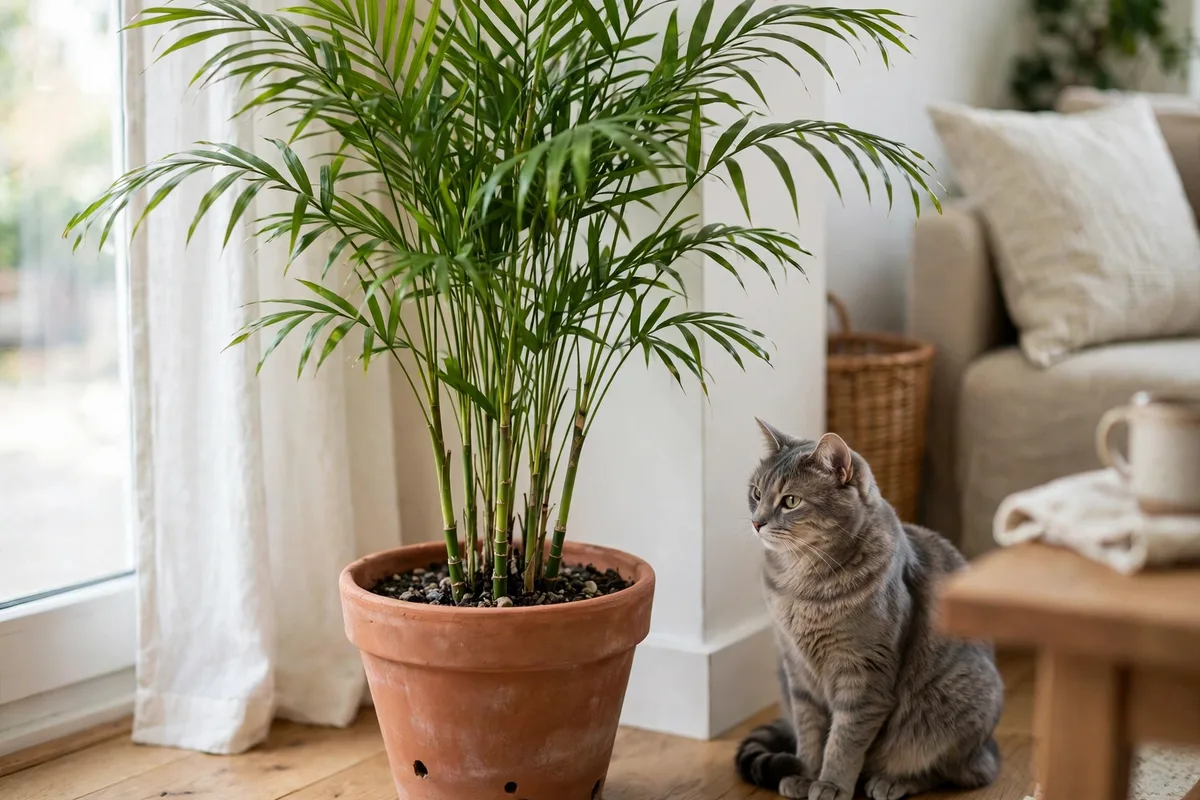
Bamboo Palm (Chamaedorea seifrizii). The name is no coincidence: slim, bamboo-like stems with feathery fronds. The ASPCA lists bamboo palm as non-toxic to cats, and it is one of the most recommended cat-safe houseplants. It wants bright indirect light and regular water, and it grows slowly enough to stay manageable for years.
Parlor Palm (Chamaedorea elegans). Bamboo palm’s smaller cousin, also ASPCA non-toxic. Better for low light and tight spaces.
True bamboo (Phyllostachys or Bambusa species). Real bamboo is a grass, and the ASPCA lists it as non-toxic to cats, dogs, and horses. It is an outdoor plant at heart, but dwarf varieties can live in bright indoor spots. Just verify the scientific name before you buy, because anything labeled “bamboo” in a gift shop is guilty until proven innocent.
Spider plant and Boston fern. Neither looks like bamboo, but both are classic cat-safe hanging plants that satisfy a cat’s urge to bat at greenery without any toxic risk.
When you swap, do not just move the lucky bamboo to another room “for now.” Rehome it to a pet-free household or discard it. A toxic plant in the garage is a toxic plant the cat will find during your next open-door moment.
How to Keep Lucky Bamboo and Cats in One Home (If You Insist)
If you read everything above and still want to keep the plant, here is the harm-reduction checklist. This is not an endorsement. It is damage control.
- One room only, door closed at all times. Not a shelf. A room.
- No fallen leaves, ever. Check the floor around the plant daily.
- Change the vase water weekly and keep the vase where splashes cannot reach cat areas.
- Never use fertilizer spikes or granules a cat could ingest; if you feed the plant, use dilute liquid fertilizer and keep the plant locked away for 24 hours after.
- Watch for new chewing interest. Cats develop plant habits suddenly, often in spring.
- Have your vet’s number and the ASPCA poison line (888) 426-4435 saved in your phone now, not during the emergency.
Revisit the decision every few months. Most owners who try the “separate room” compromise eventually rehome the plant. The vigilance gets tiring, and one forgotten open door is all it takes.
Frequently Asked Questions
Can a cat survive eating lucky bamboo?
In most cases, yes. Dracaena poisoning in cats is usually mild to moderate, and with prompt veterinary care the prognosis is good. But “usually” is doing heavy lifting in that sentence. Kittens, seniors, and cats with health problems face real danger, and delayed treatment turns mild cases serious. Survival is likely. Gambling on it is foolish.
How long does lucky bamboo poisoning last in cats?
Mild cases often resolve within 12 to 24 hours with supportive care. Vomiting and drooling are typically the first to fade. Lethargy and appetite loss can linger a day or two longer. If symptoms persist beyond 24 hours or worsen at any point, that is a vet revisit, not patience.
What part of lucky bamboo is most toxic to cats?
All parts contain saponins, but the leaves are the most dangerous in practice because they are the part cats actually chew. Do not rank the parts by safety. Treat leaves, stalks, roots, and fallen cuttings as equally off-limits.
Is lucky bamboo poisonous to touch?
No. Simply touching the plant or brushing against it will not poison a cat or a person. The toxins must be ingested. The risk is chewing, not contact. That said, sap on paws gets licked off, so a cat that bats the plant around and then grooms is still at risk.
Can lucky bamboo kill a cat?
Death from Dracaena ingestion is rare in cats, and most veterinary sources describe the toxicity as mild to moderate. Rare is not impossible. Severe dehydration from prolonged vomiting, or complications in an already-ill cat, can turn serious. Treat every ingestion as urgent regardless of the statistics.
My cat sniffed lucky bamboo but did not chew. Is that okay?
Sniffing is fine. The saponins need to be ingested to cause harm. Just make sure “sniffed” does not become “nibbled” tomorrow. This is your warning to move the plant now.
Are all Dracaena plants toxic to cats?
Yes. The saponin problem runs through the whole genus: dragon tree (Dracaena marginata), corn plant (Dracaena fragrans), song of India (Dracaena reflexa), and the rest. If you are auditing your home for cat safety, check every Dracaena, not just the lucky bamboo.
Is heavenly bamboo also toxic to cats?
Yes, and it is worse. Heavenly bamboo (Nandina domestica) is not a bamboo either. It contains cyanogenic glycosides that can release cyanide. If your landscaping includes it, that is a separate and more serious conversation with your vet.