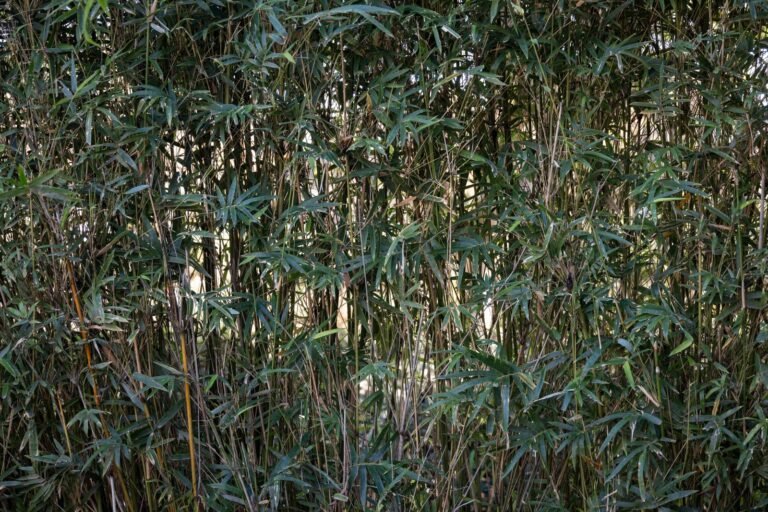


The short answer: To grow bamboo, pick a clumping type for small gardens or a running type with a root barrier for larger spaces. Plant in spring in moist, free-draining soil. Dig a hole twice as wide as the rootball, water deeply, and mulch. Keep new plants consistently watered for the first year and feed with nitrogen-rich fertilizer each spring.
Bamboo has a reputation problem. Ask a gardener about it and you will hear one of two stories: a gorgeous evergreen screen that went up in a few seasons, or a horror story about rhizomes under the neighbor’s patio. Both stories are true, and the difference between them is almost always the planting decisions made on day one. This guide covers those decisions in order: which type to buy, when and where to plant, how to plant it properly, and how to keep it where you put it.
Why grow bamboo in the first place?
It helps to know what you are growing it for, because the goal shapes every choice below. The most common reasons:
Privacy screening. The number one reason home gardeners plant bamboo. Evergreen, dense, and fast once established, a running bamboo screen on 5-foot centers typically closes in 3 to 5 years. Nothing else gives you a 15-foot evergreen hedge that quickly.
Windbreaks and shelter. Bamboo’s dense, flexible canes filter wind rather than blocking it solidly, which makes it excellent shelter for exposed gardens and for protecting more delicate plants behind it.
Timber and poles. Mature culms (3 to 5 years old) are remarkably strong for their weight and are used for garden stakes, fencing, furniture, and building in much of the world. A home grove can supply an endless stream of free poles.
Edible shoots. Young shoots of many species are eaten as a vegetable, harvested when under 6 inches tall. Only eat shoots from species known to be edible, and note that some contain compounds that require cooking to make them safe.
Ornamental value. Some gardeners grow bamboo purely for its looks: the upright architecture, the sound of wind in the canes, and varieties with black, yellow, or striped culms that work as living sculpture.
Be honest about your primary goal before buying. A screen wants a fast runner with a barrier; a specimen wants a well-behaved clumper; a timber grove wants space and patience.
Should you choose clumping or running bamboo?
This is the single most important choice, so make it before you buy anything. All bamboo falls into two growth habits, and they behave like different plants.
Running bamboo sends long underground stems called rhizomes far from the parent plant, and new shoots pop up along them. It spreads fast and fills space quickly, which is why it makes such good privacy screens. It is also the type behind every bamboo horror story. The Royal Horticultural Society lists Phyllostachys, Pseudosasa, Sasa, Pleioblastus, and Arundinaria as runners. If you plant a runner with no plan to contain it, expect it to travel.
Clumping bamboo has short rhizomes that turn upward quickly, so new shoots emerge close to the parent in a slowly expanding circle. The RHS lists Bambusa, Fargesia, Chusquea, Shibataea, and Thamnocalamus as clump-formers. They are the safe default for most home gardens. Two honest caveats from the UC Master Gardener program: clumpers are generally less cold-hardy (many struggle below 20F), and they grow in circles rather than rows, so they make lumpy rather than solid hedges.
A simple rule: small garden or planting near a boundary, choose clumping. Large space you want filled fast and you are willing to install a barrier, running is fine.
| Clumping bamboo | Running bamboo | |
|---|---|---|
| How it spreads | Tight circle, slow | Long rhizomes, fast |
| Containment needed | Usually none | Root barrier or trench pruning |
| Best for | Small gardens, pots, specimens | Privacy screens, large areas |
| Cold hardiness | Weaker (many struggle below 20F) | Stronger (Phyllostachys to 0F) |
| Example genera | Bambusa, Fargesia | Phyllostachys, Pseudosasa |
Which bamboo variety should a beginner start with?
Nurseries sell dozens of varieties, which is overwhelming the first time. You do not need the perfect species; you need one that matches your climate and your goal. These are the beginner-friendly starting points the sources converge on:
For warm climates, hedges, and screens: Bambusa multiplex. A clumping bamboo that behaves itself, tolerates heat, and planted in a row makes an attractive hedge. Bambu Batu specifically recommends it for privacy plantings where running bamboo would be a liability.
For cold climates: Fargesia species. Fargesia murielae (umbrella bamboo) and Fargesia robusta are clumpers with better cold tolerance than most tropical clumping types. They are slower than runners, so buy the largest pot you can afford; with bamboo, starting size translates directly into how soon you get a real plant.
For temperate climates where you want fast impact: Phyllostachys species. Golden bamboo (Phyllostachys aurea) is the classic fast runner for screens, hardy and vigorous, but it is a runner, so the barrier section above is mandatory reading, not optional.
Whatever you choose, buy from a nursery that labels the species and growth habit. A plant sold simply as “bamboo” with no variety name is a gamble: you cannot know its mature size, hardiness, or whether it runs. Check the label for the expected height too. A timber bamboo that wants to be 40 feet tall does not belong in a courtyard, no matter how small the pot looks today.
When is the best time to plant bamboo?
Spring. This is one of the few points every authority agrees on. The RHS explains why: bamboo stores energy in its underground rhizomes over winter, then spends it producing strong new canes in summer. Planting in spring gives the rhizomes a full growing season to put down roots before the plant goes dormant from autumn to spring.
You can buy bamboo plants for most of the year, usually in containers of at least 2 liters, but hold spring planting as the target. Avoid planting in late fall or winter, especially the frost-sensitive clumping types, because a new plant with unestablished roots is the one most likely to suffer in a hard freeze.
Where should you plant bamboo?
Get three things right and bamboo is close to indestructible. Get them wrong and you will fight the plant for years.
Sun. Most bamboos want full sun to light shade. Aim for 6 to 8 hours of direct sun daily for most species, and note that more sun means more energy for the fast growth bamboo is famous for. A sheltered spot out of harsh wind is ideal, since wind dries the evergreen foliage in winter.
Soil. Bamboo tolerates most soils but performs best in moist, fertile, free-draining ground. Sources converge on a slightly acidic to neutral pH, roughly 5.5 to 7. What it hates is extremes: constantly waterlogged soil rots the roots, and permanently dry soil stunts it. If your soil is heavy clay or pure sand, dig the planting area wider and work in plenty of compost or rotted manure.
Space. This is where people go wrong. A running bamboo without containment can cross a garden in a few seasons, and even clumping types keep expanding their circle outward, slowly but with real force. Do not plant any bamboo hard against a fence, wall, or your neighbor’s boundary. For a privacy screen, planting on 5-foot centers typically closes into a screen in 3 to 5 years.
One more consideration before you dig: pets. True bamboo is generally considered safe around cats and dogs, but gardens often mix plants, so it is worth checking each species you bring home. Our guide on whether bamboo is toxic to cats walks through which bamboo-like plants are the real concern.
How do you plant bamboo, step by step?
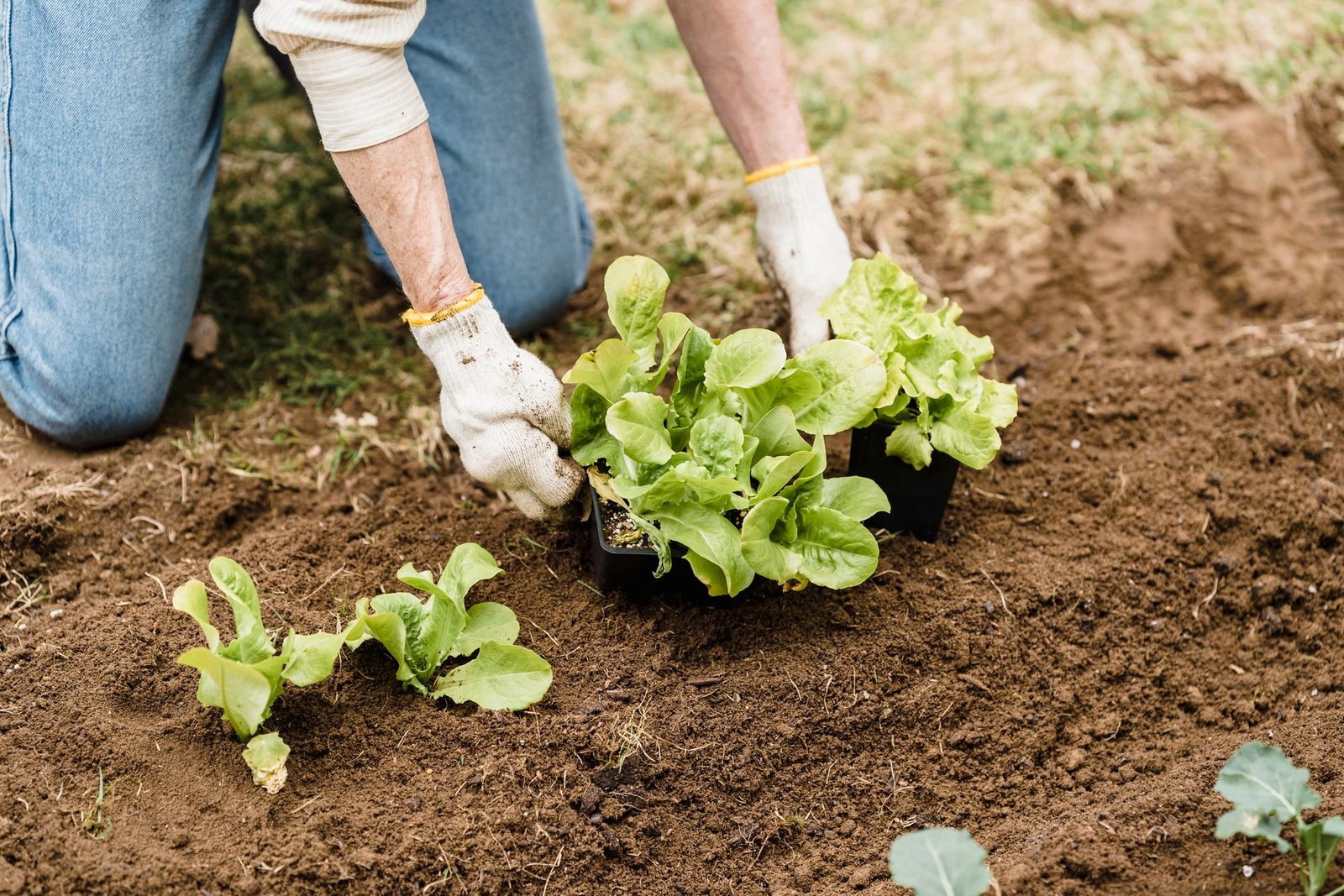
Buy a healthy nursery plant, not seeds (more on why below). Then follow these steps:
- Dig the hole twice as wide as the rootball, and just as deep. Set the rootball so its original surface sits 2 to 3 cm below the surrounding soil level. Wide matters more than deep: bamboo roots spread outward, and loose soil around the plant lets them establish fast.
- Improve the backfill. Mix the excavated soil with compost or well-rotted manure. On poor, light soil this feeding at planting time makes a visible difference in the first season.
- Position the plant. Set the bamboo in the hole at the right depth. If you are planting several for a screen, space clumping types 3 to 5 feet apart and running types about 5 feet apart.
- Backfill and firm. Fill soil back around the rootball and firm it gently to remove air pockets. Air pockets dry out roots.
- Water deeply, twice. Soak the planting area thoroughly, let the water drain in, then soak it again. This settles the soil around the roots.
- Mulch thickly. Cover the soil surface with a few inches of garden compost, bark, or leaf mold. Mulch holds moisture, suppresses weeds, and feeds the soil as it breaks down. Here is a detail most guides skip: do not rake up bamboo’s own fallen leaves. The RHS points out they contain silica, which the plant reuses to strengthen its canes.
- Install containment now if you planted a runner. Barriers go in at planting time, not later. The full method is in the next section.
- Mark your calendar for the first year. New bamboo needs consistent water while its roots establish. That means deep watering during any dry spell in the first growing season, not a daily sprinkle.
If you handle a lot of plants, wear gloves. A few people develop skin irritation from prolonged contact with bamboo foliage and culm sheaths, and our guide on bamboo allergies covers who tends to react and what helps.
How do you stop bamboo from spreading?
This is the question that stops most people from planting bamboo, and it has a reliable answer: a physical root barrier, installed correctly, works. Here is the method:
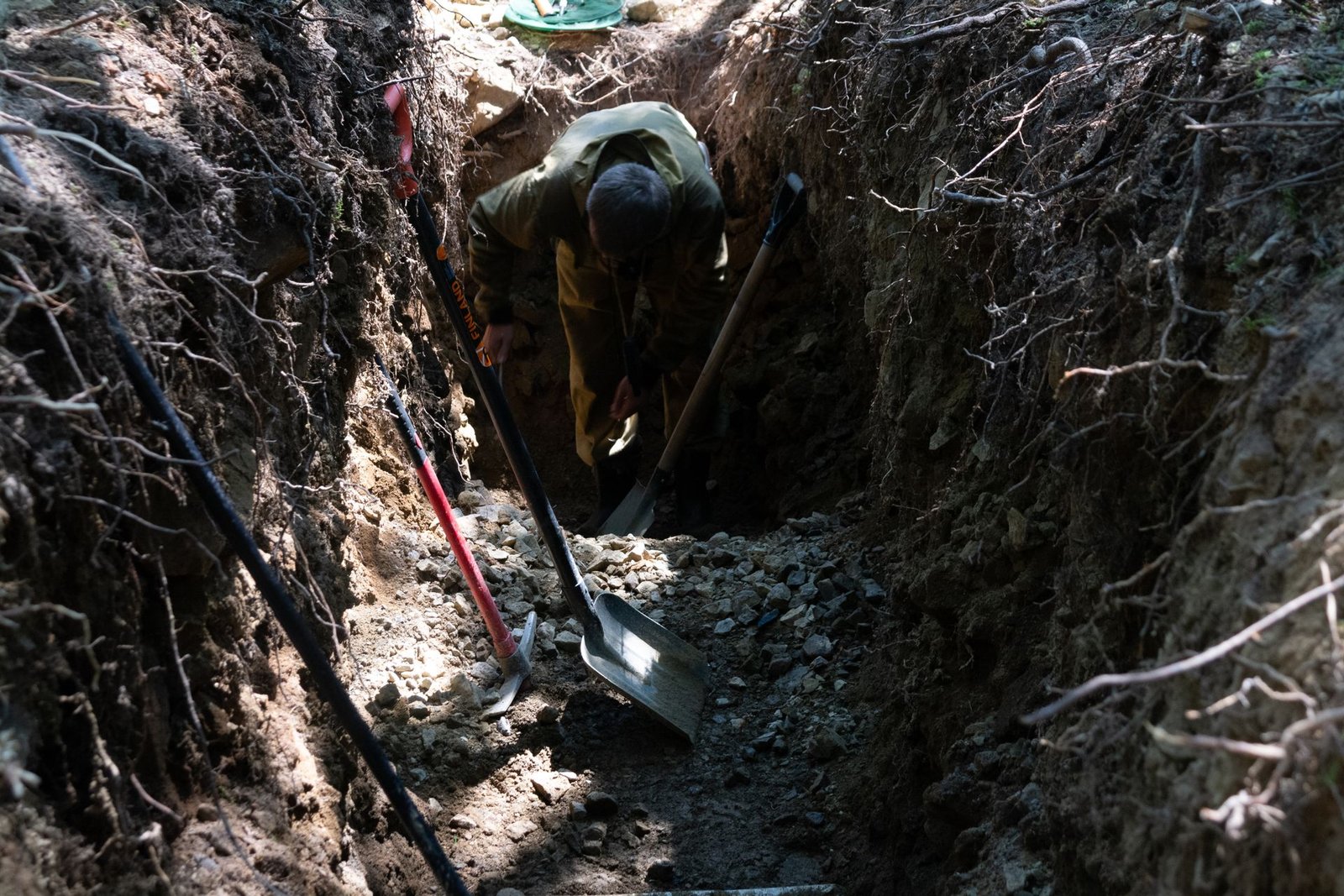
Dig a trench around the entire planting area. For most running bamboos, go at least 60 cm (2 feet) deep; the RHS recommends up to 1.2 m (4 feet) for vigorous plants like Phyllostachys. For large specimens the enclosed area should be at least 2.5 m across so the plant has room to be healthy.
Line the trench with an impenetrable barrier. Purpose-made HDPE root barrier, 30 to 40 inches deep, is the standard recommendation. Paving slabs or corrugated sheets also work. Overlap any joints by at least 30 cm and seal them; a rhizome will find a gap you left.
Leave a lip above the soil. This is the step people skip. The barrier must protrude at least 7.5 cm (3 inches) above the surface, because rhizomes can and do travel over the top of a buried edge. You can hide the lip with mulch or stones.
Maintain it. Once or twice a year, walk the perimeter and cut back any rhizome trying to escape over or around the barrier. Ten minutes with sharp secateurs beats a weekend with a mattock later.
For clumping bamboo, none of this is necessary. That is the whole point of choosing a clumper: the plant contains itself.
How much water and fertilizer does bamboo need?
Water: think consistent, not constant. Bamboo loves moisture but hates sitting in water. For the first year, water deeply whenever the top few inches of soil dry out; in hot weather that can mean several deep soakings a week. About an inch of water per week is a reasonable baseline for young plants. Established bamboo in the ground is fairly drought tolerant, but it looks its best with regular water during dry spells. Container bamboo dries out much faster and needs watering far more often, sometimes daily in summer.
Fertilizer: bamboo is a grass, and like lawn grass it is hungry for nitrogen. On decent soil, a general granular feed in spring is enough. In containers or poor soil, feed through the growing season: a general liquid feed from March to October for potted bamboo, or a high-nitrogen fertilizer every 4 to 6 weeks from spring to late summer. Do not overdo it; more fertilizer will not make bamboo grow beyond what its rhizome system can support, and excess nitrogen in autumn can push soft growth that winter damages.
How do you prune and thin bamboo?
Bamboo needs less pruning than most shrubs, but a little annual attention keeps a grove healthy and good-looking. Do the work in spring, as new shoots emerge.
Remove the dead and weak first. Cut any dead, damaged, or spindly canes to ground level with secateurs or loppers. Old canes that have lost most of their leaves are just taking up light.
Thin congested clumps. If the center of a clump is a dark tangle, remove some of the oldest canes at the base. This lets air and light into the middle, which keeps the remaining canes healthier and shows off the plant’s form.
Control height by topping new shoots. Remember that a finished cane never grows taller, so height control means cutting the top off a shoot while it is still elongating in spring. The pruned cane then leafs out more densely below the cut, which many growers prefer for screens.
Show off colorful canes. Varieties grown for their cane color look best when the lower foliage is trimmed away to expose the culms. Cut side branches close to the main cane.
Divide overgrown clumps every few years. Lifting and dividing rejuvenates a tired clump and gives you free plants. It is straightforward for small bamboos; for a large specimen it is a two-person job with a saw, so plan accordingly.
Cut out flowering shoots. If only the odd shoot flowers, remove it promptly. If the whole clump flowers, let it finish, then feed and water well; in spring, cut the clump to the ground and feed with high-nitrogen fertilizer to push new growth from the base.
Can you grow bamboo in a pot?
Yes, and for running bamboo it is one of the simplest containment strategies. But pots come with their own rules.
Go big. The minimum is a container at least 45 cm (18 inches) across and deep, and bigger is better. Small pots dry out in hours on a hot day.
Use the right compost. A loam-based, peat-free potting compost holds moisture better than lightweight multipurpose mixes.
Expect maintenance. Bamboo in pots needs regular generous watering, feeding through the growing season, and repotting every few years. Bambu Batu flags the classic failure: a bamboo left in the same pot too long becomes completely root-bound, and then water just sheets off the surface instead of soaking in. When that happens, lift the plant, divide the rootball into sections with a saw, and replant the divisions in fresh compost. You get free plants out of the chore.
Mind the drain holes. Rhizomes can and do escape through drainage holes into the soil below. Set pots on a patio, paving, or a flat stone, not directly on earth.
Can you grow bamboo from seed, cuttings, or rhizomes?
Three methods, in order of reliability:
Division (easiest and most reliable). Dig up an established clump in mid-spring and split it. Small clumps divide with a saw; large ones may need a mattock and a second person. Replant the divisions immediately, keep them well watered, and each one becomes a new plant. This is how nurseries multiply stock.
Rhizome and culm cuttings (reliable with care). In early spring, sever a young rhizome from the outside of a clump, trim the attached cane to about 30 cm, and lay it in gritty compost in a tray. Cover with a clear plastic bag to hold humidity and keep it warm and bright indoors, then plant out after the last frost. Alternatively, take 10 to 15 cm sections of healthy culm with at least two nodes, the raised rings where roots and shoots form, and root them in water or a perlite and compost mix. Keep them warm and humid; roots typically appear within 4 to 8 weeks. A stem section without a node will never root, so check for nodes before you start.
Seed (possible but usually not worth it). Bamboo flowers rarely, sometimes with decades between flowering events, so viable seed is seldom available commercially. When seed is available, it germinates best sown fresh on the surface of gritty compost at around 18 to 20C, often within a couple of weeks. But bought bamboo seed is frequently old or mislabeled, and seedlings take years to become substantial plants. For nearly every gardener, starting with a nursery plant or a division is the smarter move.
How fast does bamboo grow, and when is it mature?
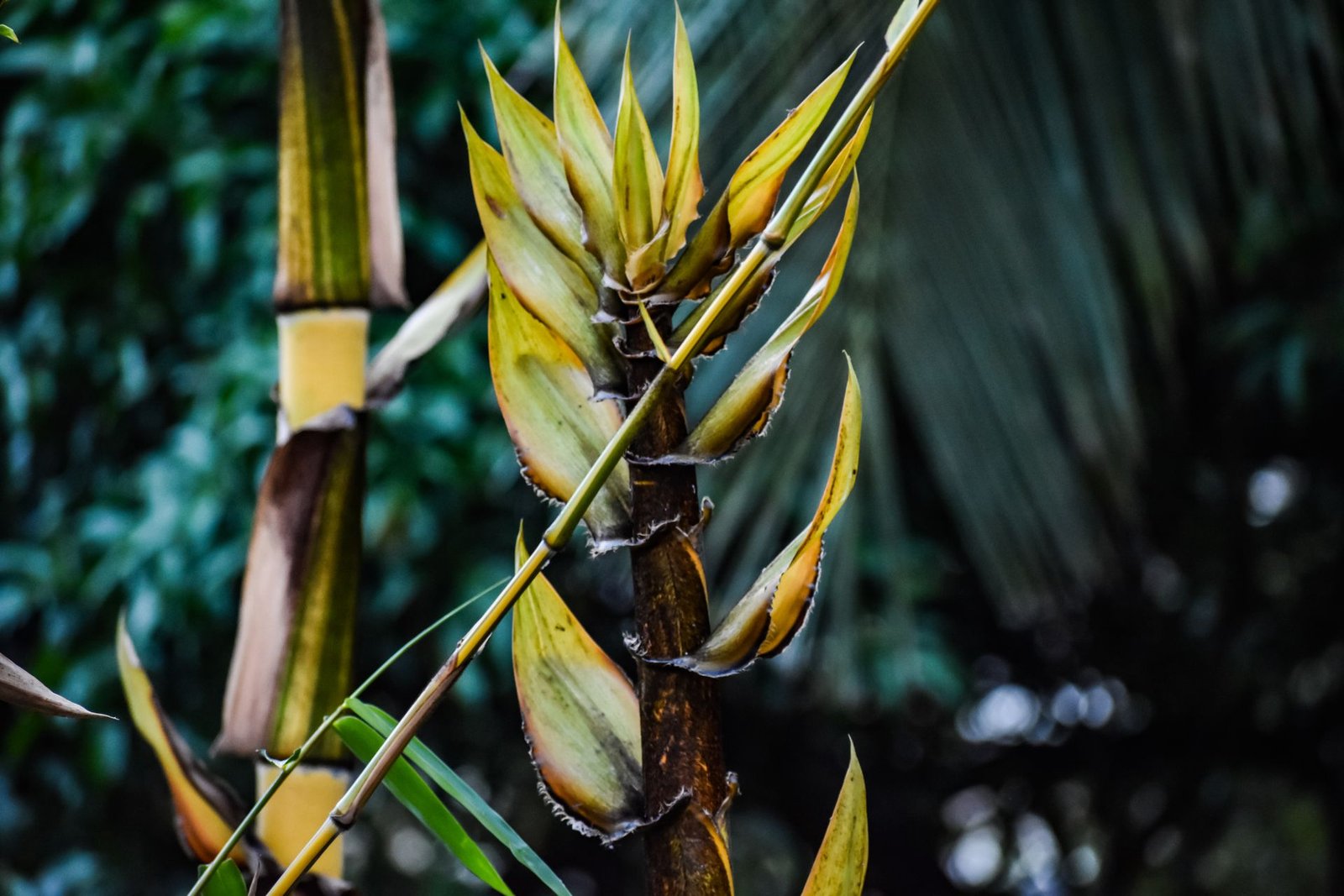
Bamboo does not grow like other plants, and this surprises almost every new grower. The cane you plant will never get taller. Instead, each spring the rhizome system sends up brand-new shoots, and each shoot emerges from the ground at the full diameter it will ever have. It then rockets upward, reaching its full height in about 60 days, and stops. Next spring, the now-larger rhizome system sends up even bigger shoots. Growth compounds year after year. Lewis Bamboo’s growth guide describes this cycle in detail, including the telescope-like elongation of the young culms.
During the spring shooting season, the speed is startling. Measured growth of almost 4 feet in a single 24-hour period has been recorded, and the commonly cited peak figure across sources is up to about 3 feet (roughly a meter) a day for vigorous species in ideal warm, wet conditions. For Phyllostachys in the Northern Hemisphere, shooting typically runs March through May.
The honest timeline looks like this:
| Stage | What happens | Timing |
|---|---|---|
| Establishment | Roots develop, small first shoots | Year 1 |
| Building | Bigger shoots each spring, grove fills in | Years 2 to 3 |
| Near-mature | Approaching full height and density | Years 3 to 5 |
| Full maturity | Maximum cane size, harvestable culms | 7 to 10 years |
It takes about three full years in the ground before a planting really takes off and starts producing the multiple large shoots that read as a proper grove. Anyone selling you instant bamboo is selling you a large, expensive pot, which is fine, but know what you are paying for.
What mistakes should you avoid?
These are the errors that cause nearly every bamboo failure:
1. Planting a runner with no containment plan. The number one mistake. If you skipped the barrier section above, go back and read it.
2. Choosing a clumper for the wrong climate. Clumping bamboos are mostly tropical and subtropical plants. In regions with real freezes, many clumpers suffer while running types like Phyllostachys shrug off the cold. Match the plant to your winters, not just your fears.
3. Drowning it. Bamboo likes moisture, but no bamboo survives with its roots permanently submerged. Do not plant it in a pond, a bog, or a spot where water stands after rain.
4. Starving it in a pot. A bamboo in a small pot with no feeding schedule is a slow decline. Big pot, regular water, regular feed, divide when root-bound.
5. Expecting instant results. Bamboo spends its first year or two building underground. The explosive above-ground growth comes after the rhizome system is established. Give it three years.
6. Cutting the top off a finished cane and expecting it to keep growing. A cane that has completed its roughly 60-day sprint will never get taller. Pruning controls height only if you cut the new shoot while it is still elongating.
When you do thin out older canes, the cut culms are too good to waste. Our DIY bamboo coasters guide is one satisfying way to put harvested canes to use.
What does bamboo need in each season?
Once established, bamboo is low maintenance, but each season has one or two jobs worth doing.
Spring: the busy season. This is planting, dividing, and feeding time. Watch for new shoots emerging and avoid walking or digging near them; a snapped shoot does not regrow. Prune out dead canes and thin congested clumps now. Apply your main fertilizer as growth starts.
Summer: water and watch. Deep-water during dry spells, especially new plantings and anything in containers. Keep mulch topped up. Walk your barrier perimeter once and cut back any escapee rhizomes while they are small and soft.
Autumn: ease off. Stop nitrogen feeding so new growth hardens before winter; soft late growth is what frost damages. Let fallen bamboo leaves lie where they fall for their silica. This is a good time to plan next spring’s divisions, not to execute them.
Winter: mostly leave it alone. Hardy bamboo in the ground needs no protection. Container bamboo is the exception: pots freeze harder than soil, so insulate them with hessian or bubble wrap, move them to a sheltered spot out of harsh wind, and do not let the compost dry out completely, since winter wind dries evergreen foliage even when the plant is dormant.
Is lucky bamboo real bamboo?
No, and this confusion causes real growing failures. Lucky bamboo is Dracaena sanderiana, a tropical houseplant that happens to look like bamboo. It grows happily in a vase of water on a desk. True bamboo is a giant grass that wants sun, soil, and space outdoors, and it will languish and die in a water vase.
The mix-up matters because care advice does not transfer. If someone tells you bamboo is easy because their lucky bamboo survived years of neglect indoors, they are describing a different plant entirely. If you want the stalky indoor plant, our lucky bamboo care guide covers exactly how to keep it healthy. If you want actual bamboo, everything above is your starting point.
What real users found
We did not test these plants ourselves. What follows is what real gardeners, nurseries, and reviewers reported after growing bamboo, with the source for each finding.
A Reddit gardener, via The Cool Down: A gardener who planted running bamboo seven years earlier with a black ground barrier, a fence, and cinderblocks still lost containment. Shoots now grow in the poster’s yard and the neighbor’s yard, and commenters agreed there is no reliable way to contain it once it escapes. The Cool Down
Mandy, a former garden-center expert, via MandyCanUDigIt: Mandy grows Fargesia clumping bamboo in half-barrel-sized pots and calls them well-behaved, but warns that running types can burst through solid pots and pop up through patios and conservatories, even when expensive barrier fabrics are used. She advises avoiding running bamboo in small gardens entirely. MandyCanUDigIt
Caroline Bates, landscaper, via GreenPacks: Caroline planted a running bamboo variety without fully understanding its growth habit, and it spread through her yard, sending up shoots in unexpected places. Containing it took a lot of effort. She has since switched to clumping bamboo, which she calls much easier to manage. GreenPacks
A gardener, via PositiveBloom: One gardener planted running bamboo thinking it could be controlled and spent three years battling it after it escaped under the fence. The same writer reports a neighbor who skipped a barrier, so five properties on the street now have bamboo sprouts in their gardens. PositiveBloom
Mid-Atlantic Bamboo, a bamboo nursery: The nursery warns that 30 and 60 mil plastic root barriers have failed in 5 years or less when used for bamboo, calling them only a temporary nuisance to the plant. For in-ground containment it recommends 4-inch thick reinforced concrete, with a curb above ground so escaping rhizomes are easy to spot. Mid-Atlantic Bamboo
Bambu Batu, bamboo specialists: Bambu Batu warns that pots give a false sense of security, because bamboo roots crawl through drain holes into the soil below. Left in the same pot too long, a bamboo becomes completely root-bound, water sheets off the surface instead of soaking in, and the roots can eventually burst the container. Bambu Batu
Frequently asked questions about growing bamboo
New shoots reach full height in about 60 days during spring, growing up to about 3 feet a day at peak. But a planting takes around 3 years to establish and 7 to 10 years to reach full maturity, depending on species and conditions.
Most true bamboo does poorly indoors long term. It is a sun-loving grass that wants bright light, airflow, and room for its roots. A few dwarf varieties can survive in large pots near bright windows for part of the year, but the plant sold as indoor bamboo is usually lucky bamboo, which is a Dracaena, not bamboo at all.
Most species grow best in full sun to light shade, around 6 or more hours of direct sun daily. More sun generally means faster growth. Some varieties tolerate shade, but deep shade produces thin, weak canes.
Install a root barrier at planting time: a trench at least 60 cm deep lined with HDPE barrier or similar, with the top edge protruding about 7.5 cm above the soil. Inspect the perimeter once or twice a year and cut back escapees. Or simply plant a clumping variety, which spreads slowly in a tight circle.
Technically yes, but it is rarely practical. Bamboo flowers infrequently, viable seed is hard to find and often mislabeled, and seedlings take years to amount to much. Division or cuttings are faster and far more reliable for home growers.
Running bamboo is aggressive, though not legally classified as invasive in most places. In a garden without containment it behaves invasively, which matters little to a neighbor whose lawn is sprouting shoots. Plant runners only with a proper barrier, or choose clumping types.
Vigorous running types like Phyllostachys (including Moso) are the speed champions, with peak shooting growth of up to about 3 feet a day in ideal warm, wet conditions. But fastest also means hardest to contain, so match the vigor to your space.
Many running bamboos are very cold-hardy; Phyllostachys species tolerate temperatures down to about 0F. Clumping bamboos are generally less hardy and many struggle below 20F. In the ground, established bamboo needs no winter protection in most temperate climates; container bamboo benefits from insulation or a sheltered spot.
True bamboo is generally considered non-toxic to pets, but gardens mix many plants and the bamboo-like lucky bamboo is a different species with its own profile. Our guide on bamboo and cat safety breaks down which plants are the real concern.