
The short answer: Bamboo towels are soft, absorbent, and dry faster than heavy cotton, which makes them genuinely good bath towels. But most are rayon made from bamboo, not natural bamboo fiber, and they are not naturally antimicrobial. Buy a bamboo-cotton blend around 600 GSM, skip fabric softener, and hang them spread out to dry.
Bamboo towels are sold as the upgrade your bathroom deserves: softer than cotton, more absorbent than cotton, naturally antibacterial, and eco-friendly all at once. Some of that is true. Some of it falls apart the moment you read the care label.
This guide tells you what “bamboo” on a towel label legally means, whether the antimicrobial claim survives scrutiny, how absorbent bamboo towels really are, what GSM to buy, how to wash them so they stay soft, and whether the reusable paper towels and compressed travel towels in this family are worth your money. No brand paid for any of this, and no brand is affiliated with this site.
What does “bamboo” on a towel label actually mean?
Almost every “bamboo towel” you can buy is not made of bamboo fiber. It is made of rayon (also called viscose) derived from bamboo: bamboo pulp dissolved in chemicals, then re-spun into fiber. That is not a fringe technicality. It is the entire product category. One 2026 review roundup of bestselling bamboo towels puts it plainly: almost every bamboo towel on the market is viscose derived from bamboo, usually blended with cotton for structure and durability, because the fiber is so smooth it needs cotton for grip and absorbency.
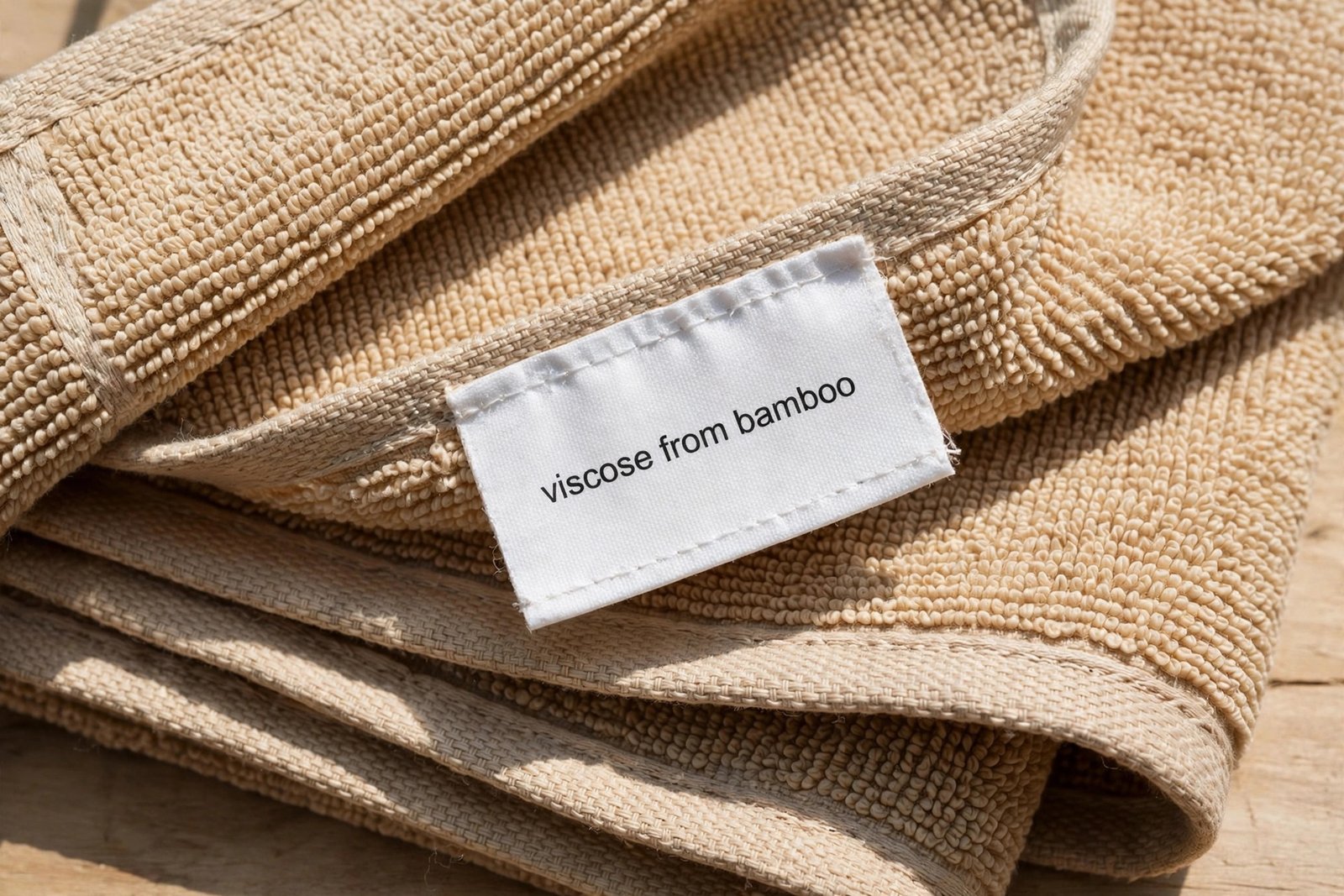
The law agrees. The Federal Trade Commission’s guidance on bamboo textiles states it directly: most “bamboo” textile products, if not all, really are rayon, and unless a product is made directly with bamboo fiber (often called mechanically processed bamboo), it cannot be called simply “bamboo.” The honest label reads “rayon made from bamboo” or “viscose from bamboo.” The FTC has charged companies over this more than once, including a 2009 case against sellers of bamboo clothing and bath products who claimed “100 percent bamboo fiber” for what was actually rayon.
So read the label before you buy, the same way you would read an ingredient list. “100% bamboo” on a silky-soft towel is a red flag, not a selling point. “Viscose from bamboo” or “rayon from bamboo,” ideally with the cotton percentage stated, is the honest version. This distinction matters for everything below, because the plant’s famous properties do not automatically survive the trip through the chemical plant.
Are bamboo towels naturally antimicrobial?
No, not in any way you can count on. This is the claim with the weakest foundation in the whole bamboo towel market, and it deserves a straight answer.
The story goes like this: the bamboo plant contains a natural substance often called “bamboo kun” that resists pests and bacteria, so bamboo fabric must resist bacteria too. The problem is the process. Turning bamboo pulp into viscose means dissolving it in harsh chemicals, and the FTC’s position is unambiguous: even when rayon is manufactured from bamboo, it does not retain the bamboo plant’s natural antimicrobial properties, because the manufacturing process eliminates them. “There is no trace of the original plant in the finished rayon product,” the Commission writes.
Independent testing points the same way. In 2009, textile researcher Ian Hardin bought bamboo products sold as antimicrobial from six different sources and tested them with the standard AATCC 147 method against Staphylococcus aureus and E. coli. None of them showed an antimicrobial effect. That result was reported in a research roundup of bamboo-textile studies; the original paper was not available for direct verification, so treat it as one reported test, not as settled science on its own. But it lines up exactly with the FTC’s position, which rests on the chemistry, not on any single test.
What about the reviews saying bamboo towels stay fresher and resist that musty smell? Those experiences are real, but the cause is probably simpler than “bamboo kun.” Bamboo-viscose towels wick moisture and dry faster than heavy cotton terry, and a towel that dries fast gives bacteria and mildew less time to grow. Quick drying is a real, physical advantage. It just is not the same as being antimicrobial, and brands that sell it as “natural antibacterial protection” are selling the plant’s reputation, not the fabric’s properties.
The practical takeaway: buy bamboo towels for softness and drying speed, not for germ-fighting powers. And wash them on the same schedule as any towel, which the care section covers below.
Bamboo viscose vs bamboo lyocell: what is the real difference?
Both start as bamboo pulp. What happens next is completely different, and it is the difference between the greenest and least green thing about your towel.
Bamboo viscose (bamboo rayon) is made by dissolving bamboo pulp in carbon disulfide, caustic soda, and sulfuric acid in an open-loop process. Industry sources describe the chemistry consistently: harsh chemicals, emissions to air and waterways, and documented risks for factory workers. This is how the large majority of bamboo towels are made. It is also, chemically, the same family of process used for ordinary rayon from wood pulp. The bamboo plant is renewable; the factory process is not obviously green.
Bamboo lyocell dissolves the pulp in NMMO, an organic solvent, in a closed-loop system that recovers and reuses roughly 98 to 99 percent of the water and solvent. No carbon disulfide. The same industry sources report solvent recovery rates of 98 to 99 percent across producers. Lyocell fibers also come out smoother and more uniform, which is part of why lyocell fabrics tend to feel softer and hold up longer.
Three honest notes. First, these process descriptions come from textile brands and industry publishers, not from peer-reviewed studies; they are consistent across independent sources, which is why this guide uses them, but they are still industry claims. Second, lyocell towels cost more, often 30 to 60 percent more than viscose equivalents at comparable sizes, because the equipment is more expensive. Third, most bamboo towels on the market are viscose, so if you specifically want lyocell, you have to shop for the word “lyocell” on the label. A towel that just says “bamboo” is viscose until proven otherwise.
If the environmental story is why you are buying bamboo, lyocell is the more consistent choice. If softness per dollar is the goal, viscose blends are fine, just buy them with clear eyes about what they are. Our complete guide to bamboo bedding walks through the same viscose versus lyocell split for sheets, where the stakes are identical.
Are bamboo towels more absorbent than cotton?
This is where the marketing gets loudest and the evidence gets thinnest. You will see claims that bamboo towels are “three times more absorbent than cotton,” that they “hold up to three times their weight in moisture,” or that “studies show” bamboo absorbs 1.76 times its weight in water. Those numbers come from brands selling bamboo towels. The studies behind them are not named, not linked, and not verifiable. One aggregator page even publishes lab-grade tables (grams of water per gram of towel, drying minutes, fiber-shedding milligrams) attributed to “12 independent lab tests” with no lab named. Treat all of it as marketing, not measurement.
Here is what can be said honestly. Bamboo viscose is a hydrophilic cellulose fiber: it takes up water readily and spreads moisture across its surface so it can evaporate. In practice, bamboo-viscose towels absorb well and dry faster than heavy all-cotton terry, largely because they are often lighter and wick efficiently. But cotton, especially long-staple Turkish or Egyptian cotton, can be more absorbent per gram, which is exactly why most quality bamboo towels blend the two: bamboo viscose for softness and wicking, cotton for structure and absorbent capacity. A 2026 review roundup makes the same point: the blend is the product, not a compromise.
There is also a useful distinction buyers miss: wicking is not the same as absorbency. Wicking is how fast moisture moves through the fabric. Absorbency is how much water the fabric holds. Bamboo viscose wicks very well. Total absorbency depends on weight, weave, and blend, which is why GSM matters more than the word “bamboo” on the package. That is the next section.
The bottom line: bamboo towels absorb well and dry fast, but nobody has published a credible head-to-head test proving the “three times” multiplier. Anyone quoting it is quoting a brand.
Bamboo towels vs cotton towels: which should you choose?
Each wins on something different. Pick by what you actually value.
| Feature | Bamboo (viscose blend) | Cotton (Turkish/Egyptian) |
|---|---|---|
| Softness | Silky, cashmere-like feel from the first wash; gets softer with washing | Soft, familiar plushness; premium cotton needs a few washes to peak |
| Absorbency | Very good; wicks fast | Excellent per gram in quality weaves; the benchmark |
| Drying speed | Faster; lighter towels release moisture quickly | Slower, especially heavyweight terry |
| Musty smell resistance | Better in practice, because faster drying starves mildew | More prone in humid bathrooms |
| Durability | Good in blends; pure bamboo viscose can be less sturdy | Very durable; the long-life choice |
| Sensitive skin | Smooth, lint-free, gentle | Good, but varies by weave |
| Eco story | Fast-growing plant, but viscose process is chemical-heavy; lyocell is cleaner | Water-hungry crop; conventional growing uses pesticides |
| Price | Mid to premium | Wide range, budget options abundant |
| Care | Cold wash, no softener, low heat | Forgiving; tolerates hot water and regular detergent |
If your bathroom stays humid and your towels always smell faintly damp, bamboo’s drying speed is a genuine quality-of-life upgrade. If you want the toughest, most forgiving towel that survives years of hot washes, quality cotton is hard to beat. And if you want both, that is exactly what the bamboo-cotton blends are for. We ran the same honest comparison for bedding in bamboo versus cotton sheets, where the trade-offs rhyme.
What is GSM, and what number should you look for?
GSM means grams per square meter: the weight of the fabric. For towels, it is the single most useful number on the package, and it tells you more than the fiber content does.
- Around 350 to 500 GSM: lightweight and fastest-drying. Good for gym bags, travel, and small bathrooms. Less plush, but they dry in a fraction of the time.
- Around 600 GSM: the everyday sweet spot for bamboo towels. Soft, absorbent, and still quick to dry. Most of the well-reviewed bamboo bath towels sit here, including several 600 GSM bestsellers in a 2026 review roundup.
- Around 700 GSM: plush and hotel-grade. The thickest bamboo options on the market sit here. They still dry reasonably fast thanks to bamboo’s wicking, but they take up more room on the bar and in the washer.
Two things GSM does not tell you. First, a high GSM towel made with short, weak fibers will pill and shed; GSM measures weight, not fiber quality. Second, weave matters: a waffle weave at 400 GSM can feel completely different from terry at the same weight. Use GSM to compare towels of similar type, not as an absolute score.
When shopping, check the blend ratio too. Most quality bamboo towels sit somewhere between 30 and 70 percent bamboo viscose, the rest cotton. Higher bamboo content means silkier and faster-drying; higher cotton content means more structure and durability. There is no magic ratio, but a towel that will not state its blend percentages is a towel to skip.
How do you wash bamboo towels?
Bamboo-viscose towels need slightly gentler care than cotton. The routine is simple, and it is the difference between towels that stay silky for years and towels that go stiff and sad in six months.
- Wash before first use. New towels carry spinning lubricants and loose fibers from manufacturing. One cold wash removes them and starts the softening.
- Wash cold or warm, never hot. Hot water breaks down viscose fibers faster. Cold with like colors on a gentle cycle is the safe default.
- Use a mild detergent, and use less of it. Residue buildup is the number one reason towels of any fiber go stiff and stop absorbing. Half the detergent you think you need is usually enough.
- Never use fabric softener. This is the big one. Softener coats fibers with a waxy film that kills absorbency, and on bamboo viscose the effect is worse than on cotton. The same goes for dryer sheets. If your towels have gone stiff and water beads on them instead of soaking in, softener buildup is the likely cause, and a hot wash with half a cup of white vinegar and no detergent can strip it.
- Tumble dry low or line dry. High heat degrades viscose faster than cotton. Low heat is fine; line drying in moving air is ideal when you can manage it.
- Expect lint in the first few washes. New bamboo-viscose towels shed loose fibers for the first two or three washes. It is normal, it settles, and the towels get softer afterward. Wash them separately from dark clothes the first couple of times.
- Do not use bleach. It weakens the fibers and yellows them. For whitening, the vinegar wash above or an oxygen-based brightener is the gentler route.
The same gentle rules apply across bamboo textiles. Our guide to washing bamboo sheets covers the shared logic in more depth, including why softener is the enemy of every bamboo fabric.
Why do towels get musty, and do bamboo towels resist it?
Every towel gets musty for the same reason: it stays damp too long. Moisture plus warmth plus time equals microbial growth, and the smell is the evidence. Testing by NSF International and Dr. Mehmet Oz on 31 used towels found significant bacteria on all of them, including towels used for only one day, mold on nearly half, and microorganism counts that nearly doubled for every seven days a towel went unwashed, as reported in a mold-prevention guide citing the study. Towels are, by job description, the dampest textile in your home.
The practical rules that actually prevent mustiness:
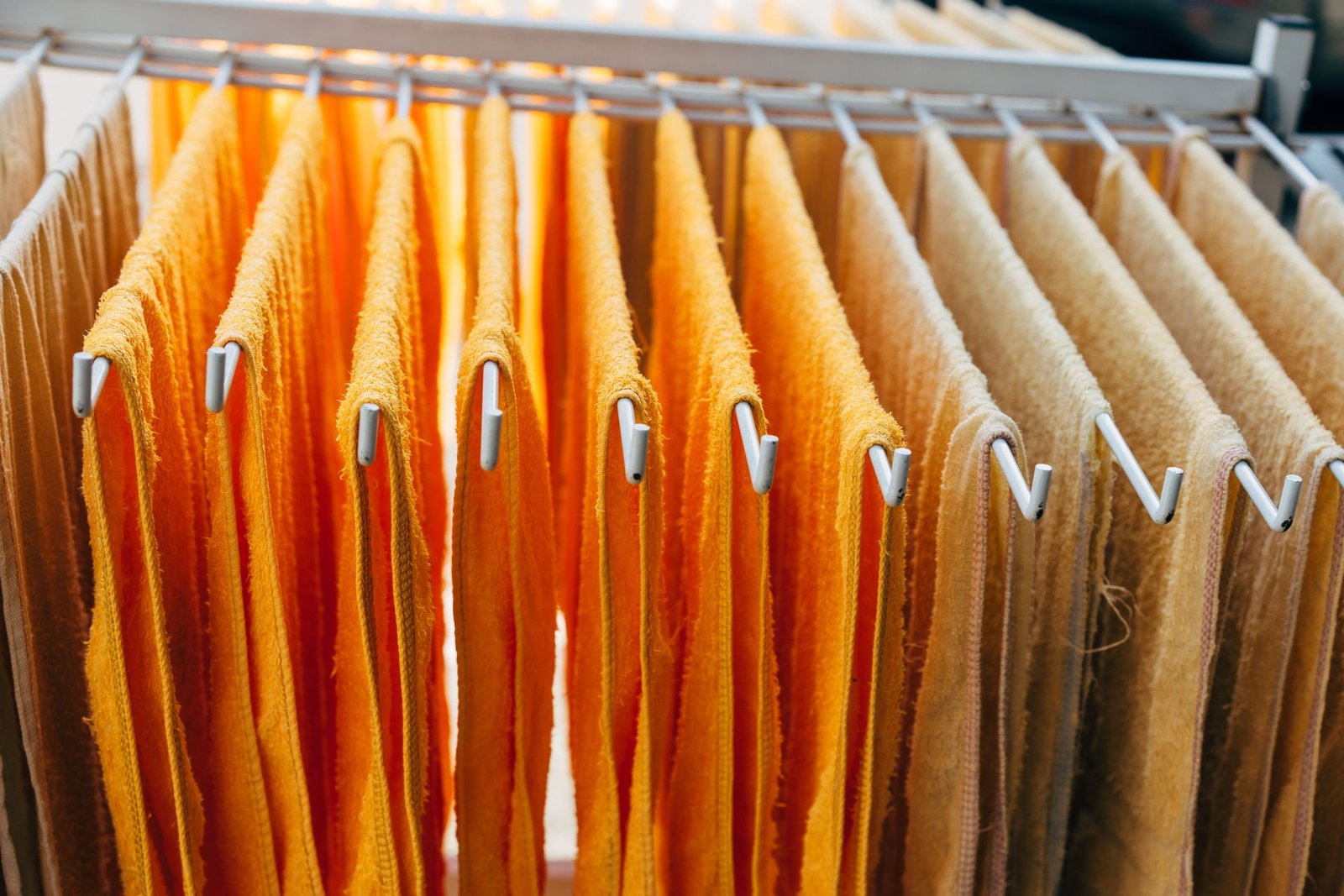
- Hang towels spread out, never bunched. A towel doubled over a hook dries from the outside in, and the inside stays damp for hours. A towel bar, spread flat with air moving around it, is the whole trick.
- Twelve hours is the danger line. If a towel is still damp after 12 hours, mildew risk climbs steeply; at 24 hours damp, actual mold becomes likely. In a humid bathroom with no ventilation, even bamboo towels will lose this race.
- Wash bath towels after three to four uses. That is the standard guidance from Loma Linda University’s environmental microbiology guidance, with a catch: the rule only works if the towel fully dries between uses. If it does not, change it after two uses. Cleveland Clinic dermatologist Alok Vij gives the simpler version: launder bath towels at least once a week, and washcloths a couple of times a week.
- Ventilate the bathroom. An exhaust fan run for 20 to 30 minutes after a shower does more for towel freshness than any fiber choice.
Where bamboo genuinely helps: because bamboo-viscose towels dry faster than heavy cotton, they spend fewer hours in the danger zone. Reviewers in humid climates consistently report less mildew smell with bamboo towels, and the mechanism is drying speed, not antimicrobial magic. It is a real advantage with an honest explanation. But no towel, bamboo or otherwise, survives being left damp in a gym bag or bunched on a hook. The fiber helps; the hanging does the work.
How often should you replace bath towels?
When they stop doing the job. The signs are consistent: the towel no longer absorbs well even after a stripping wash, it smells musty straight out of the dryer, the edges fray, or the loops flatten into a thin, slick surface. As a rough lifespan, household guidance commonly cites two to three years for bath towels with regular use, with face towels wearing out faster at one to two years. Those figures come from consumer press citing Good Housekeeping’s testing guidance, not from a lab study, so treat them as rules of thumb.
Two things extend a towel’s life. First, rotating a set of towels instead of using one daily: fibers recover between uses, and each towel gets fully dry. Second, the care routine above, especially the no-softener rule, because softener buildup is what kills absorbency long before the fibers actually wear out. A towel that has gone stiff from buildup is not worn out; it is coated. Try the vinegar stripping wash before you retire it.
Old towels still have jobs. Retired bath towels make excellent cleaning rags, car-wash towels, pet towels, and donations: animal shelters constantly need old towels and bedding. The landfill should be the last resort, not the first.
Are bamboo towels good for hair?
Yes, and the reason is straightforward. Bamboo viscose is smooth and lint-free, so a bamboo towel (or a dedicated bamboo hair wrap) creates less friction on wet hair than looped cotton terry. Less friction means less frizz and less breakage, which is the same reason microfiber hair towels became popular. Several bamboo towel makers now sell dedicated hair wraps for exactly this use.
A few practical notes. Do not rub wet hair with any towel, bamboo or otherwise; press and wrap instead, because rubbing roughs up the hair cuticle. A dedicated hair wrap beats a full bath towel for this job: it is lighter, stays on your head, and keeps a heavy wet towel off your neck. And the same care rules apply, maybe more so, because hair products and oils build up on the fabric faster. Wash hair towels frequently and keep them out of the softener cycle with everything else.
What about hand towels, washcloths, and bath sheets?
The bamboo towel family covers the whole bathroom, and the buying logic is the same throughout, with a few size-specific notes.
Bath towels are the standard: roughly 27 to 30 inches wide and 52 to 58 inches long in the well-reviewed bamboo options. This is the size most people mean when they say “bamboo towels,” and it is where the cluster’s search demand sits.
Bath sheets are the oversized version, around 35 by 63 inches in the popular bamboo options. They suit taller people and anyone who wants full coverage, and they double as gym or travel towels. The trade-off is real: more fabric means slower drying and more washer space, so the quick-dry advantage of bamboo matters even more here.
Hand towels live the hardest life of any towel: many hands, many daily uses, often shared. That is why hand towels should be washed every couple of days, more often than bath towels. Bamboo hand towels dry fast between uses, which is exactly what a shared bathroom needs.
Washcloths should be swapped most often of all: every couple of uses, per the Cleveland Clinic guidance cited above. Bamboo washcloths are notably soft and lint-free, which matters on faces, but the hygiene schedule does not change with the fiber. If you use washcloths for makeup removal, wash them separately from your bath towels to keep oils and pigments off the big towels.
One caution for the whole family: bamboo-viscose fabrics can snag on jewelry and rough skin, so treat them a little more gently than cotton in the wash. Mesh laundry bags for washcloths are cheap insurance.
Are reusable bamboo paper towels worth it?
This is really two products sharing a name, and the honest answer depends on which one you mean.
Disposable bamboo paper towels are pressed bamboo pulp on a roll, used once and thrown away. They exist mainly as a tree-free alternative to wood-pulp paper towels. They work like paper towels because they are paper towels. If the disposable form is what you want, buy whichever is cheaper; the bamboo version’s main virtue is sourcing, not performance.
Reusable bamboo paper towels are the interesting product: sheets of bamboo viscose (bamboo rayon) formed into a cloth-like sheet on a perforated roll. You tear one off, use it, rinse or machine-wash it, and use it again. They hold together when wet, wring out without falling apart, and handle jobs that shred regular paper towels, like scrubbing a stovetop.
Now the honest math, with the caveats attached. Sellers claim one roll replaces 50 to 85 disposable rolls over its life, with individual sheets surviving dozens of washes. One brand claims its sheets survive up to 85 washes. A cost analysis in TastingTable worked the arithmetic: a $16.95 twin-pack with 40 sheets, at 85 uses each, gives 3,400 uses at roughly half a cent per use, versus about $23.80 for 3,400 disposable sheets at discount prices, putting bamboo about $7 ahead over its full working life. But the same analysis flags the hinge the whole pitch hangs on: those 85 washes have to actually happen. Cheap bamboo sheets can stiffen, go musty, or fall apart after a couple of washes, and then you have paid a premium for something that cannot beat a 70-cent disposable roll. Brand quality decides everything here, so buy well-reviewed sheets or skip the category.
The eco logic is the same as the bath towels, scaled down: the reusable form earns its keep by replacing dozens of disposables; the disposable bamboo form is only marginally better than the wood-pulp version. And the viscose-process caveat from the fabric section applies to reusable sheets too: they are bamboo rayon, made with the same chemistry.
What are compressed bamboo towels?
Compressed bamboo towels are single-use washcloths pressed into coin-sized tablets. Add water and they expand into a soft, full-size cloth. They are popular for travel, camping, gym bags, and diaper bags: a handful weighs nothing, stays hygienic in its wrapper, and each tablet is one clean cloth with no laundry.
They are a convenience product, not an eco product in any strong sense. Each tablet is individually wrapped, usually in plastic or foil, and used once. The bamboo content is real but the format is disposable by design. Useful for travel; not a sustainability strategy. If you see them marketed as the eco-friendly towel solution, that is the packaging talking.
Are bamboo towels actually eco-friendly?
The honest accounting has a credit column and a debit column.
On the credit side: bamboo is a remarkably fast-growing grass that regrows from its own root system after harvest, needs little or no pesticides, and can be harvested without killing the plant. Those are real agricultural advantages over both wood pulp and conventional cotton. A bamboo towel that replaces years of paper towel use, or a reusable sheet that replaces dozens of disposable rolls, earns genuine waste-reduction credit.
On the debit side: most bamboo towels are bamboo viscose, and the viscose process uses carbon disulfide, caustic soda, and sulfuric acid in an open-loop system. The FTC’s warning is blunt: the process emits hazardous pollutants, and there is no trace of the original plant in the finished rayon. So the “natural bamboo” story on the package describes the raw material, not the manufacturing. Bamboo lyocell, with its closed-loop solvent recovery, is the cleaner process, but it is rarer and pricier.
Then there is the certification buyers lean on: OEKO-TEX Standard 100. It is worth knowing exactly what it certifies. Standard 100 means the finished textile was independently tested for harmful substances and found free of them above set limits. It is a human-safety certification: the towel is safe against your skin. It is not an environmental certification and not an organic certification. The stricter “Made in Green by OEKO-TEX” label does add environmental and labor criteria, but plain Standard 100 does not. A towel can be OEKO-TEX certified and still be viscose made with carbon disulfide. Buy the certification for what it is: proof the finished product will not expose you to harmful substances.
So: are bamboo towels eco-friendly? The plant is. The most common manufacturing process is not, particularly. Buy lyocell if the process matters to you, buy reusable formats if waste reduction is the goal, and treat “natural bamboo” marketing as the start of the question, not the answer.
How do you choose a good bamboo towel?
Use this checklist, in order. It encodes everything above into buying decisions.
- Read the fiber label. Look for “viscose from bamboo” or “rayon from bamboo” with the cotton percentage stated. “100% bamboo” on a silky towel is a mislabeling red flag.
- Pick your process. Lyocell if you want the cleaner closed-loop process and will pay for it; viscose blends for softness per dollar. Either way, know which you are buying.
- Check the GSM. Around 600 for the everyday sweet spot, around 700 for plush, 350 to 500 for lightweight and travel. Match the weight to the job.
- Look for OEKO-TEX Standard 100. It certifies the finished towel is free of harmful substances above set limits. Nice to have; not proof of eco-manufacturing.
- Choose the right size. Standard bath towel for everyday, bath sheet for full coverage, and do not forget hand towels and washcloths need replacing on their own faster schedule.
- Plan the care. Cold wash, mild detergent, no softener ever, low-heat dry, hang spread out. If that routine sounds like too much fuss, quality cotton is the lower-maintenance choice and there is no shame in it.
And three things to walk away from: “three times more absorbent” claims with no named study, “naturally antibacterial” claims with no named finish or test, and any towel whose label will not state its real fiber content. A brand that names its fiber, states its blend, shows its GSM, and makes no miracle claims is usually the honest one.
What real users found
We did not test these towels ourselves. What follows is what real buyers and reviewers found, good and bad, with the source named for each finding.
Fast drying wins. Drying speed is the praise buyers repeat most. Ettitude waffle towel buyers, across 889 reviews, say the towels soak up water fast and dry quickly even in cool weather or dark bathrooms. One buyer who carries one in a gym bag for 12-hour shifts says most natural fiber towels would smell musky, but these do not.
Top complaint. Shrinkage is the most common complaint. Ettitude buyers report towels that shrank immensely without ever going in the dryer, Haber buyers say theirs did not retain its original size after washing, and LionsBamboo buyers measure about two inches lost in length on the first wash.
Softness fades. Softness does not always survive the wash. A reviewer for The Fascination found an Ettitude waffle towel less soft after its first dryer cycle, and a verified buyer in a roundup of 500-plus retailer reviews wrote that after about eight washes the towels felt slick and not quite as thirsty.
Mixed verdicts. Absorbency splits buyers. In a six-month Better Homes and Gardens test of Amazon towels, a cotton and bamboo viscose blend was 80 percent dry within two hours, yet developed snags and a five-inch loose thread. A roundup of 500-plus retailer reviews found about 68 percent of users rating bamboo as absorbent as cotton or better.
Light jobs only. Reusable bamboo paper towels earn their keep only for light jobs. Reddit users quoted by TastingTable use the sheets for quick, frequent messes rinsed right away and keep cotton rags for anything truly foul. Cheap sheets stiffen, go musty, or fall apart after a couple of washes.
Travelers love the tablets. Compressed bamboo towels impress travelers who actually try them. In a YouTube review of P4X compressed towel tablets, the creator bought a pack, tested how little water turns each hard puck into a large soft towel, and called them a game changer for camping, travel, and emergency kits.
Frequently asked questions
Are bamboo towels good?
Yes. They are soft from the first wash, absorb well, and dry faster than heavy cotton terry, which also keeps them fresher between washes. Their weak points are gentler care requirements and a higher price than basic cotton.
Are bamboo towels more absorbent than cotton towels?
They absorb well, but the “three times more absorbent” claims come from brands without verifiable studies. Cotton can be more absorbent per gram. What bamboo viscose does exceptionally well is wick moisture and dry quickly. For total absorbency, check the GSM and the blend, not the marketing.
What are bamboo towels made of?
Almost all are viscose (rayon) derived from bamboo pulp, usually blended with cotton. A few are bamboo lyocell, made with a cleaner closed-loop process. True mechanically processed bamboo fiber towels are extremely rare. The label should read “viscose from bamboo” or “rayon from bamboo.”
Are bamboo towels naturally antimicrobial?
No. The bamboo plant has natural defenses, but the FTC states that rayon made from bamboo does not retain the plant’s antimicrobial properties because the chemical manufacturing process eliminates them. Faster drying keeps bamboo towels fresher, which is a real advantage with an honest explanation.
Do bamboo towels dry faster?
Usually yes. Bamboo-viscose blends wick moisture efficiently and are often lighter than thick cotton terry, so they tend to dry faster and are less prone to mildew. Hanging them spread out in ventilated air matters more than the fiber.
Why do my bamboo towels smell musty?
Because they stayed damp too long. Even bamboo towels mildew if bunched on a hook or left in a humid bathroom: 12 damp hours is the danger line. Hang them spread out, run the exhaust fan after showers, and wash bath towels after three to four uses. If the smell survives a proper wash, try a vinegar stripping wash to remove detergent and softener buildup.
How do you wash bamboo towels?
Cold or warm water on gentle with a mild detergent, no fabric softener or dryer sheets ever, no bleach, tumble dry low or line dry. Expect some lint in the first two or three washes; it settles and the towels get softer.
Can you use fabric softener on bamboo towels?
No. Softener coats the fibers with a film that destroys absorbency, and the effect is worse on bamboo viscose than on cotton. If your towels have gone stiff and water beads on them, strip the buildup with a wash with half a cup of white vinegar and no detergent.
What GSM is best for bamboo towels?
Around 600 GSM is the everyday sweet spot: soft, absorbent, and still quick to dry. Around 700 GSM is plush and hotel-grade. Around 350 to 500 GSM is lightweight and fastest-drying, good for gym and travel.
Are bamboo towels good for hair?
Yes. Bamboo viscose is smooth and lint-free, so it creates less friction than looped cotton terry, which means less frizz and breakage. Press and wrap rather than rubbing, and wash hair towels frequently since products build up fast.
How often should you replace bath towels?
When absorbency drops even after a stripping wash, when they smell musty out of the dryer, or when edges fray and loops flatten. As a rule of thumb, two to three years for bath towels with regular use. Retire old ones to cleaning rags or donate them to animal shelters.
Are bamboo paper towels reusable?
The reusable kind, yes. They are cloth-like sheets of bamboo viscose on a perforated roll: tear one off, use it, rinse or machine-wash it, and reuse it. Sellers claim dozens of washes per sheet, but cheap ones can stiffen or fall apart quickly, so quality decides whether the savings pitch holds. Disposable bamboo paper towels are single-use pressed pulp; buy whichever disposable is cheaper.
Are bamboo towels eco-friendly?
The bamboo plant is fast-growing and low-input, which is a real advantage. But most bamboo towels are viscose made with carbon disulfide in an open-loop process, which is not green manufacturing. Bamboo lyocell uses a cleaner closed-loop process. Judge the product by its process and its reusability, not by the word “bamboo” on the package.
Are bamboo towels worth the money?
If your bathroom is humid, you value softness, and you will follow the care routine, yes: faster drying and lasting softness are genuine upgrades over basic cotton. If you want the toughest low-maintenance towel, quality cotton costs less and forgives more. Do not pay a premium for “antibacterial” or “three times more absorbent” claims.