
So, Are Bamboo Sheets Actually Good?
Short answer? Yes. Bamboo sheets are genuinely good.
They are soft. They are cool. And they are kind to your skin.
But here is the truth. Not all bamboo sheets are equal. And they do come with a few real downsides you should know about before buying.
I switched to bamboo sheets two years ago after struggling with night sweats. Honestly, I was skeptical at first. But after the first week, I could not go back to cotton.
So let me walk you through exactly what bamboo sheets are good for, what they are not great at, and how to pick the right ones.
Quick Verdict at a Glance
| Verdict | |
| For hot sleepers | Highly recommended |
| For sensitive skin/eczema | Excellent choice |
| For allergy sufferers | Great option |
| For tight budgets | Consider mid-range |
| For easy laundry care | Needs gentle handling |
| For eco-conscious buyers | Choose lyocell type |
What Are Bamboo Sheets? (And Why Does the Type Matter)
Bamboo sheets are made from fibers that come from the bamboo plant. Simple enough. But here is where it gets interesting.
The way those fibers are processed matters a lot. It affects how the sheets feel, how they perform, and how eco-friendly they really are.
The Three Main Types of Bamboo Sheets
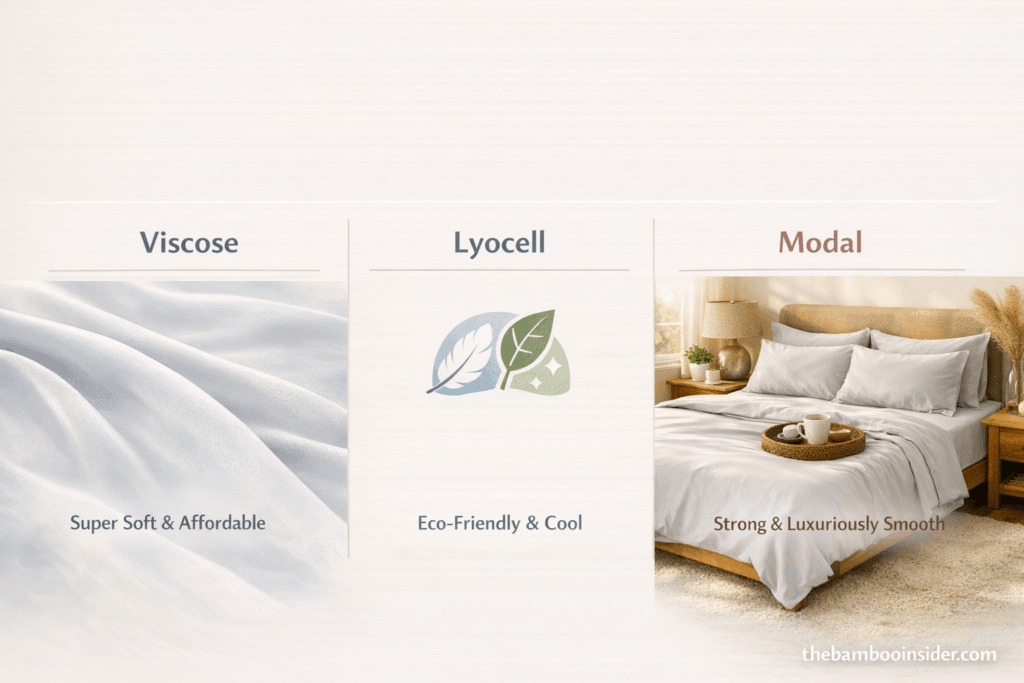
Viscose / Rayon from Bamboo: This is the most common type. Bamboo pulp is dissolved in chemicals to create fibers. The result is silky and soft. But the process uses some harsh chemicals.
Bamboo Lyocell: This is the premium option. It uses a closed-loop system. Around 99% of solvents are recovered and reused. It is softer, stronger, and much better for the environment.
Bamboo Modal: This is softer than viscose and absorbs moisture well. It is often a middle-ground option between viscose and lyocell.
Weave Types: How They Change the Feel
| Weave | Feel | Best For |
| Sateen | Silky, smooth, slight sheen | Hot sleepers, sensitive skin |
| Percale | Crisp, cool, matte finish | Those who prefer hotel-style sheets |
| Twill | Durable, textured, warm | Winter use, everyday durability |
Thread Count: What Number Should You Look For?
Stick to 300 to 400 thread count for bamboo sheets. That range gives you the best balance of softness and breathability.
Be careful if you see 600 or above. That is usually a marketing trick. Higher thread count in bamboo often means weaker, thinner threads twisted together. It does not mean better quality.
Look for OEKO-TEX or GOTS certification on the label. These confirm that no harmful chemicals touched your sheets.
Pro #1: Incredibly Soft and Kind to Your Skin
This is the big one. And honestly, it surprised me the most when I first tried bamboo sheets.
The softness is real. Bamboo fibers are naturally smooth and round. Cotton fibers have tiny hooks on them. Those hooks are what cause that slight roughness you feel over time.
Bamboo does not have those hooks. So it stays smooth wash after wash. Actually, it gets even softer the more you wash it.
Why This Matters for Sensitive Skin
If your skin is sensitive, the friction from rough fabric matters more than you think. Less friction means less redness, less irritation, and fewer flare-ups.
Bamboo sheets are naturally hypoallergenic. This means they resist common irritants like dust mites, mold, and bacteria.
They are especially good for people dealing with eczema, psoriasis, acne, or dermatitis.
The Bamboo Kun Factor
Here is something most articles skip. Bamboo has a natural bio-agent called bamboo kun.
This agent fights bacterial growth inside the fabric. So your sheets stay fresher for longer between washes. Fewer bacteria means less skin irritation. That is a win for everyone.
First-hand tip: My partner has eczema. After switching to bamboo sheets, the nighttime scratching dropped noticeably within two weeks. We were genuinely surprised.
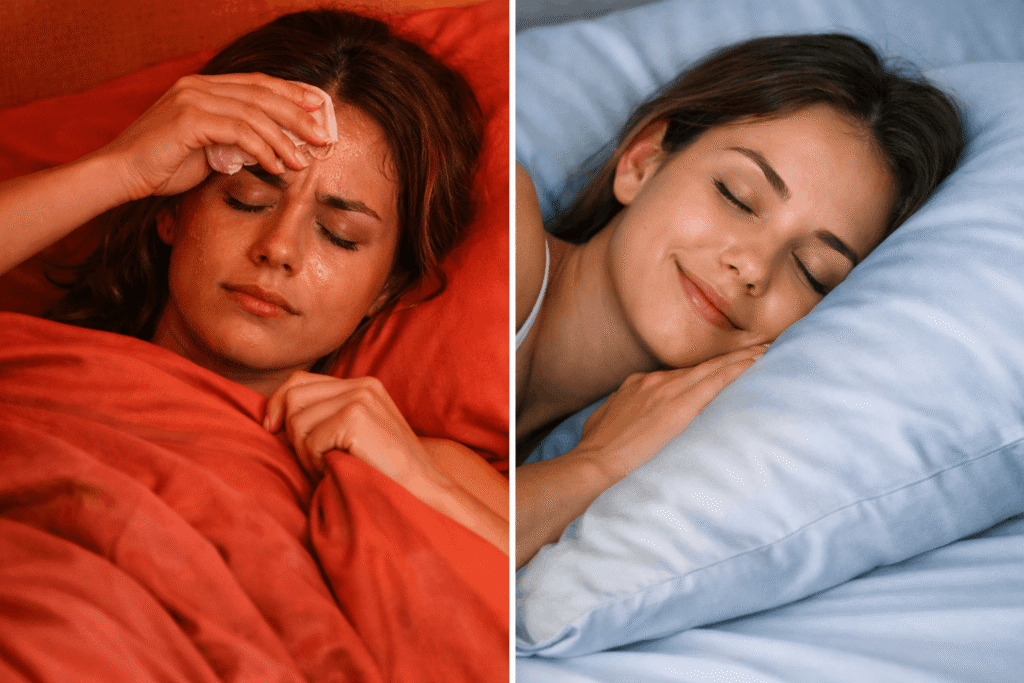
Pro #2: Seriously Good Cooling for Hot Sleepers
If you wake up drenched in sweat, this section is for you.
Bamboo sheets cool better than cotton. The science backs this up. Research published in the Journal of Engineered Fibers and Fabrics found that bamboo fabrics show higher breathability and better thermal regulation than cotton.
Here is what the numbers look like in practice.
| Feature | Bamboo Sheets | Cotton Sheets |
| Moisture absorption rate | 12 to 13% | 6 to 9% |
| Moisture wicking speed | 3x faster | Baseline |
| Surface temp vs cotton | 2 to 4 degrees F cooler | Baseline |
| Moisture absorbed before feeling damp | 40% more capacity | Baseline |
How Bamboo Keeps You Cool
Bamboo fibers have tiny hollow gaps inside them. Think of them as natural ventilation channels.
When your body heats up, those channels let heat escape quickly. When you cool down, the same fibers provide gentle insulation without trapping heat.
This is why bamboo sheets work all year round. Cool in summer, cozy in winter, without feeling stuffy.
Best Weave for Hot Sleepers
Go for sateen weave if you run hot. It has a smoother surface that glides against your skin. Percale is crisp and cool but can feel slightly rough during night sweats.
Real talk: I tested both for months. Sateen felt calmer when I was overheated. Percale felt better on dry nights. If you sweat heavily, go for sateen.
Pro #3: Hypoallergenic Properties That Keep Allergens Away
Do you wake up sneezing? Does your nose feel stuffy in the morning? Your bedding might be part of the problem.
Dust mites love warm, damp environments. Cotton sheets can hold moisture and create exactly that kind of environment overnight.
Bamboo does the opposite. It wicks moisture away fast. That keeps your sheets drier. Drier sheets mean fewer dust mites. Fewer dust mites mean fewer allergy triggers.
What Bamboo Resists Naturally
- Dust mites
- Mold and mildew
- Bacteria and fungi
- Common allergens from pet dander
This is not just good for people with allergies. It is also good for your overall bedroom air quality. Cleaner air, better sleep.
Important: Look for OEKO-TEX Standard 100 certification. This confirms your sheets were tested for over 1,000 harmful substances. It is the most reliable mark of a clean, safe sheet.
Pro #4: Bamboo Sheets Last Much Longer Than You Expect
One of the biggest myths about bamboo sheets? That they fall apart quickly. Not true, if you buy quality ones.
Bamboo fibers are naturally long. Long fibers mean a stronger fabric. Stronger fabric means less pilling, less tearing, and more years of use.
How Long Do Bamboo Sheets Last?
| Sheet Type | Average Lifespan |
| Quality bamboo (viscose/lyocell) | 5 to 15 years with proper care |
| Standard cotton | 1 to 3 years |
| Budget bamboo blends | 1 to 2 years |
The Cost Math That Makes Sense
A good bamboo sheet set costs around $150 to $250 for a queen-size. Sounds expensive upfront.
But spread that over five years of nightly use. You are paying roughly $0.10 per night. That is less than a cup of coffee for a full night of great sleep.
Quality bamboo sheets also get softer with every wash. Cotton sheets often get rougher and pill over time. So bamboo actually improves with age.
Look for sheets with double-stitched seams and reinforced elastic. Those two details tell you the brand cares about long-term quality.
Con #5: The Price Tag Is Higher Than Cotton
Let us be honest. Bamboo sheets cost more than your average cotton sheet. That is a real downside for budget shoppers.
Here is a clear breakdown of what you are looking at for a queen size set in 2026.
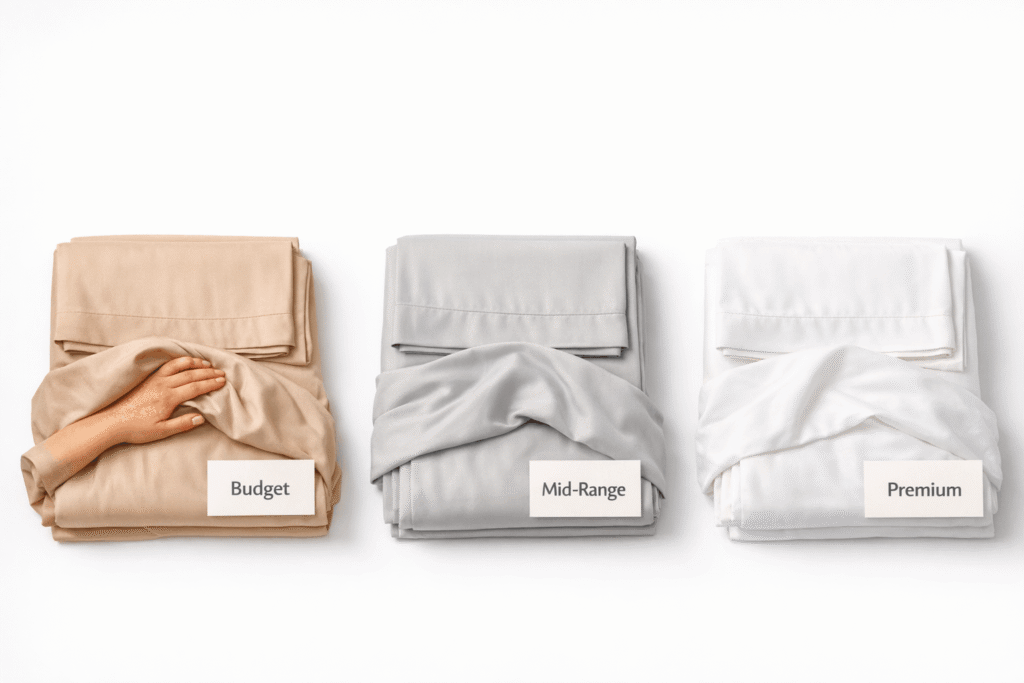
| Price Range | What to Expect | Example Brands |
| Under $70 | Usually, bamboo blends, not 100% bamboo. Performance will vary. | Linenwalas, Amazon basics |
| $130 to $200 | Solid 100% bamboo viscose. Good certifications. Decent durability. | Sijo, Quince, Bedsure |
| $200 to $280 | Premium viscose or lyocell. Better weave, better longevity. | Luxome, Brooklyn Bedding |
| $280 and above | Top-tier lyocell or proprietary weaves. Exceptional quality. | Cozy Earth, Ettitude |
Red Flags to Watch For
- Price under $50 for a full queen set (likely a polyester blend)
- No certification is mentioned anywhere on the product page
- Thread count claims of 600, 800, or 1000 (marketing gimmick for bamboo)
- Labeled ‘wrinkle-free’ or ‘no-iron’ (often means formaldehyde treatment)
- No return policy or sleep trial offered
A Note on Cozy Earth Bamboo Sheets
Cozy Earth is the most searched bamboo brand in the US right now. Oprah named them one of her favorite things.
Their sheets run around $289 for a queen. They are made from 100% bamboo viscose with a proprietary weave. Users consistently say they are the softest sheets they have ever owned.
Are they worth it? For many people, yes. But there are solid options at $150 to $200 that perform very well, too.
Con #6: Bamboo Sheets Need Gentle Care
Here is the tricky part. Bamboo sheets are not as forgiving in the laundry as cotton. Treat them wrong once, and you can shorten their life fast.
The good news? The correct care routine is simple. You just need to follow it consistently.
The Right Way to Wash Bamboo Sheets
| Do This | Avoid This |
| Cold water wash always | Hot water (breaks down fibers) |
| Gentle or delicate cycle | Heavy or regular spin cycles |
| Mild, fragrance-free detergent | Bleach or harsh chemical cleaners |
| Tumble dry on low heat | High heat drying (causes shrinkage) |
| Air dry when possible | Fabric softener (coats fibers, destroys wicking) |
| Wash separately | Washing with rough items like jeans or towels |
What About Shrinkage?
Yes, bamboo sheets can shrink. But only if you wash them in hot water or dry them on high heat.
Premium brands pre-shrink their fabric before packaging. So if you buy quality sheets and follow the care guide, shrinkage is not a real issue.
My routine: Cold wash, gentle cycle, air dry on a rack. Takes about 4 hours to dry fully. Worth it for how long the sheets stay perfect.
Con #7: The Eco-Friendly Claims Are Not Always Fully True
This one might surprise you. Bamboo, the plant, is genuinely sustainable. It grows super fast. It needs almost no water. No pesticides. No fertilizers.
But, bamboo the fabric? That is a different story.
The Processing Problem
Most bamboo sheets are made using viscose processing. This process uses chemicals like carbon disulfide and sodium hydroxide to break bamboo down into fiber.
If not managed properly, those chemicals can harm workers and the environment.
The better option is lyocell processing. It uses a closed-loop system where around 99% of solvents are captured and reused. No chemical waste goes into the environment.
How to Spot Greenwashing
- Vague claims like ‘natural’ or ‘eco-friendly’ with no certifications listed
- Products labeled as bamboo but containing 40% or more polyester
- No mention of the processing method anywhere on the product page
- No OEKO-TEX, Bluesign, or GOTS logo visible
Quick rule: If a brand cannot tell you exactly how its bamboo was processed, keep looking. Transparency is the best sign of a trustworthy company.

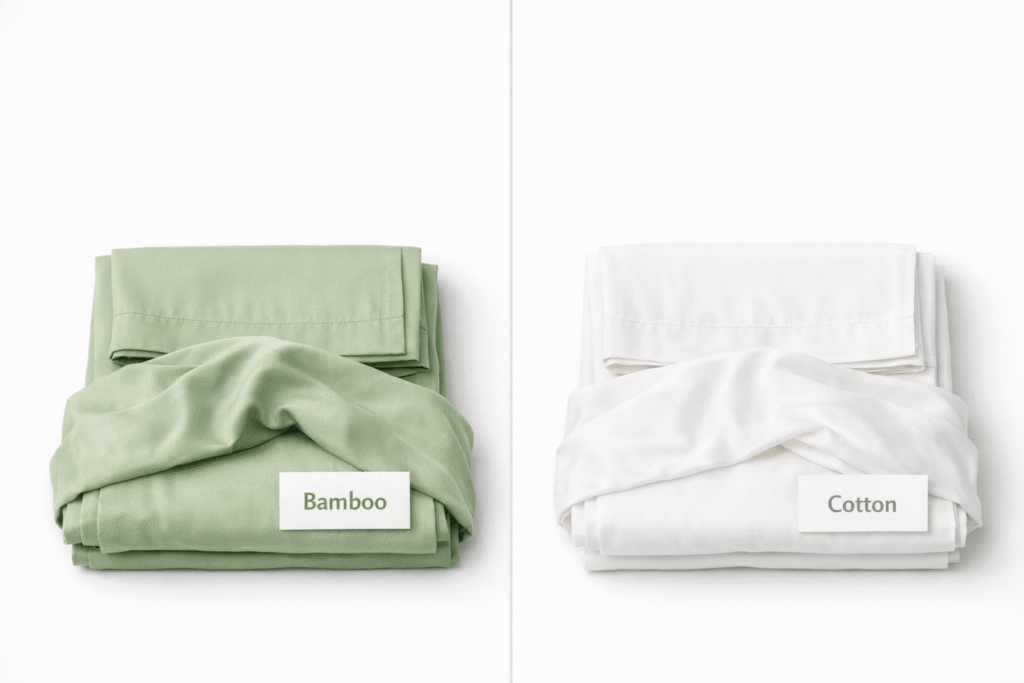
Bamboo Sheets vs Cotton: Which One Wins?
This is the most common question I get. And the honest answer is that it depends on what you need.
Here is a head-to-head breakdown so you can decide for yourself.
| Feature | Bamboo Sheets | Cotton Sheets |
| Softness | Silky, smooth from day one | Gets softer gradually over time |
| Cooling | 2 to 4 degrees cooler, wicks faster | Breathable but holds moisture longer |
| Moisture absorption | 12 to 13% (3x faster wicking) | 6 to 9% |
| Best for sensitive skin | Yes, hypoallergenic and friction-free | Good but not as smooth |
| Durability with care | 5 to 15 years | 1 to 3 years for average cotton |
| Laundry ease | Needs gentle care | More forgiving, tolerates hot wash |
| Price (queen) | $130 to $350+ | $50 to $200+ |
| Eco footprint | Depends on the processing method | High water and pesticide use unless organic |
| Feel over time | Gets softer | Can become rough or pill |
The Verdict by Sleeper Type
- You sleep hot or have night sweats: Bamboo wins clearly
- You have sensitive skin, eczema, or allergies: Bamboo is the better choice
- You prefer crisp, hotel-style sheets: Go with cotton percale
- You want easy laundry care: Cotton is more forgiving
- You are on a tight budget under $80: Cotton gives better value at that price point
How to Choose the Best Bamboo Sheets: Your Simple Buying Checklist
Ready to buy? Here is exactly what to check before you spend a dollar.
1. Check the Material Label First
Look for 100% bamboo viscose or 100% bamboo lyocell. Anything less than 70% bamboo content is a blend. Blends work fine, but will not give you the full cooling and softness benefits.
2. Thread Count: Stay in the Sweet Spot
300 to 400 is the ideal range for bamboo. Below 200 may feel thin. Above 400 is often a marketing number that does not reflect real quality.
3. Choose Your Weave Based on Your Biggest Need
Sateen if you want silky softness and cooling. Percale if you prefer a crisp, light feel. Twill if you need maximum durability.
4. Look for These Certifications
- OEKO-TEX Standard 100: Safe from harmful chemicals
- GOTS: Organic and ethically produced
- Bluesign: Environmentally responsible processing
5. Check the Pocket Depth
Modern mattresses are often 12 to 18 inches deep. Make sure your fitted sheet pocket depth matches. Sheets that pop off corners every morning are a daily annoyance.
6. Does the Brand Offer a Sleep Trial?
Quality bamboo sheet brands offer 30 to 60-night sleep trials. If a brand does not offer any trial or return option, that is a red flag.
7. Top Brands Worth Knowing in 2026
| Brand | Type | Price (Queen) | Best For |
| Cozy Earth | Bamboo viscose | $289 | Ultimate softness, premium buyers |
| Ettitude | Bamboo lyocell | $240+ | Eco-conscious shoppers |
| Luxome | Bamboo viscose sateen | $200+ | Hot sleepers, sensitive skin |
| Quince | Bamboo viscose | $100 to $130 | Best value for the quality |
| Sijo | Organic bamboo | $140 to $170 | Budget-conscious, certified |
Frequently Asked Questions About Bamboo Sheets
Are bamboo sheets good for hot sleepers?
Yes. Bamboo sheets are one of the best options for hot sleepers. They absorb moisture 60% better than cotton and wick it away three times faster. Surface temperatures stay 2 to 4 degrees Fahrenheit cooler through the night.
Are bamboo sheets good for your skin?
Yes. Bamboo sheets are smooth, hypoallergenic, and naturally antibacterial. Their silky texture reduces friction against the skin. This is especially helpful for people with eczema, psoriasis, or acne-prone skin.
Are bamboo bed sheets good for eczema?
Yes. Bamboo’s smooth fiber structure reduces the friction that triggers eczema flare-ups. Combined with moisture-wicking and antibacterial properties, bamboo sheets create a much gentler sleep environment for irritated skin.
Do bamboo sheets shrink?
They can, but only if you wash them in hot water or dry them on high heat. Always use cold water and low heat. Most premium brands pre-shrink their fabric, so shrinkage is rarely a problem with quality sheets.
Are bamboo sheets worth the price?
For most people, yes. A quality bamboo set at $150 to $250 lasts five or more years. That works out to about $0.10 per night. When you factor in better sleep, cooler nights, and skin benefits, the value is strong.
Are bamboo sheets better than cotton?
For cooling and sensitive skin, bamboo sheets are better. For easy laundry care and budget buying, cotton has the edge. The right answer depends on what your sleep needs are.
How long do bamboo sheets last?
With proper care, quality bamboo sheets last five to fifteen years. Compare that to one to three years for average cotton sheets. The key is cold water washing and low heat drying.
Are Cozy Earth bamboo sheets worth it?
Many people say yes. Cozy Earth sheets are consistently rated among the softest bamboo sheets available. At $289 for a queen, they are premium priced. But they come with a 100-night trial and get softer with every wash.
Final Verdict: Are Bamboo Sheets Right for You?
So, are bamboo sheets good? Yes. For most people, especially in the USA, they are one of the smartest bedding upgrades you can make.
If you sleep hot, have sensitive skin, deal with allergies, or just want to wake up feeling cool and rested, bamboo sheets deliver. That has been my experience, and the research backs it up.
They do cost more than cotton up front. They need a little more care in the wash. And not every brand is as eco-friendly as they claim.
But when you find the right pair? The difference in your sleep is real. And once you feel it, going back to cotton feels like a downgrade.
Start with a mid-range option like Quince or Sijo if you are new to bamboo sheets. If you want the best of the best and your budget allows, Cozy Earth or Ettitude are worth every penny.
Your skin and your sleep will thank you.