


The short answer: A bamboo toothbrush cleans as well as a plastic one when it has soft bristles and you brush for two minutes twice a day. The handle is bamboo, but the bristles are usually nylon, so it is not fully plastic-free. Keep it dry between uses, replace it every three to four months, and remove the bristles before composting the handle.
Bamboo toothbrushes are sold as the simple eco swap: same brush, no plastic guilt. The marketing is louder than the truth, and the truth is more interesting. A bamboo toothbrush really can clean your teeth just as well as a plastic one. It really does keep a plastic handle out of the bin. But the bristles are almost always plastic, the handle can grow mold if you treat it like plastic, and the charcoal versions do not whiten anything.
This guide tells you what is actually true, what dentists say, how to keep one from going moldy, and how to dispose of it properly. No brand paid for any of this, and no brand is affiliated with this site.
Are bamboo toothbrushes actually good for your teeth?
Yes, with one condition: the bristles matter, not the handle. Dentists are consistent on this. What cleans your teeth is soft bristles, two minutes of brushing twice a day, and replacing the brush before the bristles splay. The handle material does not drive cleaning performance. A bamboo handle with soft nylon bristles and good technique cleans exactly as well as a plastic handle with the same.
That is why dentists recommend bamboo toothbrushes as an option rather than warning against them. Delta Dental of New Jersey and Parkcrest Dental both cover bamboo brushes positively, always framed as “same effectiveness when used correctly.” Colgate’s own dental channel puts it simply: the main advantage of a bamboo toothbrush is that bamboo is biodegradable. Not that it cleans better. That framing is honest, and this guide keeps it.
Two things to get right. First, choose soft bristles. Medium or hard bristles do not clean better; they wear enamel and irritate gums faster, and some buyers report bamboo brushes feeling rough on gums. Soft is what dentists recommend for almost everyone. Second, brush the full two minutes. An eco handle does not compensate for a 30-second scrub.
The bottom line: if you brush properly, your teeth cannot tell the difference between bamboo and plastic. The difference is what happens after you throw it away, which is the whole point of switching.
What is a bamboo toothbrush actually made of?
Here is the surprise most buyers meet after purchase: the handle is bamboo, but the bristles are nylon. Almost every bamboo toothbrush on the market pairs a bamboo handle with standard nylon bristles, the same nylon used in plastic brushes. Delta Dental of New Jersey states it plainly: nylon is not biodegradable. So a “plastic-free” bamboo toothbrush is, strictly speaking, not plastic-free. One verified Target reviewer put it angrily in December 2025: the packaging claimed “plastic free” while the bristles were nylon “made from crude oil,” calling it misleading marketing. The brand’s co-founder replied, which tells you the complaint stung because it was fair.
Why nylon? Hygiene. Natural fibres absorb water, shed faster, and hold bacteria, which is why nylon is recommended over natural fibres for bristles. A fully plant-based bristle that survives daily brushing, dries fast, and stays hygienic is genuinely hard to make.
There are exceptions, and they are worth knowing:
- Brush with Bamboo uses bristles made from castor bean oil, a biobased nylon alternative.
- Kaylaan uses a cornstarch and castor blend for its bristles.
- A few niche brands use boar or horse hair. These shed more, need more care, and are obviously not vegan.
What about “biodegradable nylon”? You will see the claim, sometimes as “nylon-4.” It is not commercially available in toothbrush bristles, full stop. The Truthbrush puts it plainly in its FAQ. Treat any brand making that claim as marketing ahead of the chemistry.
Here is the bristle comparison in one view:
| Bristle type | What it is | Hygiene | Compostable | Notes |
|---|---|---|---|---|
| Standard nylon | Petroleum-based plastic | Excellent, dries fast | No | What almost every bamboo brush uses |
| Castor-bean-oil biobased | Plant-oil-based nylon alternative | Very good | No | Used by Brush with Bamboo; still needs bristle removal at disposal |
| Cornstarch/castor blend | Plant-based blend | Good | No | Used by Kaylaan |
| Boar or horse hair | Natural animal fibre | Weaker, holds moisture | The bristles yes, but shedding is higher | Not vegan; needs the most care |
So read the bristle line before you buy, the same way you would read an ingredient label. If a brand will not say what its bristles are made of, that silence is your answer.
Do bamboo toothbrushes get moldy?
They can, and mold is the number one real-world complaint about bamboo toothbrushes. Bamboo is a natural material. Leave it wet in a closed, warm bathroom and it behaves like any wood product: it absorbs moisture, and mold follows.
The evidence here is better than anecdotes. One independent tester ran four brands through three months of real use and called handle-base mold “the biggest practical complaint.” The pattern was clear: raw, unfinished bamboo handles developed spots by week 10, while sealed and finished handles came through fine. That is the single most useful finding in this whole guide, because it turns mold from a mystery into a buying decision: get a sealed handle. Sealing is what keeps any bamboo product alive in a wet room; our guide to making bamboo coasters walks through the sealing process step by step.
Black or dark spots near the base of the handle are almost always mold or mildew, which is also the answer to one of the most searched questions about these brushes: “why is my bamboo toothbrush turning black.” It is not the bamboo “doing something natural.” It is moisture damage. A moldy brush should be replaced, not rescued. Do not try to bleach it back to life; bleach and bamboo do not mix well, and a compromised handle is not worth saving for the price of a new brush.
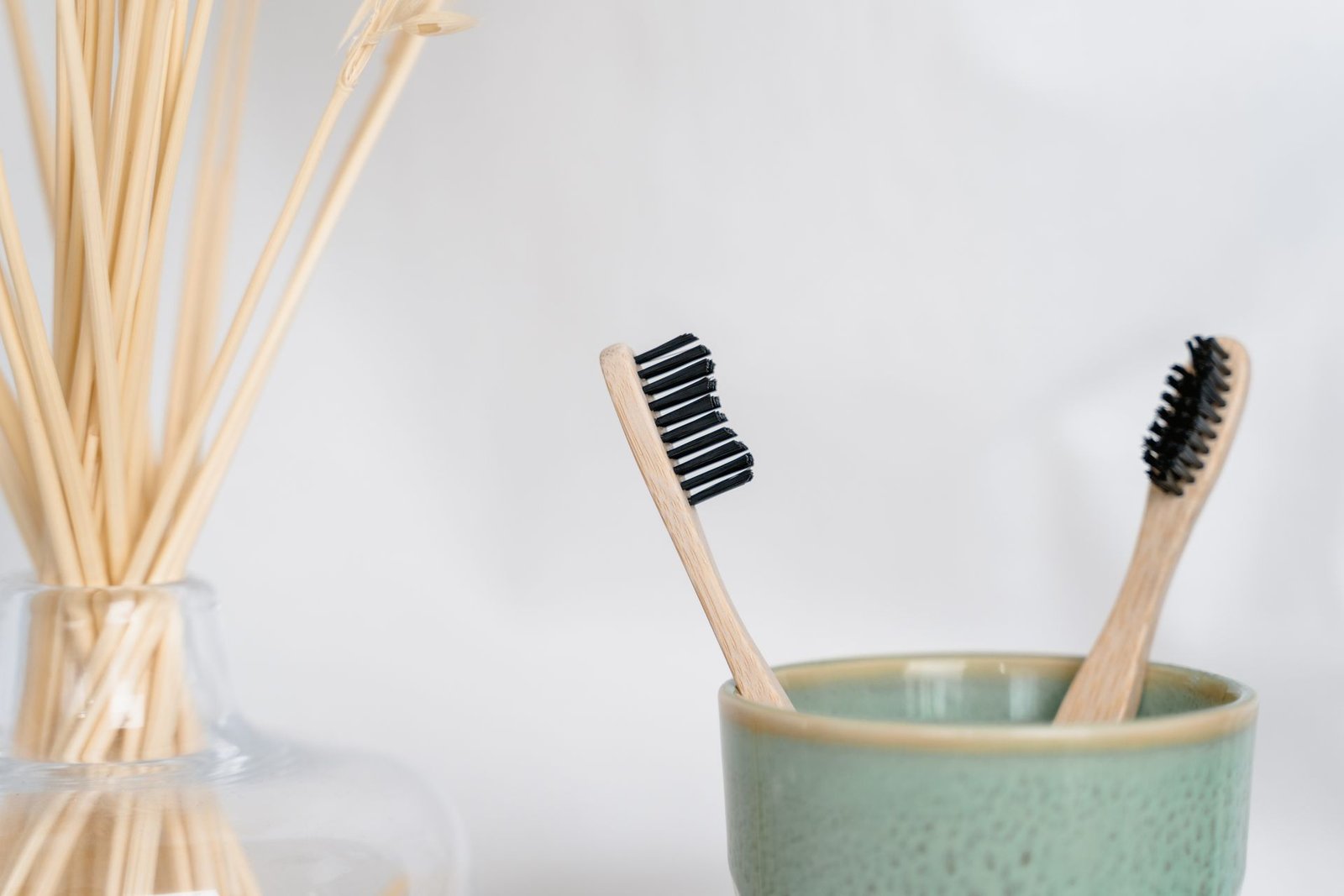
The fix is prevention, and it is simple: rinse the brush after use, shake off the water, and store it upright in open air, bristles up, so air circulates around the handle. Never leave it lying in a puddle on the sink edge, and never seal a damp brush inside a travel case. The care routine below covers the full version.
How do you take care of a bamboo toothbrush?
Treat it like wood, not plastic, and it lasts its full life. The routine takes ten seconds. Standing water is bamboo’s enemy on floors too, which is why our bamboo flooring cleaning guide opens with the same rule: never soak bamboo, damp-clean only.
- Rinse well after every use. Get the toothpaste out of the bristles completely. Toothpaste residue holds moisture against the handle.
- Shake off the water. Three or four firm shakes over the sink remove most of the water a towel would miss.
- Store it upright in open air. A cup or holder with the bristles up, somewhere ventilated. Not in a closed cabinet, not lying flat on a wet sink edge. Airflow is what keeps mold away.
- Dry it fully before travel. This is where most mold stories start: a damp brush sealed into a travel case for a weekend trip. If you travel, let the brush air-dry completely first, or pack it in a ventilated case, never a sealed damp one.
- Do not boil it. Boiling water warps and cracks bamboo. Lukewarm rinse water is all it ever needs.
- Replace it on schedule. The ADA says every three to four months, or sooner if the bristles are visibly matted or frayed. With bamboo, watch the handle too: if it darkens, softens, or smells off before the bristles wear out, replace it. Some guides suggest two to three months for bamboo in humid bathrooms, which is reasonable if your bathroom never fully dries.
That is the whole routine. Storing the brush dry is the step that stops mold. The other steps keep you from undoing it. It is the same rinse, dry, and ventilate routine we recommend in our bamboo yoga mat cleaning guide.
Do charcoal bamboo toothbrushes whiten your teeth?
No. This is the claim with the thinnest evidence in the entire bamboo toothbrush market, and it deserves a straight answer.
Charcoal-infused bristles are still nylon bristles with charcoal pigment mixed in. They look dramatic, and the marketing suggests they whiten teeth and “detox” your mouth. The evidence says otherwise. A 2017 review in the Journal of the American Dental Association found no evidence that charcoal whitens teeth. A 2019 review in the British Dental Journal reached the same conclusion. An ADA spokesperson, Kimberly Harms, has said there is no evidence of any oral-health benefit from charcoal toothbrushes and that their safety is unclear. The ADA has approved zero charcoal toothbrushes: not one carries the ADA Seal of Acceptance. A later integrative review found minimal whitening at best, with increased enamel roughness, which is the opposite of what you want. Charcoal is abrasive, and abrasion wears enamel you cannot grow back.
The marketing has also attracted legal trouble: a class action alleged that Oral-B’s charcoal whitening claims were not backed by evidence. You do not need to follow the case to take the point. When the two major dental literature reviews, the ADA’s spokesperson, and the ADA’s own approval list all line up on one side, the Instagram ads are on the other.
None of this means a charcoal bamboo toothbrush is dangerous to use for normal brushing. It means you should buy it for the color if you like the color, not for whitening. It will not whiten your teeth, and the abrasion risk makes it a worse choice than plain soft nylon, not a better one.

Are bamboo toothbrushes ADA approved?
This question has a precise answer, because “ADA approved” does not work the way most people think. The American Dental Association does not approve materials. It awards its Seal of Acceptance to individual products that pass its testing. A bamboo handle is irrelevant to the Seal; the bristles, the handle durability, and the cleaning performance are what get tested.
The criteria for a manual toothbrush are specific: safe components, no sharp bristle edges, a durable handle, bristles that stay put (tuft retention), and proven reduction of plaque and gum disease (see the ADA’s own toothbrush criteria). A bamboo toothbrush can earn the Seal the same way a plastic one can, by passing the same tests.
Do any? Yes, some brands do. Parkcrest Dental notes that some bamboo toothbrush brands carry ADA approval and advises looking for the ADA Seal of Acceptance on the packaging. So “are bamboo toothbrushes ADA approved” is the wrong question. The right question is “does this specific brush carry the ADA Seal,” and the answer is printed on the box. No Seal does not mean a brush is unsafe; it means that product has not been through the ADA’s testing. If the Seal matters to you, check the packaging before you buy, because most bamboo brushes do not have it.
How do you dispose of a bamboo toothbrush properly?
This is where the bamboo handle pays off, but only if you do it right. A bamboo toothbrush tossed whole into the trash is barely better than a plastic one: in a landfill, with no oxygen and no light, even bamboo breaks down slowly. The proper routine takes one minute.
- Pull the bristles out. Grip a tuft of bristles with pliers and pull firmly. Work across the head until the bristles are out. This is the step most people skip, and it is the step that matters: the bristles are nylon, and nylon does not compost.
- Compost the handle. A home compost bin handles a bamboo handle fine once the bristles are out. That is the disposal method dental sources describe, and it is the honest version of “compostable.”
- Trash the bristles. The nylon tufts go in household trash.
Two nuances brands gloss over. First, “biobased” is not the same as “compostable.” Some brands use plant-based bristle materials and imply the whole brush composts. Brush with Bamboo’s own FAQ and Sustainable Tomorrow both acknowledge the gap: a material that takes more than about three months to break down cannot legally be called compostable. So even the better bristles need the pliers treatment. Second, the old brush has second lives before the compost bin: plant markers for the garden (write on the handle with a marker), a grout or keyboard cleaning brush, a tile-grout scrubber for the bathroom, or a kids’ craft paintbrush. “What to do with old bamboo toothbrush” is a real search question because people sense the handle deserves better than the bin. It does, but composting is the main answer, not the clever reuse.

Are bamboo toothbrushes really better for the environment?
Better, yes. Perfect, no. Here is the honest accounting.
The headline numbers get quoted everywhere, so let us quote them carefully. Research attributed to FOREO puts US plastic toothbrush waste at 1 billion brushes a year, or 50 million pounds of plastic. That figure is often misattributed to the ADA; it is not an ADA figure, and the primary methodology behind it was not available for verification, so treat it as an often-cited estimate, not a lab measurement. Globally, an estimated 3.6 billion toothbrushes are produced every year (Humble Co). And a plastic toothbrush takes hundreds of years to break down (Delta Dental of New Jersey). The direction is not in doubt: billions of plastic handles entering the waste stream every year is a real problem.
Now the honest subtractions. The handle is only part of the brush’s plastic: the bristles are still nylon, the packaging is often plastic-windowed, and the brush still ships from overseas. Packaging deserves a line of its own: a bamboo brush in a plastic blister pack has traded one plastic problem for a smaller one, so cardboard-packaged brushes are the more consistent choice. A bamboo toothbrush does not erase your plastic footprint; it shrinks one specific, visible piece of it. The biggest real win is simple: the handle, the bulkiest part, can leave the waste stream through compost instead of sitting in a landfill for centuries.
One claim to leave out of your reasoning: some natural-bristle brands advertise a “2025 peer-reviewed study” finding millions of microplastic particles shed per year from nylon bristles. The study behind that claim could not be identified; it is advertiser-attributed, not established science. Nylon bristles do shed microplastics, that part is plausible, but the specific number is not verified. Do not repeat it as fact.
So: switch for the handle, keep expectations honest about the bristles, and compost properly. That is the version of “better for the environment” that survives scrutiny.
Bamboo vs plastic vs electric vs miswak: which should you choose?
Each option wins on something different. Pick by what you actually value.
| Bamboo manual | Plastic manual | Electric | Miswak | |
|---|---|---|---|---|
| Handle | Bamboo, compostable after bristle removal | Plastic, landfill for centuries | Plastic body, long-lived | A natural teeth-cleaning twig, no handle at all |
| Bristles | Usually nylon (some biobased or natural) | Nylon | Nylon replaceable heads | None, frayed wood fibers do the cleaning |
| Cleaning | Same as plastic with proper technique | The baseline everything is measured against | Timers and motion help consistency | Traditional method, different technique |
| Cost | A few dollars more than plastic | Cheapest | Highest upfront, heads add up | Very cheap where available |
| Maintenance | Must dry between uses; watch for mold | None | Charge it; replace heads | Trim and fray the tip regularly |
| End of life | Handle composts; bristles trashed | Whole brush trashed | Body lasts years; heads trashed | Fully biodegradable |
A note on miswak, since searchers ask about it: it is a traditional teeth-cleaning twig with centuries of use, fully natural and plastic-free. It is a different technique from brushing, not a bamboo product, and it was not researched in depth for this guide. If that tradition appeals to you, it is a legitimate separate path.
The practical takeaway: if you brush well, bamboo and plastic clean the same. Choose bamboo for the waste question, electric if you want the timer and motion helping your consistency, and miswak if you want the traditional route. There is no wrong answer here, only trade-offs.
Are bamboo toothbrushes good for kids?
Yes, with the right size. Bamboo toothbrushes come in kids’ sizes, and size matters more than material here: an adult head in a small mouth cannot reach the back molars properly, so missed spots follow. Buy the kids’ size, choose soft bristles (children’s gums are more sensitive, and some kids find bamboo brushes rough at first), and supervise young children while they brush, the same as with any toothbrush.
Two practical notes for parents. First, kids chew brushes. A chewed bamboo handle splinters faster than chewed plastic, so check the handle when you check the bristles and replace it at the first sign of damage. Second, the drying routine is harder to enforce with kids, so a sealed handle matters even more in a family bathroom. If the brush lives in a humid kids’ bathroom, expect the shorter end of the replacement range.
What about bamboo electric toothbrush heads?
They exist, and they answer a real question: searchers ask for bamboo heads for common electric handles. A bamboo electric head pairs a bamboo neck with nylon bristles, so you keep the timer and motion of your electric brush while cutting the plastic of the replaceable head, which is the part you throw away every few months.
The same rules apply. Soft bristles, replace the head every three months, let it dry between uses, and check handle compatibility before buying: heads are made for specific handle systems, and a wrong fit wastes money. Do not expect the bamboo neck to change how the brush cleans. It changes what you throw away, which is the point.
How do you choose a good bamboo toothbrush?
Use this checklist, in order. It encodes everything above into buying decisions.
- Soft bristles. Non-negotiable. Soft is what dentists recommend for almost everyone. Medium or hard bristles do not clean better and risk enamel and gums.
- A sealed or finished handle. In the independent three-month test by Peacefully Proven, raw, unfinished bamboo spotted with mold by week 10; sealed handles held up. That finding makes the sealed handle the second most important choice. Look for words like sealed, finished, or coated on the packaging.
- A comfortable head size. Same rule as any brush: the head should reach your back molars without forcing your mouth open. Most adults want a standard or compact head.
- Kids’ sizes for kids. Bamboo brushes come in kids’ sizes, which matters because an adult head in a small mouth means missed spots. Supervise young children the same way you would with any brush.
- The ADA Seal if it matters to you. Check the packaging for the Seal of Acceptance. Most bamboo brushes do not carry it; the ones that do have passed the same tests as plastic brushes.
- Bamboo heads for your electric handle, if you use one. Bamboo replacement heads exist for common electric handles, so an electric user does not have to choose between the timer and the bamboo handle.
And three things to walk away from: charcoal bristles sold on whitening (they do not whiten), “100 percent plastic-free” claims (the bristles are nylon unless the brand names a specific alternative), and raw unfinished handles (the mold finding). A brand that names its bristle material, shows a sealed handle, and makes no miracle claims is usually the honest one.
How much do bamboo toothbrushes cost?
Expect to pay a few dollars more than plastic. A single bamboo toothbrush typically runs a few dollars, against a couple of dollars for a basic plastic brush. Multipacks bring the per-brush price down, which is the sensible way to buy if the whole household is switching: a four-pack usually costs less per brush than four singles. Subscription services exist that ship replacements on a schedule, including bamboo electric heads, and they suit people who forget the three-month replacement rule.
The price gap is the handle and the smaller production runs, not better cleaning. Do not pay a premium for charcoal whitening claims or “fully biodegradable” claims that the bristle line contradicts. A fairly priced bamboo brush with soft nylon bristles and a sealed handle is the whole product. Anything above that is packaging and story.
What real users found
We did not test these toothbrushes ourselves. What follows is what real buyers and reviewers found, good and bad, with the source named for each finding.
Three-month test. An independent tester used four bamboo toothbrush brands in rotation for three months and tracked them in a notebook. The budget brand started fraying within three weeks, and by week six its bristles were visibly splayed. Sealed handles stayed mold-free for the full three months; raw handles spotted by week ten. (Peacefully Proven, three-month test)
Hard, or too soft. Bristle hardness is the most inconsistent thing buyers report. Brush with Bamboo buyers on Amazon UK call the bristles hard and unforgiving even when wet, leaving gums raw, while Beco buyers on Amazon India split the other way, some calling the same style of brush too hard and others too soft to clean.
Rare, but real. Splinters are rare but real. A Reddit user quoted by Earthava warned that a splinter penetrated a spot they could see, rather than going down their throat, and an Amazon buyer in a 29-review roundup reported getting a small splinter just from grabbing the handle. Both cases involved handles whose finish had worn thin from moisture.
Shorter life. Several buyers say bamboo brushes wear out faster than plastic ones. One Amazon reviewer wrote that they do not last as long as a plastic toothbrush, maybe a month at most, and Beco buyers on Amazon India report brushes breaking or wearing out in under a week, with durability the most repeated complaint.
Enamel fears. Charcoal bristles worry buyers who research them. One Amazon reviewer in a 29-review roundup stopped using a charcoal bamboo brush after reading that charcoal bristles can be excessively abrasive and wear tooth enamel, deciding the whitening claim was not worth the risk to their teeth.
Giving up. Some buyers give up on bamboo brushes entirely. In a March 2026 Instagram video about sustainable products she regrets buying, creator Sabrina Pare said her bamboo toothbrushes got moldy, felt unpleasant in the mouth, and had nylon bristles that wore out quickly. Commenters shared similar mold and comfort problems.
Frequently asked questions
Are bamboo toothbrushes good?
Yes, for cleaning your teeth. With soft bristles and proper technique, a bamboo toothbrush cleans exactly as well as a plastic one. Its advantage is environmental, not dental: the handle can be composted instead of sitting in a landfill for centuries.
Are bamboo toothbrushes good for your teeth?
Yes, when they have soft bristles. Dentists recommend soft bristles for almost everyone because they clean effectively without wearing enamel or irritating gums. The handle material does not affect how well the brush cleans.
Do dentists recommend bamboo toothbrushes?
As an option, yes. Dental practices including Delta Dental of New Jersey and Parkcrest Dental cover bamboo brushes positively, always with the framing that effectiveness is the same when used correctly. No major dental body recommends against them.
Are bamboo toothbrushes safe?
Yes. The safety considerations are the same as any manual brush: soft bristles, no sharp edges, replace on schedule. Check for the ADA Seal of Acceptance if you want third-party verification of a specific product.
Are bamboo toothbrushes better than plastic?
For the environment, yes: the handle can be composted after the bristles are removed, while a plastic handle persists for centuries. For cleaning your teeth, they are equal with proper technique. Bamboo needs more care (drying between uses); plastic needs none.
Do bamboo toothbrushes have plastic bristles?
Almost always, yes. The vast majority use standard nylon bristles. Exceptions include Brush with Bamboo (castor-bean-oil biobased bristles), Kaylaan (cornstarch and castor blend), and a few boar or horse hair brands. “Biodegradable nylon” bristles are not commercially available.
What are bamboo toothbrush bristles made of?
Usually nylon, the same material as plastic toothbrush bristles. Nylon is used because it stays hygienic, dries fast, and holds its shape; natural fibres absorb water and harbor bacteria. Always read the bristle line on the packaging before you buy.
Do bamboo toothbrushes get moldy?
They can. Mold is the most common complaint, and an independent three-month test found raw bamboo handles spotting with mold by week 10 of use while sealed handles stayed fine. Prevent it by rinsing, shaking off water, and storing the brush upright in open air. Never pack a damp brush in a travel case.
Why is my bamboo toothbrush turning black?
Dark or black spots near the base of the handle are almost always mold or mildew from trapped moisture. Replace the brush rather than trying to clean it. To prevent it on the next one, store it upright where air circulates and let it dry fully between uses.
How long do bamboo toothbrushes last?
Three to four months, the same as any manual toothbrush per ADA guidance. Replace sooner if the bristles splay or if the handle darkens, softens, or smells off. In humid bathrooms, two to three months is reasonable for bamboo.
How often should you change a bamboo toothbrush?
Every three to four months, or sooner if the bristles are visibly matted or frayed. With bamboo, also replace it if the handle shows mold, darkening, or softening before the bristles wear out.
Are bamboo toothbrushes ADA approved?
The ADA awards its Seal of Acceptance to individual products, not to materials. Some bamboo toothbrush brands carry the Seal; most do not. Check the packaging for the Seal if it matters to you. No Seal does not mean unsafe; it means that product has not been through ADA testing.
Are bamboo toothbrushes compostable?
The handle is, after you remove the bristles. Pull the nylon tufts out with pliers, then compost the handle in a home compost bin. Note that “biobased” bristles are not the same as legally compostable; even plant-based bristles should be removed first.
Are bamboo toothbrushes biodegradable?
The bamboo handle biodegrades; the nylon bristles do not. A whole brush thrown in the trash is barely better than plastic, because landfills lack the oxygen and light for quick breakdown. Proper disposal (bristles out, handle composted) is what makes the difference.
Can you recycle bamboo toothbrushes?
Not through curbside recycling. Nylon bristles are not accepted curbside, and bamboo handles are composted, not recycled. The correct end of life is: remove bristles with pliers, compost the handle, trash the bristles.
Do charcoal bamboo toothbrushes whiten teeth?
No. A 2017 review in the Journal of the American Dental Association and a 2019 review in the British Dental Journal found no whitening evidence, the ADA’s spokesperson says there is no evidence of oral-health benefit, and the ADA has approved zero charcoal toothbrushes. Charcoal is abrasive and can roughen enamel.
How much does a bamboo toothbrush cost?
Typically a few dollars for a single brush, a few dollars more than a basic plastic one. Multipacks lower the per-brush price, and subscriptions exist for regular replacements. Do not pay extra for whitening claims or unverifiable “fully biodegradable” claims.
Are bamboo toothbrushes good for kids?
Yes, in kids’ sizes. An adult head in a small mouth misses spots, so buy the kids’ size. Supervise young children while brushing, the same as with any toothbrush. Soft bristles matter even more for kids.