
The 60-Second Answer: What You Need to Know
Want to make bamboo coasters at home? Great choice. You cut bamboo strips or skewers to size. Then you bond them together with glue or resin. Finally, you seal them with a food-safe finish. That is it. The whole project takes about two hours. It costs under $20. Plus, bamboo is 30% harder than oak. So your coasters will last for years.
These DIY bamboo drink coasters work for hot mugs, cold glasses, and food plates. They protect your table from heat and moisture. And they look amazing doing it.
Why Choose Bamboo? The Science Behind It
Bamboo is not just trendy. It has real science behind it. Here is why it beats other materials for coasters.
It Absorbs Moisture Naturally
Bamboo has tiny pores in its structure. These pores pull moisture away from your glass. So condensation does not spread across your table. Wood does this too, but bamboo does it faster.
It Has Natural Antimicrobial Properties
Bamboo contains a natural bio-agent called bamboo kun. This agent fights bacteria growth. So your coasters stay cleaner between washes. Cork and wood do not have this feature.
It Is Incredibly Strong
Moso bamboo (Phyllostachys edulis) is the best species for DIY crafts. Its tensile strength rivals steel wire. That means your coasters resist cracking and warping for years.
It Is Good for the Planet
Bamboo grows back in 3 to 5 years. Hardwood trees take 20 to 50 years. Plus, bamboo absorbs carbon from the air as it grows. So every coaster you make helps the environment.
Here is a quick comparison to help you decide:
| Material | Absorbs Moisture | Eco-Friendly | Durability | Cost |
| Bamboo | Yes | Excellent | High | Low |
| Cork | Partial | Good | Medium | Low |
| Wood | Some | Moderate | High | Medium |
| Silicone | No | Poor | Very High | Medium |
Materials and Tools Checklist
Good news: you do not need fancy tools. Most of these items are already at home. The rest are cheap and easy to find online.
Basic Build (Skewer-Align Method)
This is the beginner-friendly version. Clean, modern look. Great for starters.
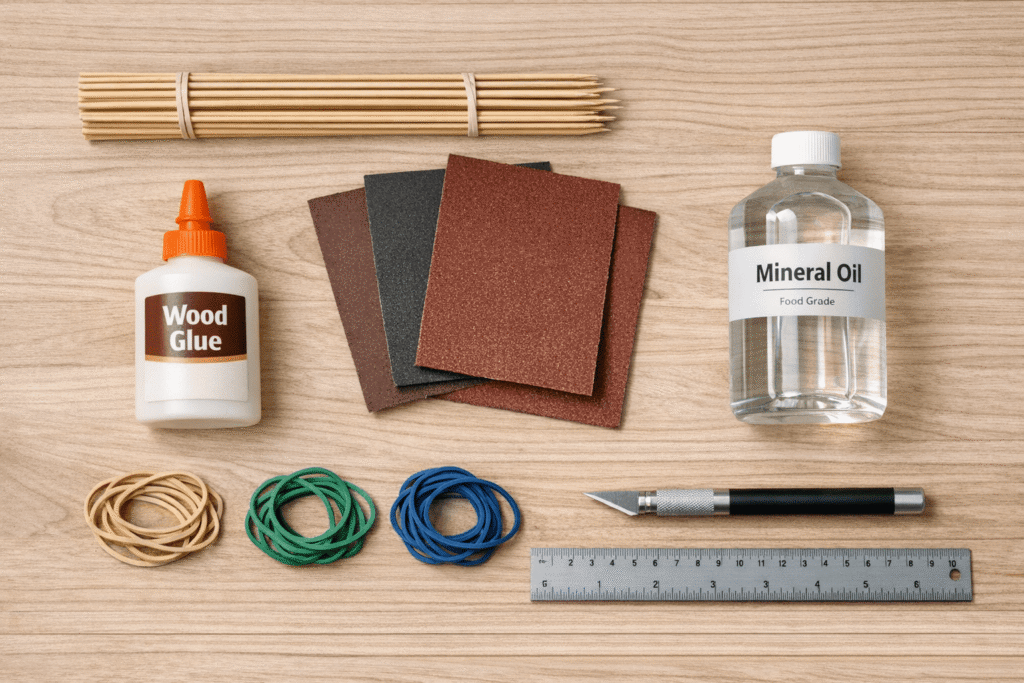
- Bamboo skewers or Moso bamboo strips (at least 30 pieces)
- Wood glue (Elmer’s or Titebond work great)
- Sandpaper set: 80, 120, and 220 grit
- Food-safe mineral oil or dewaxed shellac (sealant)
- Self-adhesive cork or rubber non-slip backing sheets
- Ruler and pencil
- Scissors or a craft knife
- Rubber bands (to hold pieces while glue dries)
Modern/Resin Build (Optional Upgrade)
Want that glossy, restaurant-quality look? Add these items:
- Two-part clear epoxy resin
- Silicone mixing cups and stir sticks
- Disposable gloves and a flat mold (or tape a frame)
- Heat gun or torch (to pop air bubbles in resin)
Here is an estimated cost breakdown for USA shoppers:
| Item | Est. USA Cost | Where to Buy |
| Moso bamboo strips/skewers | $3 to $6 | Amazon / Craft stores |
| Food-safe mineral oil | $5 to $8 | Walmart / Amazon |
| Sandpaper set (80-220 grit) | $4 to $7 | Home Depot / Lowe’s |
| Wood glue or epoxy resin | $5 to $12 | Amazon / Michaels |
| Cork/rubber non-slip backing | $3 to $5 | Amazon / Craft stores |
| TOTAL (approx.) | $20 to $38 | Makes 6 to 8 coasters |
One batch of materials makes 6 to 8 coasters. So the cost per coaster comes out under $5. That is cheaper than anything at Target or HomeGoods.
Step-by-Step: How to Make Bamboo Coasters at Home
Follow these steps in order. Do not skip the sanding or sealing steps. Those two steps are what separate a coaster that lasts two months from one that lasts two years.
Step 1: Measure, Cut, and Prepare Your Bamboo
Standard USA coasters are 3.5 inches to 4 inches wide. That is your target size. Lay your bamboo skewers side by side. Count how many fit in a 3.5-inch row. That number is your per-coaster count.
Cut all skewers to the same length. Use a craft knife or small saw. Even cuts matter here. Uneven pieces cause wobble later.
Pro Tip: Soak skewers in water for 10 minutes before cutting. They split less easily when wet.
Step 2: Choose Your Build Style
You have two main styles to pick from. Both look great. Pick the one that fits your skill level.
Skewer-Align Method (Beginner): Lay all skewers flat and parallel. Run two or three cross pieces underneath at right angles. Glue everything where they touch. Hold tight with rubber bands while drying.
Bamboo Weaving Method (Intermediate): Weave strips over and under each other. This creates a classic wicker look. It takes more time but gives a beautiful texture.
I personally started with the skewer method. It took about 30 minutes per coaster. Weaving looked amazing but took twice as long on my first try.
Step 3: Bond the Bamboo (Glue or Resin)
Glue Method: Apply a thin line of wood glue between each skewer. Press together firmly. Wrap rubber bands around the whole set. Let it dry flat for at least 2 hours.
Resin Method: Mix your two-part epoxy per the package instructions. Pour it into a flat mold. Press your bamboo arrangement into it. Let it cure for 24 hours. Do not rush this step.
The resin method gives you that polished, modern look. The glue method looks more rustic and natural. Both are equally strong when done right.
Step 4: Sand and Shape
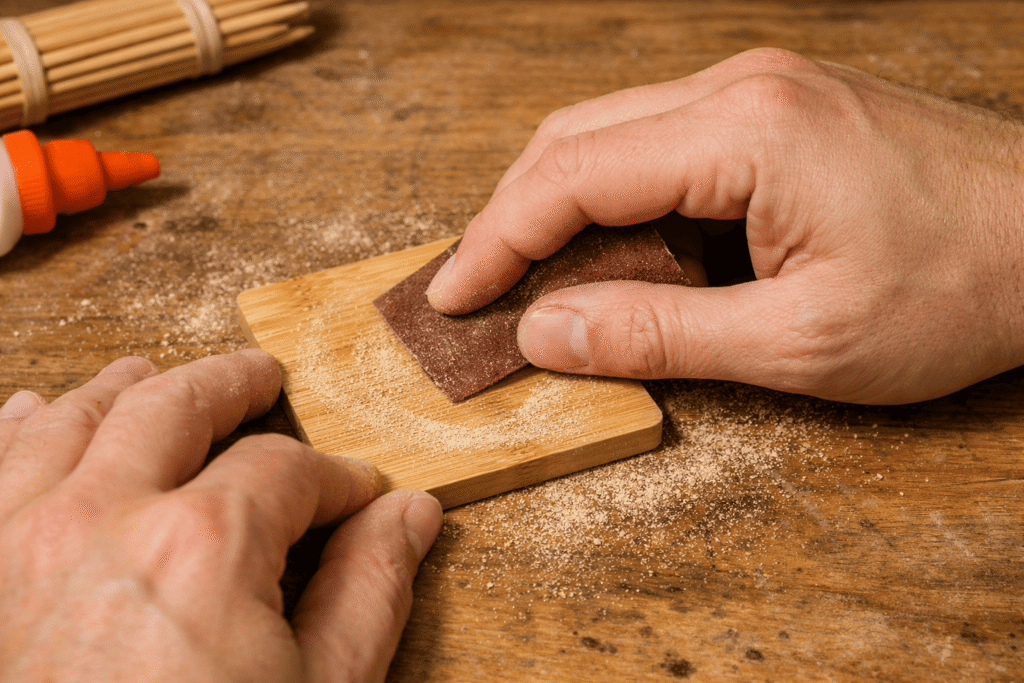
Sanding is where your coaster goes from rough to professional. Follow this order and do not skip grits.
- Start with 80-grit sandpaper. Sand all flat surfaces in a circular motion.
- Move to 120-grit. This removes the scratches from the 80-grit paper.
- Finish with 220-grit. This creates a smooth, splinter-free surface.
- Wipe away all dust with a slightly damp cloth. Let it fully dry.
After sanding, run your fingertip across the surface. If it feels silky smooth, you are ready for sealing. If you feel any rough spots, go back to 120-grit and try again.
Step 5: Apply Food-Safe Sealant
This is the most important step. The right sealant makes your coasters waterproof. It also makes them safe for food and drinks.
Here are your three best options, ranked by safety:
1. Mineral Oil (Safest Choice): Food-safe, non-toxic, and very affordable. Apply with a cloth. Let it soak in for 20 minutes. Wipe off the excess. Repeat 2 to 3 times for best results.
2. Dewaxed Shellac (FDA-Approved Contact): This is what most kitchen tool makers use. It meets FDA guidelines for food contact surfaces. Apply in thin coats. Let each coat dry for 30 minutes.
3. Oil-Based Polyurethane (Most Durable): The hardest and most water-resistant finish. Fully cured polyurethane meets NSF/ANSI 51 standards for food contact. Apply 2 thin coats. Sand lightly between coats with 220-grit.
Never use vegetable oil or coconut oil as a sealant. These go rancid inside the bamboo. Your coasters will smell bad within a few weeks.
Step 6: Add Non-Slip Backing
This step is something most DIY guides skip. And that is a big mistake. Without a non-slip backing, your coasters slide across the table. They can scratch hardwood floors and marble countertops.
Here is what to use:
- Self-adhesive cork sheet: peel, cut to size, and press on. Best for heavier coasters.
- Felt pads: budget-friendly option. Works on smooth surfaces.
- Self-adhesive rubber feet: four small dots in the corners. Works on any surface.
Cut your backing material just slightly smaller than the coaster. You do not want it sticking out at the edges. Press it firmly and let it set for 30 minutes before use.
Creative Variations: Go Beyond the Basics
Once you nail the basic build, try these fun ideas. Each one makes a great gift too.
Resin and Color Inlay
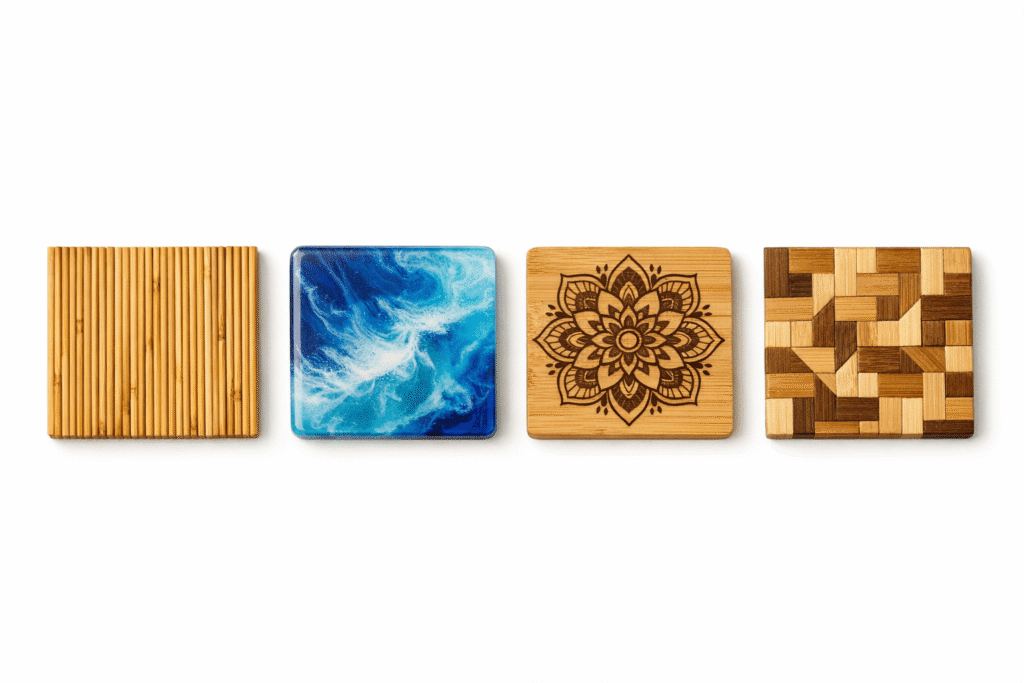
Add a few drops of alcohol ink to your resin before pouring. This creates swirling colors inside the coaster. Blues and greens look stunning with the natural bamboo.
Laser Engraved or Personalized
Take your finished coaster to a local print or craft shop. Many offer laser engraving for a few dollars per piece. Initials, logos, and small patterns look professional. These make great personalized bamboo coaster gifts for weddings and housewarmings.
Bamboo Mosaic Style
Cut bamboo into very short pieces. Arrange them in a pattern, like a geometric or sunburst design. Fill gaps with resin. This is more advanced but the results are stunning.
Burnt or Pyrography Designs
Use a wood-burning pen on the flat surface. Draw simple designs like leaves, mandalas, or geometric shapes. It adds a handmade, artisan touch that people love.
Common Mistakes to Avoid
I made most of these mistakes on my first batch. Learn from them so you do not have to.
Not Sealing Before Bonding
If you apply moisture (like water-based glue) to raw bamboo without pre-sealing it, the pieces can warp. Always do a light mineral oil pre-treatment if using water-based glue. Let it dry completely first.
Skipping the Grit Progression
Jumping straight to 220-grit sandpaper does not work. Coarse scratches from cutting stay visible under the fine grit. Always go 80, then 120, then 220. In that order.
Using Vegetable or Cooking Oil as Sealant
This is a common online tip and it is wrong. Vegetable oil goes rancid inside bamboo fibers within weeks. Your coasters will develop a bad smell. Use mineral oil instead.
Over-Applying Epoxy Resin
Too much resin traps air bubbles and turns yellow over time. Apply thin, even coats. Use a heat gun briefly to pop surface bubbles right after pouring.
Skipping the Non-Slip Backing
A coaster without backing slides around every time someone sets a glass down. It can also scratch your furniture. Always add cork or rubber backing as the final step.
Maintenance: How to Make Your Bamboo Coasters Last for Years
Your coasters will last 5 or more years with proper care. Here is what to do.
Daily Cleaning
Wipe with a damp cloth after use. Do not soak bamboo coasters in water. Do not put them in the dishwasher. Both will cause cracking and warping over time.
Deep Cleaning
Once a month, wipe with a mix of warm water and a few drops of dish soap. Dry immediately with a towel. Then leave flat to air dry for an hour.
Re-Sealing Schedule
Mineral oil coasters need a fresh coat every 6 months. Just wipe on a thin coat with a cloth. Let it soak in for 20 minutes. Wipe off excess. Done in 10 minutes.
Polyurethane-sealed coasters last 1 to 2 years before needing a new coat. Lightly sand with 220-grit before reapplying.
Storage Tips
Store coasters flat, not stacked on edge. Keep them away from direct sunlight. Heat and UV rays fade the natural color of bamboo over time.
Heat Resistance for Hot Food and Drinks
Sealed bamboo coasters handle heat up to around 250 degrees Fahrenheit. That covers most hot mugs and plates. For very hot cast iron or bakeware, add a silicone trivet underneath your bamboo coaster.
Expert FAQ: Your Top Questions Answered
How do you waterproof bamboo coasters?
Apply 2 to 3 coats of food-safe mineral oil, dewaxed shellac, or oil-based polyurethane. Each coat adds a barrier against moisture. Polyurethane gives the most durable waterproof finish. Reapply every 6 to 12 months depending on how often you use them.
Can bamboo coasters be used for hot food and drinks?
Yes. Sealed bamboo coasters handle heat up to about 250 degrees Fahrenheit. They work well under hot mugs, bowls, and plates. For extremely hot items, place a thin trivet between the food and the coaster just to be safe.
Is bamboo better than wood for coasters?
In most cases, yes. Bamboo is harder than most hardwoods. It has natural antimicrobial properties from bamboo kun. It also resists moisture better when properly sealed. Plus it is more eco-friendly and grows back much faster than trees.
What is the best bamboo species for DIY coasters?
Moso bamboo, also called Phyllostachys edulis, is the best choice. It is the densest and strongest variety available. Most bamboo products you find online or in craft stores are made from Moso bamboo.
Does bamboo absorb water better than cork?
Cork is actually more porous and absorbs moisture faster. But bamboo is denser and more durable. When sealed properly, bamboo coasters resist water better than unsealed cork. For the best of both, seal your bamboo coasters and add a cork backing.
How long do homemade bamboo coasters last?
With proper sealing and care, homemade bamboo coasters last 5 to 8 years. The key factors are how well you sealed them and how often you re-apply the sealant. Coasters that are cleaned and re-sealed regularly will outlast store-bought cork coasters by years.
Your Eco-Friendly Home Upgrade Starts Today
Making bamboo coasters at home is one of the easiest and most rewarding DIY projects you can do. The whole project takes about two hours. The total cost is under $20. And you end up with coasters that look better and last longer than most things you can buy.
Start with the basic skewer-align method if this is your first try. Once you get comfortable, move to weaving or resin inlay. Each version has its own charm.
Share your finished coasters with friends and family. They make incredible handmade gifts. And every set is a small step toward a more sustainable home.
Happy crafting. You have got this.