

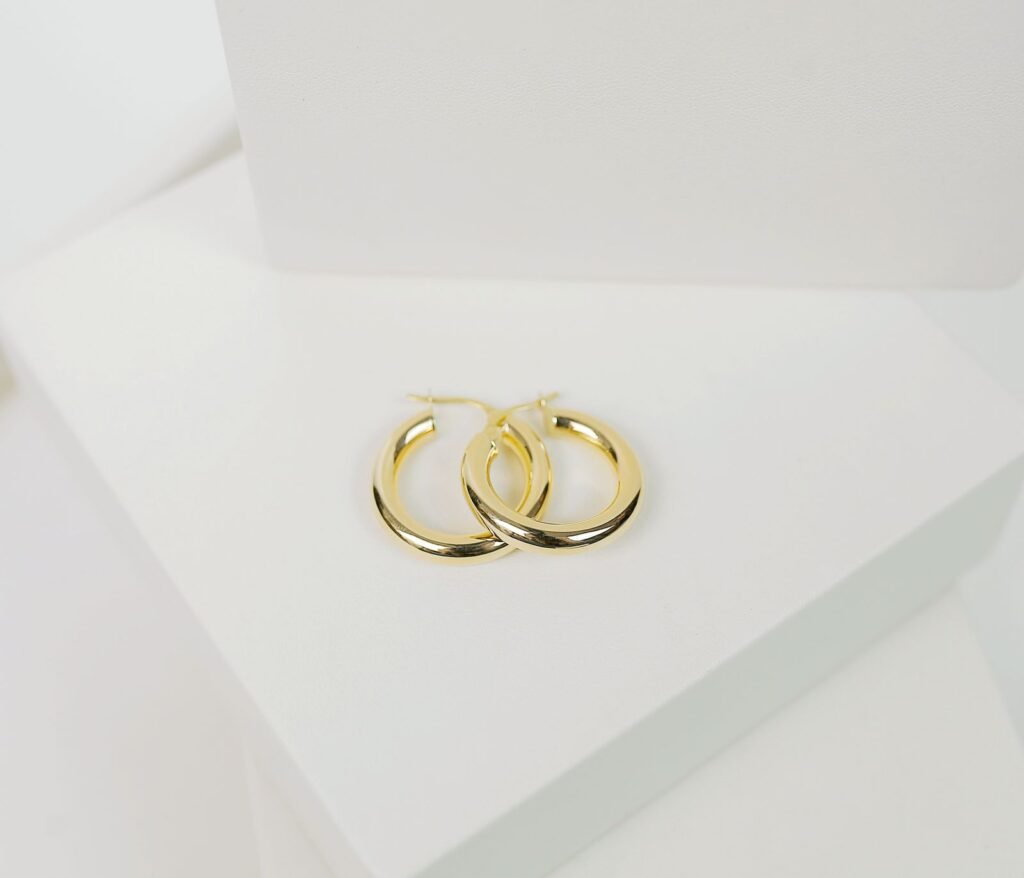
Bamboo earrings came from the hoop traditions of ancient Africa, carried forward by Black and Latina communities in America. The modern style appeared in the late 1970s, was popularized by 1980s hip-hop artists like Salt-N-Pepa and MC Lyte, and became a cultural symbol of pride and resilience.
In November 1990, LL Cool J released a song that carried bamboo earrings from the streets into millions of homes. His opening lines described his ideal woman plainly: “I need a girl with extensions in her hair, bamboo earrings, at least two pair.” That was it. That was the whole description. But those words meant something enormous to an entire generation of women. They felt seen. Celebrated. Claimed. Because those women already knew what bamboo earrings meant. They had been wearing them for years. On the subway. At the corner store. On the stoop. Now the whole country was hearing about it.
But here is what most people still do not know. The story of bamboo earrings does not start in the 1990s. It does not even start in America. Where did bamboo earrings come from? The real answer goes back thousands of years. And it runs through ancient Africa, through the civil rights era, through the Bronx, and all the way into your TikTok feed in 2026. This is the full story, from ancient hoops to the 2026 comeback.
What Are Bamboo Earrings, Exactly?
Let us start with the most common question. Are bamboo earrings actually made of bamboo? No. Not at all.
The name comes from the shape. The earrings have a hollow, segmented design. Those segments look just like the joints of a real bamboo stalk. That is the only connection.
Most bamboo earrings are made from gold-plated metal, brass, or acrylic. The classic ones from the 80s and 90s were usually gold-plated brass. Cheap to make. Cheap to buy. Big on style.
Today you also find them in faux leather, resin, wood veneer, and cardstock. But the shape always stays the same. Those segmented joints are what make a bamboo earring a bamboo earring.
Why Are They Called Bamboo Earrings If They Are Not Made of Bamboo?
This is one of the most asked questions about the style, and the answer is refreshingly simple. The bamboo name is purely visual.
The segmented, ridged joints of the hoops mimic the nodes of a bamboo stalk so closely that the name was obvious to whoever started using it. Fashion writing on the topic puts it plainly: the name can be a little misleading, since the earrings were first known as door knockers and only came to be called bamboo earrings because they resembled the plant (Angara).
Nobody has documented exactly who coined the bamboo name or when. Like much of the earring’s early history, it spread by word of mouth through the communities wearing it. The bamboo plant itself carries symbolism of strength, flexibility, and fast growth, and many writers have noted how neatly that symbolism fits the story of the earrings: something beautiful grown from humble beginnings.
Are Door Knocker Earrings the Same as Bamboo Earrings?
Yes. Door knocker earrings and bamboo earrings are two names for the same style.
This matters, because it clears up a lot of confusion. The name door knocker comes from the earring’s size and shape. The large hoops resemble the knockers on front doors, and the name stuck in the 1980s when the style exploded in Black and Brown neighborhoods. Jewelry history writing confirms this: the door knocker name comes from the earring’s appearance, matching a traditional door knocker with its ring hanging from a central point (Prya Jewellery).
The name bamboo earrings comes from the texture. The segmented, ridged design of the hoops mimics the joints of a bamboo stalk. Despite the name, the classic versions were not made from actual bamboo. They were usually gold-plated metal, sold cheaply in beauty supply stores.
Both names refer to the same oversized, segmented gold hoops that Salt-N-Pepa, MC Lyte, and Roxanne Shante wore in the 80s and 90s. When LL Cool J rapped about bamboo earrings, listeners in the community heard door knockers. Same earring, two names, one culture.
So if you see the term door knocker hoops in an article, know that the writer is talking about bamboo earrings. The terminology differs by who is telling the story, not by the object itself.

When Were Bamboo Earrings Invented?
Here is the honest answer nobody else gives you: nobody knows for certain who invented bamboo earrings. There is no single designer. No patent. No documented origin story. What we do know comes from cultural historians, community memory, and the pattern of how the earrings spread.
The most credible theory is this. Bamboo earrings were first mass-produced in Asia in the late 1970s. Cheap gold-plated metal. Simple to make. Easy to ship. They then entered the United States through flea markets, street kiosks, and open-air markets in urban neighborhoods. Cities like New York, Los Angeles, Chicago, and Philadelphia. Jewelry writers have noted that the origins of the bamboo term are unknown, but it may connect to this early Asian production and the Asian markets where they were first sold in the 80s (Prya Jewellery).
Beauty supply stores in Black and Brown communities picked them up quickly. They sold for under five dollars. Sometimes two dollars. That price point mattered enormously. Working-class women who could not afford fine jewelry could wear something bold and beautiful. The bamboo earring gave them that. For a few dollars, you could look like a million.
So while no one person invented bamboo earrings, the communities that embraced them first gave them their meaning. The invention that actually mattered was cultural, not mechanical.
Who Started the Bamboo Earring Trend?
If no one invented bamboo earrings, who made them famous? That question has a clear answer: the women of hip-hop culture in the mid to late 1980s.
As one account of the era puts it, the earrings had been around for a while before they became a trend, but in the 80s they were sold in beauty supply stores for less than five dollars and brought to life by women of color who wore them around town. They went mainstream when female hip-hop stars like Salt-N-Pepa, MC Lyte, and Roxanne Shante stepped into the spotlight and wore them everywhere, from red carpets to music videos (The Beat DFW).
Salt-N-Pepa were wearing bamboo earrings in music videos and photoshoots from the mid-1980s onward. They were impossible to miss. Cheryl James and Sandra Denton wore them with the confidence that said: this is who we are.
MC Lyte was another early champion. One of the most respected lyricists in hip-hop history. She wore bamboo earrings as naturally as she wore her skill on the mic.
Roxanne Shante wore them too. Queen Latifah. TLC. These were not just accessories. They were part of a uniform that said: I am a Black woman in hip-hop. And I take up space.
So by the end of the 1980s, bamboo earrings were already iconic in the communities that created hip-hop. The mainstream world just had not noticed yet. The women of hip-hop culture, not a designer or company, made them famous. That is the answer to who started the bamboo earring trend, and it is worth saying plainly.

Are Bamboo Earrings an 80s or 90s Thing?
The short answer is both, and the distinction tells you a lot about how trends actually work.
The mid to late 1980s were the birth era. That is when bamboo earrings, also called door knockers, took hold in Black and Brown neighborhoods and were made iconic by hip-hop artists. Jewelry historians describe the mid to late 1980s and early 1990s as the style’s particularly strong era (1stDibs). The 80s were when the meaning was made.
The 1990s were the peak era. That is when the style reached its widest audience, carried by LL Cool J’s anthem, by the dominance of hip-hop on MTV and BET, and by artists like Destiny’s Child, Lauryn Hill, and TLC wearing the earrings in nearly every music video. Fashion coverage of the style routinely describes the 1990s and early 2000s as the decades when bamboo earrings ruled the fashion world (Angara).
So when people ask whether bamboo earrings are 80s or 90s, the honest answer is that the 80s gave them their soul and the 90s gave them their spotlight. And the 2020s, with Gen Z’s nostalgia wave and TikTok’s DIY culture, gave them a comeback. Three eras, one earring.
What Song Made Bamboo Earrings Famous?
One song, more than anything else, carried bamboo earrings into the American mainstream: “Around the Way Girl” by LL Cool J.
In November 1990, LL Cool J released the track on his album Mama Said Knock You Out. The opening description of his ideal woman put bamboo earrings at the top of the list, right after extensions in her hair. That specific detail sent a signal to millions of listeners. This was not just a love song. It was a celebration.
LL was not singing about a supermodel or a celebrity. He was singing about the regular girl from the neighborhood. The girl at the corner store. The girl on the stoop. And that girl wore bamboo earrings.
The song was a genuine hit. It peaked at number 9 on the US Billboard Hot 100, becoming LL Cool J’s first top 10 single, and it was certified Gold in January 1991 (Wikipedia).
Women who wore bamboo earrings every day suddenly heard their style described as desirable and beautiful on mainstream radio. That moment mattered. It was validation from within the culture. It also meant that anyone who had not heard of bamboo earrings before 1990 now had. The earring had its anthem.
The Ancient Roots: Where Hoop Earrings Really Started
To understand bamboo earrings, you need to understand where hoop earrings come from. And that story is ancient.
The oldest hoop earrings ever found date back to around 2600 to 2500 BC. Archaeologists found them in ancient Sumeria, in the region we now call Iraq. Jewelry experts agree that a pair of simple gold hoops from Mesopotamia, now on view in the Metropolitan Museum of Art’s Ancient Near Eastern Art gallery, is among the oldest known examples (1stDibs).
Around the same time, the Nubian civilization in what is now northern Sudan was wearing hoop earrings widely. Nubia is one of the oldest civilizations in the world. And their people wore hoops as part of everyday life and spiritual practice. Museum curator Yekaterina Barbash has stated that hoop earrings originated in Africa, pointing back to Nubia in present-day Sudan (Simon Hartman).
Ancient Egypt drew on Nubian example and wore hoops at every level of society. Pharaohs wore them. Queens wore them. Nefertiti, Hatshepsut, and Cleopatra all wore bold hoop earrings. Even mummies have been found buried with their hoops on. The ancient Egyptians believed you carried your jewelry into the afterlife. So from the very beginning, hoop earrings were connected to power, beauty, and identity in African civilization.
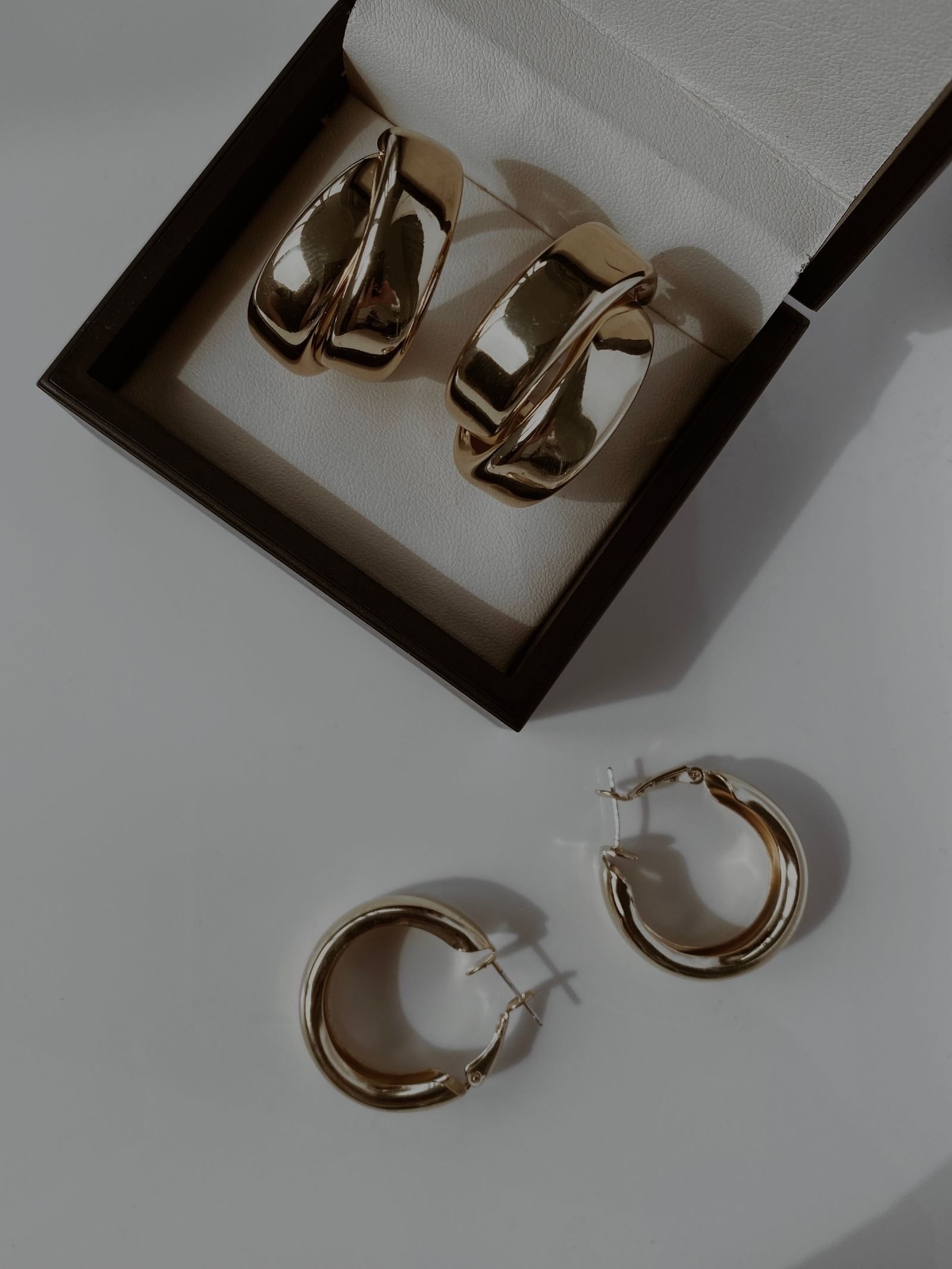
How Did Hoop Earrings Become a Generational Tradition?
After ancient Egypt and Nubia, hoops spread across the ancient world. Greek and Roman women wore them as symbols of wealth. Gold hoops meant status. Over the centuries, hoop earrings moved in and out of mainstream Western fashion. But in communities of color, they never went away.
In Caribbean, West Indian, African, and Latin cultures, a baby girl’s ears are often pierced in infancy, and she receives her first small hoop earrings in early childhood. This is not fashion. This is a welcome into the community. A saying of: you are one of us. You belong here. Carry this with you.
Grandmothers pass down hoop earrings to granddaughters. Mothers and daughters share the tradition. This is not fashion. This is inheritance.
The same tradition exists across South Asian and Middle Eastern cultures. Gold hoops mark major life moments. Births. Coming-of-age. Marriage. They carry family memory in metal.
This generational thread is the deep root that bamboo earrings eventually grew from. When the segmented gold hoops arrived in the 1980s, they landed in soil that had been prepared for thousands of years.
When Did Hoops Become a Political Statement?
Fast forward to 1960s America. The Civil Rights Movement and the Black Power Movement are reshaping American culture. And alongside the protests and the marches, a visual identity is forming.
Large, bold hoop earrings become part of that visual identity. Women like Angela Davis and Nina Simone wear big hoops with natural Afros. Together, those two elements send a message. The message is: I am proud of who I am. I am not going to shrink myself for your comfort. Tina Turner carried the same look into the mainstream during the era. In that era, wearing large hoops in predominantly white spaces was an act of bravery. It was not just fashion. It was a statement that you belonged wherever you stood.
Fashion editor Andre Leon Talley captured the shift: “In the 1960s and 1970s the hoop earring became associated with African beauty, when Nina Simone and Angela Davis started wearing the hoops” (Simon Hartman, quoting Vogue).
Around the same time, something similar is happening on the other side of the country. In Southern California in the 1960s and 1970s, Latina women in the chola subculture are wearing large gold hoops as a core part of their identity. Thick gold hoops. Dark lips. Winged liner. This look was not random. It was deliberate. It said: this is who we are. This is our neighborhood. This is our culture.
For these women, large gold hoops were a symbol of community and strength. Just like in Black communities, they wore them in spaces that challenged and disrespected their identity. This became another powerful thread in the story. Not hip-hop. Not New York. But the streets of East LA, decades before bamboo earrings became famous.
Both threads, Black and Latina, eventually wove together into the culture that made bamboo earrings iconic.
The Hip-Hop Scene Claims the Style
To understand what happened next, you need to understand what hip-hop was in the late 1980s.
Hip-hop was born in the South Bronx in the early 1970s. DJ Kool Herc, Afrika Bambaataa, and Grandmaster Flash created something new. A whole culture built out of poverty, creativity, and defiance. By the mid to late 1980s, that culture was exploding. The music was getting louder. The fashion was getting bolder. And the message was always the same: we are here, and we are proud of it.
Bamboo earrings fit that message perfectly. They were loud. They were flashy. They were affordable. They were a community.
In Brooklyn and the Bronx, especially, bamboo earrings became a uniform for the women of hip-hop culture. You wore them to the park jams. You wore them to the block parties. You wore them everywhere. They were not yet famous. But they were already essential.
The 1990s: Peak Bamboo
From 1990 onward, bamboo earrings hit their highest point in popular culture. They appeared in almost every female hip-hop and R&B music video of the decade. You could not watch BET or MTV without seeing them.
Destiny’s Child wore them in videos during the early years of Beyonce’s career. Lauryn Hill wore them as part of her signature look. TLC made them part of their visual identity.
And yet, even at peak fame, bamboo earrings still cost a few dollars at the beauty supply store. That was the point. Accessibility was part of the culture. The style was democratic. Anyone in the community could wear them. Rich or poor. That shared access gave the earrings a unity that expensive jewelry could never have.
Gold-plated metal was the dominant material. Real gold was never required. The style was always the message, not the price tag.
By the mid-1990s, bamboo earrings had also spread widely beyond just hip-hop circles. Caribbean and West Indian women across the United States and the United Kingdom were wearing them as part of their own cultural identity. For many, the earrings connected back to that ancient tradition of gold hoops passed down through generations.
Afro-Latina women wore them as a bridge between their Latina heritage and their Black identity. The earring sat at the intersection of both cultures.
In New York City specifically, you could see bamboo earrings on every subway line. Every borough. Every neighborhood with a strong community of color. They had become a shared symbol across overlapping cultures. Not owned by one group. Loved by many.
The 2000s and 2010s: Mainstream Takeover and the Controversy Begins
By the early 2000s, bamboo earrings and door-knocker styles were catching the eye of mainstream fashion. Fashion boutiques and high-end stores started stocking similar styles. The same earrings that cost four dollars at the beauty supply store now sold for forty dollars at a downtown boutique. The cultural meaning was largely stripped out in the repackaging. They became a trend, not a tradition.
This is where the story gets uncomfortable. And it needs to be told clearly.
For decades, bamboo earrings were called gaudy and ghetto when worn by Black and Latina women. Employers told women to take them off before job interviews. School dress codes targeted them. Fashion magazines ignored them entirely.
Then white celebrities and fashion designers started wearing them. Suddenly, those same earrings became bold, fashion-forward, and edgy. The style did not change. Only the person who was wearing it changed.
In 2014, Taylor Swift wore gold bamboo hoops in her Shake It Off music video. Backlash came quickly from people who recognized the cultural borrowing without the cultural credit. In 2015, designer Riccardo Tisci at Givenchy featured door-knocker earring interpretations in his collection. The fashion press praised his boldness. The communities that wore that style for decades received no mention. Then in 2016, Urban Outfitters sold bamboo earrings for sixteen dollars. That is roughly four times the beauty supply store price. The same store had previously faced multiple accusations of cultural appropriation. The backlash was significant.
This pattern repeated itself constantly through the 2000s and 2010s. The communities that created the style got criticism. The outsiders who copied it got coverage.
That double standard became central to the larger conversation around bamboo earrings and cultural appropriation. And it is why that conversation still matters today. If you want to understand that debate in full, our guide on whether bamboo earrings are cultural appropriation covers every major moment and every community perspective.
The 2010s and 2020s: Multiple Comebacks
Here is something important to understand. Bamboo earrings never actually went away. Women of color never stopped wearing them. The mainstream just kept going through cycles of ignoring them and then rediscovering them as if they were new.
Rihanna wore large bamboo-style hoops throughout the 2010s. Cardi B wore them as part of her signature look as she rose to fame. Beyonce returned to them repeatedly across her career. Each time a high-profile celebrity wore them, there was another wave of mainstream attention. And each wave also brought another wave of conversation about who deserved credit for the style.
However, something was shifting. More young people were learning history. More voices were speaking up. The story of where bamboo earrings came from was finally getting told more widely.
Then came a moment that reframed everything. On January 3, 2019, Alexandria Ocasio-Cortez was sworn into Congress wearing large gold hoop earrings. Her message was direct: next time someone tells Bronx girls to take off their hoops, they can just say they are dressing like a Congresswoman. Women of color who had been told to remove their hoops in professional settings saw themselves in that image. The earrings had gone from being called unprofessional to being worn in the most powerful room in the country.
Then Gen Z arrived. And they changed the game.
Gen Z grew up with TikTok. And TikTok is a nostalgia machine. Y2K fashion, 80s aesthetics, 90s hip-hop references: all of it went viral repeatedly between 2020 and 2026. Bamboo earrings were right at the center of that nostalgia wave. TikTok creators wore them. Styled them. Made tutorials showing how to make them at home. If that DIY spirit tempts you, our DIY guide to making bamboo earrings covers every method from beginner to advanced.
Importantly, many of those creators were young Black and Latina women who knew the history. They were not just wearing the earrings. They were explaining where they came from. They were tagging the artists. They were teaching their followers.
By 2024 and into 2026, bold oversized hoops, including bamboo styles, were firmly on every major earring trends list globally. The style had come full circle. The difference this time around is real. More people know the origin. More people credit the communities. More people understand that this is not a trend. It is a tradition.
What Do Bamboo Earrings Represent?
Strength, Resilience, and the Bamboo Plant Metaphor
There is a reason the bamboo plant and bamboo earrings share more than just a name. Bamboo is one of the strongest plants in the world. It bends in heavy wind. But it does not break. Cut it down, and it grows back stronger than before.
That is exactly how bamboo earrings have moved through history. They were dismissed as ghetto. They were copied without credit. They were declared out of style. And every single time, they came back. For women who wear them knowing that history, there is real power in that resilience. The earring that would not stay down.
A Symbol of Upward Mobility and Pride
In hip-hop culture, bold gold jewelry has always represented something specific. It represents making it despite the odds. When you grew up with nothing, wearing gold was a statement. It said: I am building something. I am taking up the space that was always supposed to be mine.
Bamboo earrings fit that statement perfectly. They looked expensive. They felt luxurious. And they cost almost nothing. That gap between how they looked and what they cost was part of the magic. You did not need to be rich to look radiant. That accessibility made them a symbol of collective pride, not individual wealth.
A Symbol of Generational Connection
For many women of color, bamboo earrings also connect back to something much older. That ancient tradition of gold hoops passed down through families. Your grandmother had her hoops. Your mother had hers. You have yours. The styles change. The sentiment does not.
When a young woman wears bamboo earrings today, she is often unknowingly participating in a tradition that goes back thousands of years. From ancient Nubia to the Bronx to her bedroom mirror. That is not just fashion. That is lineage.
Bamboo Earrings Timeline: The Full Story at a Glance
| Era | What Happened |
| 2600 to 2500 BC | Oldest hoop earrings found in ancient Sumeria, in the region now called Iraq. A pair is on view at the Metropolitan Museum of Art in New York. |
| Around 2500 BC | Nubian civilization in modern-day Sudan wears hoop earrings widely. Museum curators trace hoop earring origins to Africa and Nubia. |
| Ancient Egypt | Pharaohs and queens including Nefertiti and Cleopatra wear bold gold hoops. Hoops are buried with the dead. |
| Centuries after | Caribbean, Latina, South Asian, and Middle Eastern cultures carry gold hoops as a generational tradition. Newborn girls receive their first hoops in early childhood. |
| 1960s to 1970s | Black Power Movement. Angela Davis, Nina Simone, and Tina Turner wear large hoops as acts of cultural pride and resistance. Chola culture in East LA adopts large gold hoops as identity markers. |
| Late 1970s to early 1980s | Bamboo earrings appear in US urban markets. Most credible theory: mass-produced in Asia, sold under five dollars in beauty supply stores. |
| Mid to late 1980s | Salt-N-Pepa, MC Lyte, Roxanne Shante, and Queen Latifah make bamboo earrings iconic in hip-hop culture. |
| November 1990 | LL Cool J releases “Around the Way Girl.” The song peaks at number 9 on the Billboard Hot 100, his first top 10 single. Bamboo earrings get their cultural anthem. |
| 1990s | Peak bamboo era. Destiny’s Child, Lauryn Hill, TLC, and nearly every female hip-hop artist wears them. |
| 2014 to 2016 | Taylor Swift, Givenchy, and Urban Outfitters spark appropriation debates. Style gets repackaged without cultural credit. |
| January 2019 | Alexandria Ocasio-Cortez is sworn into Congress wearing large gold hoops, reframing the earring as powerful. |
| 2020 to 2026 | Gen Z discovers bamboo earrings through Y2K nostalgia. TikTok tutorials go viral. DIY culture explodes. Bold statement hoops dominate global earring trends with more cultural awareness than ever. |
Final Thoughts
So where did bamboo earrings come from? They came from Nubian queens who wore gold hoops as spiritual armor. They came from Black women in the 1960s who wore them as acts of defiance. They came from Latina women in East LA who wore them as declarations of identity. They came from beauty supply stores in Brooklyn that sold them for four dollars. They came from Salt-N-Pepa’s music videos. They came from LL Cool J’s voice on the radio in 1990.
They survived being called ghetto. They survived being copied without credit. They survived trend cycles that tried to flatten their meaning into nothing.
And here they are in 2026. Still on the ears. Still carrying history.
If you want to make your own pair, check out our complete DIY guide on how to make bamboo earrings at home. And if you want to understand the cultural appropriation question more deeply, read our guide on whether bamboo earrings are cultural appropriation and the ongoing conversation around who gets to wear them.
Because these earrings were never just an accessory. They were always a story.
What real users found
We did not test these earrings ourselves. Everything below comes from real buyers writing on Etsy and Amazon review pages, with the source named for each finding, so you can check the original review before you buy.
Durable, not like the beauty supply pairs. Etsy buyer Betty Blackk ordered personalized name bamboo hoops for a Y2K party and messaged the seller last minute. The seller was responsive, the earrings arrived before the date, and she calls them great quality and very durable, adding they are nothing like the ones at the beauty supply store. (Etsy, personalized bamboo earrings review spotlight)
A name that means something. Etsy buyer Claudia Sandoval ordered bamboo heart earrings with her name on them and says they came out beautiful. She shares the name with her mom, which adds sentimental value, and she did not want to break the bank on 14K gold earrings, calling these the perfect alternative. (Etsy, silver bamboo earring hoops review spotlight)
The clasp is the weak point. Etsy buyer Alexis Barrett-Harvey calls her 14K gold-plated bamboo hoops a great purchase, but with one real flaw: the clasp came loose on one earring. It is a small defect that matters, because a loose clasp on a statement hoop is how an earring gets lost. (Etsy, bamboo earrings review spotlight)
Weight and clasps decide everything. In a 346-review Amazon roundup on Woot, hoop buyers split on the same two issues: weight and clasps. One buyer praises hoops that are not too big and not too heavy, with no pulling on the earlobes, while another reports a faulty clasp that let one earring fall off. (Woot, Amazon hoop earring reviews, 346 reviews, 4.1 out of 5 stars)
Cheap plated hoops break fast. The same Woot roundup shows how fast cheap plated hoops can fail. One buyer got only one wear before an earring broke, and another says the hoops bend easily. Both complaints point to thin plating and soft base metal, not to the bamboo shape itself. (Woot, Amazon hoop earring reviews)
Bought once, bought again. Etsy buyer reviews also show how often bamboo hoops become repeat purchases. One buyer writes that she loves both pairs she ordered and is already ordering more earrings for her daughter, which says more about the style’s staying power than any trend list. (Etsy, personalized bamboo earrings review spotlight)
Frequently asked questions
Where did bamboo earrings come from?
Bamboo earrings were most likely first mass-produced in Asia in the late 1970s and distributed through urban American markets. They were then adopted and made iconic by Black and Latina women in hip-hop culture, particularly in New York City in the 1980s. The hoop tradition behind them goes back thousands of years to ancient Sumeria, Nubia, and Egypt.
When were bamboo earrings invented?
No single inventor is known. Bamboo earrings likely appeared as factory-produced jewelry in Asia in the late 1970s, then spread through US urban markets in the early 1980s. There is no patent or documented origin story. The women of hip-hop culture, not a designer or company, made them famous.
Who started the bamboo earring trend?
The trend was started by the women of hip-hop culture in the mid to late 1980s, most visibly Salt-N-Pepa, MC Lyte, and Roxanne Shante, who wore the earrings in music videos, photoshoots, and red carpet appearances. Queen Latifah and TLC carried the look into the 1990s.
Are bamboo earrings an 80s or 90s thing?
Both. The mid to late 1980s were the birth era, when the style took hold in Black and Brown neighborhoods and was made iconic by hip-hop artists. The 1990s were the peak era, when the style reached its widest audience through mainstream music and television. The 2020s brought a major comeback through Gen Z nostalgia and TikTok.
Are door knocker earrings the same as bamboo earrings?
Yes. They are two names for the same style. Door knocker refers to the large size and shape, like the knockers on front doors. Bamboo earrings refers to the segmented texture that mimics a bamboo stalk. Both names describe the oversized gold hoops popularized by Black and Latina communities in the 1980s and 90s.
Why are they called bamboo earrings if they are not made of bamboo?
The name is purely visual. The segmented, ridged joints of the hoops mimic the nodes of a bamboo stalk. Classic versions were usually gold-plated metal sold cheaply in beauty supply stores. Nobody has documented exactly who coined the name, but it spread by word of mouth through the communities wearing it.
What are bamboo earrings made of?
Classic bamboo earrings from the 80s and 90s were usually gold-plated brass. Modern versions are made from gold-plated metal, brass, acrylic, faux leather, resin, wood veneer, and cardstock. Real gold was never required. The style was always the message, not the price tag.
What song made bamboo earrings famous?
“Around the Way Girl” by LL Cool J, released in November 1990 on the album Mama Said Knock You Out. The song opened with a description of his ideal woman wearing bamboo earrings, and it peaked at number 9 on the Billboard Hot 100, becoming his first top 10 single.
Are bamboo earrings coming back in 2026?
Yes. Bold statement hoops including bamboo styles are among the top earring trends globally in 2025 and 2026. Gen Z’s love of 90s nostalgia, combined with the rise of DIY earring culture on TikTok, has brought them back with more cultural awareness than ever.
Are bamboo earrings cultural appropriation?
Not inherently. They are a cultural symbol of Black and Latina communities, made iconic through hip-hop culture. Wearing them becomes appropriation when done without awareness of their history. Our full guide on the bamboo earring appropriation debate presents every community perspective.
Can I make my own bamboo earrings?
Yes, and DIY bamboo earrings have exploded in popularity thanks to TikTok creators. Our DIY guide to making bamboo earrings covers every method from beginner to advanced.
Which culture do hoop earrings originate from?
Hoop earrings are multicultural across thousands of years. The oldest known examples come from ancient Sumeria around 2600 to 2500 BC, and museum curators trace hoop earring origins in Africa to Nubia. But the modern bamboo hoop style specifically comes from Black and Latina communities in 20th century urban America. Both things are true at the same time.