
Yes. A bamboo pillowcase is genuinely good for your hair.
But here is the part most people miss. You spend money on shampoos, masks, and oils. Then you sleep on a rough cotton pillowcase. And by morning, all that work is undone.
Your pillowcase matters more than you think. So let us break down exactly why bamboo works, how it compares to silk, and what you need to look for before buying.
The Real Problem: What Your Cotton Pillowcase Does at Night
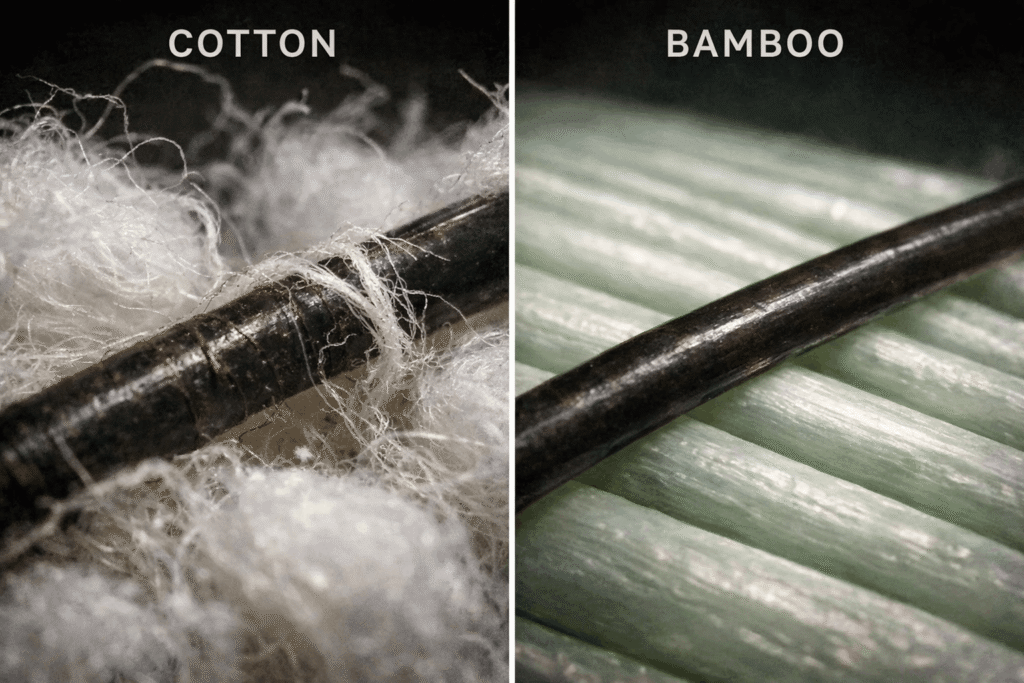
Cotton sounds harmless. But up close, cotton fibers look like frayed rope. They are rough and uneven.
Every time you move in your sleep, those fibers snag your hair. They pull at the cuticle layer. Over weeks and months, this causes split ends, frizz, and breakage.
There is another problem too. Cotton absorbs moisture fast. So it soaks up the oils and products you put on your hair before bed. You wake up with dry, frizzy, and tangled hair.
And if you sweat at night, cotton traps that heat and dampness. That creates a warm, wet surface where bacteria can grow. Not great for your scalp.
Why Bamboo Is Good for Hair: The Science Explained Simply
Bamboo fibers are naturally round and smooth at a microscopic level. That smoothness is the key. Hair glides over the surface instead of catching on it.
Studies and fabric tests show that bamboo reduces mechanical friction by up to 40% compared to cotton. Less friction means less breakage overnight.
Also, bamboo does not absorb your hair oils the way cotton does. Instead, it wicks moisture away from the surface. So your hair keeps its natural oils through the night.
Bamboo also contains a natural bio-agent called bamboo kun. It gives the fabric natural antibacterial and antifungal properties. That means a healthier surface for both your hair and scalp.
Finally, bamboo fibers have tiny micro-gaps. These allow airflow and regulate temperature. No more sweaty, hot scalp by morning.
Bamboo vs Silk Pillowcase for Hair: Which One Actually Wins?
This is the question most people land on. Both are smooth. Both reduce friction. But they are not the same.
Here is an honest side-by-side look.
| Feature | Bamboo | Silk | Cotton |
| Friction Reduction | High | Very High | Low |
| Moisture Retention | Yes | Yes | No |
| Machine Washable | Yes | No | Yes |
| Vegan | Yes | No | Yes |
| Antibacterial | Yes | Mild | No |
| Hypoallergenic | Yes | Yes | No |
| Cooling/Breathable | Superior | Moderate | Poor |
| Price | Mid-range | High | Low |
| Eco-Friendly | Yes (lyocell) | Mixed | Mixed |
Where Bamboo Clearly Wins
First, bamboo is machine washable. You can throw it in the washing machine every week. Silk needs careful hand washing or dry cleaning. Most people skip that step. Dirty silk is worse than no silk.
Second, bamboo is vegan. Silk production kills silkworms. If that matters to you, bamboo is the clear choice.
Third, bamboo costs much less than mulberry silk. You get similar smoothness without the high price tag.
Fourth, bamboo actively cools you down at night. If you sweat in your sleep, bamboo handles it better than silk.
Where Silk Has a Small Edge
Silk has a marginally smoother surface. For very fine or high-porosity hair, that slight difference can matter. Some curl enthusiasts also feel silk preserves curl shape better overnight.
But for most people, bamboo performs just as well. And it is far more practical day to day.
The Smart Combo Trick
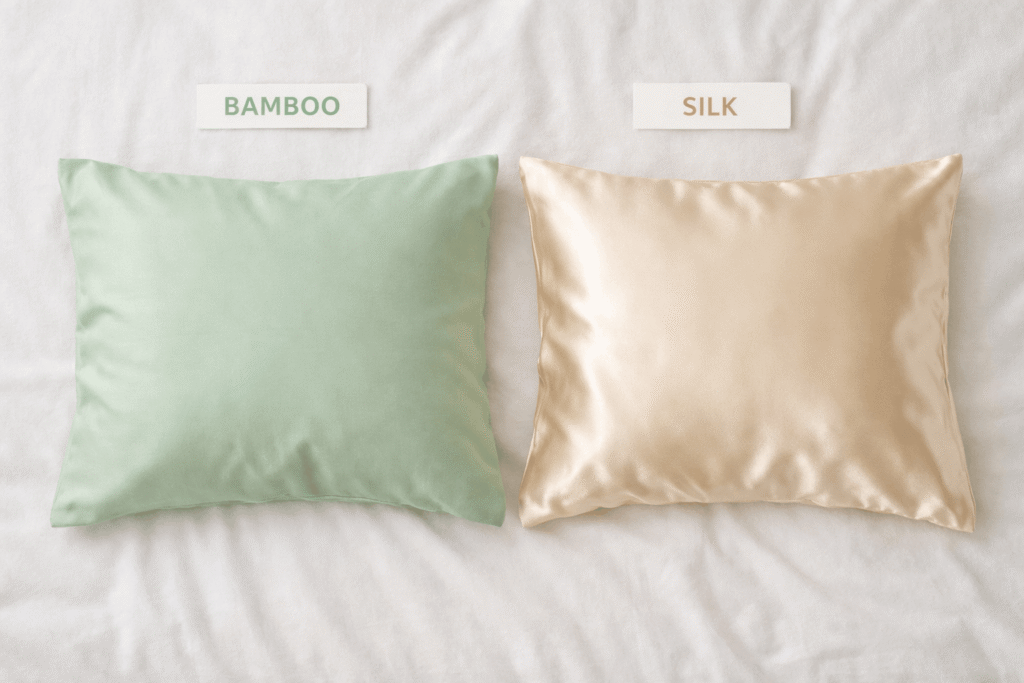
Want the best of both? Try bamboo sheets with a silk pillowcase. Or use bamboo and add a silk hair wrap on top. Many hairstylists actually recommend this combination for curly hair.
And satin? Skip it. Polyester satin has zero antibacterial benefits. It also releases microplastics with every wash. Not worth it.
Best Bamboo Pillowcase for Curly Hair, Frizzy Hair, and Sensitive Scalps
Bamboo works for everyone. But some hair types benefit even more than others. Here is a breakdown by hair type.
Curly and Textured Hair
Curly hair has more surface area than straight hair. That means more contact points with the pillowcase. And more contact means more friction.
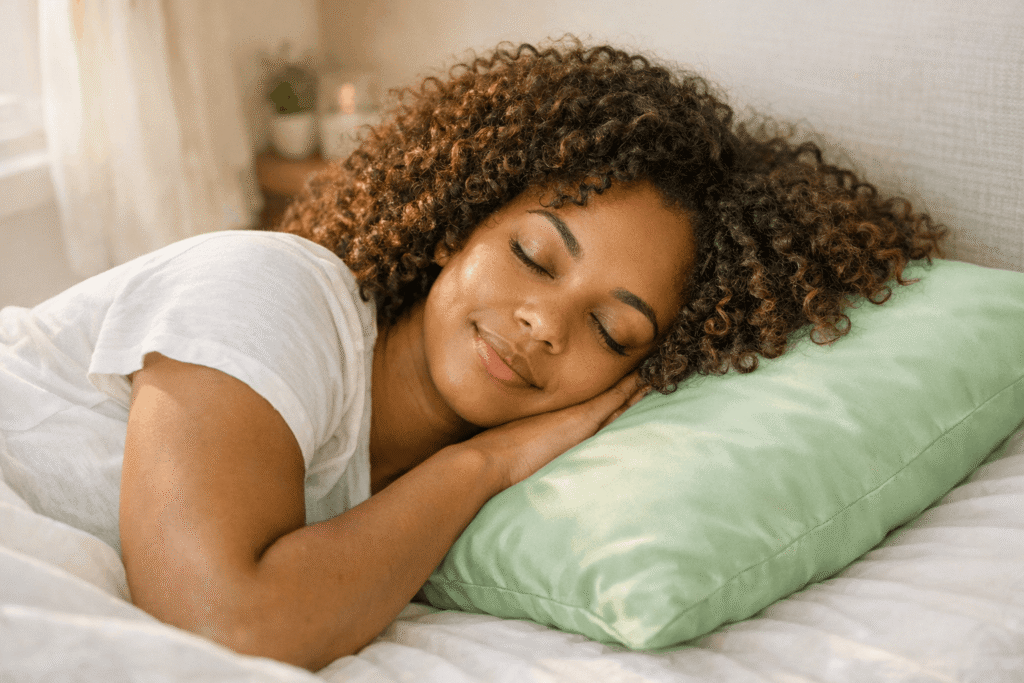
Bamboo lets curls glide freely overnight. You wake up with softer, less tangled curls. The curl pattern also stays more defined compared to cotton.
Many curl community members have switched to bamboo as a more affordable alternative to silk. The feedback is consistently positive.
Pairing bamboo with a loose pineapple hairstyle before bed makes a big difference for curl preservation.
Frizzy, Fine, and Colour-Treated Hair
Fine hair is the most fragile. It breaks more easily and loses its look faster. Bamboo reduces that overnight breakage significantly.
Colour-treated hair loses moisture faster after chemical processing. Since bamboo does not absorb your overnight treatments, your colour and conditioning products stay in your hair longer.
If you wear hair extensions, bamboo also protects the bond points from friction damage. A small thing that makes a real difference over time.
Sensitive Scalps and Acne-Prone Skin
Bamboo is naturally hypoallergenic. It resists dust mites, mold, and common allergens. So if your scalp gets itchy or irritated easily, bamboo is a safer choice.
Its antibacterial nature also means fewer scalp pimples. Cotton can harbor bacteria between washes. Bamboo is much more resistant to that buildup.
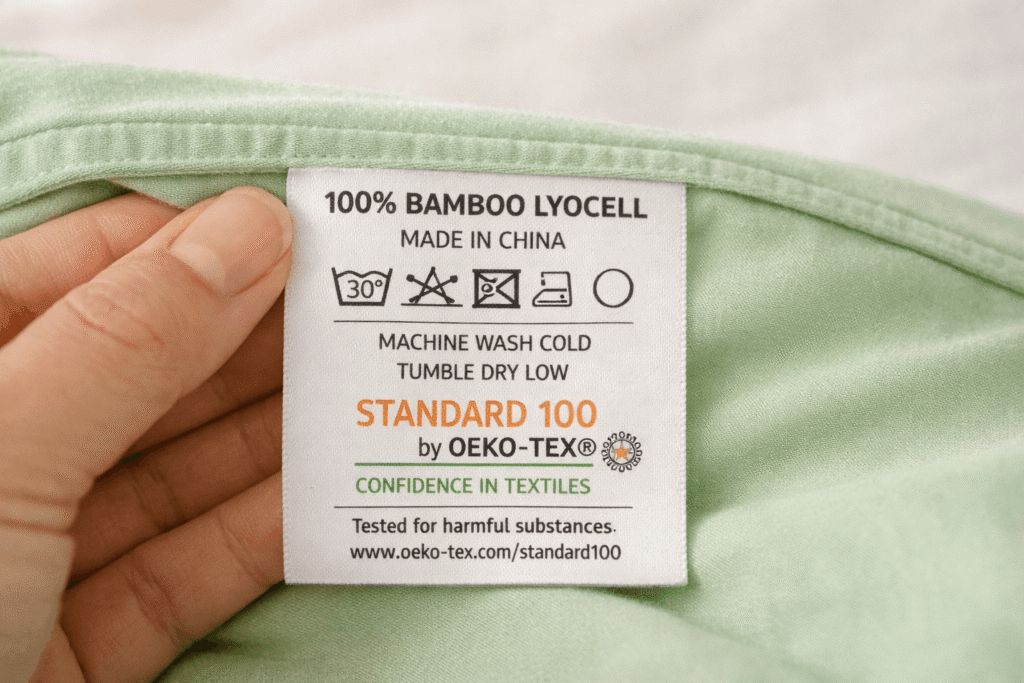
Look for OEKO-TEX Standard 100 certified bamboo. This certification means the fabric has been tested for over 100 harmful chemicals. It is safe for sensitive skin and scalps.
Not All Bamboo Is the Same: Viscose vs Lyocell (Read This Before You Buy)
This is the section most blogs skip. But it is one of the most important things to know before spending money.
When you see a label that says 100% bamboo, it almost always means bamboo viscose. And bamboo lyocell is a completely different product.
Bamboo Viscose
Bamboo viscose is the most common type. It is made by dissolving bamboo pulp using sodium hydroxide and carbon disulfide. This process is called open-loop, meaning chemicals are often released into the environment.
The result is still soft and smooth. It does the job. But the production process is not as clean as brands often suggest.
Bamboo Lyocell
Bamboo lyocell uses a closed-loop process. That means over 99% of the solvents used are captured and reused. The chemicals involved are also much less toxic.
The fibers produced are more uniform and stronger. For hair, this means a slightly more consistent surface with better friction reduction.
Lyocell is also more durable. It holds up better after many washes without pilling or losing its smooth texture.
What to Look for on the Label
- Look for the words bamboo lyocell, not just bamboo or bamboo rayon
- Check for OEKO-TEX Standard 100 certification on the packaging
- Watch out for greenwashing: organic bamboo does not always mean clean production
- Brands like ettitude use CleanBamboo lyocell, which is a transparent and verified standard
If you can only find bamboo viscose, it still works well for your hair. But if you want the most sustainable and high-performance option, go for lyocell.
How Often Should You Wash Your Bamboo Pillowcase?
This is one of the top questions people ask. And the answer matters for your hair health too.
A dirty pillowcase transfers oils, product buildup, dead skin, and bacteria back to your hair and scalp every night. Even the smoothest bamboo fabric cannot help you if it is not clean.
Washing Frequency Guide
- Normal hair: wash your pillowcase every 7 days
- Oily hair or acne-prone scalp: wash every 3 to 4 days
- You use heavy hair products at night: wash every 4 to 5 days
- You sweat heavily at night: wash every 3 days minimum
How to Wash It Without Damaging the Fabric
Use a gentle cycle with cold or lukewarm water. Hot water can break down bamboo fibers faster.
Choose a mild, sulfate-free detergent. Harsh detergents strip the natural properties of bamboo over time.
Skip the fabric softener. This is a big one. Fabric softener coats the fibers and reduces bamboo’s natural moisture-wicking ability. Over time, your pillowcase becomes less effective.
Do not bleach bamboo viscose. Check the care label. Most bamboo pillowcases cannot handle bleach.
For drying, air dry when possible. If you use a dryer, keep it on the lowest heat setting. High heat degrades the fibers and causes pilling.
The good news is that bamboo holds up very well after many washes. Unlike silk, which loses its smoothness if washed incorrectly, bamboo stays consistent wash after wash.
People Also Ask: Honest Answers
Do Bamboo Pillowcases Cause Hair Loss?
No. Bamboo pillowcases actually reduce the friction that contributes to hair loss. Cotton pillowcases snag and pull at hair strands during sleep. Over time, that repeated pulling stresses the follicle and weakens the hair shaft. Bamboo lets hair glide freely, so there is far less mechanical stress overnight.
Is Bamboo or Silk Better for Frizzy Hair?
Both are far better than cotton. For frizzy hair specifically, bamboo is the more practical and affordable choice. It reduces friction at a level comparable to silk. It also wicks moisture without stripping your natural oils. Silk has a marginally smoother surface, but it requires careful maintenance that most people do not keep up with.
Does a Bamboo Pillowcase Help with Hair Growth?
Not directly. Bamboo does not stimulate follicle activity. But it does protect your hair from overnight damage. Less breakage means your hair retains more length. Most people experience that as what feels like faster growth. It is not growth speed; it is length retention improving.
Is Bamboo Cooling for Night Sweats?
Yes. This is actually one of bamboo’s strongest features. The micro-gap structure in bamboo fibers allows airflow. It also wicks moisture away from the surface quickly. So even if you sweat at night, bamboo stays drier and cooler than cotton or silk.
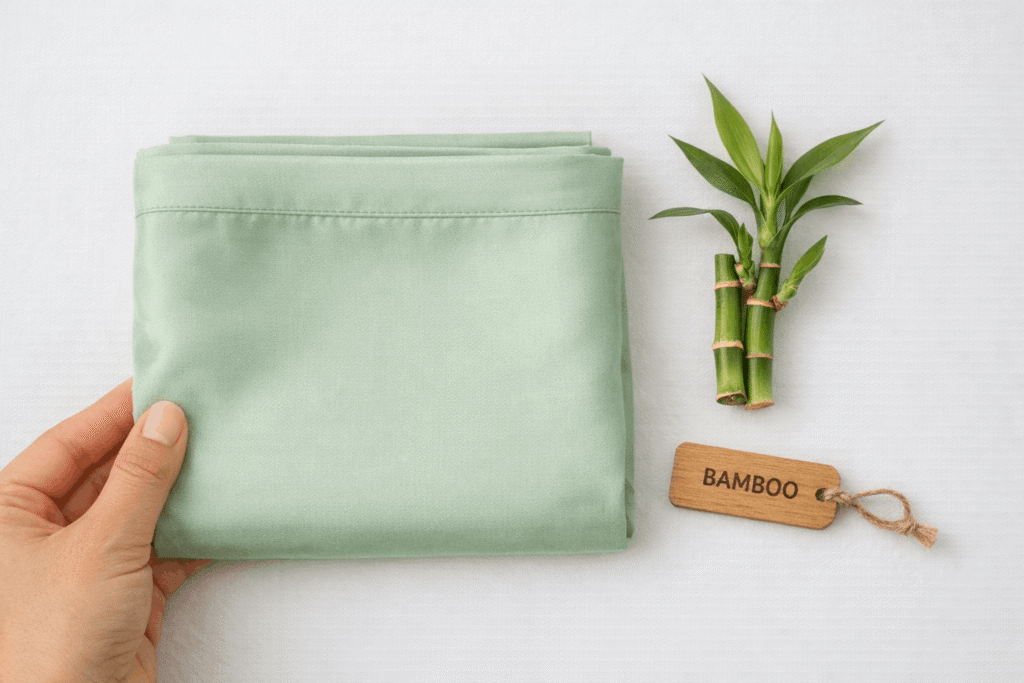
Final Verdict: Is a Bamboo Pillowcase Worth the Switch?
Yes. Absolutely yes.
If you care about your hair, your bamboo pillowcase is one of the easiest and most affordable upgrades you can make. You do not have to change your entire routine. You just change what your hair rests on every night.
Here is the simple ranking for hair health:
- First choice: Bamboo lyocell pillowcase with OEKO-TEX certification
- Second choice: Bamboo viscose, still smooth and effective
- Third choice: Mulberry silk, better surface but needs careful care
- Fourth choice: Polyester satin, decent friction reduction but no skin or scalp benefits
- Avoid: Regular cotton for hair health
Bamboo is the best all-round choice for most people. It is practical, vegan, affordable, and genuinely effective for reducing frizz, breakage, and scalp irritation.
If you have curly hair, a sensitive scalp, or colour-treated hair, bamboo moves from a good choice to a great one.
The market tells an interesting story too. Most people start their search by looking for silk. But once they discover bamboo is machine washable, cruelty-free, and costs far less, they make the switch and do not look back.