
A bamboo yoga mat is worth buying if you practice hot or sweaty yoga, want a non-toxic eco-friendlier mat, and do not have a latex allergy. The bamboo fiber top layer grips better when damp, unlike PVC. It is not worth it if you need the cheapest mat, travel light, or want maximum cushioning. Always check the full material list, because many “bamboo” mats are mostly rubber.
You have seen them all over Instagram: sleek mats that promise eco-friendly materials, better grip, and toxin-free practice. But is a bamboo yoga mat actually good, or is it a green label on a rubber mat with a markup? This guide gives you the honest answer, including how to spot fakes and what the best bamboo mat actually looks like.
What Exactly Is a Bamboo Yoga Mat? (Most People Get This Wrong)
A bamboo yoga mat is not a mat carved from bamboo wood. It is a bamboo fiber top layer bonded to a base, usually natural rubber or cork. The bamboo part gives softness, breathability, and moisture absorption. The base gives grip and cushioning.
The three main types you will find:
- Bamboo with natural rubber. The most common type. Grips well, feels soft on skin. Not suitable for latex allergies.
- Bamboo with cork. Firmer underfoot and naturally antimicrobial. The best option if you want to avoid rubber entirely.
- Bamboo with cotton. The softest option but the least grip. Best for gentle yoga or meditation.
Knowing which type you are looking at is the single most useful buying skill, because two “bamboo mats” at the same price can perform completely differently.
Bamboo Yoga Mat vs Cork: Which Is Actually Better?
This is the comparison people search for most, and it is slightly the wrong question, because bamboo and cork are usually combined, not opposed. Still, here is the honest breakdown.
A pure cork mat grips superbly when wet (cork contains suberin, a waxy compound that gets grippier with moisture), contains no rubber at all, and is fully latex-free. Its weakness is comfort: cork is firm, and some people find it hard on knees.
A bamboo-top mat with a natural rubber base is softer, cushions better, and the bamboo fiber wicks sweat across the surface. Its weakness is the rubber: latex allergies are a hard no, and cheaper rubber bases can smell for weeks.
The sweet spot for many hot yoga practitioners is a bamboo-cork blend: the antimicrobial, latex-free benefits of cork with the softer hand-feel of bamboo fiber. If you are choosing between a pure cork mat and a bamboo mat, decide on comfort versus latex-free first; the grip question answers itself after that.
Is a Bamboo Yoga Mat Good for Hot Yoga?
Yes, this is arguably where bamboo mats are at their best. Standard PVC mats get slippery when wet, which is exactly the wrong behavior in a 100-degree room. Bamboo fiber does the opposite: it absorbs moisture rather than repelling it, so grip improves as you sweat.
Two caveats. First, the base matters as much as the top layer. A bamboo top on a cheap slippery base still slides on the floor. Look for a natural rubber or cork base with a textured underside. Second, hot yoga means constant sweat, which means the mat needs wiping after every session and a weekly deep clean. Bamboo resists odor well, but “resists” is not “immune.” Our full routine is how to clean a bamboo yoga mat.
If hot yoga is your main practice, also consider a bamboo yoga towel over the mat for the sweatiest sessions. See our bamboo towels guide for why the fiber works so well for sweat.
What Thickness Should a Bamboo Yoga Mat Be?
Thickness is the spec buyers ignore and then regret. Here is the practical guide:
- 1.5 to 3 mm (travel mats): foldable, light, fits in a suitcase. Uncomfortable for knees on hard floors. Good second mat, bad only mat.
- 4 mm (the sweet spot): enough cushioning for daily practice, still portable, stable in standing poses. Most quality bamboo mats sit here.
- 5 to 6 mm (comfort mats): best for bad knees, restorative yoga, and floor-based practice. Heavier and slightly less stable in balance poses.
Do not buy thickness as a proxy for quality. A well-made 4 mm bamboo-rubber mat outperforms a cheap 6 mm mat in every way that matters: grip, durability, and how it feels under your hands.
Are Bamboo Yoga Mats Really Eco-Friendly?
Mostly yes, with one honest asterisk. The bamboo itself is a fast-growing renewable grass that needs no pesticides, and natural rubber and cork bases are biodegradable. Compared with a PVC mat that lasts 500 years in a landfill, the difference is enormous.
The asterisk is the fiber processing. Most bamboo fiber is made by the viscose process, which uses carbon disulfide, a harsh chemical. The closed-loop lyocell process is far cleaner, but it costs more, so most mats use viscose. A “bamboo” mat made with viscose fiber on a synthetic base is greener than PVC but not the pristine eco product the marketing implies.
How to buy genuinely greener: look for bamboo lyocell (not viscose) in the material list, a natural rubber or cork base (not TPE or PVC), and third-party certifications like OEKO-TEX or FSC. If the listing will not name the fiber process, assume viscose.
How to Spot a Fake “Bamboo” Yoga Mat Before You Buy
Check the full material list. A real bamboo mat names the fiber and the base: “bamboo viscose top, natural rubber base.” A fake says “bamboo yoga mat” and lists only “TPE” or “PVC” in the fine print. If bamboo is not in the materials, it is not a bamboo mat.
Look for real certifications. OEKO-TEX Standard 100 (no harmful substances), FSC (responsibly sourced materials), and GOTS-adjacent claims for organic content. Vague “eco-certified” badges with no certifying body are decoration.
Be skeptical of vague language. “Bamboo-inspired,” “bamboo technology,” “infused with bamboo essence” are all ways of saying the word without the material. Also be wary of prices under $60; real natural materials cost more than that.
Read the care instructions. Real bamboo-rubber mats warn against machine washing and harsh cleaners. A listing with no care guidance at all usually means the seller has never thought about the material.
For a deeper breakdown of what mats are actually made from, see Hugger Mugger’s material and safety guide.
The Real Downsides Nobody Talks About
Honesty requires the other side.
Weight. Bamboo-rubber mats are heavier than PVC or TPE. If you walk to class, you will feel it.
The initial smell. Natural rubber bases off-gas when new. It fades in one to three weeks of unrolled airing, but the first week can be strong. This is normal and not a defect.
Latex allergies. Natural rubber contains latex proteins. If you are allergic, bamboo-rubber is out; bamboo-cork is your path.
Price. Quality bamboo mats run $80 to $160, roughly double a decent PVC mat. The value case is durability (3 to 5 years) plus the non-toxic and eco benefits, not upfront savings.
Greenwashing. As covered above, some “bamboo” mats are barely bamboo. The spotting guide is your defense.
How to Take Care of Your Bamboo Yoga Mat So It Lasts
After every session: wipe down with a damp cloth. For sweaty sessions, a 50/50 water and white vinegar spray works well. Let it air dry completely before rolling.
Deep cleaning once a week: wipe the full surface with the vinegar solution, then a clean damp cloth to remove residue. Never use bleach, alcohol sprays, or harsh cleaners; they degrade the fiber and the base bond.
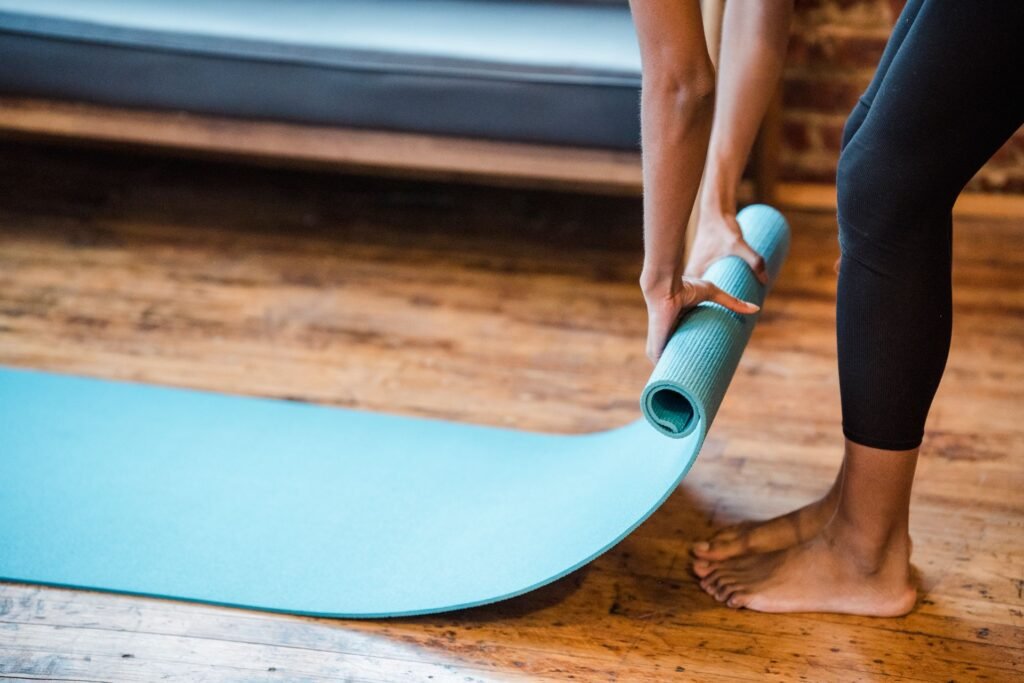
Storage: roll loosely with the top side out, never fold. Keep away from direct sunlight and heat, which dry out both bamboo fiber and rubber. If grip fades, a light water mist before practice reactivates the fiber.
For the complete care routine, read how to clean a bamboo yoga mat, step by step.
So, What Should You Actually Buy in 2026?
A correction to this guide’s earlier version: it previously named a cork mat as the top pick in a bamboo mat guide. That was confusing, so here is the honest framework instead.
The best bamboo yoga mat for you is the one that matches your practice:
- Hot yoga / heavy sweating: bamboo top on natural rubber or cork base, 4 mm, textured underside. Prioritize wet grip and a tight fiber weave.
- Latex allergy: bamboo-cork blend only. Verify “latex-free” in the materials, not just the marketing.
- Travel: 1.5 to 2 mm bamboo mat that folds. Accept the comfort tradeoff.
- Bad knees / restorative: 5 to 6 mm bamboo-rubber. Comfort first.
- Budget-conscious: save for a real one. A $40 “bamboo” mat is a TPE mat with a label.
Before buying, run the fake-spotting checklist above, confirm the fiber process (lyocell preferred), and check the return policy. A seller confident in their materials offers at least 30 days.
What real users found
We did not test these mats ourselves. What follows is what real buyers, forum users, and independent reviewers reported after using them, with the source for each finding.
OutdoorGearLab, Yoloha Unity Cork: Their testers found the cork surface slippery and rough when completely dry, and a light spritz of water made it remarkably grippy. The same testers warned the grainy texture can feel abrasive in transitions, and a few got friction rubs on their legs and feet. OutdoorGearLab
Wandering Justin, cork mats since 2015: After years of sliding on studio mats and failing with grip towels, his original Yoloha cork mat finally stopped the slipping in hot yoga. A cheaper VIRGIN PULP cork mat flaked almost immediately and let sweat pool, while the newer thinner Yoloha still gets slippery. Wandering Justin
GearJunkie, Asivana Flux Cork (May 2026): Their reviewer used the 5 mm cork-over-rubber mat two to three times a week for months, including hot yoga, and the grip stayed impressive after the break-in period. The trade-off is weight and storage: at 7 pounds it cannot roll tightly, so it suits car-to-class use. GearJunkie
Amazon UK cork mat buyers: One buyer with 20 years of daily practice called her cork mat the nicest she has ever used, saying it gets grippier as she sweats and that a friend’s year-old mat is still perfect. Another buyer warned it is hard, calling poses on the tops of the feet excruciating. Amazon UK reviews
Manduka eKO Lite, 10,635 reviews: An aggregation of Amazon, Reddit, and YouTube reviews published in July 2026 rates this natural-rubber mat 4.4 out of 5. Buyers praise its portability and dry grip, but report a strong rubber smell out of the box, thin cushioning that hurts knees, and grip that fades in sweaty practice without a towel. TrueScore
OutdoorGearLab, Gaiam Performance Cork: Their testers watched the cork peel away after the first use, and after three uses the $40 mat was almost completely ruined. Wet traction was decent and it dried fast, but they call it a short-term mat only, not one that lasts for years. OutdoorGearLab
Frequently Asked Questions
What is the best bamboo yoga mat to buy in 2026?
There is no single best mat; the right one depends on your practice. Use the framework above: match the base material to your needs (rubber for cushioning, cork for latex-free), choose 4 mm for all-round use, and verify the fiber is real bamboo, not a marketing word.
Does a bamboo yoga mat smell when new?
The bamboo fiber itself has almost no smell. Any strong new-mat smell comes from the natural rubber base, and it fades within one to three weeks of being left unrolled in ventilated space.
Is a bamboo yoga mat good for hot yoga?
Yes, it is one of the best options for hot yoga. Bamboo fiber absorbs sweat and grips better when damp, the opposite of PVC. Pair it with wiping after every session to keep it fresh.
Can I use a bamboo yoga mat outdoors?
Occasionally, yes, but not as a habit. UV degrades the fiber, and ground moisture works into the base. For outdoor practice, use a towel over the mat and never leave it in the sun.
Is a bamboo yoga mat really eco-friendly?
More eco-friendly than PVC, with caveats. The bamboo is renewable; the fiber processing (usually viscose) and the base material determine the real footprint. Look for lyocell fiber and natural rubber or cork bases for the genuinely greener option.
How long does a bamboo yoga mat last?
Three to five years with proper care: wipe after use, weekly deep clean, loose rolling, no sunlight. Cheap mats with thin fiber layers wear through in under two years.
Can bamboo mats cause a latex allergy reaction?
The bamboo fiber cannot, but the natural rubber base can. If you have a latex allergy, choose a bamboo-cork mat and confirm latex-free in the material list.
Are bamboo yoga mats slippery?
Dry, a quality bamboo mat grips well. Damp, it grips better. If yours is slippery, the usual causes are a worn fiber layer, soap residue from cleaning, or a mat that was never really bamboo to begin with.
Bamboo yoga mat vs cork mat: which should I choose?
Choose bamboo-rubber for cushioning and softness, pure cork for latex-free and maximum wet grip, or a bamboo-cork blend for the middle ground. See the comparison section above for the full breakdown.
Final Verdict: Is a Bamboo Yoga Mat Worth It?
Yes, for the right person. If you practice hot or sweaty yoga, care about non-toxic materials, and will maintain the mat, a real bamboo mat is one of the best upgrades you can make to your practice. The grip-when-wet behavior alone converts most skeptics.
It is not worth it as a budget buy, a travel-only mat you will abuse, or a purchase made on the word “bamboo” alone. Buy the materials, not the label: real fiber, honest base, real certifications.