
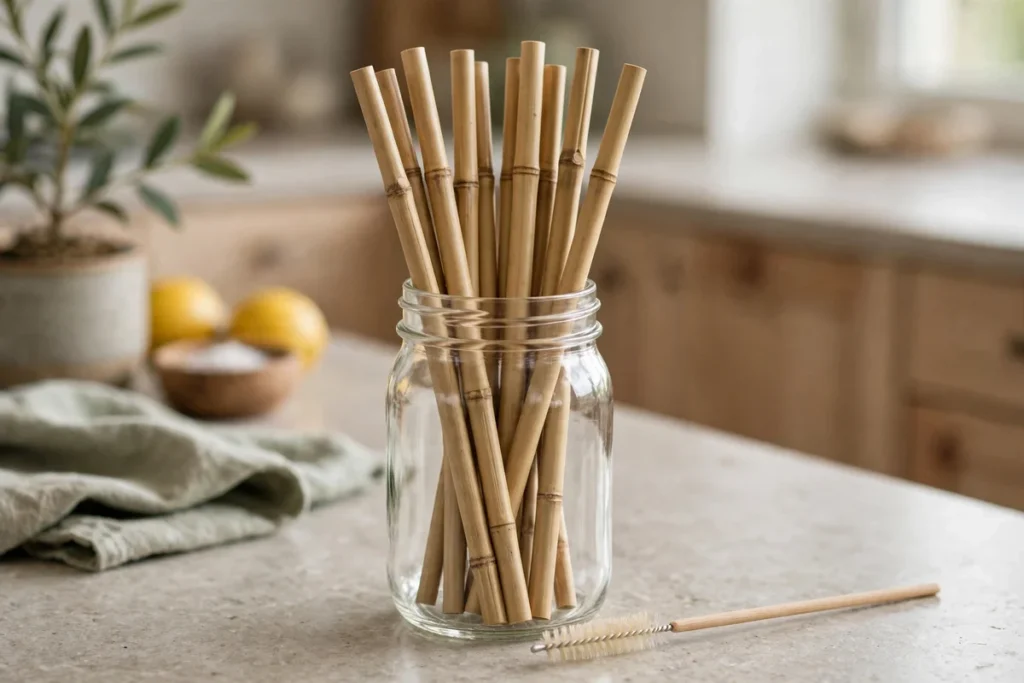
The short answer: Rinse a bamboo straw under warm water right after every drink, scrub the inside with a thin straw brush and mild dish soap, rinse again, and stand it upright to air-dry fully. Once a week, soak it briefly in one part white vinegar to four parts water, then rinse and dry. Never soak it overnight, and skip the dishwasher.
Bamboo straws are one of the easiest swaps from single-use plastic, and they are also one of the easiest reusable items to get wrong. They look simple, but they are made from a porous grass, not from steel or glass, and that changes how you clean them. A metal straw forgives a night in the sink. A bamboo straw does not. Leave it damp, and it can turn musty, grow mold, or crack. Clean it the right way, and it will last for months, often a year or more.
This guide shows you how to clean bamboo straws step by step: what to do after every drink, how to deep clean once a week, how to dry and store straws so they stay fresh, and what to avoid. It also sorts out the conflicting advice you will find online, because the top search results disagree with each other on vinegar, boiling, and the dishwasher. We read them all and checked each claim against the others, so you get the honest version, not a copy of one page.
If you are still choosing straws, a bamboo straws set with a cleaning brush included is the easiest start, since the brush is the one tool you will use every day. Our bamboo straws page lists a 150-count pack that works well for a household, and there is also a flexible version if you prefer a bendable straw. Either way, the cleaning routine below is the same.
How do you clean bamboo straws?
Cleaning bamboo straws takes about a minute a day, and the routine is the same after every drink. Do it right after you finish, before residue has time to dry inside the straw, because dried smoothie, coffee, or juice is much harder to remove than fresh residue.
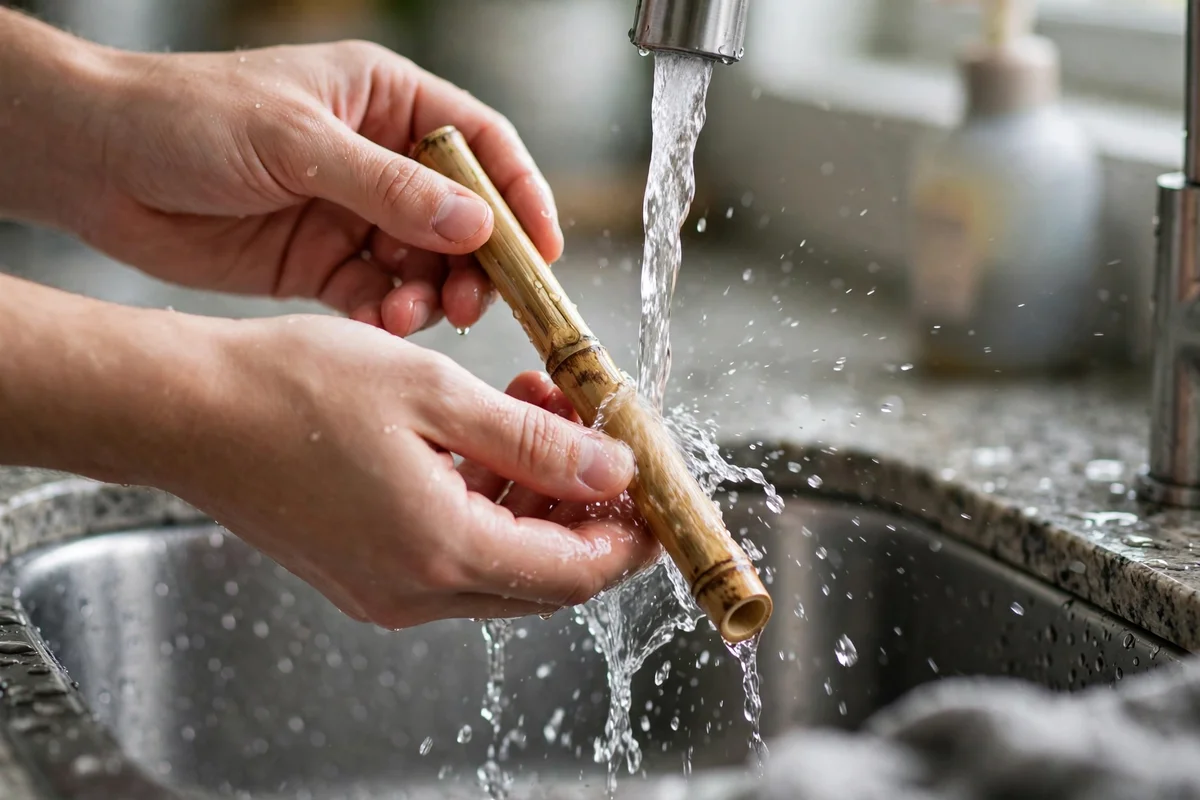
- Rinse immediately. Hold the straw under warm running water and let water flow through it for a few seconds. This flushes out most of the drink before it can dry and stick.
- Scrub the inside. Push a thin straw brush through the straw with a drop of mild dish soap. Move it back and forth a few times so the bristles reach the full length of the bore. A brush with soft, plant-based bristles is best, since a stiff metal brush can scratch the inside and create places for residue to hide.
- Rinse again. Run warm water through the straw until the water runs clear and no soap remains. Soap left inside will affect the taste of your next drink.
- Shake out the water. Give the straw a firm shake over the sink to remove as much water as possible from the inside.
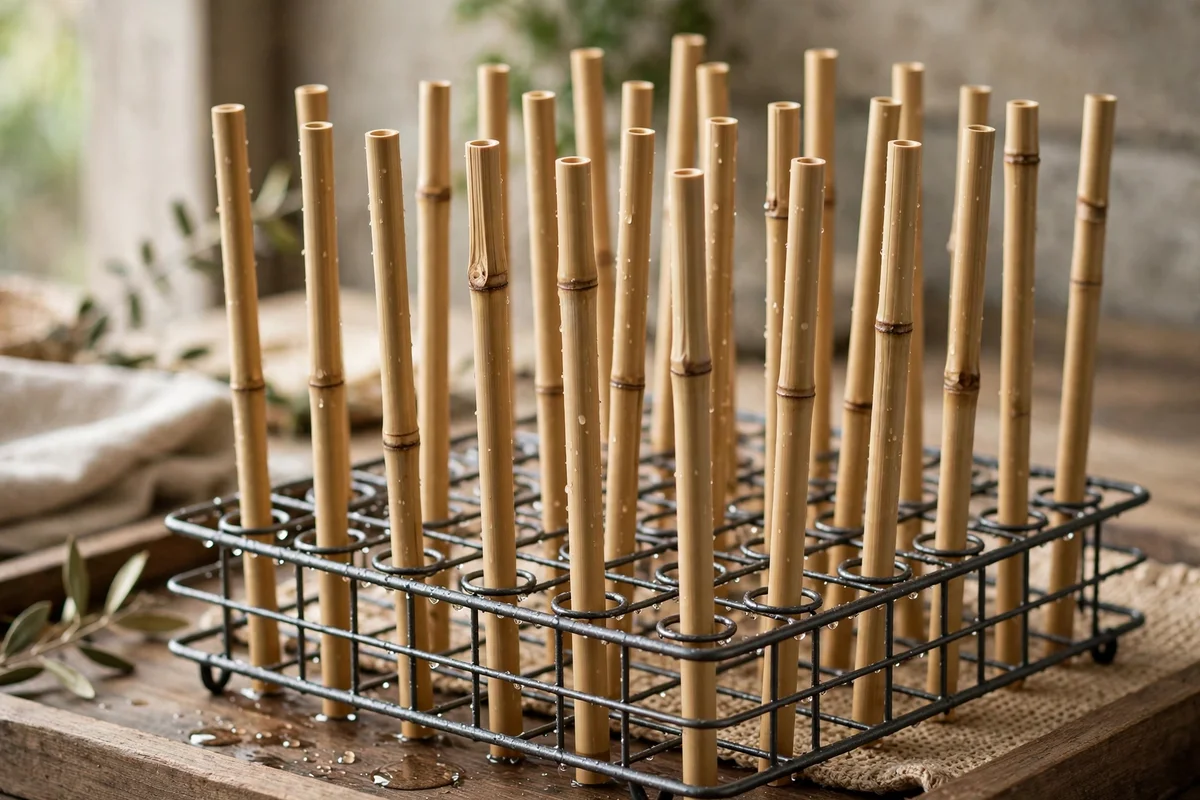
- Dry it upright. Stand the straw upright in a glass, a jar, or a drying rack, in a place with good airflow, and let it dry completely before you put it away. This is the step most people skip, and it is the step that matters most, because a straw stored damp is a straw that will grow mold.
That is the whole daily routine. It takes about a minute, and it is the single best thing you can do for your straws. If you only remember one thing from this guide, remember this: rinse right after use, A pack of bamboo kitchen towels is handy for wiping the outside of the straws and the counter after the rinse.
A note on soap: use a mild, fragrance-free dish soap, and use only a drop. Harsh detergents with bleach or strong fragrances can damage the bamboo surface and leave residues you do not want in your drink. You do not need a special bamboo cleaner, and you should avoid commercial bamboo cleaners that contain harsh surfactants, since they can strip the natural waxes that protect the surface.
How do you deep clean bamboo straws?
Once a week, give your straws a deeper clean. This clears the buildup that a daily rinse does not reach, and it removes odors before they become permanent.
- Mix the soak. Combine one part white vinegar with four parts warm water in a glass or a jar. You need enough liquid to cover the straws fully.
- Soak briefly. Place the straws in the mixture for a few minutes, no more than five. Do not soak them for hours, and never soak them overnight, because prolonged soaking swells the bamboo fiber and can cause cracking.
- Scrub again. Run the straw brush through each straw with a drop of mild soap, as in the daily routine.
- Rinse thoroughly. Flush each straw under warm running water until no vinegar smell remains.
- Dry upright and fully. Stand the straws upright in a ventilated spot and let them dry completely, which can take several hours. Do not put them away while they are still damp inside.
A note on the vinegar disagreement: you will find guides that say to soak bamboo straws in vinegar, and guides that say never to use vinegar on bamboo at all. Both sides have a point, and the difference is strength and time. A brief soak in diluted vinegar (one part vinegar to four parts water, a few minutes) is gentle and effective for odor and buildup. A long soak in strong vinegar, or an undiluted vinegar soak, can damage the fiber over time. That is why this guide recommends the mild, brief version only, and never an overnight or undiluted soak. If you prefer to avoid vinegar entirely, a weekly wash with warm soapy water and a good brush, plus thorough drying, is enough for most straws.
The same care logic applies to other bamboo items in your kitchen. If you want a fuller picture of how bamboo behaves when it is washed, our guide to cleaning bamboo cutting boards uses the same principles: The same gentle routine works for bamboo cooking utensils, which also need a quick hand wash and full drying after use.
Are bamboo straws hygienic?
Are bamboo straws hygienic? Yes, they are, as long as you clean and dry them properly. Bamboo is naturally antimicrobial, but that does not mean a bamboo straw cleans itself, and it does not mean you can skip washing it.
Bamboo contains a natural compound called bamboo kun, which has antifungal and antibacterial properties. This is a real feature of the material, and it is one reason bamboo is used for food-contact items. But the protection is limited. Once a straw has been used for a drink, it holds moisture, sugars, and acids inside a narrow tube, and that is exactly the environment where microbes grow. The bamboo kun slows that growth, but it does not stop it. What keeps a straw hygienic is your routine: rinse after every use, brush with soap, and dry fully.
The honest comparison is with other reusable straws. A stainless steel straw is easier to keep hygienic because it is smooth and non-porous, and it can go in the dishwasher. A glass straw is similar. The same hygiene logic applies to bamboo toothbrush care, since a toothbrush also needs to dry fully between uses. A bamboo straw is more porous, so it needs more attention, but it is still perfectly hygienic when it is cleaned and dried correctly. The people who run into trouble are the ones who only rinse and never brush, or who store straws damp. The same reusable logic applies at the table: reusable bamboo chopsticks need the same hand wash and full drying as straws.
One more point: buy untreated or uncoated straws when you can. Some bamboo straws are finished with water-repellent coatings, and a 2023 study found PFAS, the chemicals often called forever chemicals, in most of the bamboo straws it tested, likely from those coatings. Choosing straws described as untreated or uncoated avoids that issue. We cover this in more detail in the safety section below.
Do bamboo straws get moldy?
Do bamboo straws get moldy? Yes, they can, and mold is the most common complaint about bamboo straws. But mold is not inevitable, and it is not a sign that bamboo straws are a bad idea. It is a sign that a straw stayed damp for too long.
Bamboo straw mold grows when moisture sits inside the straw. Bamboo is porous, so it absorbs water, and the inside of a straw is dark, narrow, and hard to dry. If you rinse a straw and then put it away while it is still wet, or store it in a sealed container or a closed drawer, mold has everything it needs: moisture, darkness, and leftover drink residue. The first signs are usually dark specks inside the straw, a musty smell, or a sour taste in your drink. If you see black, green, or white spots inside, or if the straw smells musty even after washing, it is mold.
The fix is prevention, and it is simple. Dry every straw fully before storing it, and store it in a ventilated place, never in an airtight container. Stand straws upright so water drains out and air can circulate through them. If you have several straws, rotate them so each one gets a full day to dry between uses. And do the weekly deep clean, since a brush and a mild vinegar soak remove the residue that mold feeds on.
If a straw already has mold, try the deep clean first: soak briefly in diluted vinegar, scrub hard with the brush, rinse well, and dry fully. If the spots or the smell remain after that, throw the straw away and compost it. Do not keep using a straw that still smells musty after cleaning, since the mold is likely deep in the fiber. A single straw is cheap, and your health is not worth the risk. The same drying rule applies when you are cleaning a bamboo yoga mat, which also needs to air-dry fully to prevent mold and odor.
Are bamboo straws dishwasher safe?
Are bamboo straws dishwasher safe? Many are labeled dishwasher safe, but hand washing is gentler and will make them last noticeably longer. That is the honest answer, and it is the reason you will find conflicting advice.
Some manufacturers label their bamboo straws dishwasher safe, and some sellers say you can put them on the top rack. That is true as a label: a well-made straw from whole bamboo, with no glue or lacquer, can survive a dishwasher cycle. But surviving is not the same as thriving. A dishwasher combines prolonged high heat, strong detergents, and a long wet cycle, and that combination is rough on natural bamboo. Over time it can dry the fiber out, cause warping or cracking, and shorten the straw’s life. Several care guides put it plainly: if you usually just throw bamboo straws in the dishwasher and do not dry them properly or oil them, The same hand-wash rule applies to bamboo serving bowls, which also warp and crack in the dishwasher.
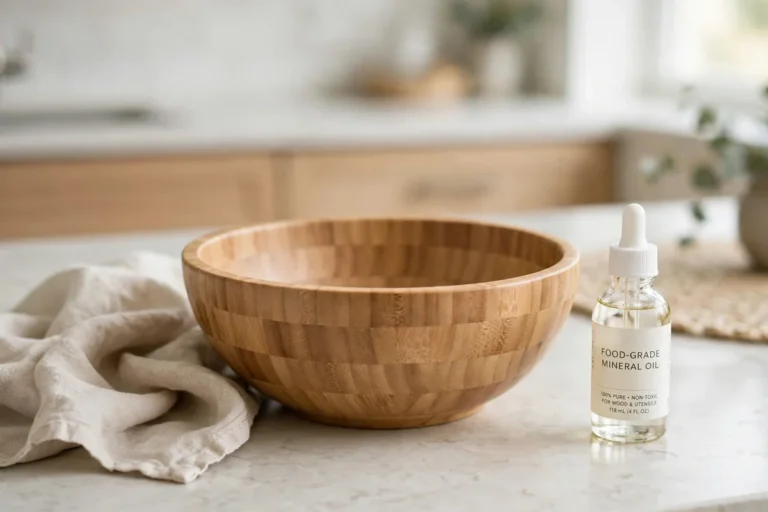
The practical rule is simple. Hand wash your straws. It takes less than a minute, and the brush actually scrubs the inside, which a dishwasher does not do well. If you do use the dishwasher occasionally, put straws on the top rack, turn off the heated dry function if you can, and take them out promptly to dry fully. And if you do use the dishwasher, treat the straws with a little food-grade mineral oil afterward to help the bamboo retain moisture and resist cracking.
This is the same pattern you will see with other bamboo kitchen items. Our guide to bamboo cutting boards safety reaches the same conclusion: the dishwasher may not ruin a board or a straw in one cycle, but hand washing is what keeps bamboo in good shape for years.
How long do bamboo straws last?
How long do bamboo straws last? With daily use and good care, expect about 50 to 100 uses, which works out to roughly 3 to 6 months, and many straws last a year or more. The range is wide because lifespan depends almost entirely on how you treat the straw, not on the straw itself.
Here is what the sources say. A detailed bamboo straw lifespan guide puts it at 50 to 100 uses, or roughly 3 to 6 months of daily use, and notes that a straw treated well can sail past that mark while a straw treated badly can crack within weeks. Other guides put it at 1 to 2 years with good care, and one maker reports that most customers get about a year from a straw. The difference is care: a straw that is rinsed promptly, brushed, and dried fully after every use lasts far longer than one that sits in the sink, goes through the dishwasher daily, or is stored damp.
The factors that decide lifespan are the same ones in this guide. Rinse within a few minutes of finishing your drink, since residue left to dry is harder to remove and feeds mold. Dry fully after every wash, since moisture is the real enemy. Hand wash instead of using the dishwasher. Never soak overnight. Store in a dry, ventilated place. Oil occasionally with food-grade mineral oil if the straw starts to look dry. And replace a straw when it shows the signs below.
How do I know when it is time to replace a bamboo straw? Replace it when you see visible cracking or splitting along the length, when the surface feels rough or flaky, when dark spots or mold remain after a deep clean, or when the straw gives your drink a sour or woody taste even after washing. A spent straw is plant fiber, so you can compost it at home, where it breaks down into soil. Do not keep using a straw that is cracked or moldy, since a crack harbors bacteria and a moldy straw is not safe to drink from.
How do you dry and store bamboo straws?
How you dry and store bamboo straws matters as much as how you wash them. A straw that is washed well but stored damp will still grow mold, while a straw that is dried fully will stay fresh for months.
Dry straws upright, not flat. Stand them in a glass, a jar, or a drying rack, with the opening facing up, so water drains out and air can move through the inside. Give them several hours, or a full day if you can, before you put them away. If you are in a hurry, shake the straw firmly over the sink first to remove as much water as possible, then stand it upright. Do not towel-dry the inside, since a towel cannot reach through a narrow straw, and do not use a hair dryer, since the heat can crack the bamboo.
Store straws in a dry, ventilated place. A glass jar on the counter, an open drawer, or a bamboo holder all work well. Never store straws in an airtight container, a sealed plastic bag, or a closed jar while they are even slightly damp, because trapped moisture is the fastest route to mustiness and mold. Keep them out of direct sunlight, which can fade and warp the surface, and away from heat sources like the stove.
A practical tip is to keep three or four straws in rotation. Use one, wash it, and set it aside to dry while you use another. That way each straw gets a full day to dry between uses, The same rotation idea works for bamboo soup bowls: keep a few in rotation so each one dries fully between uses.
This is the same logic behind washing bamboo sheets and towels: the fiber needs air and time to dry fully, and the routine is what keeps it fresh. Our guide to washing bamboo sheets covers the same drying principle for bamboo fabric.
What should you never do to bamboo straws?
Some mistakes will ruin a bamboo straw faster than any amount of normal use. Avoid these, and your straws will last far longer.
Never soak bamboo straws overnight. Prolonged soaking swells the bamboo fiber, and a swollen straw can crack or warp when it dries. A brief soak of a few minutes for a deep clean is fine. An overnight soak is not.
Never use bleach. Bleach damages the bamboo surface, weakens the fiber, and leaves residues you do not want in your drink. If a straw needs disinfecting, use the diluted vinegar soak instead, and rinse thoroughly.
Never put bamboo straws in the dishwasher as a habit. An occasional top-rack cycle will not destroy a well-made straw, but regular dishwasher use dries the fiber out and shortens its life. Hand washing takes less than a minute and is always the better choice.
Never use an abrasive brush or a metal scouring pad inside the straw. A stiff metal brush scratches the inner surface, and those scratches trap residue and give mold a place to anchor. Use a soft straw brush with gentle bristles.
Never use essential oils to scent or clean a straw. Essential oils can polymerize and clog the pores of the bamboo, and they can leave flavors that affect your drink. If a straw smells bad, use the vinegar soak and the brush instead.
Never store a straw while it is damp. This is the single most common mistake, and it is the one that causes most mold. Always dry fully, and always store in a ventilated place.
Never leave bamboo straws in direct sunlight or in a hot car for long periods. Heat and sun can fade, warp, and crack the surface. Store them in a cool, dry spot indoors.
How do you remove smells and stains?
A bamboo straw that smells musty or sour, or that has a stain inside, can usually be saved with a deep clean. The cause is almost always residue that was left to dry, or moisture that was trapped during storage.
For smells, use the weekly vinegar soak: one part white vinegar to four parts warm water, a few minutes, then scrub with the brush, rinse well, and dry fully. The vinegar neutralizes odors and clears buildup. If the smell remains after one soak, repeat the soak once more, and let the straw dry for a full day in a ventilated spot before you use it again.
For stains, sprinkle a little baking soda inside the straw, add a few drops of water to make a paste, and scrub gently with the brush. Rinse thoroughly. Lemon juice also works for stains and odors: rub a little lemon juice on the stain with a soft cloth, let it sit for a few minutes, then rinse and dry. Do not use bleach or harsh stain removers, since they damage the bamboo.
For a woody taste in a new straw, rinse it well before first use, and soak it briefly in warm water with a little vinegar. This removes the woody aroma that some new straws carry. If a straw still tastes woody or sour after several washes, it is likely old or damaged, and it is time to replace it.
If you wash bamboo towels, you will recognize the same rule: a mild, natural cleaner and thorough drying beat a harsh chemical every time. Our bamboo towels guide The same gentle approach works for bamboo round plates, which also need a mild cleaner and thorough drying.
Bamboo straws vs paper straws vs metal straws
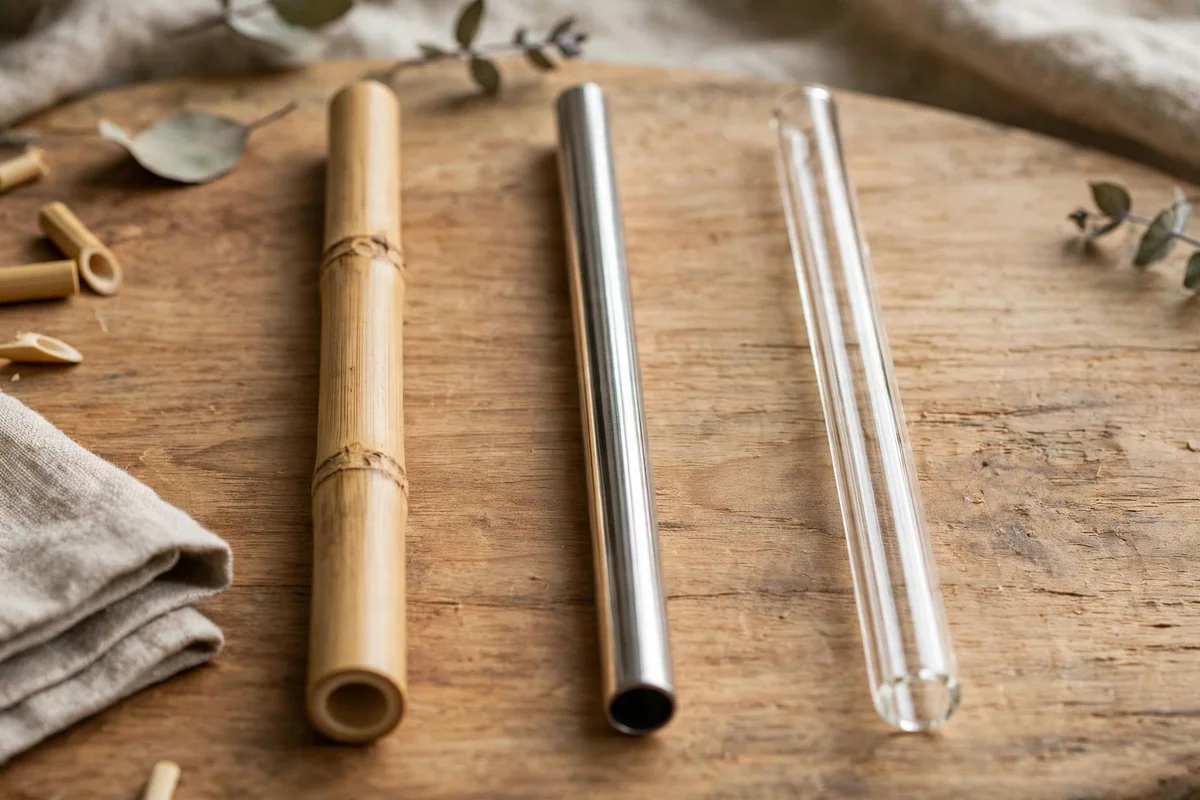
Bamboo straws vs paper straws is the comparison most people start with, since both are marketed as eco-friendly alternatives to plastic. But the real choice is wider, and each material has a different balance of feel, care, and lifespan. Here are the bamboo straws pros and cons, and how bamboo compares with the other common reusable straws.
| Material | Feel and taste | Lifespan with care | Cleaning | Best for | Keep in mind |
|---|---|---|---|---|---|
| Bamboo | Warm, natural, no metallic taste | 3 to 6 months to 1 to 2 years | Hand wash, brush, dry fully | Home use, natural look, hot or cold drinks | Must dry fully; can crack or mold if neglected |
| Paper | Light, can go soggy | Single use | None, disposable | Parties, short drinks | Goes soft in liquid; not reusable |
| Stainless steel | Cool, metallic taste for some | 5 years or more | Dishwasher safe, easy | Durability, easy cleaning | Can feel cold; can chip teeth if you bite it |
| Glass | Smooth, neutral taste | Years if not dropped | Dishwasher safe, brush | Clean taste, seeing inside | Breakable; needs care in handling |
| Silicone | Soft, flexible, neutral | Years | Dishwasher safe | Kids, travel, flexible use | Can retain flavors; can feel flimsy |
Bamboo straws reusable sets are the warmest and most natural option, and they are fully compostable at the end of their life, which steel and glass are not. Bamboo straws disposable paper straws, by contrast, are single-use, so they do not need cleaning at all, but they create waste with every drink and they go soft in liquid. If you want a straw you can use every day at home and compost when it is spent, bamboo is the best fit. If you want a straw that needs almost no care and lasts for years, steel or glass is the better choice. Many households keep both: For a party, a disposable bamboo cutlery set keeps the table plastic-free without any washing at all.
Bamboo tableware follows the same care rules, and our bamboo plates guide covers plates, bowls, and serving pieces. A note on cost: a bamboo straws set is usually inexpensive, and a single straw costs only a few dollars. Because a straw lasts for months with care, the cost per use is very low. That is part of the appeal, and it is why a little care is worth the effort.
Are bamboo straws safe?
Are bamboo straws safe? Yes, they are safe to drink from, as long as they are clean, dry, and in good condition. Bamboo is a natural material, and a well-made straw from whole bamboo, with no glue or lacquer, is a safe food-contact item.
Are bamboo straws safe to drink out of? Yes, with the same condition: the straw must be clean and dry, and it must not be cracked or moldy. A cracked straw can harbor bacteria in the crack, and a moldy straw is not safe to drink from. If a straw is cracked, moldy, or smells musty after cleaning, replace it.
There are two safety points worth knowing. First, buy untreated or uncoated straws. Some bamboo straws are finished with water-repellent coatings, and a bamboo straw benefits guide reports that a 2023 study found PFAS, the chemicals often called forever chemicals, in most of the bamboo straws it tested, likely from those coatings. Choosing straws described as untreated or uncoated avoids that issue. Second, check that a straw has no glue or lacquer, since some cheaper straws are made from laminated bamboo held together with adhesive, and that adhesive can come apart in hot liquid or in the dishwasher. A straw made from a single piece of whole bamboo, with no glue, is the safest choice.
If you have a bamboo allergy, read our bamboo allergy guide before using bamboo straws, since a small number of people are sensitive to bamboo. For most people, bamboo straws are safe and well tolerated.
For hot drinks, bamboo straws are fine for warm liquids, but do not leave a straw sitting in a very hot drink for a long time, and do not use a bamboo straw in boiling liquid, since prolonged heat can damage the fiber. For cold drinks, smoothies, and iced coffee, For a thick smoothie, serve it in 17 oz bamboo bowls, which give the straw room to move and the smoothie room to breathe.
Where to buy bamboo straws
If you are looking for straws, search results for bamboo straws near me usually show big-box stores and online listings, and bamboo straws amazon listings carry dozens of options. The same is true if you search bamboo straws australia or bamboo straws uk, since these straws are sold worldwide. What matters is not where you buy, but what you buy: choose whole bamboo, untreated and uncoated, with no glue or lacquer, and make sure a cleaning brush is included. A bamboo straws wholesale pack makes sense for a cafe, a party, or a large household, since you will want several straws in rotation so each one can dry fully between uses. Our bamboo straws page lists a 150-count pack, and flexible bamboo straws are available if you prefer a bendable straw. Either way, the cleaning routine in this guide is the same.
Frequently asked questions
How do you clean bamboo straws?
Rinse under warm water right after every drink, scrub the inside with a thin straw brush and a drop of mild dish soap, rinse again, and stand the straw upright to air-dry fully. Once a week, soak briefly in one part white vinegar to four parts water, then rinse and dry. Never soak overnight, and skip the dishwasher.
Are bamboo straws reusable?
Yes. Are bamboo straws reusable? Yes, a bamboo straw is meant to be used again and again. With a quick rinse-and-dry routine, a bamboo straw typically lasts for months, and often a year or more, before it starts to look tired. When it finally wears out, it is compostable.
Do bamboo straws mold?
Do bamboo straws mold? Yes, they can, if they stay damp. Mold needs moisture, so the fix is simple: air-dry each straw completely before putting it away, and give it an occasional deep clean with a brush. A straw stored dry will not grow mold.
How do I know if my straw is already moldy?
How do I know if my straw is already moldy? Look for black, green, or white spots inside the straw, and smell it: a musty or sour odor after washing is a sign of mold. If the spots or the smell remain after a deep clean with diluted vinegar and a brush, throw the straw away and compost it.
Can you put bamboo straws in the dishwasher?
Can you put bamboo straws in the dishwasher? Many are labeled dishwasher safe, but hand washing is gentler and will make them last noticeably longer. If you do use the dishwasher, put straws on the top rack, turn off the heated dry function if you can, and take them out promptly to dry fully.
Do bamboo straws taste woody?
A new bamboo straw can have a mild woody taste at first. Rinse it well before first use, and soak it briefly in warm water with a little vinegar to remove the woody aroma. After a few uses, the taste fades and the straw tastes neutral. If a straw still tastes woody or sour after several washes, it is likely old or damaged, and it is time to replace it.
How do you clean bamboo straws for smoothies?
Smoothies leave the most residue, so rinse the straw immediately after you finish, before the smoothie dries inside. Use the brush with a drop of mild soap, and rinse well. For a thick smoothie, run warm water through the straw first to loosen the residue, then brush. A flexible bamboo straw can be easier for thick drinks, since you can bend it to reach the bottom of the glass.
What is the best brush for cleaning bamboo straws?
A thin straw brush with soft bristles, long enough to reach through the full length of the straw. Many bamboo straws sets include a brush. If yours did not, look for a brush made for reusable straws, with a handle long enough for your straws and bristles soft enough not to scratch the inside. Avoid stiff metal brushes.
Final take
Cleaning bamboo straws is simple, but it is not optional. Rinse after every drink, brush with mild soap, and dry fully before storing, and a bamboo straw will serve you well for months. Skip the drying, and mold will find it. Skip the brushing, and residue will build up. The routine takes about a minute a day, and the weekly deep clean takes only a few minutes more. That is a small price for a straw that is natural, compostable, and pleasant to drink from.
If you are ready to start, a bamboo straws set with a brush is the easiest way in, and our bamboo straws page has a 150-count pack that will keep a household supplied for a long time. And if you already own bamboo straws, start the routine today: rinse, brush, dry upright, and you will notice the difference within a week.