

Yes. A bamboo pillowcase is genuinely good for hair, mainly because its smooth surface cuts the overnight friction that causes frizz, tangles, and breakage. It is not quite as smooth as silk, but it is machine washable, animal free, and much cheaper. That makes it the more practical everyday choice for most people.
Here is the part most people miss. You spend money on shampoos, masks, and oils. Then you sleep on a rough cotton pillowcase. And by morning, a good part of that work is undone.
Your pillowcase matters more than you think. Here is exactly why bamboo works, how it honestly compares to silk, and what to check before buying.
The Real Problem: What Your Cotton Pillowcase Does at Night
Cotton sounds harmless. But up close, cotton fibers look like frayed rope. They are rough and uneven.
Every time you move in your sleep, those fibers snag your hair and pull at the cuticle layer, which causes split ends, frizz, and breakage over time.
There is another problem too. Cotton is highly absorbent. So it soaks up the oils and products you put on your hair before bed. You wake up with dry, frizzy, and tangled hair.
If you sweat at night, cotton holds that heat and dampness against your skin. That creates a warm, wet surface where bacteria can grow. Not great for your scalp.
For the full cotton comparison, read our bamboo vs cotton breakdown.
How Bamboo Actually Helps Hair
Bamboo fibers are round and smooth at a microscopic level. That smoothness is the key. Hair glides over the surface instead of catching on it, so there is less pulling at the cuticle overnight. Less friction means fewer tangles, less frizz by morning, and less breakage over time.
Bamboo also handles moisture differently than rough cotton. Cotton grabs at the strand and pulls oils away. Bamboo has a smoother, less grabby surface, so more of your hair’s natural oils and overnight products stay where they belong.
That said, bamboo is still an absorbent fiber. It absorbs less aggressively than cotton, but silk and satin absorb even less. If your hair is very dry or chemically damaged, a pillowcase alone will not solve the moisture problem.
Finally, bamboo fibers have tiny micro-gaps. These allow airflow and regulate temperature. If you wake up with a hot, sweaty scalp, bamboo stays noticeably cooler and drier than cotton through the night.
One Correction: What Bamboo Does Not Do
The previous version of this article claimed bamboo kun, a natural antibacterial agent, carries into the finished pillowcase. That was not accurate.
Bamboo kun is a real compound in the raw bamboo plant. But almost every bamboo pillowcase on the market is made from bamboo viscose or bamboo lyocell, which means the bamboo pulp is dissolved and chemically regenerated into fiber. That process does not preserve the plant’s original compounds. A finished bamboo pillowcase does not carry bamboo kun, and there is no solid evidence that it is meaningfully antibacterial.
What is actually true: bamboo bedding tends to resist dust mites, mold, and common allergens better than cotton, and it breathes well so it does not stay damp. That is a real scalp advantage. It is just not a medical or antibacterial one.
The certification that actually matters is OEKO-TEX Standard 100. It means the finished fabric has been independently tested for over 100 harmful substances. If you have a sensitive scalp, that label tells you more than any bamboo kun marketing claim.
Bamboo vs Silk Pillowcase for Hair: Which One Actually Wins?
Both are smooth and both reduce friction far better than cotton. But they are not the same, and there is no single winner. Your hair type and your habits decide.
Here is a side-by-side look.
| Feature | Bamboo | Silk |
|---|---|---|
| Friction reduction | High | Very high, the smoothest of the three |
| Moisture handling | Good, absorbent but gentle | Excellent, absorbs the least |
| Machine washable | Yes | No, hand wash or gentle cold cycle |
| Vegan | Yes | No, conventional silk comes from silkworms |
| Cooling and breathable | Superior | Moderate, tighter weave traps more heat |
| Price | Mid-range | High |
| Eco profile | Better for lyocell, mixed for viscose | Labour-intensive, animal-derived |
Where bamboo clearly wins: it is machine washable, it costs much less than mulberry silk, it is animal free, and it handles heat and sweat better. Most people skip silk’s careful wash routine. A dirty silk pillowcase is worse for your hair and skin than a clean bamboo one.
Where silk has a real edge: its surface is genuinely smoother. For very fine, high-porosity, or delicate curly hair, that small difference can matter. A few independent reviewers note silk keeps delicate curls slightly more intact overnight.
The smart combo: many people use bamboo sheets with a silk pillowcase, or bamboo plus a silk bonnet or wrap for curly hair. You get bamboo’s easy care and cooling across the bed, and silk’s maximum smoothness where your hair actually rests.
And satin? That gets its own section below.
Is a Bamboo Pillowcase Good for Curly Hair?
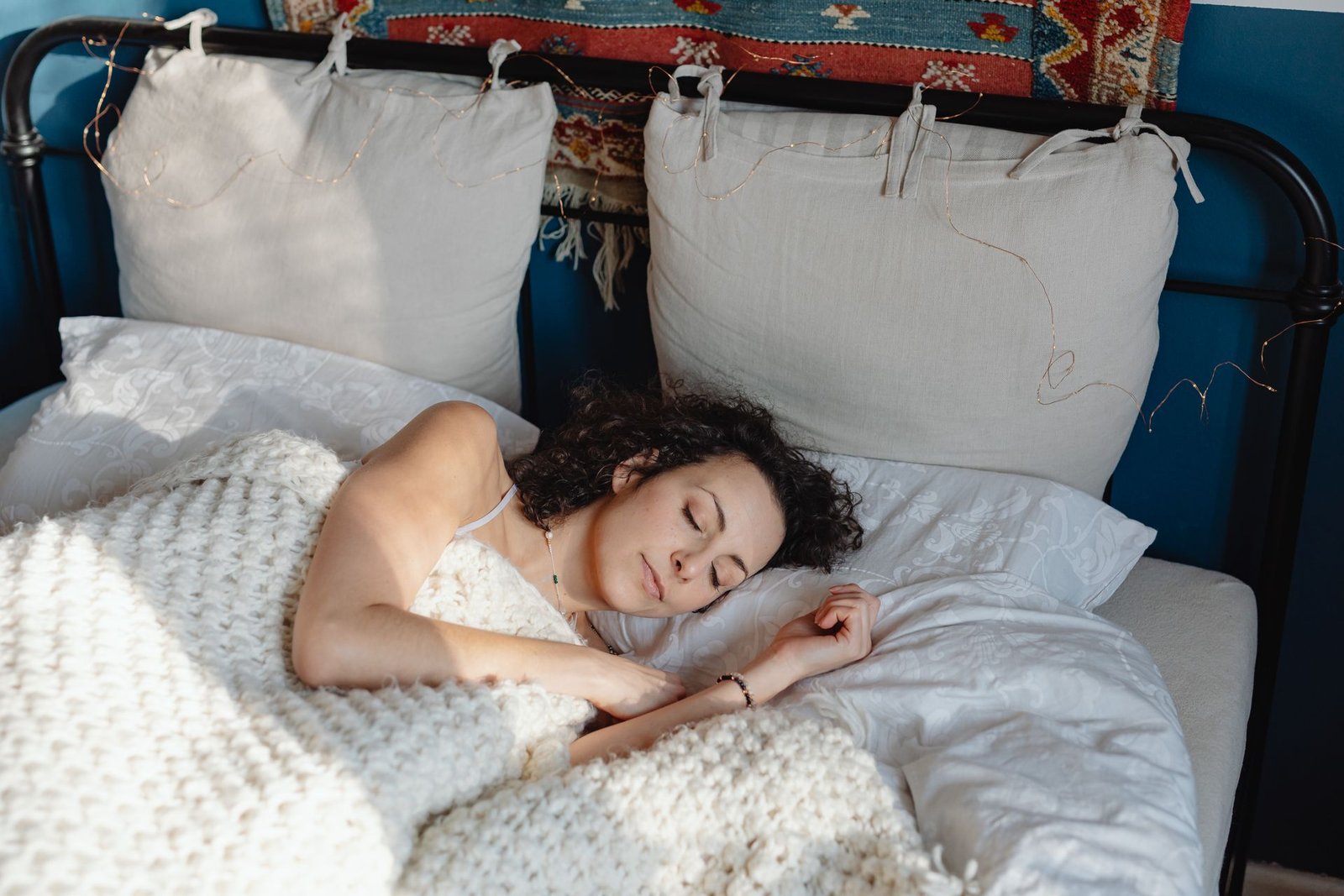
Yes, and curly hair is one of the hair types that benefits most. Curls have more surface area than straight hair, which means more contact points with the pillowcase and more opportunities for friction. A smooth bamboo surface lets curls glide instead of catching, so you wake up with softer, less tangled curls and a better-defined pattern than on cotton.
Here is the honest qualifier. If your curls are very delicate, fine, or high-porosity, silk’s marginally smoother surface gives it a small edge for tangle prevention. Several comparison reviewers land on silk for the most fragile curls and bamboo as the practical everyday alternative.
Two things matter more than the bamboo-vs-silk debate for curly hair:
First, the weave. A sateen weave floats most of its threads across the surface, which leaves fewer bumps for hair to catch on. Look for bamboo sateen rather than a plain weave. The weave of the finished fabric matters as much as the fiber it is made from.
Second, your nighttime routine. A loose pineapple or a silk bonnet on top of the bamboo pillowcase does more for curl preservation than any fabric choice alone. Reviewers in the curly community consistently report bamboo as a well-liked, affordable silk alternative, and pairing it with a protective style makes the difference bigger.
Bamboo Pillowcase vs Satin Pillowcase for Hair: Which Is Better?
This comparison confuses people, partly because satin, sateen, and silk are three different things.
Sateen is a weave, not a fiber. It can be made from cotton or bamboo. A bamboo sateen pillowcase is simply a bamboo pillowcase woven for extra surface smoothness, and it is a good choice for hair.
Satin, as sold in most pillowcases, is a weave made from polyester. Polyester satin does reduce friction, and it absorbs very little moisture, which is why some people like it for hair. But it has real downsides: it is not breathable, so it sleeps hot; it has none of bamboo’s cooling or allergen resistance; and as a synthetic textile it sheds plastic microfibers with every wash.
Our verdict: bamboo beats polyester satin for hair overall. It is smooth enough to meaningfully cut friction, it breathes, it washes easily, and it does not shed microplastics. Satin’s only real advantage is lower moisture absorption, and even that gap narrows with a bamboo sateen weave.
Will a Bamboo Pillowcase Dry Out Your Hair?
This is a fair question, and the honest answer is: it can, slightly, if your hair is already very dry.
Bamboo is gentler than cotton and far less grabby, but it is still an absorbent fiber. Overnight, it can draw out some moisture and some of your leave-in products. People with dry, bleached, or chemically treated hair sometimes notice this more than people with normal or oily hair. Silk and polyester satin absorb less, which is the one genuine hair advantage silk holds over bamboo.
That does not make bamboo a bad choice for dry hair. It just works best with a routine. Apply your leave-in or oil as usual before bed, choose a bamboo sateen weave for the smoothest surface, and consider a silk or satin bonnet for extra moisture protection. The pillowcase is one variable in the eight-hour equation, not the whole equation.
For normal, fine, or oily hair, dryness from bamboo is rarely an issue at all.
Do Bamboo Pillowcases Help Your Hair Grow Faster?
Not directly. No pillowcase stimulates follicle activity or changes your growth rate. Any brand that implies otherwise is selling you something.
What bamboo does is protect the hair you already have from overnight damage. Less friction means less breakage and fewer split ends, so you retain more length. Most people experience that as hair that seems to grow faster. It is better length retention, not growth speed.
The same logic applies to hair loss claims. A bamboo pillowcase will not stop shedding or regrow hair. What it does is reduce the mechanical stress that weakens the hair shaft overnight, which is a small but real part of keeping the hair you have.
If you are dealing with actual hair loss, see a dermatologist. A pillowcase is a supporting player, not a treatment.
Is Bamboo Good for Oily Hair?
Yes, and this is one of bamboo’s underrated strengths. Its moisture-wicking ability helps manage the excess oil and sweat that build up overnight, and reviewers with oily hair frequently report waking up with hair that looks cleaner for longer compared to cotton.
A practical tip: if your hair is very oily, a slightly tighter weave can help absorb excess oil without feeling heavy, while still being gentler than cotton. And wash frequency matters more than fabric for oily scalps. Even the smoothest bamboo pillowcase transfers oil, product buildup, and dead skin back to your hair if it is not clean. For oily hair, wash the pillowcase every three to four days.
One thing to watch: if you use heavy styling products or dry shampoo at night, buildup will accumulate on any fabric. Bamboo handles it well because it is machine washable, but the wash schedule is what keeps the benefit real.
Not All Bamboo Is the Same: Viscose vs Lyocell (Read This Before You Buy)
This is the section most blogs skip. But it is one of the most important things to know before spending money.
When you see a label that says 100% bamboo, it almost always means bamboo viscose. And bamboo lyocell is a different product.
Bamboo Viscose
Bamboo viscose is the most common type. It is made by dissolving bamboo pulp with sodium hydroxide and carbon disulfide in an open-loop process.
The result is still soft and smooth, and it does the job for your hair. But treat “eco-friendly bamboo” claims on viscose labels with healthy skepticism.
Bamboo Lyocell
Bamboo lyocell uses a closed-loop process. The solvent is captured and reused, with producers like Lenzing reporting recovery rates above 99% for their Tencel process, and the chemicals involved are much less toxic.
The fibers are more uniform and stronger, which means a slightly more consistent surface for your hair. Lyocell is also more durable: it holds up better after many washes without pilling or losing its smooth texture.
What to Look for on the Label
Look for the words bamboo lyocell, not just bamboo or bamboo rayon. Check for OEKO-TEX Standard 100 certification on the packaging. Prefer a sateen weave for the smoothest hair-friendly surface. And watch out for greenwashing: organic bamboo does not always mean clean production.
If you can only find bamboo viscose, it still works well for your hair. But for the most sustainable and longest-lasting option, go for lyocell. For a rundown of what to actually buy, see our best bamboo pillowcases guide.
How Often Should You Wash Your Bamboo Pillowcase?
This matters for your hair as much as the fabric itself. A dirty pillowcase transfers oils, product buildup, dead skin, and bacteria back to your hair and scalp every night. Even the smoothest bamboo fabric cannot help you if it is not clean.
Washing frequency guide:
Normal hair: wash your pillowcase every 7 days.
Oily hair or acne-prone scalp: wash every 3 to 4 days.
Heavy overnight hair products: wash every 4 to 5 days.
Heavy night sweating: wash every 3 days minimum.
How to wash it without damaging the fabric: use a gentle cycle with cold or lukewarm water, since hot water breaks bamboo fibers down faster. Choose a mild, sulfate-free detergent. Skip the fabric softener: it coats the fibers and reduces bamboo’s moisture-wicking ability. Do not bleach bamboo viscose. Air dry when possible, or use the dryer on the lowest heat setting.
Warning signs your pillowcase needs replacing rather than washing: persistent static, rapid pilling after the first few washes, or a stiff texture that never softens. A worn pillowcase creates the friction you bought bamboo to avoid.
Bamboo holds up very well after many washes. Unlike silk, which loses its smoothness if washed incorrectly, bamboo stays consistent wash after wash. Our full care walkthrough is here: how to wash bamboo sheets.
What real users found
We did not test these pillowcases ourselves. What follows is what real buyers, forum users, and independent reviewers reported after sleeping on them, with the source for each finding.
Bamboo Comfort, Molly (September 2026): Molly has tested bamboo sheets, towels, and home textiles in her own home since 2017, basing every recommendation on at least 14 nights of use. She says bamboo may reduce tangling, but she would not promise it prevents breakage or fixes frizz, and silk still gets her vote for delicate curls. Bamboo Comfort
PillowPro (November 2026): Their roundup of Amazon’s most-reviewed cooling pillowcases puts the Bedsure PureWoven bamboo rayon set at 4.4 stars across more than 37,700 ratings. Reviewers call it silky and cool to the touch, and one replaced all of their high-thread-count cotton cases, though buyers complain it wrinkles and cools only mildly in a hot room. PillowPro
Household Gadgets (November 2026): Writing originally for their YouTube channel, they report Bedsure bamboo pillowcase buyers saying their hair looks less frizzy after sleeping on it and that the fabric stays soft after washing. Cooling fades during the night for some buyers, and others complain about wrinkling and the pillow sliding around. Household Gadgets
All About Sleep, buyer Jan V: Jan V calls her bamboo pillowcases amazing, saying she found a kinder substitute for the silk pillowcases she used to buy and that they are every bit as good. The same guide reports curly-haired customers waking up with far more manageable hair after switching to bamboo. All About Sleep
Sleepopolis, Ettitude review (2026): Their reviewer slept on Ettitude’s Signature Sateen bamboo lyocell set, pillowcases included, for several weeks and washed it several times, reporting no pilling or deterioration. The fitted sheet stayed put thanks to deep pockets, and the one real annoyance was wrinkling: a crisp-looking bed takes extra effort. Sleepopolis
ProductReview.com.au, Ettitude buyers: Across 183 reviews, buyers report the bamboo fabric pilling after a few washes, breaking down within 12 months, and pillowcases falling apart at the seams. One buyer says her pillowcases fell apart after a few months of use, and that Ettitude deleted her negative review from its own site. ProductReview.com.au
Frequently Asked Questions
Do bamboo pillowcases cause hair loss?
No. Bamboo pillowcases reduce the friction that contributes to mechanical hair damage. Cotton pillowcases snag and pull at strands during sleep, and that repeated pulling stresses the hair shaft over time. Bamboo lets hair glide, so there is far less mechanical stress overnight. That said, a pillowcase cannot treat medical hair loss. If you are shedding unusually, see a dermatologist.
Is bamboo or silk better for frizzy hair?
Both are far better than cotton. For frizzy hair, bamboo is the more practical choice: it cuts friction to a level close to silk, breathes better for hot sleepers, and survives the washing machine. Silk has a marginally smoother surface, which can matter for very fine or high-porosity hair. If you will actually maintain the wash routine, silk edges it. For everyone else, bamboo wins.
Does a bamboo pillowcase help with hair growth?
Not directly. Bamboo does not stimulate follicles or speed up growth. It protects your hair from overnight breakage, so you retain more length. Most people experience that as hair that seems to grow faster. It is length retention, not growth speed.
Is bamboo cooling for night sweats?
Yes. This is one of bamboo’s strongest features. The micro-gap structure in the fibers allows airflow and wicks moisture away from the surface quickly. Even if you sweat at night, bamboo stays drier and cooler than cotton, and it breathes better than silk’s tighter weave.
Is bamboo pillowcase good for curly hair?
Yes. Curls have more surface area and more contact with the pillowcase, so they suffer more friction on cotton. Bamboo’s smooth surface lets curls glide, which means softer, less tangled, better-defined curls in the morning. For the most delicate curls, silk has a slight edge, and a sateen weave plus a loose pineapple or bonnet gets you the best result on bamboo.
Is bamboo better than satin for hair?
A bamboo pillowcase is the better overall choice. Polyester satin reduces friction and absorbs little moisture, but it sleeps hot, is not breathable, and sheds plastic microfibers in the wash. Bamboo cuts friction meaningfully, breathes, washes easily, and a bamboo sateen weave narrows satin’s one real advantage.
Will a bamboo pillowcase dry out my hair?
It can, slightly, if your hair is already very dry, because bamboo is still an absorbent fiber. For normal or oily hair this is rarely an issue. If your hair is dry or chemically treated, pair the pillowcase with your usual leave-in products and consider a bonnet for extra protection. Silk absorbs less moisture than bamboo, which is its one genuine hair advantage.
Is bamboo good for oily or greasy hair?
Yes. Bamboo wicks moisture and manages overnight oil buildup better than cotton, and many people with oily hair report their hair looks cleaner for longer. Wash the pillowcase every three to four days, since a dirty case transfers oil straight back to your hair.
Final Verdict: Is a Bamboo Pillowcase Worth the Switch?
Yes. If you care about your hair, a bamboo pillowcase is one of the easiest and most affordable upgrades you can make. You just change what your hair rests on every night.
Here is the honest ranking for hair health:
First choice: Bamboo lyocell pillowcase, sateen weave, OEKO-TEX certified.
Second choice: Bamboo viscose, still smooth and effective.
Third choice: Mulberry silk, the smoothest surface but needs careful care.
Fourth choice: Polyester satin, decent friction reduction but hot and synthetic.
Avoid: Regular cotton for hair health.
Bamboo is the best all-round choice for most people. It is practical, vegan, affordable, and genuinely effective for reducing frizz, breakage, and scalp irritation. If you have curly hair, a sensitive scalp, oily hair, or colour-treated hair, bamboo moves from a good choice to a great one.
One last piece of honesty: no pillowcase fixes hair on its own. Your products, your heat styling, and how you wear your hair at night all matter more than fabric. But for eight hours of contact every single night, bamboo is the surface your hair deserves.