
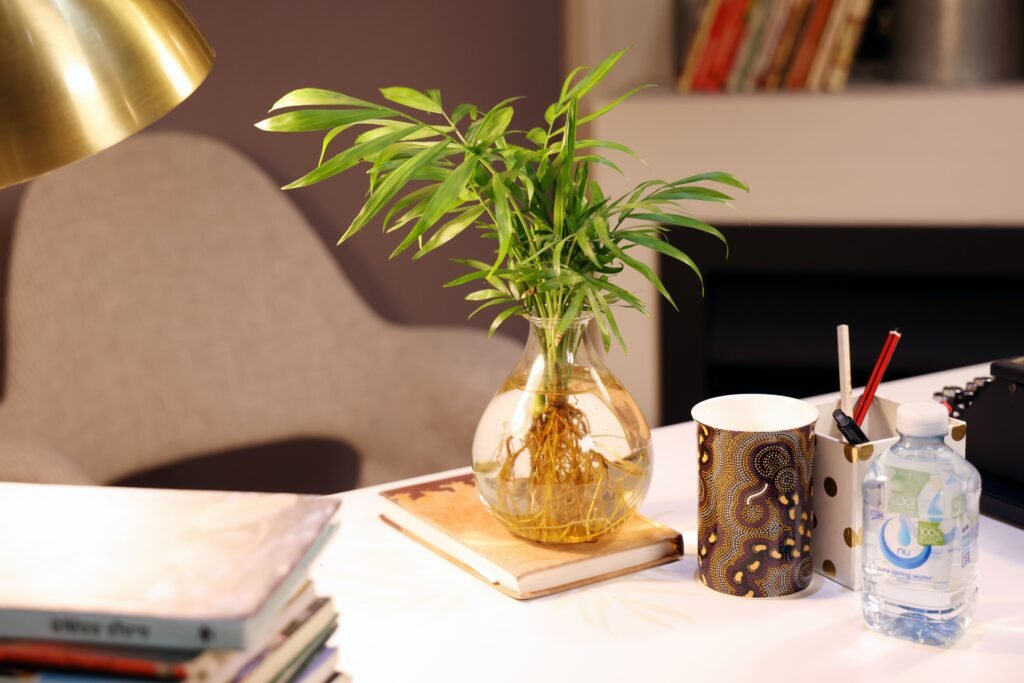
The short answer: To care for lucky bamboo, keep its roots and about 1 inch of stem in chlorine-free water, change the water weekly, and give it bright indirect light. Feed it a quarter-strength liquid fertilizer every other month, keep it warm (65F or above), and trim damaged parts, because yellow stalks never turn green again.
Is lucky bamboo actually bamboo?
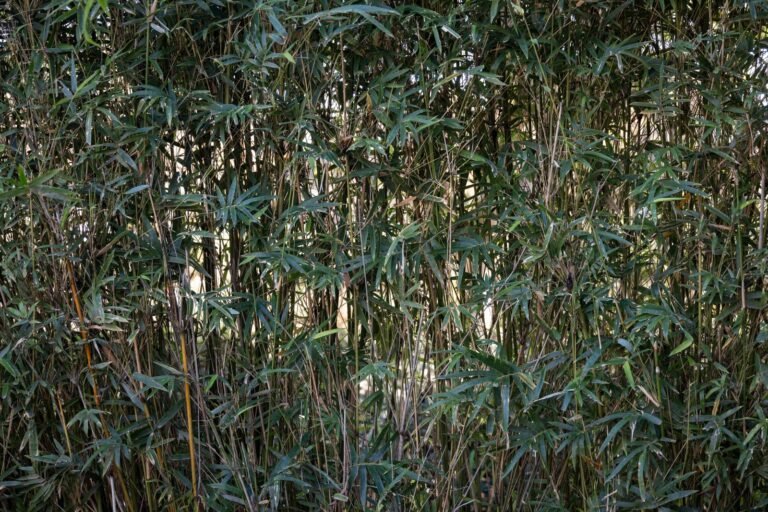
No. Lucky bamboo is not bamboo at all. Its botanical name is Dracaena sanderiana, and it belongs to the asparagus family (Asparagaceae), which makes it a relative of the dragon tree and the snake plant, not of grasses. True bamboo is a grass in the family Poaceae. Lucky bamboo only looks like bamboo when growers strip off its lower leaves to expose the segmented, cane-like stalk. In the wild it is a tropical shrub from West and Central Africa, and its species name honors the German-born nurseryman Henry Frederick Conrad Sander. NC State’s Extension confirms the naming story and notes that lucky bamboo rarely blooms as a houseplant.
This matters more than most care guides admit, because the care advice for real bamboo is almost the opposite of what a lucky bamboo needs. True bamboo is a hungry, sun-loving grass. Lucky bamboo is a shade-tolerant tropical understory plant that wants very little food. If you have been treating yours like a bamboo, that alone may explain its problems. (Curious how the lookalikes compare? Our guide explains how true bamboo, lucky bamboo, and heavenly bamboo differ.)
How much light does lucky bamboo need?
Bright, indirect light. That is the whole answer, and almost every yellowing complaint starts with getting it wrong in one of two directions.
The classic advice from Clemson’s Home and Garden Information Center is a spot near an east- or north-facing window, where the light is gentle. Direct sun scorches the leaves and turns them brown, then yellow. The New York Botanical Garden’s plant experts suggest keeping the plant 5 to 6 feet back from a bright south window. A little morning sun through sheer curtains is fine; a hot afternoon blast across the table is not.

The other direction is too little light. Lucky bamboo tolerates low light, which is why it survives on office desks and in bathrooms, but it does not thrive there. In a dim corner it grows slowly and the new leaves come in pale and thin. If that sounds like your plant, move it closer to the light, but gradually. A plant that has been in a dark room for months can burn when it is suddenly placed in bright sun.
One quick check: if the stalks lean toward the window, rotate the vase a quarter turn every week or two. Growers create those curly, spiral stalks on purpose by training them against one-sided light, and new growth straightens out again once the light is even.
What kind of water should I use for lucky bamboo?
This is where lucky bamboo care gets honest, because water quality is the single most underrated part of keeping this plant alive. NC State’s Extension says it plainly: grow lucky bamboo in chlorine-free water.
The reason is fluoride. Dracaenas are among the most fluoride-sensitive plants grown indoors, according to Michigan State University’s Extension, and the symptom is necrotic leaf tips and margins. Municipal tap water in most US cities contains both chlorine and fluoride, and both harm lucky bamboo. The University of Arkansas Extension traces leaf tip burn to high salts or high fluoride and recommends rainwater where possible.
Here is the myth that needs correcting: letting tap water sit out overnight removes the chlorine, but it does not remove the fluoride. Fluoride does not evaporate. A number of care sites repeat the 24-hour rest trick as if it fixes both, which is simply wrong on the fluoride half. If your tap water is fluoridated, a jug on the counter overnight still gives your plant a dose of fluoride every time you change the water.
So what should you actually use? Ranked by reliability:
- Rainwater (collected cleanly, from a clean container). Free of both chemicals, and recommended by the Arkansas Extension for fluoride-sensitive plants.
- Distilled water. Reliable and cheap. Note that distilled water carries no minerals at all, so a plant living in it for years may benefit from very light feeding.
- Filtered water, if the filter removes fluoride (many pitcher filters do not; reverse-osmosis systems do).
- Rested tap water, only as a last resort: it removes chlorine, but understand it does nothing about fluoride.
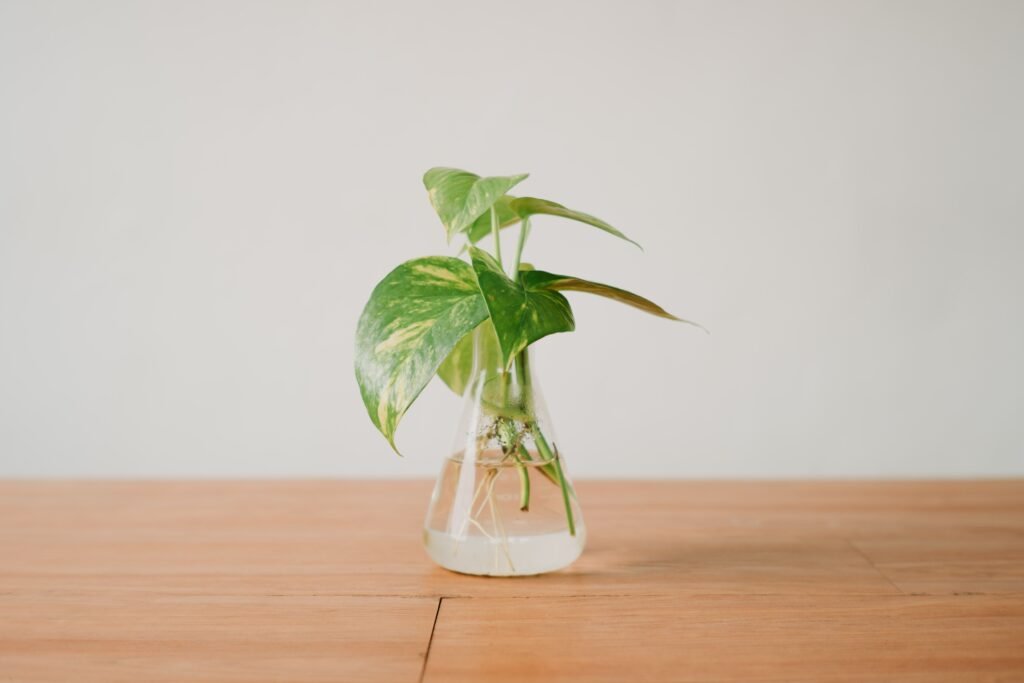
If your plant already has brown, dry leaf tips and you have been using tap water, fluoride is the most likely cause. There is no way to heal the damaged tips; the brown tissue is dead and will not turn green again. Trim the dead tip just inside the brown edge with clean scissors, change your water source, and judge success by the new leaves, which should come in clean.
How often should I change the water?
Weekly. Clemson’s Extension says change the water weekly, and NC State agrees, adding a reason most guides never mention: standing vase water breeds mosquitoes. A weekly change is pest control as much as plant care.
A few details that separate a full change from a sloppy one. First, the water level: keep the roots and about 1 inch of stem submerged, which is Clemson’s measure. As water evaporates, top it back up to that level, but topping up is not a substitute for changing. Community growers on plant forums make a practical point here: a full change replaces depleted oxygen and washes out the bacterial film that builds up on the glass and pebbles. If your water smells sour or the vase walls feel slimy, you have been topping up too long.
Second, rinse the pebbles and the container when you change the water. That decorative layer of stones traps dead root hairs and organic debris, and rotting debris is exactly what turns water stagnant and fuels stem rot. Third, use room-temperature water. Cold water straight from the tap or fridge shocks a tropical plant.
One more honest note: an opaque or dark container shows less algae than a clear one, but you cannot inspect roots through it. A clear vase with weekly changes is the better deal for a beginner, because you can see problems early.
Should I grow lucky bamboo in water or soil?
Both work, and both have real trade-offs. Water is the traditional display and the reason most people buy the plant: clean, simple, and easy to monitor. Soil is the more honest long-term home.
In water, lucky bamboo grows slowly and looks tidy for a long time, but there is a ceiling. The New York Botanical Garden’s plant information service puts it bluntly: within about two years, a water-grown display is likely to become exhausted and die, because stripping the lower leaves to keep the cane look reduces the plant’s ability to photosynthesize. That matches what long-time growers report: water plants cruise along, then stall, then decline. You can extend the good years with clean water and light feeding, but a vase is not a forever home.
In soil, lucky bamboo grows faster and lives longer, which is what thursd.com and the Clemson fact sheet both say. The soil rules are simple: a well-drained potting mix labeled for indoor or tropical plants, a container with drainage holes, and water when the top inch of soil is dry. Never leave water sitting in the saucer. In soil the plant gets steady nutrition, stable moisture, and a root system that is not fighting bacterial slime.
| Factor | Grown in water | Grown in soil |
|---|---|---|
| Growth rate | Slow | Faster |
| Long-term outlook | Likely exhausts within a couple of years (NYBG) | Lives longer with steady care |
| Feeding | Very light liquid feed, every other month | Monthly in the growing season |
| Main risk | Rot from stagnant water; mineral buildup | Overwatering and stem rot in soggy soil |
| Best for | Beginners, desks, short-term displays | Anyone who wants the plant for years |
If your water plant is struggling and you want to switch, move it when it is healthy, not when it is dying. Lift it out, keep the roots intact, pot it at the same depth, and keep the soil evenly moist (not soggy) for the first few weeks while water-grown roots adjust to soil. Expect the plant to pause for a while; that is normal transplant sulking, not failure.
Does lucky bamboo need fertilizer?
Barely. This is the plant that most people kill with kindness. Overfeeding is a documented cause of yellow leaves and burned roots in lucky bamboo, and the expert advice is strikingly restrained.
For plants grown in water, Clemson’s guidance is a liquid houseplant fertilizer at one quarter of the label rate, every other month. That is it. For plants in soil, feed monthly during the growing season, and use a weak dose. Other extension and nursery sources go even lighter: one grower guide caps it at a light water-soluble solution every three months at most, and some veteran growers feed only a couple of times a year. The range tells its own story: if in doubt, feed less.
The symptoms of overfeeding look a lot like other problems, which is why people double down on the wrong fix. Yellowing that starts at the bottom leaves and moves upward, plus brown leaf tips, after a recent feed, points at fertilizer. The fix is not more food; it is a full water change and a long pause before the next feed.
Two popular internet tricks deserve an honest verdict. Activated charcoal dropped in the vase is said to keep water fresh, but no university or extension source backs that claim, so we list it as unproven, not recommended. Watering occasionally with aquarium water is suggested as a free fertilizer on some blogs; it is unproven too, and aquarium water can carry pathogens from the tank. If you want to feed your plant, use a weak liquid houseplant fertilizer from the store and nothing else.
What temperature does lucky bamboo like?
Normal room temperature, leaning warm. Lucky bamboo is a tropical plant, hardy outdoors only in USDA zones 10 to 12, and the standard guidance is 65F to 90F. If yours spends summer on a shaded patio, which is fine once frost danger has passed, bring it back inside before nighttime temperatures drop below 65F. The New York Botanical Garden adds a wider safety margin: avoid extremes below 55F or above 85F where possible.
Location matters more than the thermostat number. Keep the plant away from cold drafts, heating vents, radiators, and the direct blast of air conditioning. A plant that is fine at 72F in still air can still suffer if it sits in the path of a vent. Cold damage shows as soft, darkened tissue, and it is as permanent as any other dead tissue on this plant.
Why is my lucky bamboo turning yellow?
This is the question that drives most lucky bamboo searches, and it deserves a careful answer, because “turning yellow” covers three different problems with three different endings. Read which one matches your plant before you act.
Yellow leaves on an otherwise green stalk. This is the recoverable one. Common causes, in rough order: too much direct sun, fluoride or chlorine in the water, overfeeding, or water that has not been changed in weeks. Work through the list in that order. Move it out of direct sun, switch to chlorine-free water, pause the fertilizer, and do a full water change. The yellow leaves will not turn green again, but new growth should come in clean, and that is how you know the fix worked.
A stalk that is yellow from base to tip. This one is terminal. A fully yellow stalk is dead tissue, and no water change, fertilizer, or prayer brings it back. The right move is to remove it: cut it off at the base with clean, sharp scissors so it stops draining energy and, more importantly, so rot does not spread through shared water to the healthy stalks. If the top of the stalk is still green, you can cut off the green section and root it in fresh water as a new plant.
Yellow, soft, or mushy tissue, often with a bad smell. That is rot, and it is also terminal for the affected part. Take the plant out, cut away everything soft with sterilized scissors until you reach firm green tissue, rinse the roots, wash the container and pebbles, and start again in fresh chlorine-free water. If every stalk is mushy at the base, the plant is done; propagate from any healthy green top growth before you compost the rest.
Underneath all three cases is one rule worth memorizing: damaged tissue on lucky bamboo is permanent. Yellow does not reverse, brown tips do not heal. You are not nursing the old leaves back to health; you are fixing the cause so the next leaves grow right. Every guide that promises to “turn yellow stalks green again” is selling you something.
Why does my lucky bamboo have brown tips?
Brown, dry leaf tips have two common causes, and telling them apart decides the fix.
The first is fluoride in the water, covered in detail above. Dracaenas are unusually fluoride-sensitive, and the damage starts at the leaf tips and margins. If you use tap water in a fluoridated area, this is your prime suspect.
The second is dry air, especially in winter when heating runs constantly. The extension sources note low humidity as a browning cause alongside overfeeding. Some blogs suggest misting the leaves; there is no university source showing misting solves humidity-driven tip browning on this plant, so treat it as a folk tip. What is supported: move the plant away from heat sources and vents, and group houseplants together so they share transpired moisture.
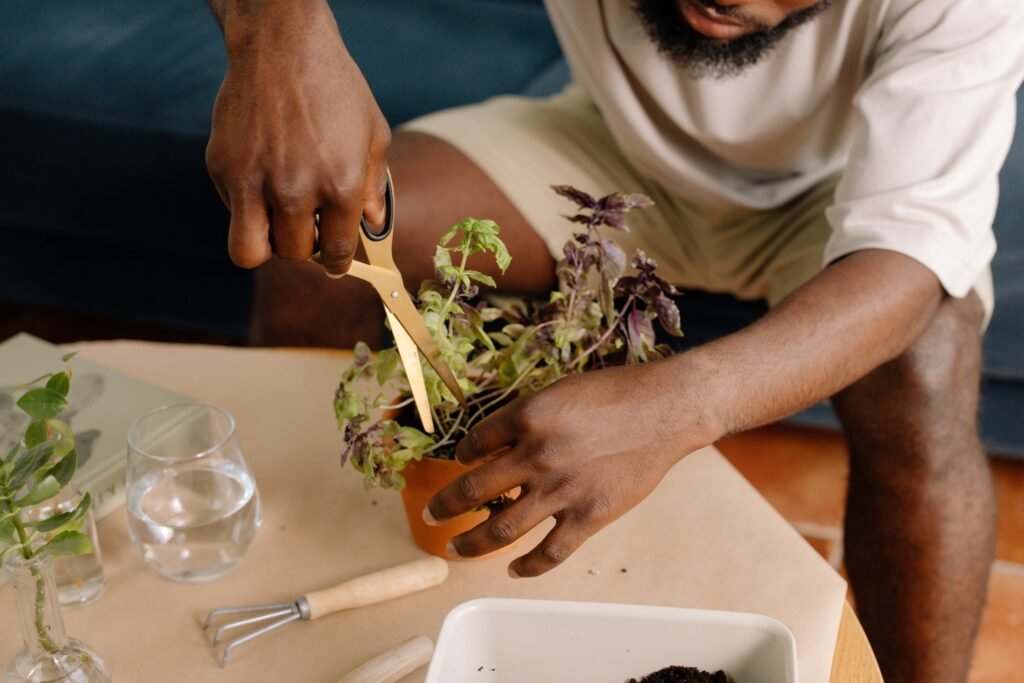
The fix for both is the same in the end. Trim the dead brown tip with clean scissors, cutting just inside the dead edge so no brown remains, and then fix the cause. The trimmed tip will not grow back; the point of trimming is cosmetic, and the point of changing the water is the next set of leaves.
How do I prune lucky bamboo?
Pruning lucky bamboo is simple, and it is the tool you use for all the rescues above. Use clean, sharp scissors or pruning snips, and wipe the blades with rubbing alcohol between cuts if you are cutting away anything rotten.
To shorten a stalk that has grown too tall, cut just above a node, which is one of the ringed bumps along the stalk. New shoots usually sprout from the node just below the cut. To remove a dead or fully yellow stalk, cut it off at the base, as low as you can, and take it out of the arrangement. To clean up ragged brown leaf tips, trim just inside the dead tissue at an angle that follows the leaf’s natural point, so the cut blends in.
Save the cuttings. A healthy top cutting with a node roots easily in water, which is how most growers multiply their plants, and how you rescue a plant when the base is gone but the top is still alive.
How do I propagate lucky bamboo?
Take a healthy offshoot or top cutting that includes at least one node, strip the lower leaves so no foliage sits underwater, and stand it in fresh chlorine-free water. Clemson’s fact sheet says new roots usually form within 2 to 3 weeks. The New York Botanical Garden suggests using the top 4 inches of a stalk and propagating in spring or late summer, when the plant is naturally growing.
Change the propagation water weekly, just like a grown plant’s. Once roots are a couple of inches long, you can leave the new plant in water or pot it into soil. Keep the new plant out of direct sun while it roots; bright indirect light is enough. This is the same move the big YouTube care channels demonstrate in their most-watched videos: the top propagation video on this topic has over 3.6 million views, which tells you how many people buy one plant and want five.
Is lucky bamboo toxic to cats and dogs?
Yes. Because lucky bamboo is a Dracaena, it carries the Dracaena risks. NC State’s Extension states that all parts are toxic to cats and dogs; the toxic compounds are saponins, and symptoms include vomiting, depression, loss of appetite, excessive salivation, and, in cats, dilated pupils. The ASPCA lists Dracaena as toxic to both species. Clemson adds that the sap can irritate human skin, so wear gloves or wash up after heavy pruning.
This is a bigger deal than it sounds, because lucky bamboo sits at exactly the height a curious cat bats things off tables, and the stalks are fun to chew. If you share your home with pets, put the plant somewhere truly unreachable, or choose a different plant. We cover this in full detail in our guide to whether lucky bamboo is toxic to cats, including what to do if your cat chews a leaf. And if anyone in the house reacts to plant materials generally, our page on bamboo allergies is worth a read.
Does lucky bamboo purify the air?
No, not in any meaningful way. This claim shows up on a lot of product pages, but the science behind it does not survive a look at the numbers. A 2020 review by Cummings and Waring, cited in the plant press, examined 12 chamber studies of plants and indoor air and found that you would need somewhere between 10 and 1,000 potted plants per square meter of floor space to match the air exchange an ordinary building already gets from its ventilation. One vase of lucky bamboo on your desk is doing nothing measurable to your air.
None of this makes it a bad plant. It is an easy, attractive, forgiving houseplant with a real cultural tradition behind it. It just is not an air purifier, and a care guide that repeated the claim would be lying to you.
What do the different numbers of stalks mean?
Part of why people buy lucky bamboo is the symbolism, and the stalk counts carry meanings in Chinese tradition: one stalk for a simple life, two for love, three for happiness, wealth, and long life, five for health, six for prosperity, eight for growth and wealth, nine for great fortune, ten for completeness, and twenty-one for a powerful blessing. Four is avoided, because the word for four sounds like the word for death.
The honest caveat, which thursd.com states openly: ask three sellers and you may hear three slightly different lists. These are cultural traditions, not botanical facts, so treat any definitive-looking chart with a grain of salt.
The feng shui layer goes one step further. The classic arrangement is said to hold all five elements: the stalks for wood, pebbles for earth, water for water, a red ribbon for fire, and a glass or metal container for metal. Placement advice usually points east for family health or southeast for wealth. Whether you believe in the energy, the five-element arrangement is a good care setup anyway: pebbles stabilize the stalks, and a red ribbon does no harm.
What pests attack lucky bamboo?
Lucky bamboo has no serious disease problems according to NC State’s Extension, but a few common houseplant pests will move in if the plant is stressed or sitting near other infested plants. The ones Clemson’s fact sheet names are spider mites, mealybugs, and aphids; NC State adds scale insects to the watch list.
Spider mites are the most common, and they love the dry air of heated homes. Look for fine webbing where leaves meet the stalk, plus a stippled, dusty look on the leaves. Mealybugs show up as small white cottony clumps in leaf joints. Aphids cluster on new growth and leave sticky residue behind. Scale looks like tiny brown bumps that do not move.
The first response is always mechanical: take the plant to the sink, rinse the leaves and stalks thoroughly, and wipe the pests off with a damp cloth or cotton swab dipped in rubbing alcohol. For a stubborn infestation, insecticidal soap or neem oil applied per the label works on all four pests. Treat twice, about a week apart, to catch the next hatch. And quarantine the plant away from your other houseplants until you are sure the pests are gone, because all four of these travel.
Prevention is mostly about plant health. A stressed, underfed, dusty plant invites mites; a plant with clean leaves, fresh water, and decent light mostly does not. Wiping the leaves down when you change the water is a small habit that catches problems early.
What should I check when buying lucky bamboo?
Most lucky bamboo problems are inherited at the store, so buying well is half of care. Run through this checklist before a stalk goes in your cart.
First, look at the color. Every stalk should be green from base to tip, and the leaves should be a healthy green with no yellowing edges or brown tips. Pass on any arrangement where even one stalk is yellowing, because a rotting stalk in shared water can take the healthy ones down with it.
Second, check the base. Lift the stalks gently and look at where they meet the water or pebbles. The base should be firm and green, not soft, brown, or mushy. Mushy at the base means rot has already started, and no discount makes that a good buy.
Third, smell the water. A healthy arrangement smells like nothing. A sour or swampy smell means bacteria have been building up, which tells you the store was not changing the water and the plant has been sitting in it.
Fourth, look at the roots if you can see them through the glass. Healthy lucky bamboo roots are white to light tan and firm. Dark brown, black, or slimy roots are a bad sign. Finally, check the leaves for pests: webbing, white cottony spots, or sticky residue are all reasons to pick a different plant. A good nursery or garden center turns its stock over quickly and keeps the water fresh; a dusty arrangement at the back of a gift shop usually does not.
Lucky bamboo care mistakes to avoid
| Mistake | Why it hurts | Do this instead |
|---|---|---|
| Using fluoridated tap water | Dracaenas are highly fluoride-sensitive; tips brown and die | Rainwater, distilled, or fluoride-free filtered water |
| Only topping up the water | Oxygen depletes, bacteria build up, rot follows | Full water change weekly; rinse pebbles and vase |
| Feeding like a hungry houseplant | Overfeeding yellows leaves and burns roots | Quarter strength, every other month, or less |
| Full afternoon sun | Scorched, yellowed leaves | Bright indirect light; east or north window |
| Keeping a fully yellow stalk | Dead tissue can spread rot to healthy stalks | Cut it out at the base; root the green top if any |
| Expecting yellow to turn green | Damaged tissue is permanent; you wait for nothing | Judge fixes by new growth, not old leaves |
| Leaving it in reach of pets | Saponins are toxic to cats and dogs | Unreachable shelf, or choose a pet-safe plant |
| Cold drafts and heater vents | Tropical plant; tissue damage below its comfort range | Still air, 65F to 90F, away from vents |
What does a weekly lucky bamboo routine look like?
Once the plant is set up right, care takes about five minutes a week. Pour out the old water, rinse the vase and pebbles, refill with room-temperature chlorine-free water to cover the roots plus an inch of stem, and wipe the leaves with a damp cloth while you are at it. Glance at the roots and stalk bases for softness, check the leaf tips for browning, and rotate the vase a quarter turn if the stalks lean toward the light. Once every two months, add that quarter-strength feed to the fresh water. That is the whole routine. Everything else in this guide is for diagnosing problems, which a plant on this routine rarely develops.
What real users found
We did not test these plants ourselves. Every finding below comes from real growers and plant-care guides, named with their source, so you can check the original report before you change your routine.
Fluoride leaves a signature. Greg, the plant-care app, calls one pattern the hallmark of fluoride damage: a brown leaf tip edged with a narrow yellow band. Its guidance says fluoride accumulates in the long leaves over repeated waterings and kills tissue at the tips first. The fix it ranks first is switching the water source to distilled, filtered, or collected rainwater. (Greg, common lucky bamboo problems)
A mushy stalk is a rescue, not a recovery. PlantFix, writing in October 2026, is blunt about a stalk that has gone yellow and soft from the base up: that tissue is rotting and no change of water or light brings it back. Its rescue is to cut a couple of inches above the mushy section with clean scissors and re-root the firm green top in fresh chlorine-free water. (PlantFix, lucky bamboo yellow leaves guide)
Rested water stopped the yellowing. One owner writing in November 2026 kept a lucky bamboo in a glass vase for a year, topping it up straight from the tap, until the leaf tips yellowed. Resting the water for 24 hours and changing it every two weeks stopped the yellowing, and the plant stayed a deep, even green with new leaves at the top. (Recipe Treasury, owner account)
Stale water suffocates roots in days. Aqualogi, a water-gardening guide, warns that water-culture roots suffocate in anaerobic water within 7 to 10 days without a change. Slimy brown roots that pull away with light pressure mean rot has started. Its rescue protocol trims every slimy root back to firm white tissue and soaks the roots in diluted hydrogen peroxide for five minutes. (Aqualogi, how to save a dying lucky bamboo)
Overfeeding yellows stalks. Bovees, writing in March 2026, names overfeeding as a yellowing cause: lucky bamboo in plain water needs very little fertilizer, and build-up in the water causes salt accumulation that damages the roots and turns the stalks yellow. Its advice is to flush the system and stop feeding until the plant recovers. (Bovees, lucky bamboo turning yellow)
Soil rescued a struggling plant. On the Dave’s Garden forum, one grower moved lucky bamboo to soil after it did poorly in water and reports the plants have not looked better, with the colour brightened to a lovely emerald green and the leaves doing very well. Another grower in the same thread notes growth had slowed after a year and a half in water. (Dave’s Garden forum thread)
Frequently asked questions about lucky bamboo care
No. A stalk or leaf that has turned yellow will not turn green again. Damaged tissue on lucky bamboo is permanent. The only useful question is whether the cause is fixed, and you answer it by watching the new growth.
Every week. Both Clemson’s and NC State’s extensions recommend weekly changes, and NC State adds that standing vase water breeds mosquitoes. Top up evaporated water between changes, but do not let topping up replace the change.
It depends on your tap water. Chlorine harms the plant, and fluoride burns the leaf tips, and dracaenas are unusually fluoride-sensitive. Letting water sit overnight removes chlorine but not fluoride. If your water is fluoridated, use rainwater, distilled water, or a fluoride-removing filter instead.
No. It is Dracaena sanderiana, a tropical shrub in the asparagus family from West and Central Africa. It only resembles bamboo when the lower leaves are stripped from the stalk.
Water is easier and fine for a year or more, but soil tends to give faster growth and a longer life. The New York Botanical Garden notes that water-grown displays often become exhausted within about two years. For a plant you want to keep for years, soil wins.
Yes. All parts contain saponins that are toxic to cats and dogs, with symptoms including vomiting, loss of appetite, and excessive drooling. Keep the plant out of pets’ reach.
It depends on how it is grown. In water, displays often decline after a couple of years as the plant exhausts itself. In soil with decent care, it lives much longer. Exact lifespan figures floating around online come from weak sources, so treat any specific number of years with skepticism.
Usually fluoride in the water or dry indoor air. Check your water source first, since dracaenas are fluoride-sensitive. Trim the dead tips with clean scissors and fix the cause; new leaves will grow in clean.
Traditional meanings vary by seller, but common ones: two stalks for love, three for happiness and wealth, five for health, eight for growth and wealth. Four is avoided. These are cultural traditions, not botanical facts.