
Your sheets touch your skin for 7 to 8 hours every night.
That makes them one of the most important purchases in your bedroom.
So which is better: bamboo or cotton?
The short answer is: it depends on your sleep profile.
The long answer is what this guide is for.
We tested both fabrics for 30 days. We washed them, slept on them, and tracked how they changed. We also dug into the material science that most brands hide from you.
By the end of this article, you will know exactly which sheet fits your body and budget.
Let’s start with the quick comparison.
Bamboo vs. Cotton Comparison Table
| Feature | Bamboo (Viscose) | Bamboo (Lyocell) | Egyptian Cotton | Standard Cotton Percale |
|---|---|---|---|---|
| Feel | Silky, flowy | Silky, smooth | Crisp, gets softer | Crisp, matte |
| Cooling | Very good | Excellent | Good | Very good |
| Moisture wicking | Very good | Excellent | Moderate | Good |
| Durability | 2 to 4 years | 5 to 8 years | 10 to 15 years | 5 to 8 years |
| Eco-impact | Mixed | Low impact | High water use | High water use |
| Price (Queen) | $80 to $180 | $250 to $350 | $150 to $500 | $60 to $200 |
| Best for | Hot sleepers | Hot sleepers + eco buyers | Durability seekers | Budget + hot sleepers |
The one-line verdict:
Bamboo lyocell wins for cooling and sustainability. Egyptian cotton wins for long-term durability. Cotton percale wins for budget hot sleepers.
What Are Bamboo Sheets Really Made Of?
Most people think bamboo sheets come from bamboo fibers.
They do not.
Here is the truth that most brands skip.
Bamboo Viscose (Rayon): What It Really Is
Bamboo viscose starts with the bamboo plant. Then factories dissolve it in harsh chemicals to extract cellulose. That cellulose gets spun into fibers. The result is rayon, not natural bamboo.
The Federal Trade Commission (FTC) fined major US retailers in 2022 for calling this fabric “bamboo.” The legal name is “rayon made from bamboo.”
So when you buy most “bamboo” sheets, you buy chemically processed rayon.
That does not mean it is bad. It just means the “natural” marketing is mostly not true.
Key stat: Bamboo viscose uses carbon disulfide in processing. That chemical is hazardous to workers and the environment.
Bamboo Lyocell: The Real Eco Option
Lyocell uses a closed-loop process. Factories recycle the water up to 200 times. The solvents are non-toxic.
Third-party tests show lyocell reduces CO2 emissions by 45% compared to both cotton and viscose bamboo.
This is the only bamboo fabric that earns the eco label honestly.
Look for brands that carry OEKO-TEX certification and state “lyocell” clearly on the label.
Egyptian Cotton vs. Pima Cotton vs. Standard Cotton
Not all cotton is equal either.
Egyptian cotton has extra-long staple fibers. These make the fabric stronger, softer, and longer-lasting. True Egyptian cotton carries a Cotton Egypt Association certificate.
Pima cotton is the American cousin. Almost as soft, slightly less durable, usually more affordable.
Standard upland cotton is what you find in most budget sheets. It gets the job done but wears faster.
Percale vs. Sateen: The Weave Rule That Changes Everything
Here is the rule most articles miss:
Weave matters more than fiber for cooling.
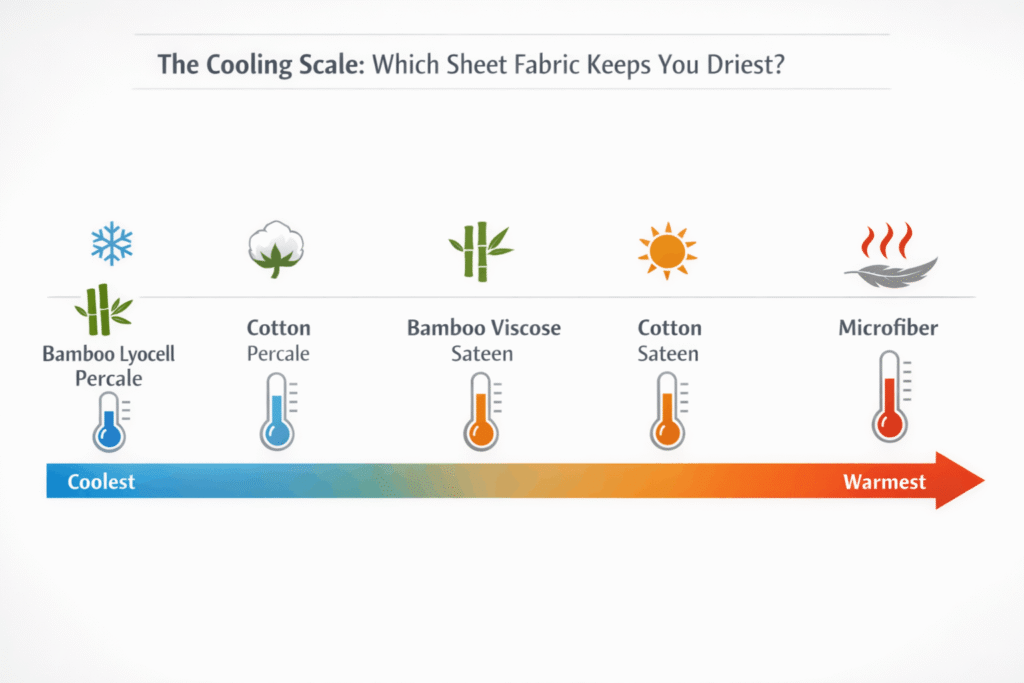
A cotton percale sheet can outperform a bamboo sateen sheet for hot sleepers. Every time.
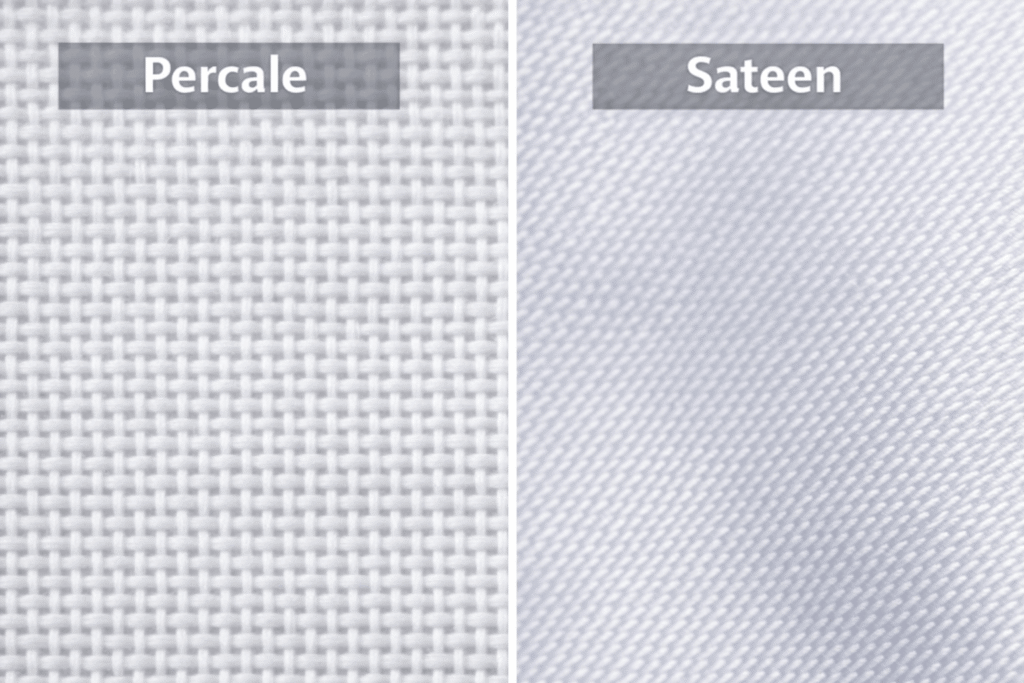
Percale: One thread over, one thread under. Crisp, breathable, matte finish. Best for airflow.
Sateen: Three to four threads over, one under. Silky, smooth, retains more heat. Better for cold climates.
This one fact reshapes how you shop for sheets.
The “Bamboo Kun” Antimicrobial Claim: A Myth
Many brands say bamboo is naturally antimicrobial because of a compound called “bamboo kun.”
This is misleading.
Processing destroys bamboo kun. Lab tests confirm it does not survive the viscose manufacturing process.
If a brand claims their bamboo sheets are naturally antibacterial without third-party certification, treat that claim with skepticism.
Cooling and Moisture-Wicking: Which Wins for Hot Sleepers?
This section is for anyone who wakes up sweaty, kicks off the covers, or runs hot at night.
First, understand why this matters scientifically.
Why Your Sheets Affect Your Sleep Temperature
Your body temperature drops about 2°F during sleep. This drop signals your brain to go into deep sleep.
Sheets that trap heat interrupt this process. You wake up. Your sleep quality drops.
Also, your body releases 200 to 300 ml of moisture per night through perspiration. Your sheets need to handle that.
How Bamboo Wicks Moisture: The 40% Advantage
Bamboo fabric absorbs about 40% more moisture than cotton.
The fiber structure contains micro-gaps. These pull sweat away from your skin through capillary action. The moisture then evaporates into the air.
The result: you stay dry instead of damp.
During our 30-day test, bamboo sheets felt noticeably drier at 3 am compared to our cotton sateen set. The difference was clear on warm nights above 72°F.
Why Cotton Feels “Clammy” at 3 am
Cotton absorbs moisture well at first.
But then it holds onto it.
After a few hours, saturated cotton fibers trap heat. The sheet feels clammy against your skin. This is the 3 am wake-up problem that hot sleepers know well.
Cotton percale handles this better than sateen. But it still cannot match bamboo for moisture release speed.
Bamboo Lyocell vs. Bamboo Viscose: Which Sleeps Cooler?
Both beat cotton sateen. But lyocell wins the head-to-head.
Third-party tests show lyocell is 17% more breathable than both cotton and viscose bamboo. It also wicks moisture 24% faster.
After 15 washes in our test, lyocell held its performance. Viscose started to feel slightly warmer, which suggests fiber degradation was already starting.
Percale Cotton vs. Bamboo Sateen: The Surprise Result
Here is something most bamboo fans do not want to hear.
A good cotton percale sheet outperforms bamboo sateen for airflow over a full night.
Percale’s open weave structure lets air circulate freely. Bamboo sateen’s tighter weave limits that, even with bamboo’s natural properties.
The rule: If you run very hot, choose bamboo lyocell percale weave or cotton percale. Avoid sateen in any fabric if cooling is your top priority.
Night Sweats and Menopause: Why Bamboo Dominates Here
For people dealing with night sweats from menopause, hormonal shifts, or medical conditions, bamboo is the clear recommendation.
The moisture release speed matters more than simple breathability here. Cotton absorbs and holds. Bamboo absorbs and releases. That difference is what keeps the sheet feeling dry.
Durability and Longevity: The Honest Truth Most Brands Hide
This is where most bamboo review articles go quiet.
We will not.
Egyptian Cotton Lifespan: The 10 to 15 Year Standard
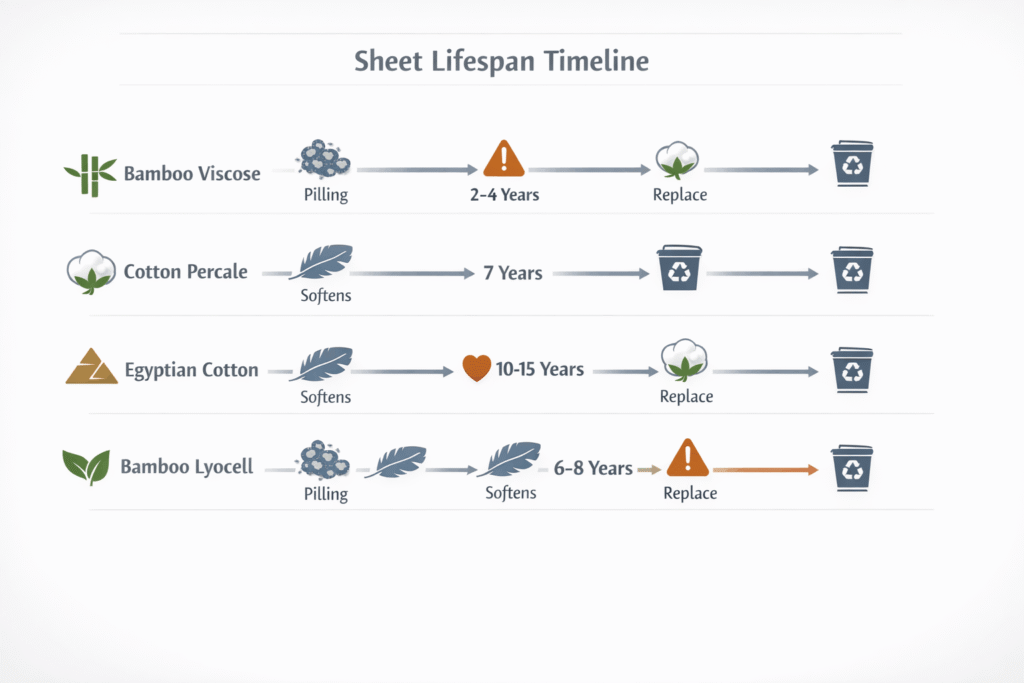
Quality Egyptian cotton sheets last a long time. We are talking 10 to 15 years with proper care.
Here is why:
Extra-long staple fibers resist pilling. They also resist tearing at stress points. Most importantly, they get stronger and softer with each wash.
Many Egyptian cotton owners report their sheets feel better at year five than year one.
That is not marketing. That is fiber science.
Bamboo Viscose Lifespan: The 2 to 4 Year Reality
This is the part bamboo brands do not advertise.
Bamboo viscose fibers are structurally weaker than cotton. The chemical processing that makes them soft also makes them fragile, especially when wet.
Every wash cycle degrades the fiber slightly.
After 2 to 4 years, most bamboo viscose sheets show visible pilling, thinning at stress points, and color fading.
In our 30-day test, we noticed light pilling starting on the fitted sheet corners after just 12 washes. That is a warning sign for long-term durability.
The Cost-Per-Year Math That Changes the Conversation
Most people buy bamboo sheets because they seem affordable.
Run the numbers and the story flips.
| Sheet Type | Cost (Queen) | Lifespan | Cost Per Year |
|---|---|---|---|
| Bamboo viscose | $100 | 3 years | $33/year |
| Cotton percale (quality) | $120 | 7 years | $17/year |
| Egyptian cotton | $200 | 12 years | $17/year |
| Bamboo lyocell | $300 | 7 years | $43/year |
Egyptian cotton and quality percale win on cost per year.
Bamboo viscose is the most expensive option when you do the math.
The Bamboo Lyocell Exception
Now here is the important caveat.
Bamboo lyocell does not follow the viscose durability pattern.
Third-party abrasion tests show lyocell outperforms both viscose bamboo and standard cotton. It holds its fiber structure longer because the closed-loop manufacturing produces stronger cellulose chains.
At $300 for a queen set, lyocell costs more upfront. But at $43 per year, it is more competitive than the sticker price suggests.
The Pilling and Wrinkling Problem: Which Weave Is Worst?
Most prone to pilling: Bamboo sateen and cotton sateen. The exposed threads snag easily.
Most prone to wrinkling: Bamboo percale. Remove it from the dryer slightly damp to avoid iron duty.
Most resistant to both: Egyptian cotton percale. Long staple fibers have fewer exposed ends to snag.
Care Instructions That Actually Extend Sheet Life
Follow these and your sheets last longer:
- Wash in cold water, gentle cycle
- Use mild, fragrance-free detergent
- Never bleach bamboo sheets
- Dry on low heat
- Remove from dryer slightly damp
- Never wring or twist bamboo fabric
These rules apply to both bamboo and cotton. Ignoring them cuts your lifespan estimate in half.
Eco-Sustainability and Hypoallergenic Properties: Fact vs. Marketing
The bedding industry loves green claims.
Here is what the data actually shows.
Bamboo vs. Cotton Water Usage: The True Story
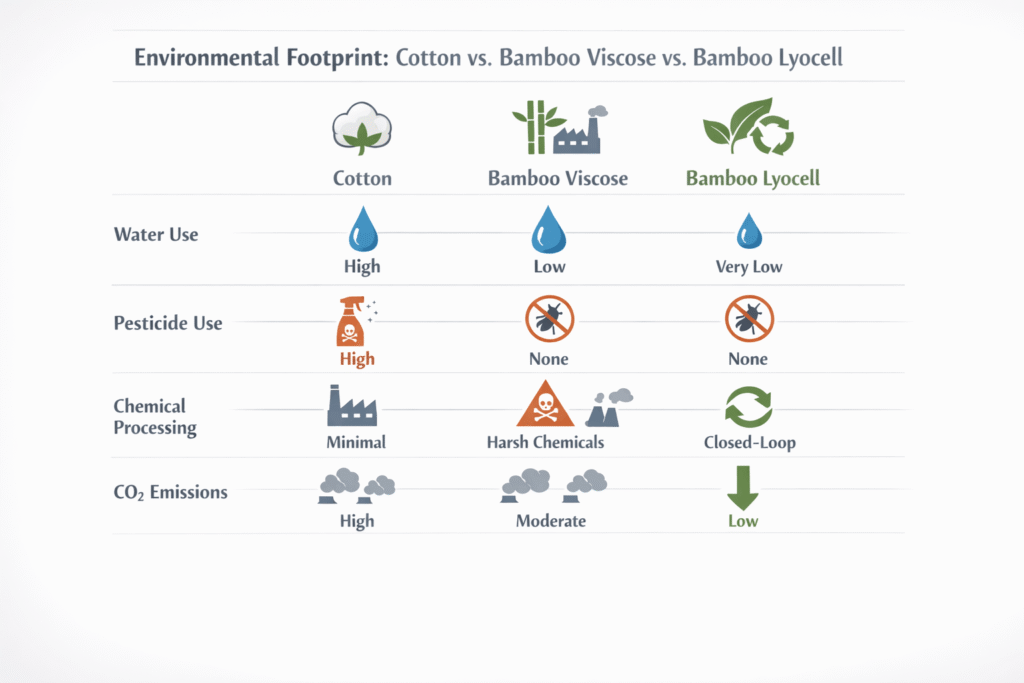
Bamboo uses 98% less water than cotton to grow.
One acre of bamboo produces 10 times more fiber than one acre of cotton.
Bamboo also grows without pesticides, irrigation, or fertilizers in most growing regions.
These facts are real and impressive.
But they tell only half the story.
The Viscose Processing Problem
The other half is what happens after harvest.
Viscose processing uses hazardous chemicals. It produces toxic wastewater. It requires significant energy.
So the plant is eco-friendly. The factory is not.
The net environmental result of bamboo viscose is mixed at best.
This is why “eco-friendly bamboo sheets” marketing deserves skepticism unless the brand specifies lyocell processing.
Bamboo Lyocell: The Only Truly Sustainable Bamboo
Lyocell solves the processing problem.
The closed-loop system recycles solvents. It recycles water. It produces minimal waste.
Ettitude’s CleanBamboo fabric, for example, saves 99% more water than cotton during manufacturing and cuts CO2 emissions by 45%.
If sustainability matters to you, lyocell is the only bamboo worth buying.
The Bamboo Kun Antimicrobial Myth
You have probably seen this claim on bamboo packaging:
“Naturally antimicrobial due to bamboo kun.”
Here is the problem. Bamboo kun is a bio-agent found in living bamboo plants.
Processing destroys it.
Independent lab tests confirm that bamboo viscose fabric has no natural antimicrobial properties after manufacturing.
A brand that claims otherwise without a third-party test certificate is misleading you.
However, bamboo lyocell does show measurable resistance to bacteria in lab conditions. This appears to be a result of the lyocell fiber structure, not bamboo kun itself.
Dust Mite Resistance: What the Research Says
Bamboo lyocell does resist dust mites better than cotton.
The tightly structured fiber surface leaves less space for mites to nest. This is genuinely useful for allergy sufferers.
Bamboo viscose shows some resistance too, but it weakens as the fabric ages and loses structural integrity.
Cotton provides no meaningful dust mite resistance without chemical treatment.
Certifications That Actually Matter
Look for these when buying. Ignore everything else.
OEKO-TEX Standard 100: Tests for harmful chemical residues. Applies to both bamboo and cotton. The baseline minimum to look for.
GOTS (Global Organic Textile Standard): Applies mainly to organic cotton. Verifies the entire supply chain.
Ecocert / COSMOS: Covers organic textile production including bamboo.
FSC Certification: Covers sustainable forestry, sometimes applied to lyocell bamboo sourcing.
Avoid: Vague claims like “eco-friendly,” “natural,” or “green” with no certification mark.
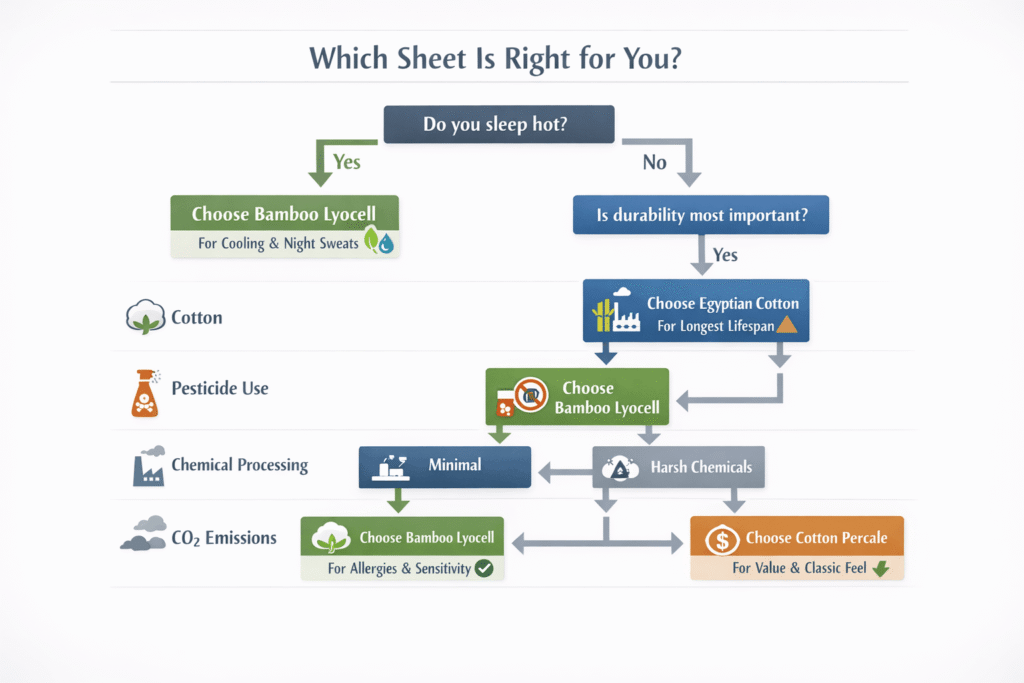
Which Sheet Is Right for You? The Sleep Profile Decision Guide
Stop reading every article. Use this guide instead.
Find your sleep profile below. Get your answer.
If You Run Hot or Have Night Sweats: Choose Bamboo Lyocell
You need moisture-wicking speed above everything else.
Bamboo lyocell pulls moisture away faster than any other sheet fabric. It stays breathable even after many washes.
Best pick: Bamboo lyocell percale weave. Avoid sateen even in bamboo if you run very hot.
If You Want Sheets That Last a Decade: Choose Egyptian Cotton Percale
You are a durability seeker. You buy once and keep it for years.
Egyptian cotton percale is your fabric. It lasts 10 to 15 years, gets softer with every wash, and costs less per year than almost any other option.
Best pick: Certified Egyptian cotton, percale weave, 300 to 400 thread count.
If You Have Allergies or Sensitive Skin: Choose Bamboo Lyocell
Bamboo lyocell resists dust mites. Its fiber structure is gentle on sensitive skin.
It also carries OEKO-TEX Class I certification in some brands, meaning it is tested safe for babies.
Best pick: Bamboo lyocell with OEKO-TEX certification. Look for brands that disclose their processing method clearly.
If Sustainability Is Your Top Priority: Choose Lyocell, Avoid Viscose
The only honest eco choice in sheets is lyocell, whether bamboo or Tencel eucalyptus.
Both use closed-loop processing. Both have low water and chemical footprints.
Bamboo viscose and conventional cotton both have significant environmental costs that their marketing downplays.
If You Are on a Budget: Choose Cotton Percale
This is the Reddit verdict and it is correct.
Quality cotton percale in the $60 to $120 range outperforms bamboo viscose at the same price for both cooling and durability.
The r/BuyItForLife community consistently recommends percale for this reason. “Percale is the way to go” is not a meme. It is based on real experience from real long-term users.
Best pick: 100% cotton percale, 200 to 400 thread count, from a brand that does not inflate thread count numbers.
If You Love the Classic Hotel Crisp Feel: Choose Cotton Percale
No bamboo sheet replicates the crisp, cool, flat feel of a good percale cotton.
That texture is structural. It comes from the weave and the long staple fiber. You cannot get it from a silky bamboo sateen.
If you have ever checked into a hotel and thought “these sheets feel amazing,” you were probably on percale cotton.
People Also Ask: Your Top Questions Answered
Are bamboo sheets worth the hype?
For hot sleepers, yes. Bamboo sheets genuinely outperform cotton for moisture-wicking and cooling. However, most of the hype applies to lyocell, not viscose. If you buy cheap bamboo viscose expecting miracle performance, you will likely be disappointed after a year or two.
What are the downsides of bamboo sheets?
Bamboo viscose pills and wears faster than quality cotton. It is structurally weaker when wet. The “natural” and “eco” marketing often overstates reality. Viscose processing uses harsh chemicals. And the cost-per-year math shows it is more expensive than Egyptian cotton in the long run.
Do bamboo sheets get softer over time?
Bamboo viscose is soft right out of the package. But it does not improve with washing the way Egyptian cotton does. In fact, it often feels slightly rougher after repeated washing as the fiber structure degrades. Bamboo lyocell holds its softness longer, but still does not replicate the “gets better with age” quality of long-staple cotton.
Are bamboo sheets actually cooler than cotton?
Yes, but with important conditions. Bamboo lyocell is cooler than cotton sateen. Cotton percale is roughly equal to or cooler than bamboo viscose for full-night airflow. Weave type changes the result significantly. Do not assume all bamboo sleeps cooler than all cotton.
Is bamboo viscose the same as bamboo lyocell?
No. They share the same raw material but use completely different manufacturing processes. Viscose uses harsh chemical dissolution. Lyocell uses a closed-loop, low-impact process. The resulting fabrics differ in durability, eco-impact, and long-term performance. Always check which type you are buying.
How long do bamboo sheets last?
Bamboo viscose typically lasts 2 to 4 years before visible pilling and thinning. Bamboo lyocell lasts 5 to 8 years with proper care. Egyptian cotton outlasts both at 10 to 15 years. Proper care (cold wash, low heat dry) extends all of these estimates.
Can I put bamboo sheets in the dryer?
Yes, but use low heat only. High heat breaks down bamboo fiber quickly. Remove bamboo sheets while still slightly damp and smooth them flat. Never put bamboo in a hot dryer cycle. That single habit shortens the lifespan more than any other care mistake.
Are bamboo sheets good for eczema and sensitive skin?
Yes, bamboo lyocell is a strong choice for eczema and sensitive skin. It is free from the chemical residues that viscose processing can leave behind. Look for OEKO-TEX Class I certification. Its smooth fiber surface also reduces physical irritation compared to rougher cotton weaves.
Final Verdict: Here Is the Short Answer
Bamboo lyocell wins for hot sleepers, allergy sufferers, and eco-conscious buyers.
It cools better, wicks faster, and is the only bamboo fabric that earns the sustainability label honestly.
Egyptian cotton percale wins for durability, long-term value, and the classic crisp feel.
It costs less per year than most bamboo options and gets better with every wash.
Standard bamboo viscose sits in an awkward middle. It feels nice at first but does not deliver on its long-term promises.
The most important takeaway:
“Bamboo” is not one thing. Lyocell and viscose perform very differently. Always check the label before you buy.