
A bamboo steamer is a stack of woven baskets that sits over simmering water. Steam rises through the perforated base, cooks your food gently, and the domed bamboo lid absorbs excess moisture. No soggy dumplings. No added oil. Just clean, flavorful results in minutes.
The short answer: Add 1 to 2 inches of water to a wok or wide pan. Line the baskets. Load food in a single layer. Stack, cover, and steam for 8 to 15 minutes, depending on what you are cooking.
Now, let’s walk through every step so you get it right the first time.
What Is a Bamboo Steamer and Why Use It
A bamboo steamer is a traditional Asian cooking tool. It consists of stackable woven bamboo baskets with a domed lid on top. Together, they sit over a pot or wok of simmering water.
Steam rises through the open ridges at the bottom of each basket. It then circulates around the food inside. The result is gentle, even cooking with no oil required.
Why Bamboo Beats Metal and Electric Steamers
The bamboo lid absorbs moisture instead of collecting it. Metal lids drip condensation back onto food. That drip changes texture and dilutes flavor.
Bamboo is also eco-friendly, inexpensive, and goes straight from stove to table. It costs far less than an electric steamer and delivers far better results.
Key benefits at a glance:
- Preserves natural flavor and nutrients
- Requires zero oil or fat
- Cooks multiple foods at once using stacked tiers
- Produces authentic dim sum results at home
- Naturally absorbs excess steam so food stays firm
What You Need Before You Start
Gather these before you begin. Missing one item mid-cook causes problems.
Equipment Checklist
- Bamboo steamer (10-inch is the most versatile size for home use)
- Wok or wide pan (the steamer must rest on the rim, not fall in)
- Tongs or oven mitts (steam burns are serious)
- Heat source (gas, electric, or induction all work)
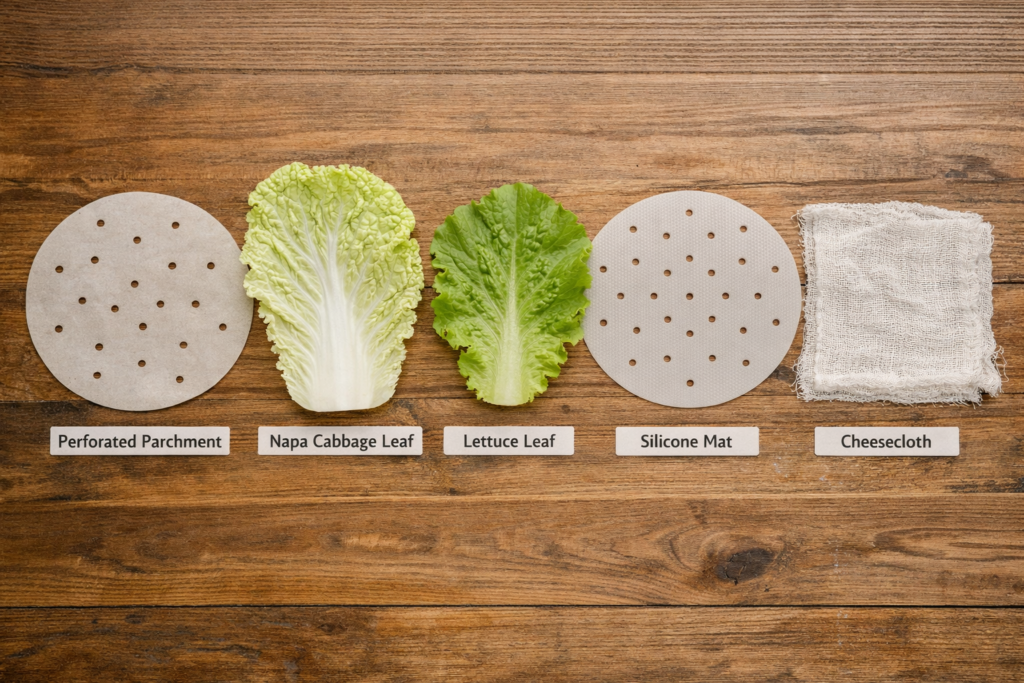
Liner Options (Choose One)
You need a liner for most foods. It prevents sticking and still lets steam pass through. Never use a solid, non-perforated liner.
| Liner Type | Best For | Notes |
| Perforated parchment paper | Dumplings, buns, fish | Poke holes if using regular parchment |
| Napa cabbage leaves | Dumplings, sticky rice | Adds subtle flavor |
| Lettuce leaves | Vegetables, lighter foods | Wilts quickly, replace if reusing |
| Silicone steamer mat | All-purpose, reusable | Must have holes for steam |
| Cheesecloth | Sticky rice, delicate foods | Folds to fit any size |
How to Use a Bamboo Steamer for the First Time
Brand new steamer? Follow these steps before cooking any food. Skip them and your steamer scorches or smells like raw bamboo.
Step 1: Rinse It
Rinse every basket and the lid under warm running water. No soap yet. Just rinse away any dust or bamboo residue from manufacturing.
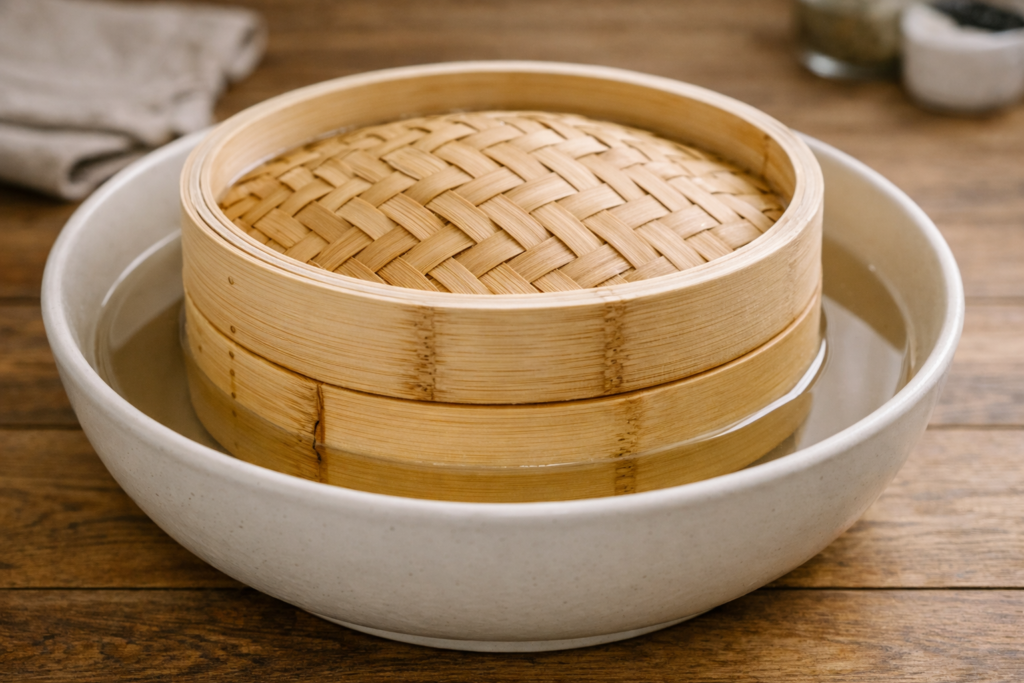
Step 2: Soak the Bottom Rim
Fill your sink or a large bowl with warm water. Submerge the bottom rim of the steamer for 20 to 30 minutes. This softens the bamboo fibers that will make direct contact with the hot pan. It stops scorching.
Step 3: Run an Empty Steam
Place the soaked steamer over a pot of simmering water. Cover it. Steam it empty for 10 minutes. This sanitizes the baskets and removes that fresh woody scent. Your first batch of food will thank you.
Step 4: Air Dry Completely
After the empty steam, remove the steamer. Set it in a well-ventilated spot. Let it dry for at least 24 hours before you store it. Storing bamboo while damp causes mold. This is the single most common mistake new owners make.
How to Use a Bamboo Steamer (Step-by-Step)
This is your core process. Follow these 8 steps every time you cook.
Step 1: Choose Your Vessel
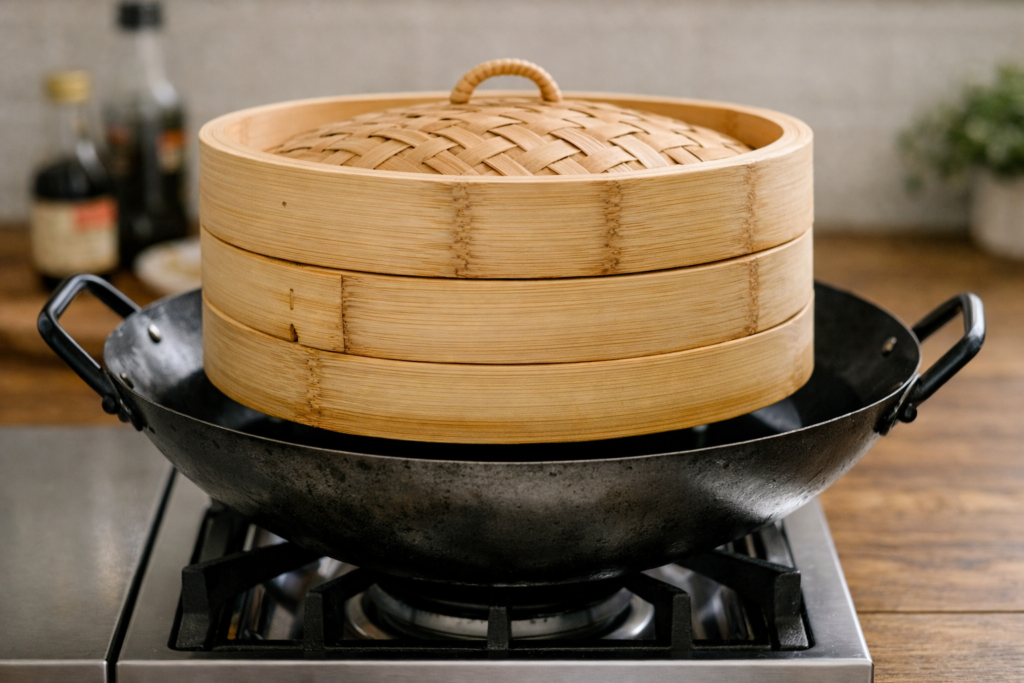
Pick a wok or a wide, shallow pan. The bamboo steamer must rest on the rim without falling inside. A 10-inch steamer fits best in a 12-inch wok or a 12-inch wide skillet.
A wok works best because its thin walls heat quickly and its curved shape accommodates many steamer sizes. A wide skillet is a fine second choice.
Step 2: Add the Right Amount of Water
Pour 1 to 2 inches of water into the wok or pan. Place the steamer on the rim first, then check the water level.
The water must touch the bottom rim of the steamer. It must NOT touch the bottom of the food basket inside. That small gap is everything. Too little water and the pan runs dry. Too much and the food sits in boiling water, not steam.
Safety rule: Always use hot water to refill during cooking. Adding cold water causes a sudden temperature drop, releases a burst of steam, and can warp thin pans.
Step 3: Line the Baskets
Place your chosen liner in each basket you plan to use. The liner should cover most of the base but leave the edges open. Steam must enter from the sides and the perforations.
For dumplings, use individual small squares of parchment under each one. For vegetables, a single large cabbage leaf works well. For marinated meats or fish, use a heat-safe plate inside the basket to catch the juices.
Step 4: Load Food in a Single Layer
Place food inside the lined basket with space between each piece. Dumplings need at least half an inch of clearance from each other. Vegetables need room for steam to circulate around them.
Overcrowding is the most common mistake. Packed baskets produce unevenly cooked food because steam cannot reach every surface.
Step 5: Stack the Baskets Smartly
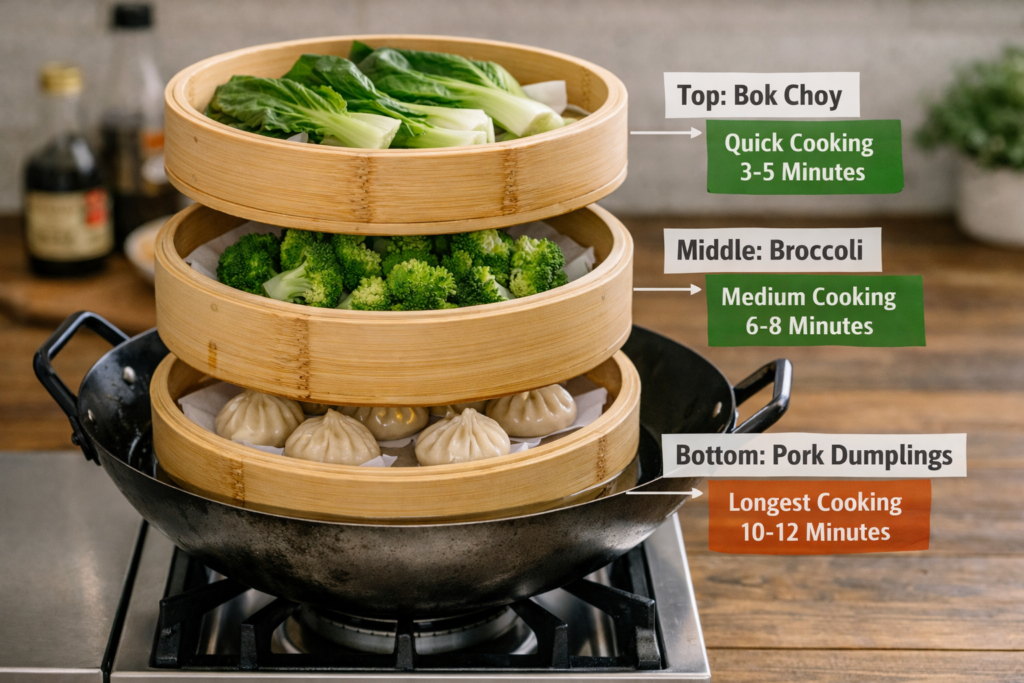
Stacking multiple tiers lets you cook different foods at once. Here is the key: denser foods that need more time go on the bottom. Lighter, quick-cooking foods go on top.
Example stacking order (bottom to top):
- Bottom tier: pork dumplings or fish fillets (10 to 12 min)
- Middle tier: broccoli florets or bok choy (6 to 8 min)
- Top tier: leafy greens or pre-cooked items to reheat (3 to 5 min)
Step 6: Bring Water to a Boil, Then Reduce Heat
Turn the burner to high. Bring the water to a rolling boil first. Then reduce the heat to medium or medium-low to maintain a steady simmer.
Do not steam on high heat the whole time. Aggressive boiling wastes water fast and can push too much moisture into the food. A gentle, consistent simmer produces better texture.
Step 7: Cover and Steam
Place the domed lid on the top basket. Start your timer.
Bamboo Steamer Cooking Time Reference:
| Food | Steam Time | Notes |
| Fresh dumplings (jiaozi, har gow) | 8 to 10 min | Done when wrappers turn translucent |
| Frozen dumplings | 12 to 15 min | No thawing needed |
| Soup dumplings (XLB) | 8 to 10 min | Handle gently after cooking |
| Pork buns (baozi) | 12 to 15 min | Done when puffy and dough springs back |
| Shrimp/scallops | 6 to 8 min | Done when flesh turns opaque |
| Fish fillets | 8 to 12 min | Done when it flakes with a fork |
| Broccoli, bok choy, snap peas | 5 to 7 min | Vivid green = perfect |
| Carrots, beets, dense root veg | 10 to 15 min | Cut into even pieces |
| Glutinous/sticky rice | 25 to 30 min | Soak rice 4 hours first |
| Reheating leftovers (dumplings, buns) | 4 to 6 min | Best reheating method available |
Keep the lid on during steaming. Every time you lift it, you lose heat and add 2 minutes to cooking time.
Step 8: Check Water and Serve
Every 7 minutes, tilt the steamer slightly and peek at the water level. If it drops below half an inch, add more hot water carefully.
When the food is done, use tongs to lift the steamer off the heat. Open the lid away from your face. Steam burns happen fast. Let the rush of steam escape before you reach inside.
Serve directly from the steamer. It goes straight to the table and keeps food warm.
How to Use a Bamboo Steamer Without a Wok
No wok? No problem. Most American home kitchens do not have one. Here are three reliable methods.
Method 1: Wide Skillet
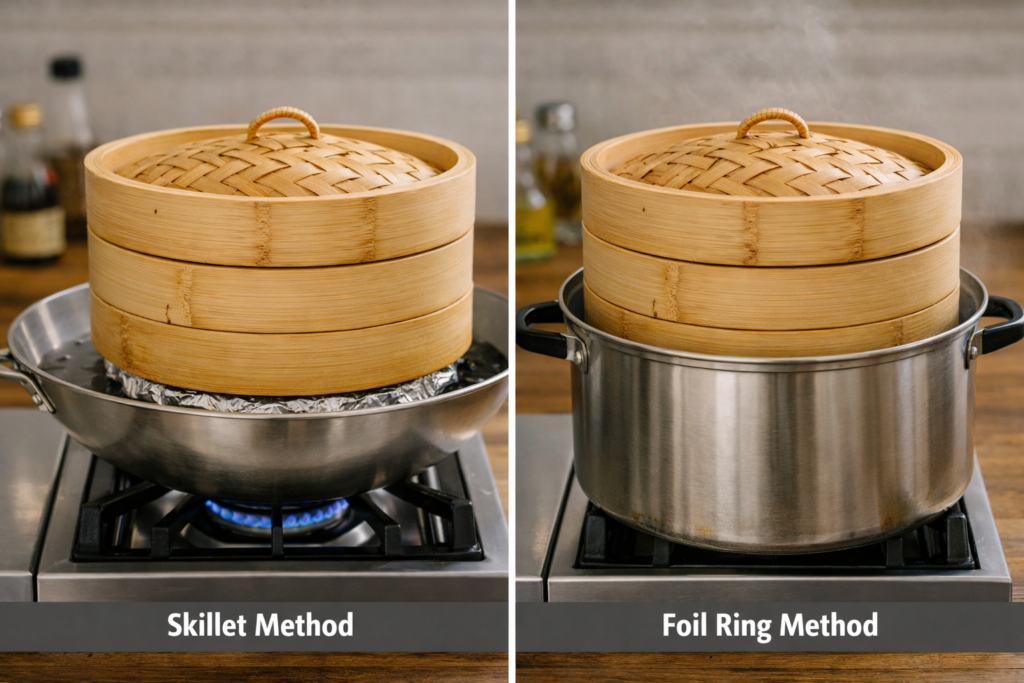
Find a skillet or sauté pan with a diameter slightly smaller than your steamer. The steamer rests on the top rim of the pan. This works exactly like a wok if the diameter is right. A 12-inch stainless steel or cast iron skillet handles a 10-inch bamboo steamer perfectly.
Method 2: Regular Pot with a DIY Stand
Take a regular stockpot. Crumple a long piece of aluminum foil into a thick ring. Place the ring inside the pot. Set the bamboo steamer on top of the ring. The ring keeps the steamer elevated above the water. Use 2 inches of water in the pot below.
Alternatively, place a small metal rack or trivet inside the pot. The steamer sits on the rack.
Method 3: The Pie Tin Hack
Place an aluminum pie tin with a center hole punched through it over a regular pot. The steamer rests on the tin. Steam rises through the hole and into the baskets. This works well for a pot that is slightly too narrow.
What NOT to use: A narrow, deep stockpot without a stand. The steamer drops inside, contacts the water, and your food boils rather than steams.
Best Foods to Cook in a Bamboo Steamer
A bamboo steamer handles far more than dumplings. Here is what it does best and why.
Dumplings and Dim Sum
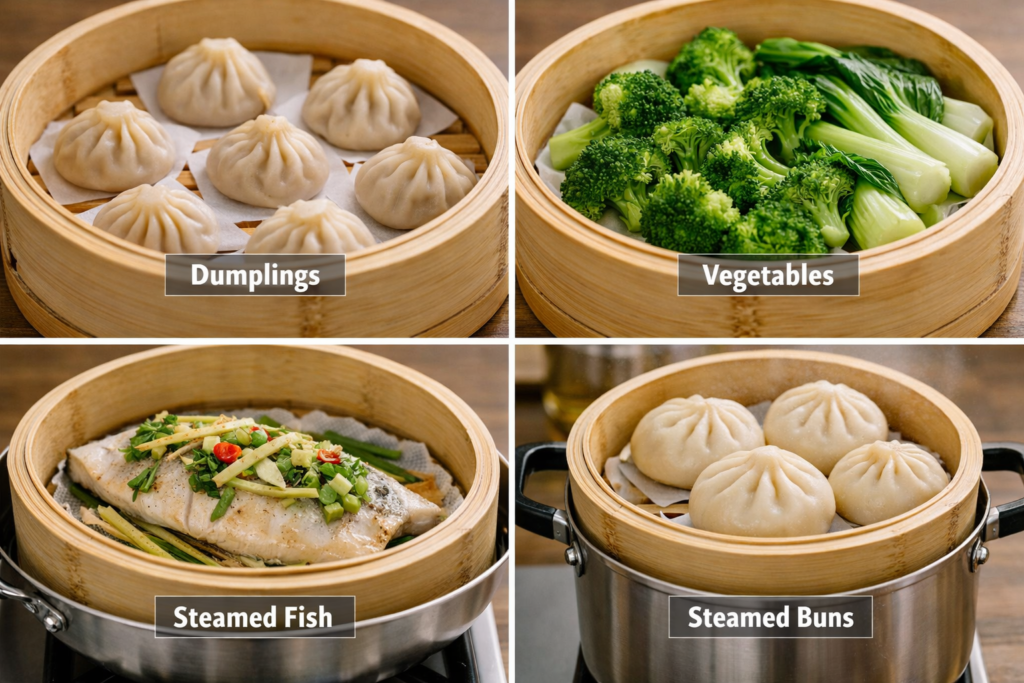
Bamboo steamers were designed specifically for dim sum. The gentle steam keeps wrappers tender and filling juicy. Dumplings, har gow, shumai, and XLB all perform best here.
The bamboo absorbs just enough moisture so wrappers stay silky instead of soggy. Metal steamers cannot do this.
Steamed Buns (Baozi)
The porous bamboo lid controls humidity perfectly for buns. Too much steam collapses the dough. Too little dries it out. Bamboo finds that balance naturally.
Fish and Seafood
Steaming preserves the delicate texture of fish. It stays moist, flakes cleanly, and absorbs any aromatics in the water below. Fish fillets cook in 8 to 12 minutes.
Vegetables
Broccoli, bok choy, snap peas, and carrots steam in 5 to 15 minutes depending on thickness. Steaming retains more vitamins than boiling because the food never touches water directly.
Sticky Rice (Lo Mai Fan)
Line a basket with cheesecloth. Soak glutinous rice for 4 hours first. Steam for 25 to 30 minutes. The result is perfectly sticky, fragrant rice with a texture no pot of boiling water can match.
Reheating Leftovers
This is the bamboo steamer’s underrated superpower. Leftover dumplings, buns, and rice reheat in 4 to 6 minutes with their original texture fully restored. Microwaving makes them rubbery. A bamboo steamer brings them back to life.
Pro Tips for Perfect Results and Common Mistakes to Avoid
These tips come from the details that separate consistently great results from frustrating ones.
Pro Tips
1. Use aromatics in the water. Add ginger slices, lemon rounds, star anise, fresh herbs, or a splash of sake to the simmering water. The steam carries a subtle flavor directly into the food. Andrew Zimmern, who has cooked across dozens of Asian food cultures, recommends this technique as his first move before any steaming session.
2. Keep the lid shut. Resist the urge to check. Every peek releases steam and drops the basket temperature. Set a timer and trust the process.
3. Refill with hot water only. Keep a kettle of hot water nearby. When the level drops, pour carefully from the kettle. Cold water causes a sudden steam burst and slows the cooking process.
4. Point stems toward the center. For broccoli, asparagus, and similar vegetables, arrange them with the thicker stems pointing inward toward the center of the basket. The center gets slightly more heat. Thick parts cook evenly with thin tips this way.
5. Add denser food tiers first. If cooking multiple items with very different times, start the bottom tier. Add the top tier 5 to 7 minutes later. Everything finishes at the same time.
Common Mistakes to Avoid
1. Water touching the food. Fill carefully. Measure if you are unsure. This turns steamed food into boiled food.
2. Dry boiling. If the water runs out completely, the bamboo scorches, the food burns, and the pan can warp. Set a timer to remind yourself to check the level.
3. Solid liners. A solid piece of parchment with no holes blocks steam entirely. The food beneath it does not cook. Always poke holes or use perforated parchment.
4. Overcrowding. If pieces touch, steam cannot circulate between them. The touching sides stay raw or undercooked. Use a second tier instead.
5. Opening toward your face. Steam burns happen in a fraction of a second. Always tilt the lid away from you when removing it.
How to Clean and Store Your Bamboo Steamer (Prevent Mold)
Proper care keeps your steamer functional for years. Neglect it, and mold appears within days.
After Every Use
Clean the steamer while it is still warm. Warm bamboo releases food residue more easily than cold bamboo.
- Rinse each basket under hot running water immediately after use.
- Use a soft nylon brush to scrub any stuck food. Never use metal scrubbers.
- Mild dish soap is acceptable occasionally. Do not soak the steamer in soapy water.
- Rinse again thoroughly with hot water.
Drying (This Step Is Critical)
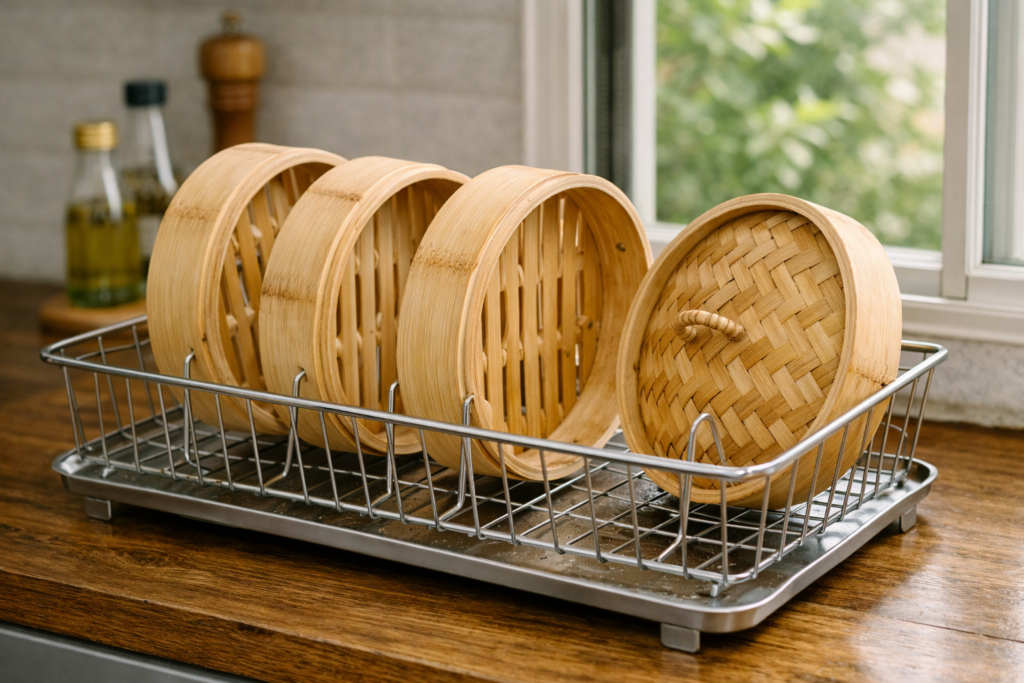
Place the clean steamer upright in a well-ventilated area. Separate each tier so air moves around all surfaces. Allow it to dry completely before stacking or storing. In a humid kitchen, this takes a full 24 hours.
Never store it sealed in a plastic bag or in a closed cabinet. Trapped moisture creates mold within 48 hours.
Storage
Store in a cool, dry spot with airflow. A kitchen shelf or an open pantry works well. Stack the tiers with the lid off to allow continued ventilation.
If Mold Appears
Mix equal parts white vinegar and warm water. Soak a soft cloth and wipe down all affected surfaces. Scrub gently with a nylon brush. Rinse with hot water. Dry fully in direct sunlight if possible. Sunlight is a natural antimicrobial that helps bamboo fibers recover.
Frequently Asked Questions
Can you put a bamboo steamer directly in water?
No. The steamer rests on the rim of the wok or pan. The bottom rim of the basket touches the sides of the vessel. Water should only come up to that bottom rim level. Food inside must never contact the water.
Do you need to line a bamboo steamer?
Yes, for most foods. Dumplings, buns, fish, and anything sticky need a liner to prevent tearing when you remove them. Firm vegetables like broccoli florets or carrot rounds can go directly on the bamboo base without a liner.
Do you oil a bamboo steamer?
No. Do not apply oil to the bamboo itself. Use liners instead of oil to prevent sticking. Some sources suggest a very thin layer of vegetable oil on the bamboo ribs for dry-climate storage to prevent cracking. But this is maintenance, not a cooking step.
How long do you steam dumplings in a bamboo steamer?
Fresh dumplings take 8 to 10 minutes over medium-simmering water. Frozen dumplings take 12 to 15 minutes with no thawing needed. Soup dumplings (XLB) take 8 to 10 minutes. You know they are done when the wrappers turn translucent.
What size bamboo steamer should I buy?
A 10-inch steamer is the best all-purpose size for home cooking. It fits a standard 12-inch wok or skillet, holds enough dumplings for 2 to 3 people per tier, and is easy to store. Larger sizes are available but harder to find compatible pans for.
Can you use a bamboo steamer on an induction stove?
Yes. Place an induction-compatible wok or pan on the burner first. Then rest the bamboo steamer on the rim of that pan. The bamboo never touches the induction surface directly. This works exactly the same as any other burner type.
Can you put a bamboo steamer in the dishwasher?
No. The dishwasher’s heat, pressure, and detergent warp the bamboo, loosen the woven joints, and accelerate cracking. Always hand wash.
Quick Summary
Here is the full process in five steps:
- Soak a new steamer for 20 to 30 minutes before first use to prevent scorching.
- Add 1 to 2 inches of water to a wok or wide pan. The water touches the rim. It must not touch the food.
- Line the baskets with perforated parchment, cabbage leaves, or a silicone mat before loading food.
- Load food in a single layer with space between pieces, then stack with dense food on the bottom tier.
- Steam on medium heat with the lid on. Fresh dumplings take 8 to 10 minutes. Fish takes 8 to 12. Vegetables take 5 to 10.
After cooking, clean immediately with hot water and a soft brush. Air dry completely for at least 24 hours before storing.
A 10-inch bamboo steamer, a 12-inch wide pan, and a bag of frozen dumplings are all you need to put restaurant-quality dim sum on your table tonight in under 15 minutes.
This guide is written by a team with hands-on experience testing bamboo steamers across multiple brands, sizes, and cooking contexts. All cooking times listed are based on verified testing with fresh and frozen products commonly available in US grocery stores.