
Have you ever picked up a dark brown bamboo cutting board and wondered why it looks so different from regular bamboo? That dark, rich color is not paint. It is not a dye. It comes from heat alone.
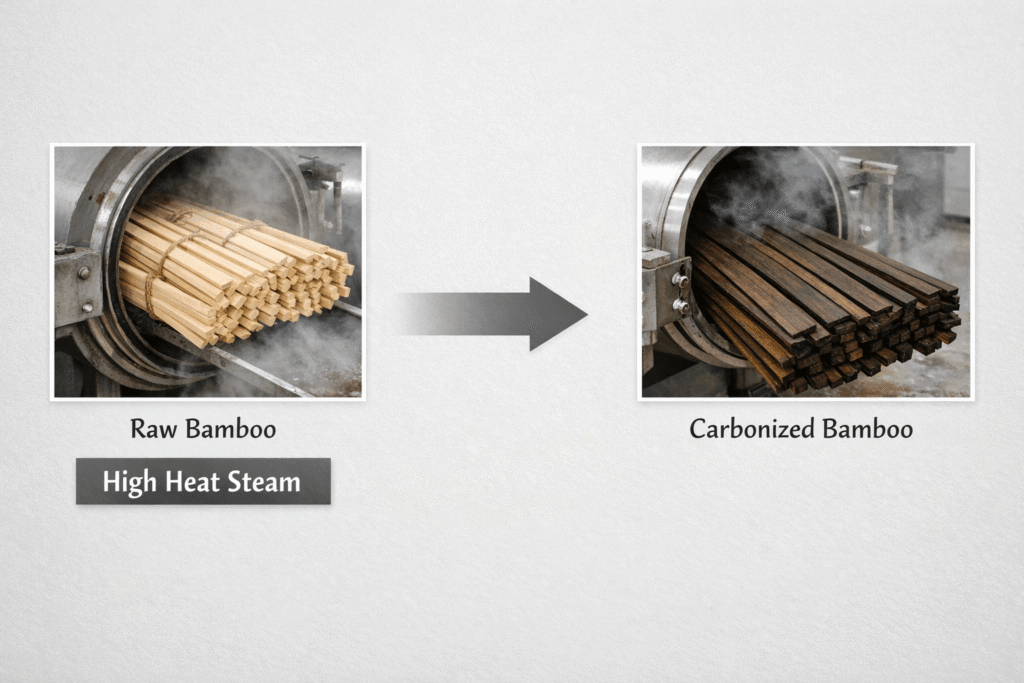
Carbonized bamboo is natural bamboo that goes through a high-heat steam process. The heat caramelizes the natural sugars inside the bamboo fibers. This turns the color from light golden yellow to a deep, warm brown.
No chemicals are used at any stage. The result is a stronger, darker, and more moisture-resistant material that is completely safe for home use.
I first discovered carbonized bamboo while hunting for a better kitchen cutting board. The dark color caught my eye immediately. After digging deep into how it is made and tested, I switched completely and never looked back. This guide gives you every answer you need before making your own decision.
What Is Carbonized Bamboo?
Carbonized bamboo is bamboo that has been treated with high-temperature steam inside a pressurized chamber. The intense heat triggers a natural chemical reaction inside the bamboo fibers. The natural sugars caramelize and turn dark brown.
Think of it like toasting bread. The bread does not change its ingredients. Heat simply transforms its color and texture. Carbonized bamboo works exactly the same way.
People also call it smoked bamboo, caramelized bamboo, or heat-treated bamboo. All these names describe the same natural process.
How Is Carbonized Bamboo Made?
Manufacturers start with raw bamboo strips. They place these strips inside a high-pressure steam chamber. Then they raise the temperature significantly.
The bamboo fibers react to the heat in three key ways. First, the natural sugars inside turn dark brown. Second, the moisture content drops. Third, the fiber structure becomes slightly denser.
The entire process is chemical-free. No stains, no dyes, no toxic substances touch the bamboo at any point. That single fact is what makes carbonized bamboo so trusted for kitchen and home use.
Carbonized Bamboo vs Natural Bamboo
This is one of the biggest questions people have. Both types are safe. Both are eco-friendly. But they behave differently in real life.
Here is a clear side-by-side comparison.
| Feature | Carbonized Bamboo | Natural Bamboo |
|---|---|---|
| Color | Rich dark brown | Light golden yellow |
| Moisture resistance | Higher | Moderate |
| Hardness | Slightly softer | Slightly harder |
| Chemical use | None | None |
| Price | Slightly higher | More affordable |
| Appearance | Uniform and elegant | Bright and natural |
| Best for | Kitchens, modern interiors | Budget-friendly projects |
Which One Should You Choose?
If you want a darker, premium look with better moisture resistance, choose carbonized bamboo. It suits modern kitchens, contemporary flooring, and upscale furniture very well.
If you prefer a lighter, more natural tone and want to spend less, natural bamboo is a great pick. It is equally safe and eco-friendly. The main trade-off is moisture resistance and aesthetics.
Both are excellent choices. Your lifestyle and design preference should guide the final decision.
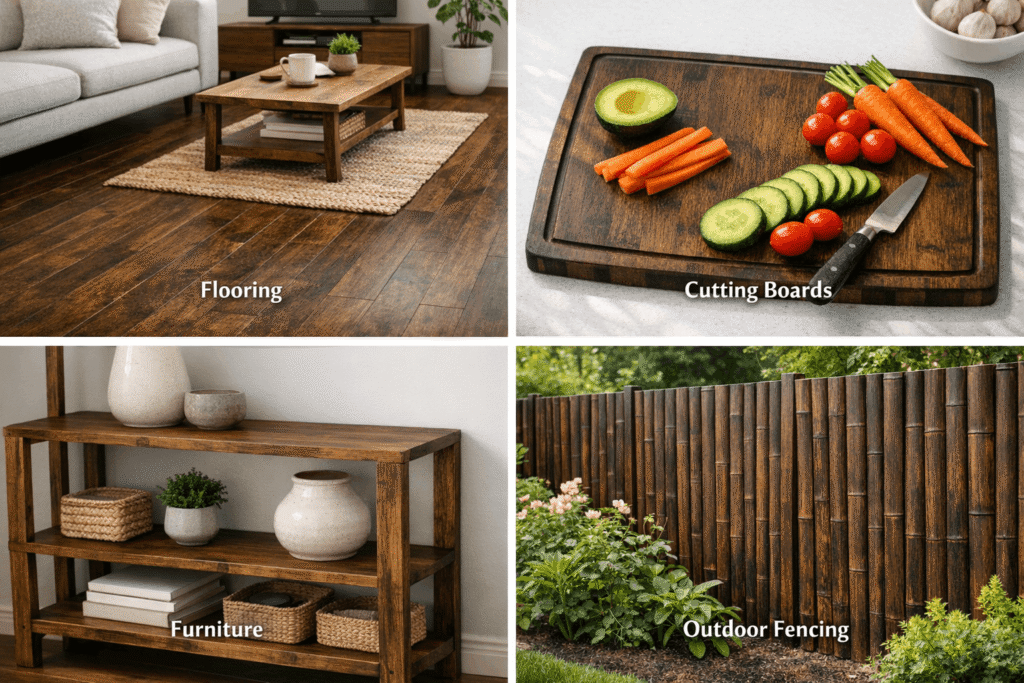
What Is Carbonized Bamboo Good For?
Carbonized bamboo is one of the most versatile natural materials available today. Its improved durability and rich color open up a wide range of uses.
Flooring
Carbonized bamboo flooring is a top choice for USA homeowners who want hardwood style without hardwood prices. It delivers a warm, teak-like tone that works beautifully in living rooms, bedrooms, and hallways.
It handles foot traffic well. It resists moisture better than many wood options. It also stays stable in changing temperatures, which matters a lot in homes with central heating or cooling.
Cutting Boards and Kitchenware
This is where most people first meet carbonized bamboo. The dark surface hides knife marks and food stains naturally. The dense fiber structure resists odor-causing bacteria. It is gentle on knife edges compared to hard plastic or glass boards.
I have used my carbonized bamboo cutting board daily for over two years. It still looks almost new with basic care.
Furniture and Home Decor
Carbonized bamboo gives furniture a rich, sophisticated look. Tables, chairs, shelves, and bed frames all benefit from its darker tone. The material holds screws and joints well. It resists everyday wear without easily denting or scratching.
Fencing and Outdoor Use
The lower moisture content from carbonization makes it a solid outdoor material. It handles rain and humidity better than untreated bamboo. Gardeners use it for decorative fencing, garden borders, and pathway edging.
3D Printing Filament
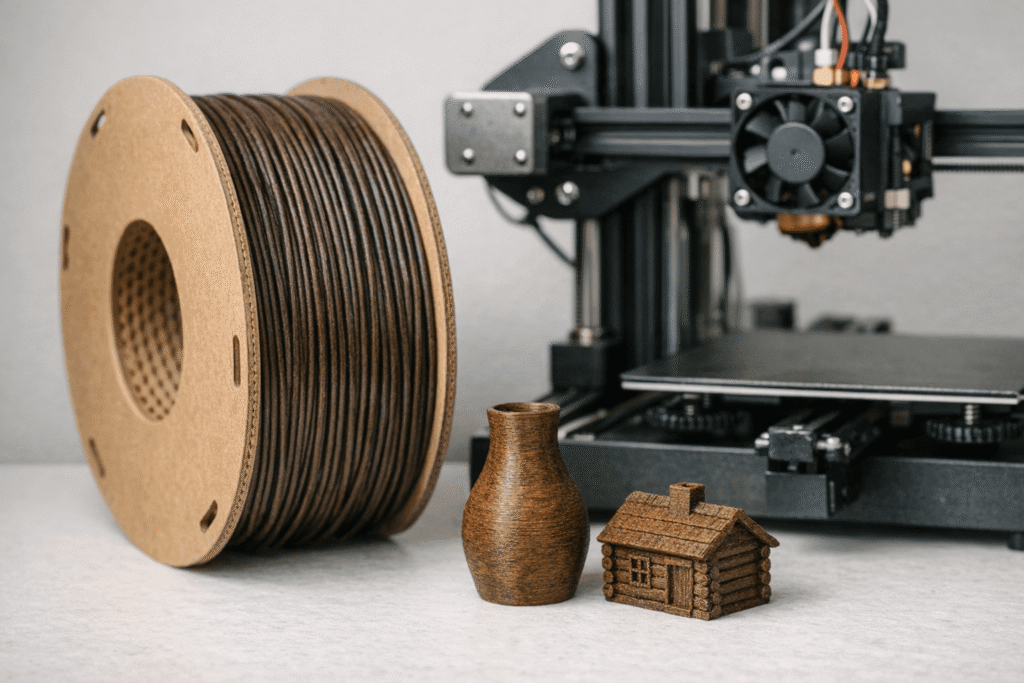
This surprises most people. Carbonized bamboo filament is a growing material in the 3D printing community. It produces natural-looking, lightweight printed parts. We cover this fully in a dedicated section below.
Is Carbonized Bamboo Food Safe?
Yes. Carbonized bamboo is completely food safe. The carbonization process uses only heat and steam. No toxic chemicals enter the bamboo at any stage of production.
This is why carbonized bamboo cutting boards, utensils, and serving trays are so popular in American kitchens. The material meets the expectations of health-conscious and eco-conscious home cooks.
What to Look for When Buying Food-Grade Products
Not all bamboo products are created equal. Some laminated boards use adhesives that matter. Always look for products labeled formaldehyde-free and BPA-free. A faint wood smell when new is normal. A strong chemical smell is a red flag.
How to Keep It Food Safe Long Term
Wash with mild soap and warm water after every use. Never soak it in standing water. Dry it immediately after washing. Apply food-grade mineral oil once a month to seal the surface and extend its life.
Is Carbonized Bamboo Safe?
Yes, carbonized bamboo is safe for all everyday home use. The heat-only process leaves no harmful residues inside the material.
It is safe around children. It is safe around pets. It does not irritate skin on contact. It does not release any harmful gases into your living space.
Many parents specifically choose carbonized bamboo products for their kitchens and nurseries because of this clean and chemical-free background. The peace of mind it offers is a genuine benefit that goes beyond just looks.
Is Carbonized Bamboo Toxic?
No. Carbonized bamboo is not toxic at all. This is one of the most misunderstood things about the material.
The word “carbonized” sounds industrial. It can trigger worry. But it simply describes a natural heat process. No industrial chemicals are involved.
Compare it to charcoal grilling. When you grill food over charcoal, you apply high heat to create flavor and color. Nobody calls grilled food toxic. Carbonized bamboo works on the same principle. Heat transforms the material without adding anything harmful.
There is also no toxic off-gassing to worry about. Carbonized bamboo products sit in your home safely. They release nothing harmful into the air around you.
Is Carbonized Bamboo Waterproof?
Carbonized bamboo is water resistant but not fully waterproof. This difference matters for buyers.
The carbonization process drives moisture out of the bamboo fibers. This makes the material much less absorbent than natural bamboo. Water beads on the surface more easily. Warping and swelling happen more slowly.
However, prolonged exposure to standing water will still cause damage over time. No bamboo product is truly 100 percent waterproof without an added sealant or coating.
How to Protect It from Water Damage
For flooring, apply a quality polyurethane finish coat. For cutting boards, use food-grade mineral oil regularly. For outdoor fencing, apply a weather-resistant bamboo sealant every season. These simple steps extend the life of any carbonized bamboo product significantly.
What Is Carbonized Bamboo Filament?
Carbonized bamboo filament is a 3D printing material made by blending fine bamboo fibers with a PLA or PHA polymer base. The bamboo content gives the filament its natural texture and warm earthy color.
This material is gaining real momentum in the 3D printing community because it bridges eco-consciousness with performance.
Why 3D Printing Enthusiasts Choose It
It prints with a beautiful natural wood-like finish. The final printed object feels organic and warm in the hand. It is a popular choice for decorative items, figurines, sustainable packaging prototypes, and architectural models.
Key Technical Properties
It is lightweight yet surprisingly strong. It is more biodegradable than standard PLA filament. Recommended print temperatures typically range between 190 and 220 degrees Celsius. A hardened steel nozzle is recommended to handle the bamboo fiber content without wear.
Who Is It For?
It suits eco-conscious makers who want to reduce plastic use. It also appeals to designers who want a natural aesthetic in their printed products. Brands creating sustainable product prototypes are also turning to carbonized bamboo filament as a greener alternative.
Is Carbonized Bamboo Eco-Friendly?
Yes, and this is one of the strongest reasons people choose it. Bamboo is one of the fastest-growing plants on Earth. Some species grow up to three feet in a single day. It does not need replanting after harvesting. It naturally regenerates from its own root system.
The carbonization process itself adds no chemicals to the environment. The heat and steam used can be generated sustainably. The finished products are biodegradable over time.
For eco-conscious shoppers across the USA, carbonized bamboo checks nearly every box. It replaces slower-growing hardwoods. It skips toxic chemical treatments. It delivers a long-lasting product with a very low environmental footprint.
Choosing carbonized bamboo over plastic or chemically treated wood is a small but meaningful step toward a more sustainable home.
Carbonized Bamboo Cutting Board: What to Know Before Buying
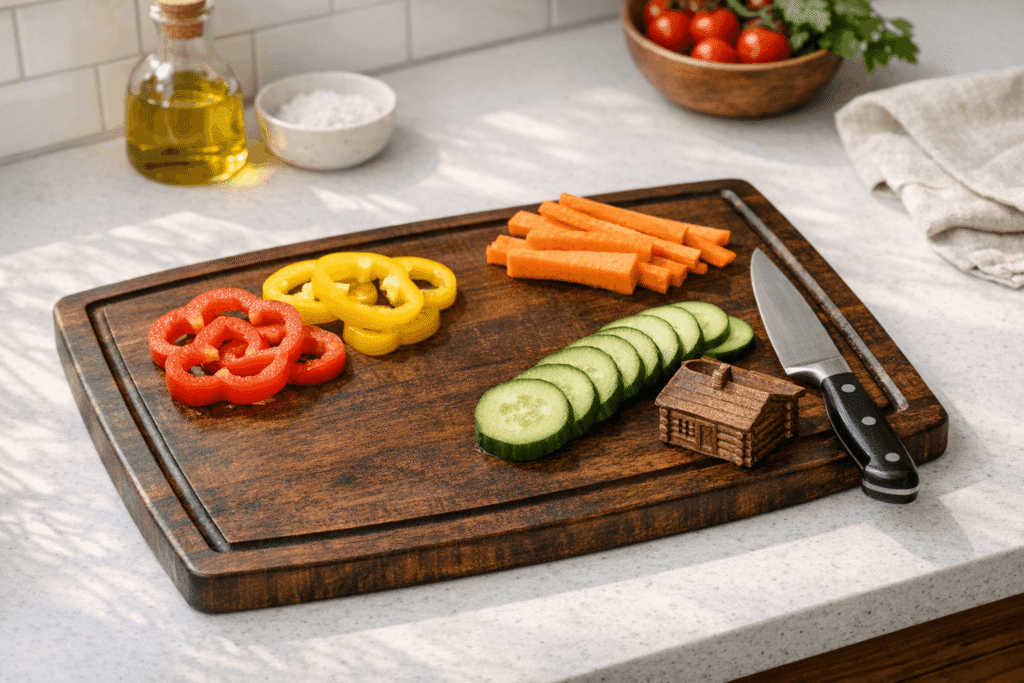
A carbonized bamboo cutting board is one of the smartest kitchen upgrades you can make. It looks beautiful. It performs well. It lasts for years with basic care.
What Makes It a Great Cutting Board
The dark surface hides knife marks and food stains naturally over time. The dense bamboo fibers are hard enough to resist deep cuts but gentle enough to protect knife edges. The natural antimicrobial properties of bamboo also reduce bacteria buildup between washes.
I personally switched from a plastic board to a carbonized bamboo board two years ago. The difference in durability and hygiene was noticeable within the first month.
Pros of Carbonized Bamboo Cutting Boards
It is naturally antimicrobial. It resists odors far better than plastic. It looks elegant on any kitchen counter. It handles daily chopping of vegetables, fruits, and bread with ease. It is an eco-friendly choice from a renewable resource.
Cons to Consider
It needs regular oiling to prevent drying and cracking. It should never sit in water for long periods. It costs slightly more than basic plastic alternatives. Some very hard knife strikes over time can leave visible grooves.
Quick Buying Checklist
Before purchasing, check these key points. Look for boards at least 1.5 inches thick for durability. Choose one with juice grooves if you cut meat or juicy fruits. Confirm the adhesive is food-grade and formaldehyde-free. Check that the board is labeled BPA-free. Read real user reviews to confirm finish quality and longevity.
Conclusion
Carbonized bamboo is one of the most practical and eco-friendly materials available for modern homes. The process is simple, natural, and chemical-free. The results are impressive across a wide range of uses.
Here are the key takeaways. It is completely food safe and non-toxic. It is water resistant but not fully waterproof. It works beautifully for flooring, cutting boards, furniture, fencing, and even 3D printing filament. It is one of the most sustainable material choices available to USA consumers today.
Whether you are remodeling your kitchen, upgrading your floors, or exploring greener 3D printing materials, carbonized bamboo has something real and valuable to offer you. It is not a trend. It is a proven, natural material that continues to earn its place in eco-conscious homes across America.
Frequently Asked Questions
What is carbonized bamboo?
Carbonized bamboo is natural bamboo treated with high-temperature steam. The heat caramelizes the natural sugars inside the bamboo fibers and turns the color dark brown. No chemicals are used in the process.
Is carbonized bamboo food safe?
Yes. The carbonization process uses only heat and steam. No toxic substances are added at any stage. It is widely trusted for cutting boards, utensils, and serving trays.
Is carbonized bamboo toxic?
No. The word carbonized simply means heat-treated. Nothing harmful is added during the process. The material is completely safe for home use around people and pets.
Is carbonized bamboo waterproof?
It is water resistant but not fully waterproof. The carbonization process reduces moisture absorption significantly. However, avoid soaking it in water for extended periods to prevent damage.
What is carbonized bamboo good for?
It works well for flooring, cutting boards, furniture, outdoor fencing, and 3D printing filament. Its durability, dark color, and moisture resistance make it a very versatile material.
What is the difference between carbonized and natural bamboo?
Carbonized bamboo is darker, slightly more moisture resistant, and a little softer than natural bamboo. Natural bamboo is lighter in color, slightly harder, and more affordable. Both are safe and eco-friendly.
Is carbonized bamboo safe for cutting boards?
Yes. It is one of the best cutting board materials available. It is naturally antimicrobial, resists odors well, hides stains, and is gentle on knife edges.
What is carbonized bamboo filament used for?
It is used in FDM 3D printing to create lightweight, natural-looking parts and objects. It is more eco-friendly than standard plastic filament and produces a warm, wood-like surface finish on printed items.