
The short answer: Neither fabric wins outright. Bamboo viscose is softer, silkier, and cooler at first touch, and it wicks sweat well. Cotton is tougher, easier to wash, and lasts years longer. For sheets and hot sleepers, cotton usually wins on value. For softness against sensitive skin, bamboo viscose wins, if you wash it cold and accept a shorter life.
Shop for anything soft, a T-shirt, a pair of pajamas, a set of sheets, and sooner or later a label will promise you bamboo: a fast-growing grass, no pesticides, softer than cotton, cooler than cotton, greener than cotton. Some of that is true. Some of it is marketing, and some of it is flatly wrong, in a way the US Federal Trade Commission has fined major retailers millions of dollars for repeating.
This guide compares the two fabrics properly: what bamboo viscose actually is, what the law says you can call it, how they compare on softness, cooling, durability, shrinkage, care, price, and sustainability, and which one to buy for sheets, clothing, socks, underwear, and baby clothes. Every number traces to a named source, and where sources disagree, the disagreement is stated, not hidden.
What is bamboo viscose, really?
Bamboo viscose is rayon made from bamboo. That one sentence clears up most of the confusion around this fabric, so it is worth saying plainly before anything else. The raw material is bamboo, usually Moso bamboo, but the finished fibre is not bamboo fibre. It is regenerated cellulose, the same family of fibre as the rayon in a blouse lining or a dress, made by dissolving plant pulp in chemicals and spinning it back into a fibre.
The process runs like this. Bamboo stalks are chipped and washed, then dissolved, usually in sodium hydroxide and carbon disulfide, until only cellulose is left. That cellulose solution is pushed through microscopic spinnerets into an acid bath, where it hardens into fine filaments, which are spun into yarn and woven or knitted into fabric. By the time it becomes a T-shirt, the original bamboo fibre structure is essentially gone. A recent YouTube Short making exactly this point puts it well: bamboo stalks do not naturally give long, soft fibres that can simply be spun into yarn, and the properties of the plant cannot automatically be transferred to the finished textile.
Two names cause most of the confusion. Viscose and rayon are the same fibre. Rayon is the generic name used in US regulation, viscose is the name for the process, and it is the word used more often in Europe and Asia. When a label says “bamboo viscose”, “viscose from bamboo”, or “rayon made from bamboo”, it is describing the same thing: rayon whose plant source was bamboo. When a label says only “bamboo” and names no fibre at all, it is one of two things: a rare, coarse fabric spun straight from the plant, which costs far more than viscose, or a label that breaks the naming rules.
There is also a third name you will meet: bamboo lyocell. Lyocell is a different way of making regenerated cellulose. It dissolves the pulp in a solvent called NMMO, spins it, then captures and reuses almost all of that solvent, with no carbon disulfide involved at all. It is cleaner, more expensive, and usually sold under the TENCEL brand name. Most of what is sold as bamboo fabric is viscose, not lyocell: a peer-reviewed study of 115 online retailers found that about 82 percent of bamboo-labelled apparel listings were viscose, as reported by GreenerPulse. So when this guide says “bamboo viscose”, it means the fabric most shoppers actually buy.
Cotton, by contrast, needs no chemical transformation to become a fibre. It is a natural fibre that grows as a soft boll on the cotton plant, is picked, cleaned, carded, and spun into yarn. The plant and the fibre are the same thing. That difference, a natural fibre versus a manufactured fibre made from a natural feedstock, sits underneath almost every comparison in this guide.
Is bamboo viscose actually bamboo?
No, not as a fibre. The raw material is bamboo, the finished fibre is rayon, and the US Federal Trade Commission has said so in plain language. Its business guidance, “How to Avoid Bamboozling Your Customers”, states that most “bamboo” textile products, if not all, really are rayon, made using environmentally toxic chemicals in a process that emits hazardous pollutants, and that there is no trace of the original plant in the finished rayon product. Only a product spun straight from the plant fibre itself may use the word bamboo alone on its label. The correct label is the generic fibre name, such as rayon, or “rayon made from bamboo”. (FTC, “How to Avoid Bamboozling Your Customers”)
This is not a technicality the FTC ignores. It has acted against bamboo labelling repeatedly. In 2010 it fined Amazon, Macy’s, and Sears a combined $1.26 million for mislabelling rayon products as bamboo. In April 2022 it used its Penalty Offense Authority against Kohl’s and Walmart for falsely marketing dozens of rayon textile products as bamboo and making deceptive environmental claims about them, seeking civil penalties of $2.5 million from Kohl’s and $3 million from Walmart, a total of $5.5 million. The FTC noted that converting bamboo into rayon requires toxic chemicals and results in hazardous pollutants, while the retailers had marketed the textiles as made using eco-friendly processes. The same evidence rule covers any claim that the finished fabric still kills germs the way the plant does: the seller needs solid proof, and the FTC’s position is that the process wipes that property out.
The rule is the same outside the United States. In the EU, bamboo is not a listed fibre name under Regulation (EU) No 1007/2011, so the label must use a listed name such as viscose, modal, or lyocell. Canada similarly requires rayon, viscose, or viscose from bamboo. And GOTS does not allow regenerated fibres to be labelled organic, even when the source plant was organically grown: a product labelled “organic bamboo viscose” uses the word organic for how the plant was grown, not for the finished textile.
For a shopper, the practical test is simple. Read the fibre content label, not the product name. If it says “100% rayon (made from bamboo)” or “100% viscose from bamboo”, the seller is being honest. If a silky soft product says only “100% bamboo”, be suspicious: genuine mechanically processed bamboo fibre is coarse and rare, not silky.
Bamboo viscose vs cotton: the full comparison
Here is the whole comparison on one table. The rows are the ones every honest guide uses. Cotton is split into conventional and organic, because the verdict changes when organic cotton is the comparison: organic cotton closes the pesticide gap, but not the water gap.
| Bamboo viscose | Conventional cotton | Organic cotton | |
|---|---|---|---|
| Feel and softness | Silky, smooth, drapes like liquid | Soft, matte, structured hand | Soft, improves with washing |
| First-touch coolness | Cool and silky on contact | Neutral, warms to skin quickly | Neutral, warms to skin quickly |
| All-night breathability | Good at first, holds moisture once saturated | Steady airflow, dries more evenly | Steady airflow, dries more evenly |
| Moisture wicking | Strong wicking, high absorbency | Absorbs well, wicks slowly | Absorbs well, wicks slowly |
| Durability | 2 to 3 years for sheets with care; pills and thins | 4 to 6+ years for quality sheets | 4 to 6+ years for quality sheets |
| Shrinkage | 2 to 3 percent with proper care, up to 5 to 7 percent if not pre-shrunk | Can shrink, usually less than viscose | Can shrink, usually less than viscose |
| Pilling | Prone to pilling, especially lower quality and blends | Resists pilling better, softens with washing | Resists pilling better, softens with washing |
| Wrinkles | Wrinkles more than cotton percale, about the same as cotton sateen | Percale wrinkles more, sateen wrinkles less | Percale wrinkles more, sateen wrinkles less |
| Care | Cold wash, gentle cycle, low heat or air dry, no bleach | Tolerates warm and hot washing, tumble drying | Tolerates warm and hot washing, tumble drying |
| Wet strength | Loses about half its strength when wet | Strengthens when wet | Strengthens when wet |
| Price | Sheets $50 to $200; clothing 20 to 50 percent more than cotton | Sheets $80 to $250; cheapest upfront | Usually the most expensive cotton option |
| Cost per year | About $60 per year for sheets (Or and Zon) | About $32 per year for percale sheets (Or and Zon) | About $36 per year for percale sheets (Or and Zon) |
| Growing impact | Fast growing, little water, few pesticides | High water, high pesticide use | High water, no synthetic pesticides |
| Processing impact | Chemical heavy, carbon disulfide, open loop | Moderate, mostly mechanical and dyeing | Moderate, mostly mechanical and dyeing |
| Sensitive skin | Smooth, low friction, helps; hypoallergenic not proven | Can irritate if rough or low grade | Often the safest default, especially certified |
Two notes on the table. The lifespan and shrinkage figures are ranges, not single numbers, because the sources disagree and the disagreement is real: different fibres, different weaves, different care, and different brands measuring different things. The cost per year figures are Or and Zon’s own maths, not a market survey, but the direction is consistent across sources: cotton’s longer life usually beats bamboo’s similar sticker price.
Which fabric is softer?
Bamboo viscose, and it is not close on first touch. The fibre is smooth and round, with no scales or roughness, so it glides over skin instead of catching on it. It drapes like liquid, falls in soft folds, and feels cool and silky the moment it touches you. That is the single biggest reason people fall in love with bamboo viscose clothing and sheets, and it is the reason the fabric has a market at all. Reddit users quoted in bedding guides describe bamboo sheets as “soft as butter”, and that is an accurate description of good quality bamboo viscose.
Cotton is soft in a different way. It has a matte, slightly textured hand, more structure, and less drape. A high-quality cotton percale feels crisp and clean; a high-quality cotton sateen feels smooth and almost silky, though not as slippery as bamboo viscose. Cotton also improves with washing: it softens over the first dozen washes and keeps softening, while bamboo viscose is at its softest when new and slowly loses that first softness as it pills and thins.
Weave matters as much as fibre. A cotton sateen sheet can feel smoother than a loosely woven bamboo viscose sheet, and a cheap bamboo viscose T-shirt can feel rougher than a good cotton one. But comparing quality against quality, bamboo viscose wins on softness at first touch, and cotton wins on softness over time.
Which is cooler and breathes better?
This is the question where the honest answer splits in two, and most product pages only give you the first half. Bamboo viscose feels cooler at first touch, because the smooth fibre sits flat against the skin and moves heat away quickly. Cotton feels neutral and warms to skin temperature fast. So for the first minutes in bed, or the first minutes in a T-shirt on a hot day, bamboo viscose wins. Over a full night, or a full sweaty day, the picture reverses. Bamboo viscose absorbs a lot of moisture, and once it is saturated it holds that moisture and stays damp and clingy. Cotton absorbs plenty too, but it keeps air moving through the weave and dries more evenly. The distinction that matters here is wicking versus absorbency, and our bamboo towels guide makes it clearly: wicking is how fast moisture moves through a fabric, absorbency is how much it holds.
The numbers behind this are modest and worth stating plainly. Moisture regain, measured by the ASTM D1909 standard, is 8.5 percent for cotton and 11 percent for rayon, including bamboo viscose, according to SockRatesCustom, with merino wool at 13.6 percent for comparison. A second source gives bamboo viscose at 11 to 13 percent and cotton at 7 to 8 percent. So bamboo viscose does hold more moisture than cotton. That is good for pulling sweat off skin and bad for staying dry once the fabric is full.
Brands quote wicking multipliers that sound impressive, such as bamboo wicking three to four times better than cotton, or 50 percent better, or 40 percent faster drying. This guide does not repeat any of those figures as facts, because no two of them use the same test method, and none of them was shown with a named independent lab test behind it. The field evidence points the same way: a hiking field test found a bamboo viscose shirt felt great for the first hour, then stayed damp for about twice as long as a comparable polyester shirt after a hard climb. For a hot sleeper, the practical summary is the one Or and Zon gives best: bamboo wins the first touch, cotton percale wins the all night. If you sleep hot and wake up damp, cotton percale is usually the better buy.
Which lasts longer?
Cotton, clearly, and this is where most bamboo viscose buyers feel let down. Quality cotton sheets last 4 to 6 or more years with weekly washing, according to Or and Zon, and they soften with each wash, hold their shape, and tolerate the high temperatures needed to kill dust mites. Bamboo viscose sheets, by the same source, last 2 to 3 years, and tend to pill and thin in that time, particularly along high-stress seams and fitted-sheet corners. Other sources give longer figures: Decolure, a bamboo sheet seller, says 3 to 5 years with proper care, while Ettitude says bamboo viscose loses softness within 1 to 2 years. The honest range for bamboo viscose sheets is therefore about 2 to 5 years depending on quality and care, against 4 to 6 or more years for quality cotton. Our own bamboo underwear guide finds the same pattern at smaller scale: bamboo underwear lasts 1 to 2 years of regular rotation with gentle care, cotton lasts 1 to 3 years and tolerates rough washing.
There is a physical reason for the gap. Regular viscose loses roughly half its strength when wet, while cotton strengthens when wet, so every wash is harder on bamboo viscose than on cotton. The damage accumulates as pilling at friction points, thinning across the seat of a sheet or the elbows of a shirt, small tears along seams, and a slow loss of shape. A 2024 study in the Mehran University Research Journal of Engineering and Technology found pilling resistance of regenerated bamboo fabric and 50:50 bamboo-cotton woven fabric was poor, and that bio-polishing improved it.
Against that, some bamboo sellers claim their sheets last 5 to 15 years, longer than cotton. Those claims conflict directly with every independent comparison in this guide and with the Reddit discussion that one bamboo seller itself quotes, where users report bamboo sheets wearing out faster than cotton and developing pilling issues. Treat the 5 to 15 year claims as marketing, not evidence.
Does bamboo viscose shrink?
Yes, it can, and heat is the trigger. The figures conflict, so here is the range with the sources named. Decolure says to expect 2 to 3 percent shrinkage maximum with quality products and proper care, meaning cold water and low heat or air drying. The Alibaba buying guide says bamboo viscose can shrink up to 5 to 7 percent if it is not pre-shrunk, and advises checking care labels and avoiding high-heat drying. Our own sheets guide lands in the middle: expect 3 to 5 percent shrinkage after the first wash, buy deep pockets, and wash cold to keep it at the low end. The honest answer is therefore 2 to 7 percent, with the low end belonging to pre-shrunk, quality fabric washed cold, and the high end belonging to unshrunk fabric washed hot or tumble dried on high heat.
Cotton shrinks too, but it is more dimensionally stable across repeated wash cycles and tolerates higher temperatures. That matters twice over: a cotton garment that shrinks a little in the first wash usually settles, while a bamboo viscose garment kept in hot water keeps losing shape, and the cold wash that prevents bamboo viscose shrinkage is itself a burden. Sewers know this well: sewing guides recommend pre-washing unsewn bamboo rayon fabric in hot water and drying it in the dryer to pre-shrink it in one go, before cutting.
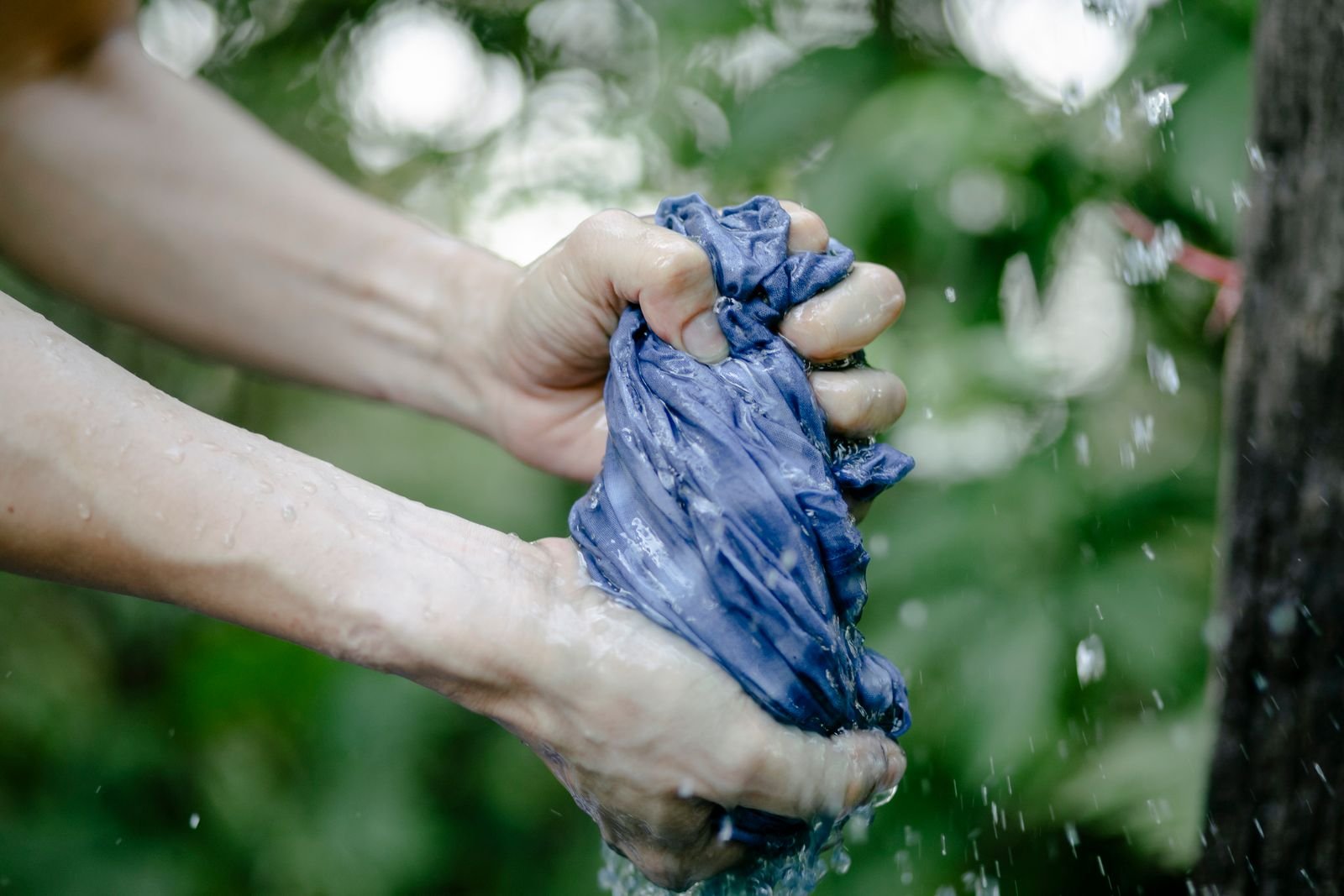
The care rule that protects bamboo viscose is simple, and it is also the fabric’s biggest practical weakness. Wash cold, on a gentle cycle, with mild detergent. Dry on low heat or, better, air dry. Do not use bleach or fabric softener, which coats the fibres and reduces absorbency, and turn garments inside out to reduce pilling. If you wash your sheets and clothes hot, as many households do, bamboo viscose will punish you for it, and cotton will not. Our guide to washing bamboo sheets covers the full routine step by step.
Is bamboo viscose more sustainable than cotton?
Neither fabric is clearly better, and anyone who tells you otherwise is selling one of them. The honest way to answer is to split the question in two: growing the plant, and turning the plant into fabric. On growing, bamboo wins easily. On processing, cotton wins easily.
Growing bamboo is genuinely low impact. Bamboo grows fast, up to about 91 centimetres, or 3 feet, a day for the fastest species, needs little or no pesticide, and needs far less irrigation than cotton. It grows on marginal land and regrows from its own rhizome without replanting. Growing cotton is genuinely high impact: conventional cotton needs a lot of water and a lot of pesticide. Published water figures vary widely, one guide puts conventional cotton at about 10,000 litres per kilogram, another at about 20,000 litres, so this guide does not state a single water number as fact. What is not disputed is the direction: cotton farming uses far more water and far more pesticide than bamboo farming. Organic cotton removes the pesticide problem, but it still needs a lot of water.
Processing reverses the picture. Turning bamboo into viscose is chemical heavy: the process uses sodium hydroxide and carbon disulfide, and in a standard open-loop viscose plant only about half the solvent is recovered, with the rest released as pollution, according to TryFibr. The FTC itself notes that converting bamboo into rayon requires toxic chemicals and results in hazardous pollutants. One bamboo seller claims closed-loop systems capture and recycle over 99 percent of chemicals, but that figure describes a closed-loop plant, not the standard open-loop viscose process that makes most of the world’s bamboo fabric. Turning cotton into fabric is mostly mechanical: ginning, carding, spinning, weaving, dyeing. It uses water and dye chemicals, but it does not dissolve the fibre in toxic solvents and rebuild it.
So where does that leave the comparison? TryFibr, the most careful independent guide in this space, concludes that neither bamboo viscose nor conventional cotton is clearly better for the environment, because they have different problems. GreenerPulse puts it as a hierarchy: bamboo lyocell is better than bamboo viscose, which is better than polyester, and if you want certainty, organic cotton gives you sustainability without the ambiguity. The most-watched videos making this comparison now land in the same place: the plant is the easy part, the process is the problem.
Two traps deserve a direct warning. First, “organic bamboo” misleads more than it informs. The organic label can describe only how the plant was grown, not the chemical processing, and GOTS does not allow regenerated fibres to be labelled organic at all. Paying extra for “organic bamboo” buys organically grown feedstock put through the same viscose process. Second, durability is a sustainability factor too. A cotton sheet that lasts 5 years replaces a bamboo viscose sheet that lasts 2 to 3 years, and the greenest garment, as one recent video puts it, is the one you buy least often. A fabric that wears out fast is not sustainable no matter how green its plant was.
Is bamboo viscose good for sensitive skin or eczema?
Usually yes, with a limit that matters. Bamboo viscose is smooth, and smooth fibres create less friction against skin. That is the main reason it helps people with sensitive skin: less rubbing at the elbows, knees, neck, and waistband, and moisture wicked away from the skin, since dampness is a common eczema trigger. Brands and guides aimed at babies and children make the same case, and our bamboo baby clothes guide finds bamboo viscose a strong option for eczema-prone babies for exactly those reasons.
The limit is the word hypoallergenic. It is a marketing word, not a regulated one, and the evidence behind it is thin. The most careful counterweight comes from TryFibr: bamboo viscose is reasonably soft and breathable and decent for sensitive skin, similar to regular viscose, but the marketed antibacterial and hypoallergenic properties do not survive the viscose process. A Yale researcher quoted by Tripulse adds that how safe rayon is to wear against skin has not been fully studied, and there are currently no published studies measuring carbon disulfide residues in finished fabric. That is a gap in the evidence, not a proven risk.
The advice from both sides converges on one practical rule: certification matters more than the word bamboo. An OEKO-TEX Standard 100 certified garment has been tested for residual chemicals and dyes, and for baby items the Class I standard is the strictest. As our baby clothes guide puts it, an OEKO-TEX Class I cotton garment will beat an uncertified bamboo one every time. Most reactions people blame on bamboo, such as rashes from sheets or itching, are actually caused by processing chemicals, dyes, detergents, or dust mites, not the bamboo fibre itself, as our bamboo allergy guide explains. True bamboo allergy is rare. So the honest summary is: bamboo viscose is a good choice for sensitive skin when it is certified and washed properly, but the word hypoallergenic on a label proves nothing on its own, and organic cotton is the safer default when you cannot verify certification.
Is bamboo viscose antibacterial?
No, not in any way you can count on. This is one of the most repeated claims about bamboo fabric, and it is also one of the most clearly wrong. The bamboo plant does contain a natural antimicrobial agent, sometimes called bamboo kun, but the viscose process destroys it. The FTC says so directly: the same proof rule that covers the fibre name also covers any claim that the finished fabric still kills germs like the plant does, and there is no trace of the original plant left in the finished rayon.
A lab test reported in 2009 backs the FTC’s position. Textile researcher Ian Hardin bought bamboo goods marketed as germ-killing from six sellers and ran the standard AATCC 147 fabric test on them, using two common bacteria, and not one sample showed any germ-killing effect. The original paper could not be checked first-hand, so this guide treats it as one reported test, not as proof on its own. Still, it agrees with the FTC, with TryFibr, Or and Zon, and FiberCheck, and with our own towels post: the germ-killing claim does not survive the viscose process. Some factory process videos still claim natural antibacterial resistance survives into the fabric, and some brand pages still print it. Those claims are marketing, and they are the reason the FTC’s 2022 action also covered deceptive environmental claims, not just the fibre name. If a product’s main selling point is that bamboo kills germs, do not buy it for that reason.
Which should you buy for sheets, clothing, socks, and baby clothes?
The comparison changes by use, and this is the section most guides skip. A fabric that wins for pajamas can lose for socks, and the right answer depends on how the item is used and washed.
Sheets. Cotton usually wins, on value and on sleep quality over a full night. Bamboo viscose feels wonderful at first touch and wicks well, but it costs about the same upfront, lasts 2 to 3 years against cotton’s 4 to 6 or more, pills and thins, and needs cold washing, which blocks the hot wash many allergy sufferers rely on to kill dust mites. The maths is simple: a $150 bamboo set lasting 2.5 years costs $60 a year, while a $150 cotton set lasting 5 years costs $30 a year. Buy bamboo viscose sheets only if silky drape is the single thing you want most, and buy them knowing you will replace them sooner. For the full bedding comparison, see our bamboo vs cotton sheets guide, and for the skin and sleep angle, our guide to whether bamboo sheets are good for skin and sleep.
Everyday clothing and T-shirts. Bamboo viscose wins on comfort in warm weather: softer, cooler at first touch, better drape, good wicking. Cotton wins on durability and easy care: it survives hot washing, resists pilling, and holds its shape. Bamboo clothing typically costs 20 to 50 percent more than equivalent cotton garments, so the value case depends on the garment lasting. Buy bamboo viscose for summer tops and loungewear you will treat gently; buy cotton for workhorse shirts that get washed hard and often.
Underwear. Bamboo viscose is worth the premium if you sweat, chafe, or have sensitive skin: it is softer, cooler, and dries faster than cotton. But it wears out faster and needs cold washing, and it costs roughly three times as much per pair, $12 to $30 against $4 to $20 for cotton. Our bamboo underwear guide gives the practical advice the community repeats: buy two pairs first and judge by the end of the week.
Socks. Cotton usually wins, with one exception. Bamboo viscose socks feel softer and wick well at first, but they lose about half their strength when wet, and feet sweat, so the fabric is wet for much of its life. Cotton socks hold their shape better, tolerate hot washing, and cost less. The exception is a bamboo-cotton blend sock, which keeps some of bamboo’s softness with cotton’s structure.
Baby clothes. Bamboo viscose is worth it for sleepwear, where the smooth, temperature-regulating fabric genuinely outperforms cotton for hot sleepers and sensitive skin. It is a poor value for rough daytime play, because baby clothes are washed more than anything else, and viscose pills, thins, and loses shape with frequent washing, while cotton keeps its shape and resists pilling better over many washes, which matters for hand-me-downs. Bamboo baby garments cost $25 to $45 each against $8 to $25 for organic cotton. Our bamboo baby clothes guide covers the sleepwear-only compromise in full, including the eczema angle and the certification rule.
What about bamboo-cotton blends?
Blends are the compromise most shoppers actually end up happiest with. A typical blend is 60 to 70 percent bamboo viscose with 30 to 40 percent cotton, sometimes with a little polyester or spandex. Cotton adds strength, structure, and a crisper hand, and makes the fabric more forgiving in the wash. Polyester adds wrinkle resistance but holds heat, so a bamboo-polyester blend is a worse choice for hot sleepers than a bamboo-cotton one. A one-year wardrobe trial reported by Alibaba found that after 50 wears, pure bamboo viscose showed minor pilling and slight colour fading, organic cotton held up, and a 70 percent bamboo with 30 percent organic cotton blend performed best overall. Treat that as a single anecdotal trial, not a study, but it matches the textile logic: a blend fails at its weakest fibre, and cotton is the stronger partner. When you buy a blend, read the percentages: a “bamboo” garment that is 30 percent bamboo and 70 percent cotton is mostly a cotton garment, and should be priced like one.
Bamboo viscose vs bamboo lyocell: what is the difference?
Both are regenerated cellulose fibres made from bamboo pulp, but the process is different, and the process is what matters. Viscose uses sodium hydroxide and carbon disulfide in an open loop, with about half the solvent recovered. Lyocell uses a solvent called NMMO in a closed loop, with no carbon disulfide and nearly complete solvent recovery. Lyocell is therefore the cleaner fibre, and it is also stronger, especially when wet, which is why it pills less and lasts longer than viscose.
The price reflects that. Bamboo lyocell sheets typically cost $300 to $500 a set, against $150 to $300 for bamboo viscose and $80 to $200 for cotton, according to Ettitude. If you want bamboo fabric and you can afford it, lyocell is the better buy. On a label, lyocell is usually named directly, often with the TENCEL brand name, while viscose is named as viscose or rayon. If the label does not say lyocell, assume viscose.
How do you read the label and buy well?
Most of the disappointment in this market comes from buying the wrong thing, not from the fabric itself. This checklist takes thirty seconds and prevents most of it.
1. Read the fibre content label, not the product name. Look for “rayon made from bamboo” or “viscose from bamboo”, with a fibre percentage. A label saying only “bamboo” on a silky soft product is a warning sign.
2. Check for certification. OEKO-TEX Standard 100 means the finished fabric was tested for residual chemicals and dyes. Class I is the strictest, for baby items. GOTS covers organic cotton, not bamboo viscose. FSC covers the bamboo sourcing.
3. Feel the fabric and check the weave. Good bamboo viscose feels smooth and dense, with a liquid drape. Thin, flimsy viscose pills fastest. For cotton, percale feels crisp and breathable, sateen feels smooth and warmer.
4. Buy the right blend, or none. If you want durability with bamboo’s softness, a bamboo-cotton blend with 30 to 40 percent cotton is the pragmatic choice. If you want pure bamboo viscose, accept the care burden and the shorter life, and pay for quality, not for the word bamboo.
5. Check the care label before you pay. If it says cold wash only and air dry, believe it. If you wash everything hot, bamboo viscose is the wrong fabric for your household, and cotton is the honest answer.
6. Do the cost-per-year maths. Divide the price by the realistic lifespan, not the marketed one: 2 to 3 years for bamboo viscose sheets, 4 to 6 or more for quality cotton.
What real users found
We did not test these products ourselves. What follows is what named owners, reviewers, and forum users actually found after sleeping on, wearing, and washing bamboo viscose, gathered from Reddit, review sites, and YouTube.
Sheets that hold up, and sheets that do not. A reviewer who slept on Cozy Earth bamboo viscose sheets for six months of weekly washing found zero pilling, zero fading, and no loose threads. Reddit owners broadly agree the sheets hold up for two to three years before pilling shows, though other owners report pilling and snags within a couple of months. (Sources: Cozy Earth 6-month review, Sleep Verdict)
Cool at first, warmer later. In an r/Bedding thread about bamboo sheets, some owners preferred cotton percale for comfort through the whole night, saying bamboo felt cool at first but warmer once they had lain on it. Others slept cooler on bamboo and loved its softness, and one hot sleeper liked bamboo’s cooling feel but disliked percale’s texture. (Source: Sleep Examiner, summarising the r/Bedding discussion)
Soft, but wrinkled every morning. Mattress Clarity slept on Cariloha bamboo viscose sheets for four nights and filmed the review. The sheets were soft and light, with no breathability or pilling problems, but they wrinkled very easily and the creases got worse after each night. The cheaper Linenspa set in the same comparison did not fit the bed after washing. (Source: Mattress Clarity Cariloha review and video)
Same sheets, very different lifespans. Owners of Purple SoftStretch sheets, a bamboo viscose blend, report very different lifespans. One owner says their set lasted about six years, outlasting a cheap Amazon replacement that pilled badly. Other owners report rips, pilling, and holes, with the bottom sheet lasting about four years. (Source: SleepRecs Purple SoftStretch review)
Undershirts that last, T-shirts that fade. Amazon customers rate Mr. Davis bamboo viscose undershirts 4.8 stars across 587 reviews, reporting no shrinking, no armpit staining, and no pilling. One owner says shirts bought four years ago still look good. ONNO bamboo T-shirt owners call the fabric soft straight out of the box, but one found it dried far slower than merino. (Sources: Mr. Davis customer reviews, ONNO T-shirt reviews on Desertcart)
Cool through the night, on camera. In a YouTube review of cooling sheets, the reviewer calls a bamboo viscose set incredibly soft and breathable, saying it stayed cool through the whole night, with deep pockets and a smooth, buttery feel that made the bed instantly more comfortable. The reviewer notes the set was sent to them free. (Source: Best Cooling Sheets I have Tried, on YouTube)
Frequently asked questions
It depends on what you want. Bamboo viscose is softer, silkier, cooler at first touch, and wicks sweat well. Cotton is tougher, easier to wash, lasts years longer, and usually wins on cost per year. For softness against sensitive skin, choose bamboo viscose. For durability, easy care, and value, choose cotton.
The plant is, the process usually is not. Bamboo grows fast with little water and few pesticides, but turning it into viscose uses sodium hydroxide and carbon disulfide in a mostly open loop, with about half the solvent recovered. Cotton farming uses far more water and pesticide, but turning cotton into fabric is mostly mechanical. Neither fabric is clearly greener overall. Bamboo lyocell is the greener bamboo option, because its solvent is captured and reused instead of released.
The raw material is bamboo, but the finished fibre is rayon. The FTC states there is no trace of the original plant in the finished rayon product, and that only fabric made directly from mechanically processed bamboo fibre may be called bamboo. Everything else must be labelled “rayon made from bamboo” or “viscose from bamboo”.
Yes, and heat is the trigger. Expect 2 to 3 percent shrinkage with proper care, cold water and low heat or air drying, and up to 5 to 7 percent if the fabric was not pre-shrunk and is washed hot or tumble dried on high heat.
Usually yes. Its smooth fibres create less friction and wick moisture away, which helps sensitive and eczema-prone skin. But hypoallergenic is a marketing word, not a regulated claim, and the evidence that it is proven hypoallergenic is thin. Choose OEKO-TEX Standard 100 certified bamboo viscose, and know that certified organic cotton is the safer default when you cannot verify certification.
No, not in any way you can count on. The bamboo plant has natural antimicrobial properties, but the viscose process destroys them. The FTC applies the same substantiation standard to antimicrobial claims as to the fibre name, and a reported 2009 test found no antimicrobial effect in bamboo products from six sources. Do not buy bamboo viscose for antibacterial protection.
Generally no. Quality bamboo viscose is smooth and silky, and most guides describe it as ideal for sensitive skin. If a bamboo viscose garment itches, the cause is usually the dye, the finish, or a rough blend, not the bamboo fibre itself.
Yes, it can, especially lower-quality fabric and short-fibre blends. Pilling is mechanical, driven by friction, short fibres, and harsh washing. Turn garments inside out, wash cold on a gentle cycle, and air dry to slow it down.
About 2 to 3 years with regular use, or 3 to 5 years with careful cold washing and air drying, against 4 to 6 or more years for quality cotton sheets. Claims of 5 to 15 years come from bamboo sellers and conflict with every independent comparison. Divide the price by the realistic lifespan to compare cost per year.
Viscose and rayon are the same fibre: rayon is the US generic name, viscose is the process name. Modal is also a type of rayon, usually made from beech, with higher wet strength than standard viscose. Lyocell is a different process using the NMMO solvent in a closed loop, with no carbon disulfide, and it is cleaner, stronger, and more expensive.
The bottom line
Bamboo viscose is a genuinely lovely fabric to wear and sleep under, and a genuinely oversold one. It is softer than cotton, cooler at first touch, and a pleasure against sensitive skin. It is also rayon, made with toxic chemicals in a process the FTC has fined retailers millions for misrepresenting, and it pills, thins, shrinks, and wears out years sooner than cotton while demanding cold water and gentle handling. Cotton is the plainer fabric and the better workhorse: tougher, easier to wash, longer lasting, and usually cheaper per year.
Buy bamboo viscose when softness is the thing you want most and you are willing to wash it cold and replace it sooner. Buy cotton when you want something that lasts, survives a hot wash, and costs less over its life. And whichever you buy, read the label first: the fibre name tells you what you are actually buying, and no product name, no bamboo forest on the packaging, and no claim about antibacterial magic changes what is in the fabric.