

The short answer: Bamboo shoots are the young, tender shoots of bamboo plants, harvested before they harden into woody stalks. They are a mild, crisp vegetable used across Asian cooking, but they must always be cooked first: raw shoots contain taxiphyllin, a compound that releases hydrogen cyanide. Boiled properly, they are low in calories and safe to eat.
If you have ever picked a bamboo shoot out of a stir-fry and wondered what it actually is, you are not alone. It looks like nothing else in the produce aisle: a pale, cone-shaped spear wrapped in brown papery layers, firm as a root vegetable, yet it comes from a grass that can grow taller than a house. And it carries a warning most vegetables do not: eat it raw and it can poison you.
This guide answers the question properly. What bamboo shoots are, what they taste like, why they must be cooked, how long to boil them (the honest answer is “it depends”, and this guide shows you what it depends on), what the nutrition numbers really say, and how to choose between fresh, canned, dried, and vacuum-packed. Every number here traces to a named source, and where the sources disagree, the disagreement is stated instead of hidden.
What are bamboo shoots?
A bamboo shoot is the young, edible shoot of a bamboo plant: the new culm pushing out of the ground from the underground rhizome, harvested while it is still soft and tender, before it hardens into the woody stalk bamboo is known for. Bamboo is a grass, not a tree, and its shoots are eaten as a vegetable. Wikipedia puts the definition plainly: bamboo shoots are “the edible shoots (new bamboo culms that come out of the ground) of many bamboo species including Bambusa vulgaris and Phyllostachys edulis“, used in Asian dishes and broths, and sold fresh, dried, and canned (Wikipedia, “Bamboo shoot”).
Timing is everything. A shoot is only food for a short window. Growers pick shoots within a week or two of emergence, while they are still short, firm, and pale, with the tip still closed and the outer sheaths wrapped tight. Leave one in the ground and it does what bamboo does: it grows up, turns green, develops woody fibre, and becomes a culm you could build with, not eat. The exact height at harvest varies by species and by grower, so there is no single number worth quoting. The rule is simpler: if it is tall, green, and unfurled, it is past eating.
Inside, a shoot is built in layers. The outside is a series of tough, overlapping sheaths (sometimes called bracts or husks), brown, green, or purple depending on the species, often covered in fine irritating hairs. Peel those away and you find the pale, tender core: creamy white to pale yellow, dense, and crisp. Only that inner core is eaten. The sheaths, the fibrous base, and the tough lower end are trimmed away during preparation.
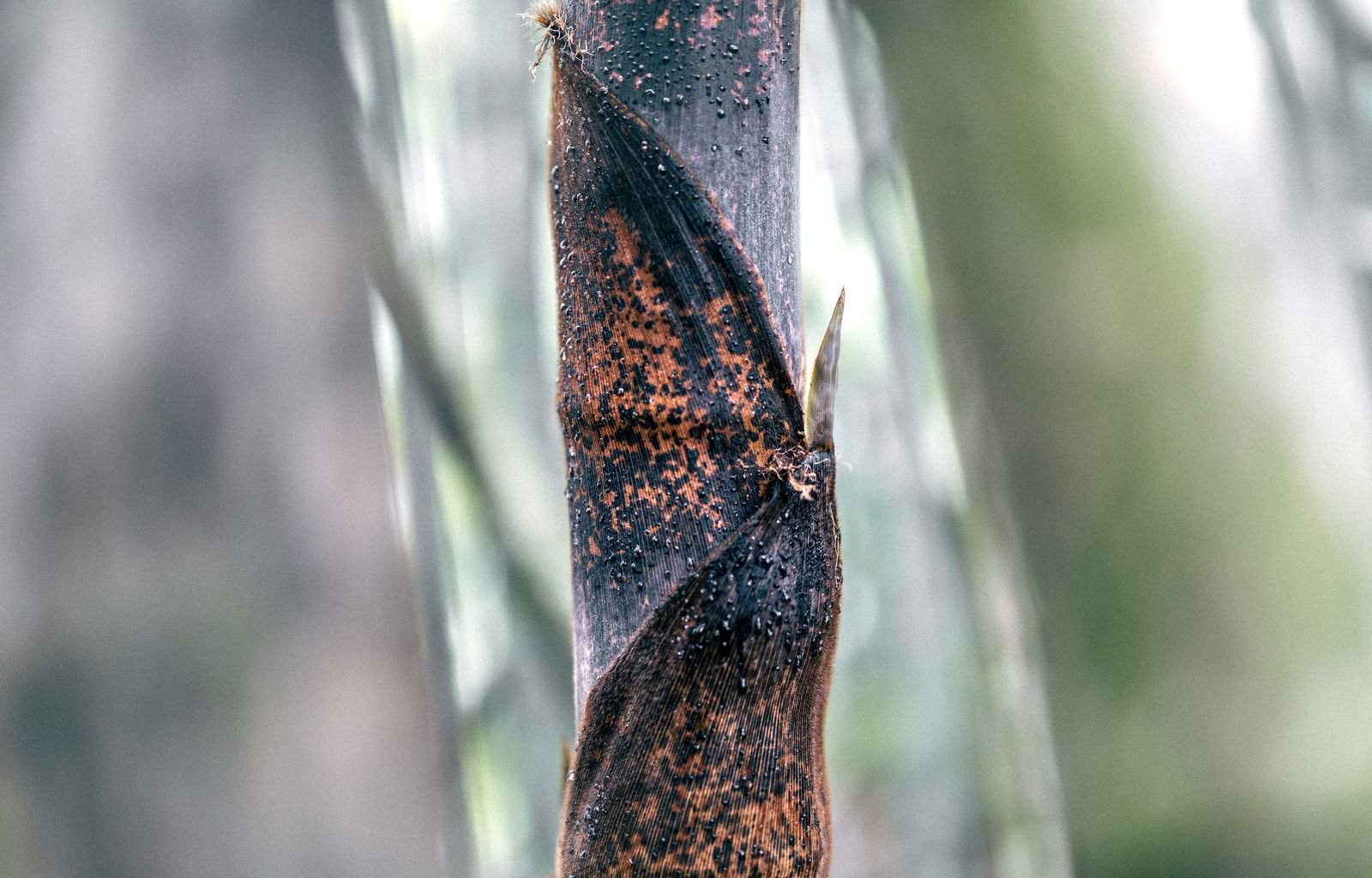
Not every bamboo makes food. There are up to 1,500 bamboo species in the world, and only around a hundred or so are harvested regularly for their shoots, according to Wikipedia. The common food species are the ones you will meet in markets and on labels: Moso bamboo (Phyllostachys edulis), Bambusa vulgaris, Dendrocalamus latiflorus, and Dendrocalamus asper. Healthline names the same two as the most common cooking types (Healthline, “Bamboo Shoots: Nutrients, Benefits, and More”). Some species taste sweet, others bitter: grower guides list Phyllostachys edulis among the sweet ones and Dendrocalamus hamiltonii and Bambusa tulda among the bitter ones. That difference matters when you buy fresh shoots, because a bitter species needs longer cooking and a water change to taste good.
Where do they come from? Bamboo shoots are a staple across East and Southeast Asia, and have been for centuries: China, Japan, Korea, Thailand, Vietnam, Indonesia, the Philippines, and parts of India, where fermented shoots are a traditional food. In Japan they are called takenoko and mark the arrival of spring. Fresh shoots are seasonal, with the peak season running from late March through May in most regions, according to the F.N. Sharp preparation guide. Outside that window, the shoots you buy are canned, vacuum-packed, or dried, which is how most of the world eats them most of the year.
What do bamboo shoots taste like?
Mild, slightly sweet, earthy, and crisp. That is the consensus across every cooking guide in the research, and it is also the reason bamboo shoots are so useful: they do not dominate a dish, they carry it. One cooking guide describes the taste as “a cross between young artichoke and water chestnut”, and another compares it to baby corn. The texture is the star: tender-crisp, with a clean snap when you bite into a well-cooked slice, closer to a water chestnut than to a soft vegetable like zucchini.
Fresh shoots taste better than canned ones, and every source that has tried both says so. Fresh shoots are sweeter, crisper, and more aromatic. Canned shoots are softer, milder, and sometimes carry a tinny or metallic note from the canning liquid, which is why most recipes tell you to rinse them first. A Hong Kong cooking magazine puts it bluntly: fresh is “a million times better than the canned version”. That is an opinion, not a measurement, but it matches the experience of everyone who has cooked both.
One more thing about flavour: bamboo shoots are a sponge. They absorb the flavour of whatever they are cooked in, which is why they work in strongly seasoned dishes like curries, braises, and ramen broth, and why they taste bland on their own. If your bamboo shoots taste like nothing, the problem is usually the seasoning, not the shoot. And if they taste bitter, that is a preparation problem, not a flavour problem: bitterness comes from the cyanogenic compounds and from shoots left standing after harvest, and it is fixed by proper boiling, which the next sections cover.
Are bamboo shoots safe to eat?
Yes, when they are cooked properly. No, never raw. That is the single most important fact in this guide, and every authoritative source agrees on it.
Raw bamboo shoots contain taxiphyllin, a cyanogenic glycoside. When the shoot’s cells are damaged, by chewing or digestion, taxiphyllin breaks down and releases hydrogen cyanide. National Geographic, quoting bamboo researcher Lee Smith, states it plainly: “Raw bamboo shoots contain cyanogenic glycosides, which break down to release toxic hydrogen cyanide, [which can] lead to acute cyanide poisoning” (National Geographic, “The science of why bamboo shoots are a superfood”). Healthline says the same: fresh shoots “contain toxic amounts of the cyanide taxiphyllin”, and Verywell Health, medically reviewed by a registered dietitian, agrees that “it is not safe to consume raw bamboo shoots” (Verywell Health, “Can You Eat Bamboo and What It Does For Your Health?”).
Cooking fixes this, but not by magic and not completely. Boiling greatly reduces the cyanogenic glycosides. The measured reductions in published studies are large but never 100 percent: boiling reduced them by 75.76 to 96.10 percent across three species in one 2016 study, and a 2018 thesis measured 94.1 percent reduction in one species and 98.5 percent in another after 20 minutes of boiling with a water change halfway through. A Hong Kong food safety study, reported second-hand, found cyanide in sliced shoots falling from 40 mg/kg to 3.7 mg/kg after 15 minutes of boiling, about a 91 percent reduction. So the honest wording is “boiling greatly reduces the toxins”, not “boiling destroys them entirely”. Any page that promises total destruction is overstating the science.
Canned, vacuum-packed, and dried shoots are a different case. They are already processed before they reach you, and food safety authorities recognise that processing as reducing hydrogen cyanide to safe levels. Canned shoots are pre-cooked and safe to eat straight from the can. Rinse them first for taste, not for safety: the canning liquid is what gives them their tinny note.
A few groups should be extra careful. Bamboo shoots are goitrogenic, meaning they contain compounds that can affect thyroid function. Healthline notes that in one test-tube study, compounds extracted from bamboo shoots decreased the activity of thyroid cells, and a large cross-sectional study of schoolchildren found a 31 percent prevalence of goitre despite adequate iodine intake, suggesting a possible association with frequent bamboo shoot consumption. That is association, not proof, and it involved frequent consumption, not the occasional cooked serving. Cooking reduces goitrogens, and adequate iodine helps. If you have a thyroid condition, or you eat bamboo shoots very often, this is worth a conversation with your clinician rather than a decision made from a blog post.
Two more cautions from the sources. First, Kikkoman notes that bamboo shoots are high in oxalic acid, and advises people prone to kidney stones to eat them with calcium-rich foods. Second, shoots are high in fibre, so adding a large amount to your diet quickly can cause bloating or gas. Both are ordinary food cautions, not reasons to avoid a properly cooked shoot.
And a word on the panda comparison, because it comes up: pandas eat bamboo raw. Humans must not copy pandas. Pandas are adapted to bamboo; we are not.
How long do you boil bamboo shoots?
This is the question that confuses everyone, because the answers online range from 2 minutes to 3 hours, and almost nobody explains why. The reason is simple: the time depends on the form. A thin strip and a whole large shoot are different jobs. Here is the range, tied to form, with the source for each row.
| Form | Boil time | Source |
|---|---|---|
| Thin strips (halved, peeled, trimmed, sliced thin) | 8 to 10 minutes in lightly salted water | Food Standards Australia New Zealand (FSANZ) |
| Sliced pieces or small whole shoots | 20 to 30 minutes | Healthline and Verywell Health |
| Large whole shoots | 20 to 30 minutes, change the water, then another 20 to 30 minutes | F.N. Sharp preparation guide |
| Bitter varieties or very large shoots | Up to 2 hours, until tender | Healthline (some guides report longer for whole bitter shoots) |
| Canned or vacuum-packed shoots | Already cooked; rinse and heat through only | Food safety authorities; cooking guides |
The FSANZ figure deserves emphasis because it is the most precise guidance available, and it is also the most misused. FSANZ says fresh shoots should be sliced in half lengthwise, the outer leaves peeled away, any fibrous tissue at the base trimmed, then thinly sliced into strips and boiled in lightly salted water for eight to ten minutes. That 8 to 10 minutes applies ONLY to thin strips prepared exactly that way. It does not apply to a whole shoot dropped in a pot. A whole shoot needs the longer times in the table.
The studies back up the longer end of the range. The 2016 study that measured the reductions found that 20 minutes of boiling plus 12 hours of soaking was the most appropriate and time-efficient preparation method. The 2018 thesis found the greatest taxiphyllin reduction at 20 minutes with a water change at 10 minutes. And the practical rule every good guide repeats is the same: boil until a skewer or toothpick goes through without resistance, then taste a piece. If it still tastes bitter or prickles your tongue, it needs more time.
Three habits make the boil work properly. First, always discard the cooking water; the toxins and the bitterness go into it. Second, change the water partway through for large or bitter shoots, and soak them in fresh water afterwards if they still taste bitter. Third, do not trust a 1 to 2 minute blanch as a safety step for raw shoots. That figure appears on low-authority pages and conflicts with FSANZ, Healthline, and the measured studies. A short blanch is a flavour step for already-cooked shoots, not a safety step for raw ones. A brief stir-fry alone is not enough for raw shoots either.
One small disagreement to note: some cooks say not to salt the water because salt toughens the shoot, while FSANZ specifies lightly salted water. This guide follows FSANZ. If you prefer unsalted water, the safety outcome is the same; the texture difference is a matter of taste.
How do you prepare fresh bamboo shoots?
Preparing a fresh shoot takes a few minutes of hands-on work and then mostly waiting while the pot does its job. Here is the method, step by step.
1. Choose a good shoot. Pick shoots that feel firm and heavy for their size, with tight, unopened tips and no soft spots, dark patches, or sour smell. The outer sheaths should look fresh, not dried out or slimy. Smaller, younger shoots are more tender and less bitter than large ones.
2. Peel the outer sheaths. Cut off the base, then peel away the tough outer layers like shucking corn, until you reach the pale, tender core. Wear gloves if you like: the sheaths often carry fine, irritating hairs. Trim off the fibrous base end, about an inch, because it is the most bitter part.
3. Halve and slice. Cut the shoot in half lengthwise, then slice it into thin strips or pieces, depending on the dish. Thin strips cook fastest and are the safest form, which is why FSANZ specifies them.
4. Boil, and discard the water. Drop the slices into a pot of boiling water (lightly salted, per FSANZ) and boil for the time that matches the form, using the table above. Drain, and throw the cooking water away. For large or bitter shoots, boil, change the water, and boil again.
5. Soak if needed, then taste. If the shoots still taste bitter, soak them in fresh water, changing it a few times. The taste test is the most reliable check there is: a properly prepared shoot tastes mild and slightly sweet, with no bitterness and no tongue-prickling. Some traditional methods add rice bran or a dried chilli to the boiling water, and a Japanese method boils whole shoots for about an hour with rice bran and then lets them cool overnight in the pot. Those are flavour traditions, not safety requirements.
6. Cook them into a dish. Once boiled and drained, shoots are ready for anything: stir-fry them for 3 to 5 minutes, add them to soup in the last 10 to 15 minutes, simmer them in a curry, or toss them into noodles at the end. If you want to steam them after boiling, our bamboo steamer guide covers the steaming method step by step.
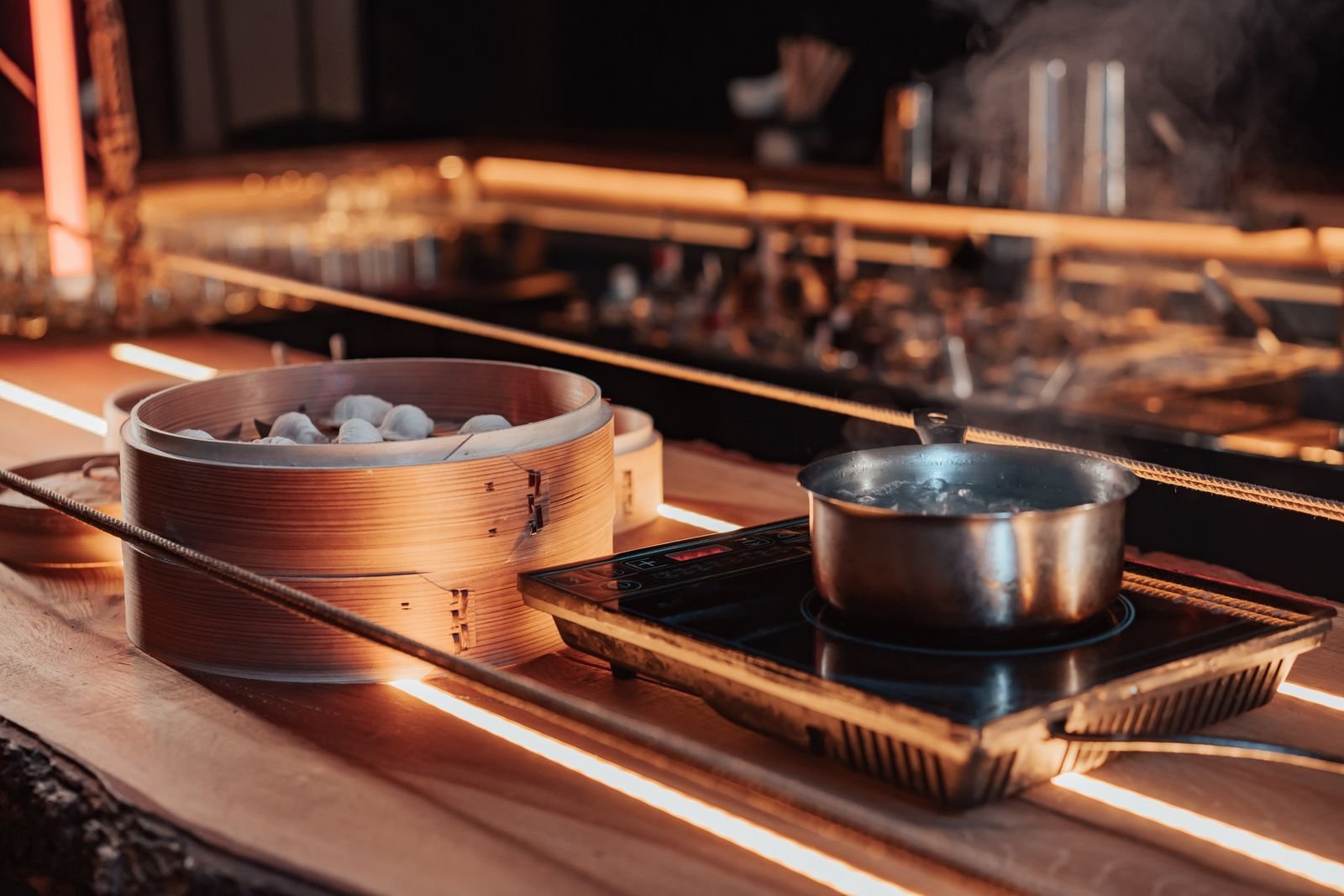
One thing you will notice while boiling: a white powder sometimes appears on the surface. That is tyrosine, an amino acid that crystallises out during cooking, according to Kikkoman. It is harmless, and you can skim it off or ignore it.
Fresh vs canned vs dried: which should you buy?
Most people will buy canned shoots most of the time, because fresh shoots are seasonal and sold mainly in Asian markets in spring. That is fine. Each form has a real trade-off, and the right choice depends on the dish.
| Form | Taste and texture | Preparation | Storage |
|---|---|---|---|
| Fresh | Best flavour: sweeter, crisper, more aromatic | Peel, halve, trim, slice, boil (see the table above), discard water | Use within 3 to 4 days; boiled shoots keep about a week in water in the fridge, changing the water daily |
| Canned | Softer, milder, sometimes tinny from the canning liquid | Already cooked; rinse well, heat through at the end of cooking | Unopened up to 2 years at room temperature; opened, about 5 days in the fridge |
| Vacuum-packed | Close to fresh, better crunch than canned | Already cooked; brief rinse or blanch, then use | Follow the packet date; refrigerate after opening |
| Dried | Chewier, more concentrated flavour | Soak several hours, then boil like fresh shoots | Months in a dry cupboard |
Two notes on that table. First, the storage times are sourced ranges, not a single number, because the sources disagree: one guide says fresh shoots keep 3 to 4 days, another says boiled shoots keep up to a week in water, and the USDA FoodKeeper figure for opened canned shoots is 5 days in the fridge at or below 40 F. Use the shortest figure when in doubt, and trust your nose: a sour smell, slime, or dark discolouration means the shoots have gone bad. Second, canning reduces some nutrients, especially vitamins and minerals, while dietary fibre holds up, according to a 2024 review of bamboo shoot processing. Fresh shoots are nutritionally the best of the four forms, but canned shoots are still a low-calorie vegetable, and the convenience is real.
For shopping: fresh shoots appear in Asian grocery stores in spring, and sometimes at farmers markets. Canned shoots are in the Asian foods aisle of most large supermarkets, year-round. Vacuum-packed shoots are sold online and in Asian markets. Dried shoots are an Asian market item. If a recipe calls for fresh shoots and you only have canned, use the canned ones and add them near the end of cooking, just to heat through. Long cooking makes canned shoots softer, and they have already been cooked once.
Are bamboo shoots healthy?
Yes, in the ordinary sense: they are low in calories, low in fat, and a useful source of fibre, potassium, and some B vitamins. They are not a miracle food, and the honest numbers are more modest than the headlines suggest.
| Per 100 g | Raw shoots | Canned shoots (drained) |
|---|---|---|
| Energy | 27 kcal | 19 kcal |
| Protein | 2.6 g | 1.72 g |
| Carbohydrate | 5.2 g | 3.22 g |
| Fibre | 2.2 g | Not listed in the USDA canned entry used here |
| Fat | 0.3 g | 0.4 g |
| Potassium | 533 mg | About 105 mg per 131 g serving |
Those are USDA figures, raw via the USDA National Nutrient Database and canned via USDA-based mirrors. One cooked cup (155 g) comes in at 64 calories, 2.5 g protein, 5 g carbs, and 2 g fibre, with copper at 19 percent of the daily value, vitamin B6 at 14 percent, and vitamin E at 9 percent, according to Healthline citing USDA FoodData Central. Note that the cooked cup is a different USDA entry, not a conversion of the raw figures, so do not expect the numbers to line up exactly.
Two claims need correcting because they circulate widely. First, bamboo shoots are sometimes called “high in protein”. They are not. At 2.6 g of protein per 100 g raw, the amount is modest, and a cooked cup gives 2.5 g. They are a vegetable with some protein, not a protein food. Second, they are sometimes called a “superfood”. That label comes from press coverage of a 2025 systematic review in Advances in Bamboo Science, and the review itself is far more cautious than the headlines. The authors screened 1,052 records and included 16 studies, of which only 4 involved human participants, and they wrote that “additional high-quality human trials are necessary before we can make firm recommendations”. The honest framing is “promising but thin evidence”, not “proven superfood”.
What does that thin evidence actually say? The best human study is a small one from 2009: eight healthy women aged 21 to 23 ate 360 g of bamboo shoots a day for six days, and their total and LDL cholesterol fell compared with a fibre-free diet. But that was eight people, six days, a very large serving (12.7 ounces a day), and a comparison against a diet with no fibre at all, not against a normal diet. The same study found no difference in blood sugar. A separate study of bamboo-shoot-fortified cookies found a smaller rise in blood sugar after eating, but that is one study of a fortified food, not of shoots on a plate. So the cholesterol and blood-sugar claims you will see online are real studies, but they are small, short, and specific, and they do not prove that a normal serving of bamboo shoots lowers cholesterol or blood sugar. The full study is on PubMed for anyone who wants to check (Park and Jhon, 2009, PubMed).
Weight loss follows the same pattern. There is no human weight-loss trial of bamboo shoots in the research. What exists is the general logic of fibre and satiety, plus one mouse study in which bamboo shoot fibre prevented obesity in mice on a high-fat diet. That supports “low in calories with useful fibre, which can help you feel full”, and nothing stronger.
The fair summary: bamboo shoots are a genuinely good vegetable, low in calories, with useful fibre, potassium, and B vitamins, and early research hints at more benefits. But the human evidence is thin, the studies are small, and anyone selling them as a proven cure for anything is ahead of the science.
What are bamboo shoots in ramen?
The shoots in ramen are usually menma, not plain bamboo shoots. Menma, also called shinachiku or “Chinese bamboo”, is a Japanese condiment made from lacto-fermented bamboo shoots, dried before fermentation, then seasoned with soy sauce, sugar, salt, sesame oil, and mirin. It is the salty-sweet, slightly crunchy topping you find on a bowl of ramen, and it tastes quite different from a plain boiled shoot because the fermentation and the seasoning do most of the work.
Traditional menma takes time: the shoots are boiled, sealed to ferment for about a month, then sun-dried for a few days. Authentic menma is made from young shoots of Dendrocalamus latiflorus, a species found mainly in Taiwan, southern China, Myanmar, and Vietnam. Quick home versions skip the fermentation and simmer boiled, often canned, shoots in the seasoned liquid instead. That is what most home recipes do, and it is a fair shortcut, though the flavour is simpler.
If you are making menma at home, two practical tips repeat across the recipes. First, avoid pre-sliced canned shoots, because they are often too soft to hold up. Whole canned shoots, sliced yourself, keep a better bite. Second, if you do not like the flavour from the can, soak the sliced shoots in boiling water for a few minutes before cooking them in the seasoning. For the full method, Just One Cookbook has a careful menma recipe (Just One Cookbook, “Menma”).
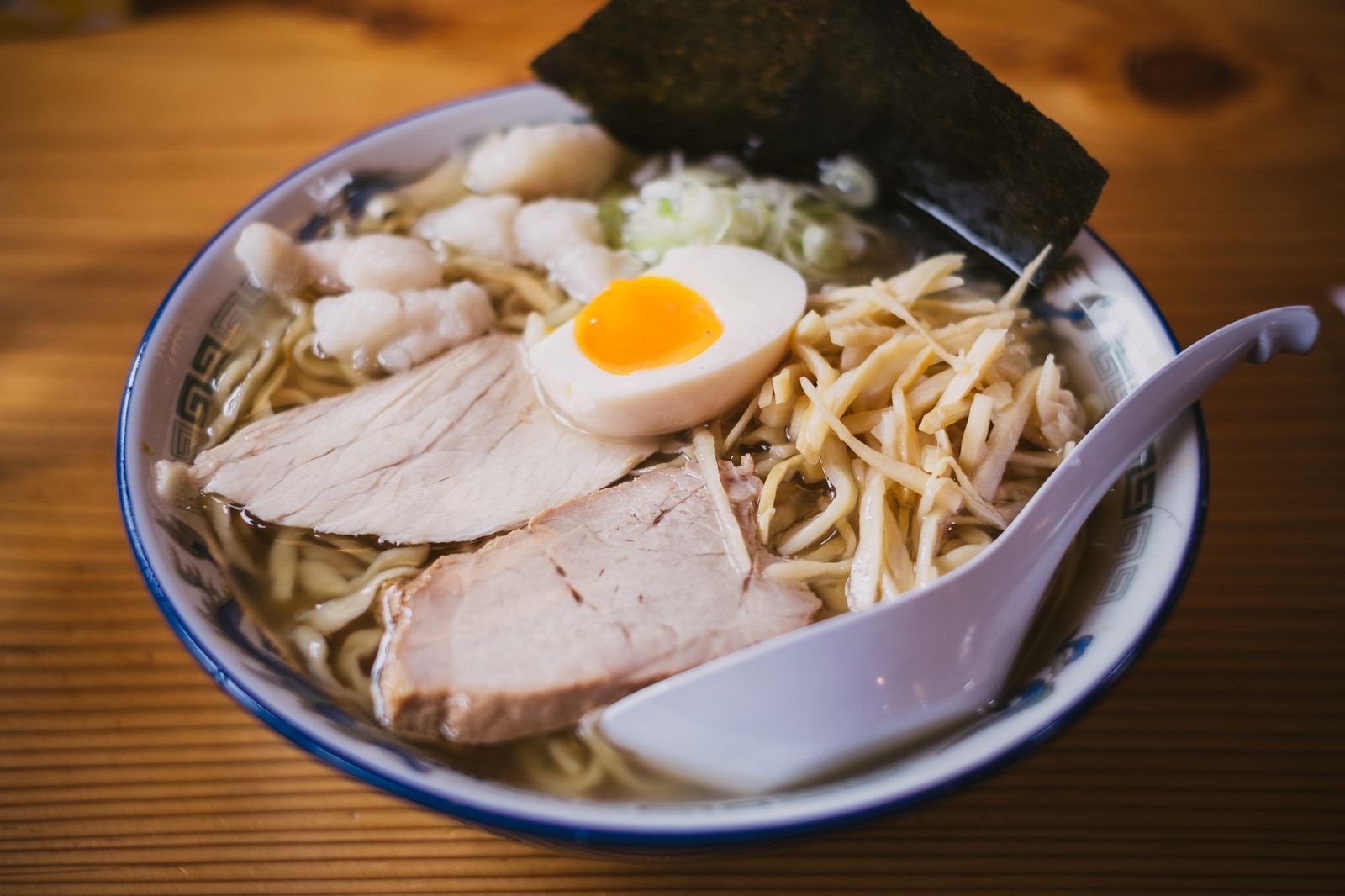
Menma is also the answer to a common confusion: the shoots in a ramen bowl are not the same as the shoots in a stir-fry, even though both started as bamboo shoots. One is fermented and seasoned; the other is boiled and tossed in a sauce. Same plant, different food.
Can you eat bamboo shoots from your garden?
Maybe, but do not assume it. Three things have to be true: the species has to be one of the edible ones, the shoots have to be young enough, and they have to be cooked properly.
Start with the species. Only around a hundred of the roughly 1,500 bamboo species are harvested regularly for food, and some species are not suitable for eating at all. A forum thread on this exact question shows the confusion: one reply claims “all bamboo is edible as it is a grass”, which is not supported by any authoritative source. The safe approach is to identify your bamboo by its scientific name before eating anything from it. If the nursery tag only says “bamboo” with no species name, do not eat the shoots until you know what you have.
Second, which type you have matters for the garden as well as the kitchen. Running bamboo spreads aggressively through underground rhizomes, while clumping bamboo stays in a tight cluster, and that difference decides whether a bamboo in your yard is a manageable plant or a multi-year problem. Our guide to clumping vs running bamboo explains how to tell them apart, including the rhizome test and the nursery tag check. If you are thinking of planting bamboo so you can harvest shoots, read that guide first, and read our complete guide to growing bamboo for the planting and care side. Planting a runner for its shoots and then discovering it has colonised the neighbour’s garden is a mistake you only make once.
Third, garden shoots need the same preparation as market shoots: peel, halve, trim, slice thin, boil for the time that matches the form, discard the water, and taste-test. Some garden species are bitter, and bitter shoots need the longer boil and a water change. And never eat a garden shoot raw to “test” it. The test for edibility is the species name and proper cooking, not a raw taste.
How do you store bamboo shoots?
Fresh shoots perish fast, and they get more bitter the longer they sit after harvest. That is why the storage advice is really two pieces of advice: how to keep them before cooking, and how to keep them after.
Before cooking, use fresh shoots within 3 to 4 days, and keep them cool. One farming guide gives a shelf life of only 3 to 4 days at room temperature, which is why shoots are usually sold soon after harvest. If you cannot cook them the same day, refrigerate them and cook them as soon as you can.
After boiling, the shoots keep longer. Kikkoman advises storing boiled shoots submerged in water in the fridge for up to a week, changing the water daily. A cooking guide puts it at about 5 days for boiled shoots stored in water. Processed shoots keep longest in the freezer: the F.N. Sharp guide says up to 12 months, though they will be softer after thawing and are best used in cooked dishes.
Canned shoots are the easy case. Unopened, they keep up to 2 years at room temperature. Once opened, the USDA FoodKeeper figure is 5 days in the fridge at or below 40 F, and unopened cans kept in the fridge are good for about 2 weeks. Transfer leftover canned shoots to a container with fresh water, change the water daily, and use them within those 5 days. Dried shoots keep for months in a dry cupboard, and need soaking for several hours before they are boiled like fresh ones.
The rule behind all of these numbers: trust the shortest figure when sources disagree, and trust your senses over any number. A sour smell, a slimy texture, or dark brown or black discolouration means the shoots have gone bad, whatever the date says.
What real users found
We did not test bamboo shoots ourselves for this guide. The findings below come from people who did cook and eat them: home cooks, gardeners, foragers, and buyers who wrote about what actually happened in their kitchens. Each finding names who said it and where, so you can check it yourself.
Fresh shoots beat canned shoots by a wide margin. Wendy Kiang-Spray, gardener and author of The Chinese Kitchen Garden, writes that there is “simply no comparison between fresh bamboo shoots and what you get out of a can”, comparing it to a fresh garden pea against a canned one. She calls the shoots served in Chinese restaurants “gross”, the pieces people pick out onto a napkin. Her method is to boil the hearts in an uncovered pot for about 45 minutes. (Wendy Kiang-Spray, wendykiangspray.com)
Canned shoots carry a metallic note, but a quick blanch fixes it. Reviewers of Dynasty canned bamboo shoots on Amazon (4.4 out of 5 stars, 411 reviews) report that “you can definitely tell they come from a can as they have a bit of a metallic taste, but it is not overwhelming.” One reviewer fixes it with a quick blanch in acidic salted water, 2 cups of water with 1 teaspoon of salt and 1 teaspoon of lemon juice, boiled for 90 seconds, which “perks them up and gives them a fresher taste and kills the tiny bit of canned taste.” The same reviewers note the shoots remind them “a little bit of artichoke heart or palm hearts.” (Amazon reviews of Dynasty canned bamboo shoots, via Desertcart)
Bitterness is the most common complaint, and longer boiling with water changes is the fix real cooks report. On Threads, home cook vicke_uca found that a porridge simmered for two hours was completely free of bitterness, while a soup cooked for 40 minutes stayed bitter. Commenters agreed the bitterness is set at harvest and told her to cut off the green exposed part, start in cold water, and boil for one to two hours. Forager Green Deane (Eat The Weeds) gives the same rule: cooking in one or more changes of water “reduces or gets rid of that bitterness”, and “if you cannot boil the bitterness out, do not eat it.” A user on the Guadua Bamboo forum reported the same pattern from the other side: harvested shoots carried “a bitter almond cyanide compound odor which dissipated on boiling.” (Threads, vicke_uca, Eat The Weeds, Green Deane, Guadua Bamboo forum)
The rice trick for bitterness gets mixed results. On Threads, home cook Emma shared the tip of adding a spoonful of white rice while boiling bamboo shoots to remove the bitter taste, calling it grandmotherly wisdom worth saving. Commenters who tried it reported mixed results: some said it helped, while one found that vigorous boiling for 15 minutes removed the bitterness regardless of the rice. Treat it as a trick worth trying, not a guarantee. (Threads, Emma)
First-time cooks are surprised by how sweet fresh shoots taste after proper boiling. A home cook writing on Asian Lifestyle Design followed a YouTube tutorial on boiling bamboo shoots, cooked them for 40 minutes in plain water without rice bran, and wrote that she was “pleasantly surprised at the sweet taste.” Her conclusion: “fresh bamboo shoots really make a big difference in flavor.” Cookbook author Sonoko Sakai reports the same gap from the other direction: fresh shoots “taste nothing like the smelly and flavorless water packed bamboo shoots that come in a can”, and she pre-cooks hers in rice bran water for about 30 minutes to remove bitterness. (Asian Lifestyle Design, Sonoko Sakai, sonokosakai.com)
Not every canned brand is worth buying. A reviewer of Native Forest organic sliced bamboo shoots on Amazon wrote that opening the can released “a horrible strong smell”, the slices were “so soft, they turned into mush” on a gentle rinse, and “$30 in the garbage went.” Another reviewer of the same brand found the shoots came from “the more woody part of the lower bamboo, and not the tender tips”, and said the smell could be reduced by boiling in water and discarding the yellowish liquid. Brand matters with canned shoots: read the reviews before you buy in bulk. (Amazon reviews of Native Forest bamboo shoots, via Desertcart)
The pattern across all of these reports is consistent: fresh shoots taste better, canned shoots need rinsing and a quick blanch, and bitterness is fixed by longer boiling and water changes, not by shortcuts.
Frequently asked questions
Can you eat bamboo shoots raw?
No. Raw bamboo shoots contain taxiphyllin, a compound that releases hydrogen cyanide when digested, and eating them raw can cause acute cyanide poisoning. Always peel, slice, and boil them first, and discard the cooking water. Canned shoots are the exception: they are pre-cooked and safe straight from the can.
Are canned bamboo shoots already cooked?
Yes. Canned shoots are cooked during processing, and food safety authorities recognise that processing as reducing hydrogen cyanide to safe levels. Rinse them before use to remove the tinny taste of the canning liquid, and add them near the end of cooking just to heat through.
Why do my bamboo shoots taste bitter?
Bitterness comes from the cyanogenic compounds in the shoot, and from shoots left standing after harvest, which grow more bitter with time. The fix is proper preparation: peel, halve, trim the fibrous base, slice thin, boil for the time that matches the form, discard the water, and change the water and soak if they still taste bitter. Some species are naturally more bitter than others, and bitter varieties need the longer boil. A 1 to 2 minute blanch will not fix a bitter raw shoot.
Are bamboo shoots good for weight loss?
They can help in the ordinary way a low-calorie, high-fibre vegetable helps: raw shoots have 27 calories per 100 g, and the fibre can help you feel full. But there is no human weight-loss trial of bamboo shoots, so do not present them as a weight-loss food. The honest claim is “low in calories with useful fibre”, not “helps you lose weight”.
Do bamboo shoots affect the thyroid?
They may, and the evidence is limited. Bamboo shoots are goitrogenic, and one large cross-sectional study of schoolchildren found a 31 percent prevalence of goitre despite adequate iodine intake, suggesting a possible association with frequent consumption. There is also test-tube and animal evidence that bamboo compounds can reduce thyroid cell activity. None of this proves that eating cooked shoots normally causes thyroid problems. Cooking reduces goitrogens, and adequate iodine helps. If you have a thyroid condition, ask your clinician.
Are bamboo shoots keto?
They fit a low-carb pattern: raw shoots have 5.2 g of carbohydrate per 100 g, and canned shoots have 3.22 g per 100 g. Whether they fit your particular plan depends on the rest of what you eat, so check your own targets rather than taking a blog’s word for it.
Can you eat bamboo shoots while pregnant?
The research for this guide found no reliable guidance either way. The one pregnancy warning found online, that shoots “can tone the uterus and encourage bleeding”, cites no source and is best treated as unverified folk caution, not medical guidance. Properly cooked shoots are a normal food in many countries, but if you are pregnant, ask your clinician rather than relying on a blog post.
Are bamboo shoots high in histamine or oxalate?
No reliable histamine figure was found in this research, so this guide makes no claim about it. On oxalate, Kikkoman notes that bamboo shoots are high in oxalic acid and advises people prone to kidney stones to eat them with calcium-rich foods. If oxalate or histamine is a concern for you, ask your clinician.
What is the white powder on bamboo shoots?
The white powder that appears when bamboo shoots are boiled is tyrosine, an amino acid that crystallises out during cooking. It is harmless. Skim it off if you like, or ignore it.
Are all bamboo shoots edible?
No. Only around a hundred of the roughly 1,500 bamboo species are harvested regularly for food, and some species are not suitable for eating. The common food species are Moso (Phyllostachys edulis), Bambusa vulgaris, and Dendrocalamus species. Do not eat shoots from an unidentified bamboo in your garden until you know the species, and never eat any shoot raw.
The bottom line
Bamboo shoots are a mild, crisp, low-calorie vegetable with a real place in the kitchen, and a real rule attached: never eat them raw. Peel them, slice them thin, boil them for the time that matches their form, throw the water away, and taste before you serve. Buy fresh in spring when you can, and use canned the rest of the year without guilt. And when a headline calls them a superfood, remember the evidence: promising, thin, and still waiting on better human trials. The shoot itself is good enough without the hype.