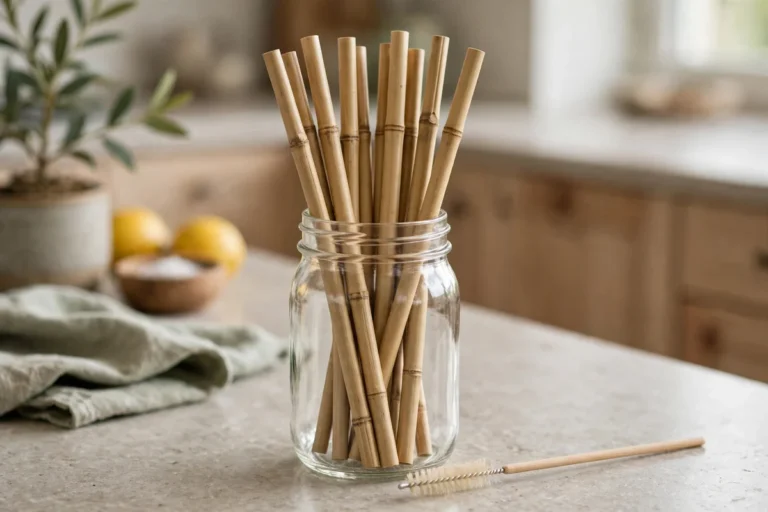

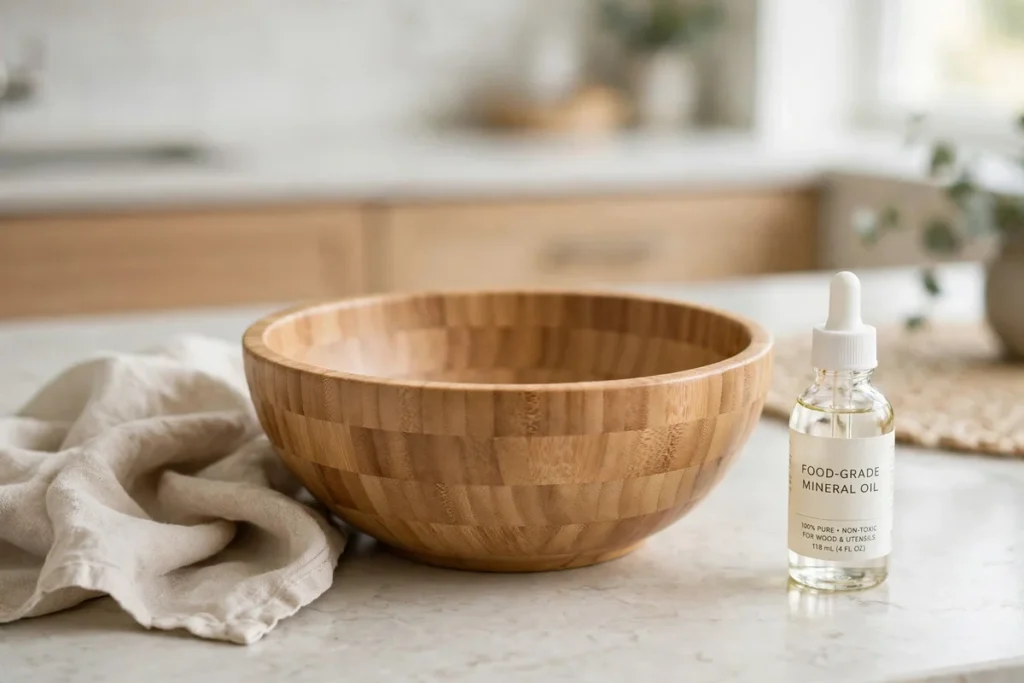
The short answer: To care for bamboo bowls, hand wash them right after use with warm water and mild soap, towel dry them at once, and let them air dry fully. Oil them once a month with food-grade mineral oil. Never put them in the dishwasher, never soak them, and never use them in the microwave. Store them dry with air around them.
Bamboo bowls are light, natural, and easy to live with, but they need a different routine than ceramic or glass. Bamboo is porous, so it absorbs water and food, and it can warp, crack, or grow mold if you treat it the wrong way. The routine is simple: wash it by hand, dry it fully, oil it once a month, and store it dry. This guide explains how to care for bamboo bowls, and it answers the questions people ask most, from the dishwasher to stains, odors, safety, and how long a bowl lasts. Bamboo bowl care is simple once you know the routine.
What kind of bamboo bowl do you have?
Before you clean a bamboo bowl, check which kind it is. A solid bamboo bowl is carved from real bamboo and has a visible grain. A bamboo fiber composite bowl is bamboo powder bound with melamine resin, smooth and glossy like plastic. A disposable bowl is made for one use. The care below is for a solid reusable bamboo bowl.
Most bamboo bowls fall into three kinds. A solid bamboo bowl is made from real bamboo. You can see the grain, and the finish is natural and matte. A bamboo salad bowl is usually a solid bamboo bowl, large and wide, made for serving salad at the table. A bamboo salad bowl set often comes with serving utensils, and a bamboo salad bowl with lid is a solid bowl with a cover for storage. These are reusable bowls, made to last for years. Manufacturers kiln-dry the bamboo to 8 to 12 percent moisture content before shaping it, and sand the finished bowl from 180 to 320 grit for a smooth surface, according to Bamboo Wood Art.
A bamboo fiber composite bowl is different. It is made by mixing bamboo powder with melamine-formaldehyde resin and molding it into a bowl. It looks smooth and glossy, often in bright colors, and it feels like plastic. It is often sold as bamboo or eco tableware. This kind is the one to be careful about, because it can leach melamine and formaldehyde, especially with hot or acidic food. You can tell it apart from solid bamboo by its smooth, glossy surface and by the label: if it says bamboo fiber, melamine, or resin, it is a composite.
A bamboo salad bowl set often comes with bamboo utensils for serving. A bamboo salad bowl with utensils is a complete set, and a bamboo salad bowl and servers set is similar. A bamboo salad bowl large enough for a family is 10 to 12 inches wide. If you want to know how to care for bamboo salad bowl sets, the routine is the same. Bamboo bowls and plates are often sold together, and the same routine works for a bamboo pot. Bamboo pot care follows the same steps: hand wash, dry, and oil.
How do you clean bamboo bowls after use?
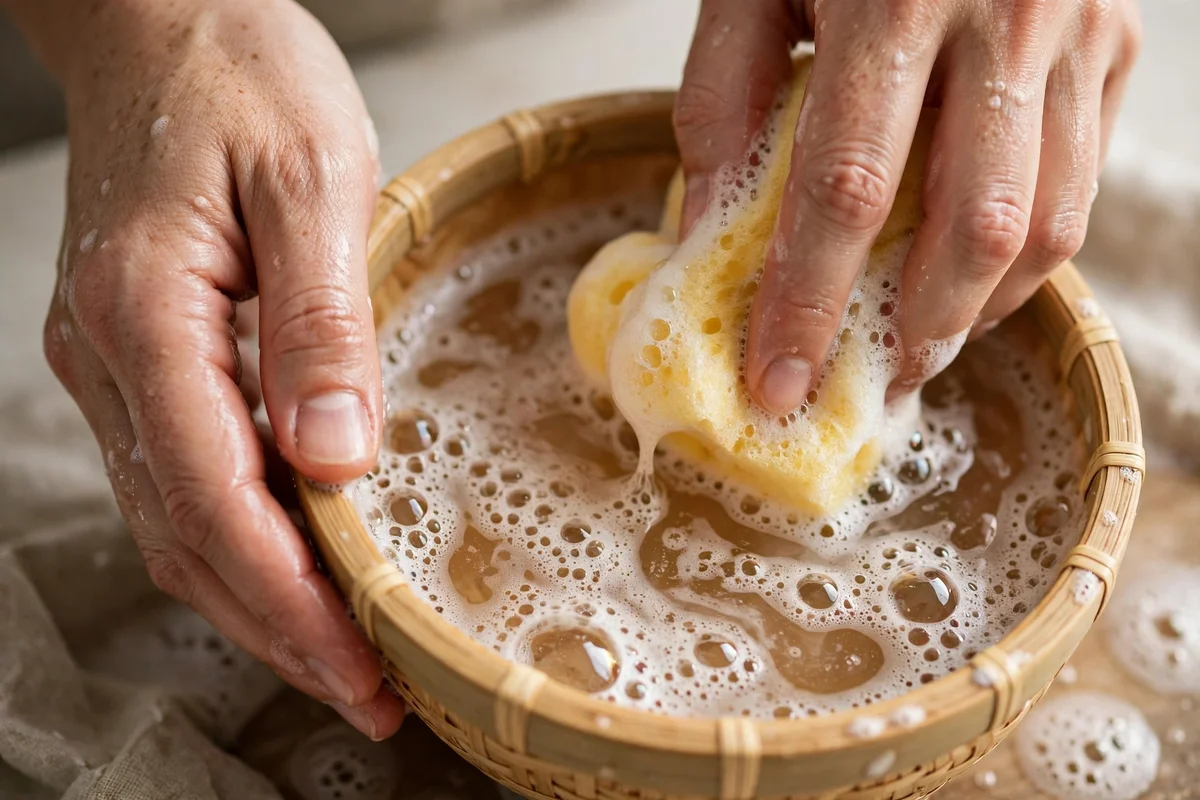
To clean a bamboo bowl, wipe out any food with a soft cloth, wash it right away in warm water with mild soap and a soft sponge, rinse it well, and dry it at once with a soft towel. Do not use abrasive cleaners or bleach, and do not leave the bowl soaking in water.
Start by wiping out any food with a soft cloth or a paper towel. If food is stuck, add a little warm water and let it sit for a minute, then wipe it out. Do not leave the bowl sitting in water. Soaking is one of the worst things you can do to bamboo, because it absorbs water and swells, and that can cause it to warp or crack.
Wash the bowl right after use with warm water and a mild dish soap. Use a soft sponge or a soft cloth. Do not use a scouring pad, steel wool, or any abrasive cleaner. Abrasives scratch the surface and damage the finish, and a scratched surface is harder to clean and more likely to harbor bacteria. Rinse the bowl well with warm water to remove all the soap, then dry it at once with a soft towel. One source suggests a 15-minute warm water soak before first use, but this guide does not recommend soaking, because it can make bamboo swell. A brief wash is enough.
The routine is the same as how to clean bamboo cutting boards, and our guide to cleaning bamboo cutting boards covers boards in detail. The same routine works for a bamboo cutting board, which needs the same hand wash and dry.
How do you dry bamboo bowls so they do not get moldy?
To dry a bamboo bowl so it does not get moldy, towel dry it at once after washing, then let it air dry fully in a well-ventilated place before you store it. Do not store a damp bowl, do not stack wet bowls together, and do not put a damp bowl in a closed cupboard.
Drying is the step that prevents mold. Bamboo is porous, so it holds moisture. If you put a damp bowl away in a closed cupboard, mold can grow. That is why you should dry the bowl twice: first with a towel, then by air.
After you wash the bowl, dry it at once with a soft towel. A bamboo towel for drying is soft and absorbent, and it works well for this. Wipe the inside and the outside. Then place the bowl upside down on a dish rack or a clean towel in a well-ventilated place, and let it air dry fully. Do not put it away until it is completely dry. That can take an hour or more, depending on the air and the humidity.
Do not stack wet bowls together. If you stack bowls while they are damp, moisture is trapped between them and mold can grow. Let each bowl dry on its own. Do not put a damp bowl in a closed cupboard or a drawer. A closed space traps moisture. Let the bowl air dry in the open first, then store it in a dry place.
Do bamboo bowls get moldy? Yes, they can get moldy if they are stored damp. If you see dark spots or smell mustiness, wash the bowl, wipe it with diluted vinegar, rinse, and air dry it fully. If the mold does not go away, replace the bowl.
Are bamboo bowls dishwasher safe?
No, most bamboo bowls are not dishwasher safe. A pure solid bamboo bowl should not go in the dishwasher, because high heat, long water exposure, and harsh detergent can make it swell, warp, crack, and lose its finish. Some bamboo fiber composite bowls are labeled dishwasher safe, but those are a different product. When in doubt, hand wash it.
This is the question people ask most, and the answer is clear for solid bamboo: do not put it in the dishwasher. The dishwasher uses high heat and strong detergent, and the wash cycle is long. Bamboo is porous, so it absorbs water during the cycle. The heat then dries it out too fast. That cycle of swelling and drying is what causes warping and cracking. The detergent is also harsh, and it can strip the oil finish that protects the bowl.
Some bowls are labeled dishwasher safe. If a bowl says it is dishwasher safe on the label, it is usually a composite bowl, not solid bamboo. A composite bowl can survive the dishwasher because it is mostly plastic. A solid bamboo bowl cannot. If you are not sure which kind you have, hand wash it. Hand washing is always safe, and it makes any bamboo bowl last longer.
HomeGearGeek, a kitchenware guide, warns that the dishwasher can damage bamboo bowls and recommends hand washing instead. Hand washing is the safer choice, and the dishwasher is the fastest way to shorten a bamboo bowl’s life.
How do you oil a bamboo bowl?
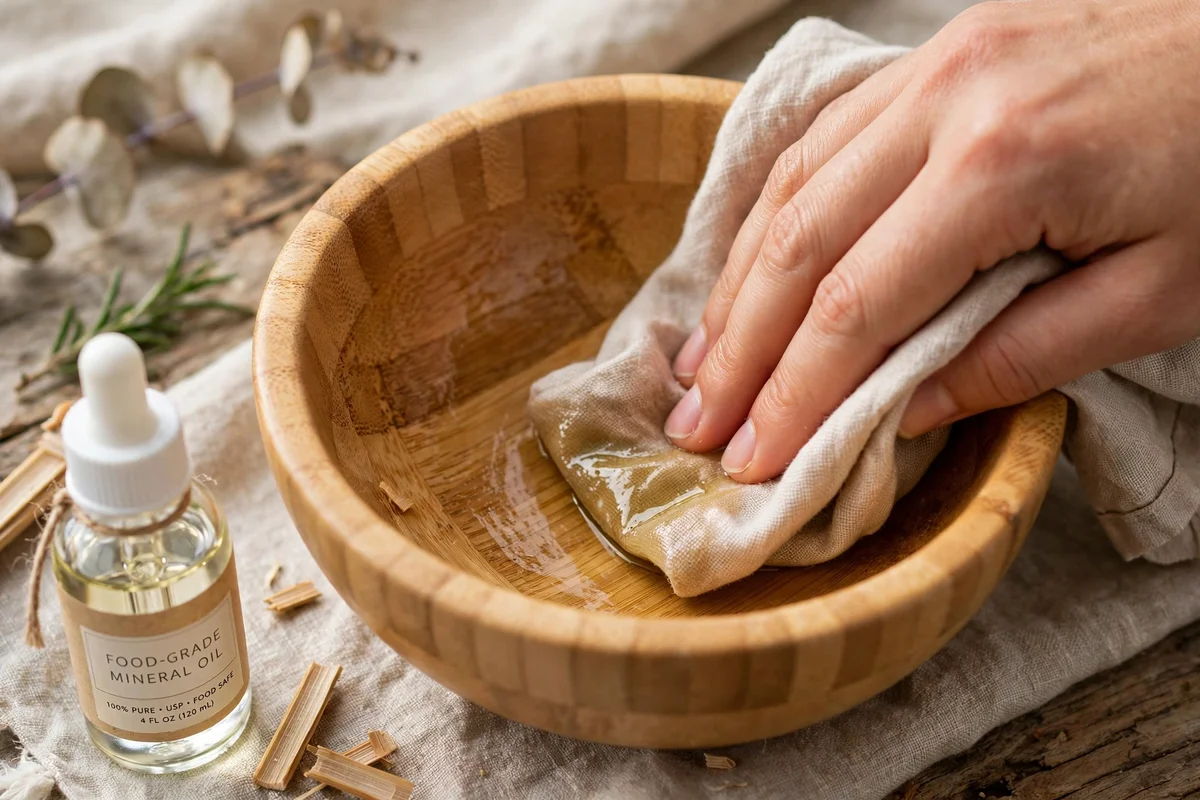
To oil a bamboo bowl, make sure the bowl is clean and fully dry, pour a small amount of food-grade mineral oil onto a soft cloth, rub it into the bowl in a thin, even layer, let it sit for a few hours, then wipe off any excess oil. Oil the bowl once a month.
Oiling is the step that keeps a bamboo bowl sealed and protected. Bamboo is porous, so it absorbs water and food. Oil fills the pores and creates a barrier. That barrier keeps water out, keeps stains from soaking in, and keeps the bowl from drying out and cracking. A bowl that is oiled regularly will last much longer than a bowl that is never oiled.
Start with a clean, fully dry bowl. Do not oil a damp bowl. Pour a small amount of food-grade mineral oil onto a soft cloth. Do not pour oil directly onto the bowl. Rub the oil into the inside and the outside of the bowl in a thin, even layer. Use a small amount. You do not need much. A thin layer is enough. The same step applies to a bamboo mini bowl, which needs the same thin layer of oil.
Let the oil sit for a few hours, or overnight if you can. That gives the oil time to soak into the bamboo. Then wipe off any excess oil with a clean, dry cloth. The bowl should feel smooth, not sticky or greasy. If it feels sticky, you used too much oil. Wipe it again with a clean cloth.
Which oil is best for bamboo bowls?
Food-grade mineral oil is the best oil for bamboo bowls. It is tasteless, odorless, and it does not go rancid. Use only food-grade mineral oil, which is sold for cutting boards and butcher blocks. Do not use vegetable oil, olive oil, or coconut oil, because those can go rancid and leave a sticky residue and a bad smell.
Food-grade mineral oil is the standard for bamboo and wood kitchenware. It is a refined oil that is safe for food contact. It has no taste and no smell, and it does not go rancid. That means it will not turn bad in the bowl, and it will not leave a smell or a taste in your food. You can buy it at a kitchen store or online, often sold as cutting board oil or butcher block oil. Make sure the label says food-grade.
Do not use vegetable oil, olive oil, or coconut oil. These are cooking oils, and they can go rancid over time. When they go rancid, they leave a sticky residue and a bad smell in the bowl. That smell can transfer to food. Some people use coconut oil because it is solid at room temperature, but it can still go rancid, and it can leave a sticky film. The sources are mixed on coconut oil, but the safe choice is mineral oil.
Do not use tung oil, linseed oil, or any oil that is not food-grade. Some wood oils are not safe for food contact. Use only food-grade mineral oil. It is inexpensive, it is easy to find, and it is the oil that the manufacturers and the care guides recommend.
Can bamboo bowls go in the microwave?
No, bamboo bowls should not go in the microwave. Microwave heat can crack or char bamboo, and it can damage the finish. Heat food in a microwave-safe container instead, then transfer the food to the bamboo bowl for serving. A bamboo bowl is for serving and eating, not for heating.
The microwave heats food unevenly, and it can create hot spots. Bamboo is a natural material, and it does not handle microwave heat well. The heat can dry out the bamboo, crack it, or char it. The finish can also be damaged. Once a bamboo bowl is cracked or charred, it is not safe to use for food, because bacteria can grow in the crack.
This is a common mistake. People heat soup or leftovers in a bamboo bowl because it is convenient. But a bamboo bowl is not a microwave container. It is a serving bowl. Heat the food in a glass or ceramic container that is labeled microwave-safe, then pour the food into the bamboo bowl to serve and eat. That takes only a few seconds more, and it protects the bowl.
If you need a bowl that can go in the microwave, use glass or ceramic. Save the bamboo bowl for serving. That is what it is made for, and it will last much longer if you use it that way.
Can you put hot soup in a bamboo bowl?
Yes, you can put hot soup in a bamboo bowl for serving and eating, as long as the soup is not boiling and the bowl is solid bamboo. Pour the soup into the bowl, eat it right away, and wash the bowl promptly after. Do not leave hot soup sitting in the bowl for a long time.
Hot soup is fine in a solid bamboo bowl, but there are limits. The soup should be hot, not boiling. Pour it into the bowl and eat it right away. Do not leave the soup sitting in the bowl for hours. Hot, wet food can soak into bamboo if it sits too long, and that can cause the bowl to swell or stain. Wash the bowl promptly after you finish eating.
A bamboo soup bowl is made for this. Our bamboo soup bowls are 10 oz bowls, a good size for a serving of soup. They are disposable bamboo bowls, sturdy for one use. If you have a reusable solid bamboo bowl, it works for soup too, as long as you wash it promptly after.
If you want a bowl for soup every day, a ceramic or glass bowl is a better choice, because it can handle hot, wet food without soaking. A bamboo bowl is best for salads, snacks, and dry foods, and it works for soup as an occasional serving bowl. Use it for soup, but wash it promptly, and do not let soup sit in it.
How do you remove stains from bamboo bowls?
To remove stains from a bamboo bowl, make a paste from baking soda and water, spread it on the stain, let it sit for a few minutes, scrub gently with a soft sponge, then rinse and dry the bowl. For tougher stains, use a diluted vinegar solution or rub the stain with a lemon half, then rinse and dry.
Stains are the most common complaint about bamboo bowls, and acidic foods are the usual cause. Tomato sauce, citrus, berries, and vinaigrette can leave a stain, especially if the food sits in the bowl for a long time. The stain is not dirt. It is color that has soaked into the fibers. That is why prompt washing matters: if you wash the bowl right after use, the stain never gets a chance to set.
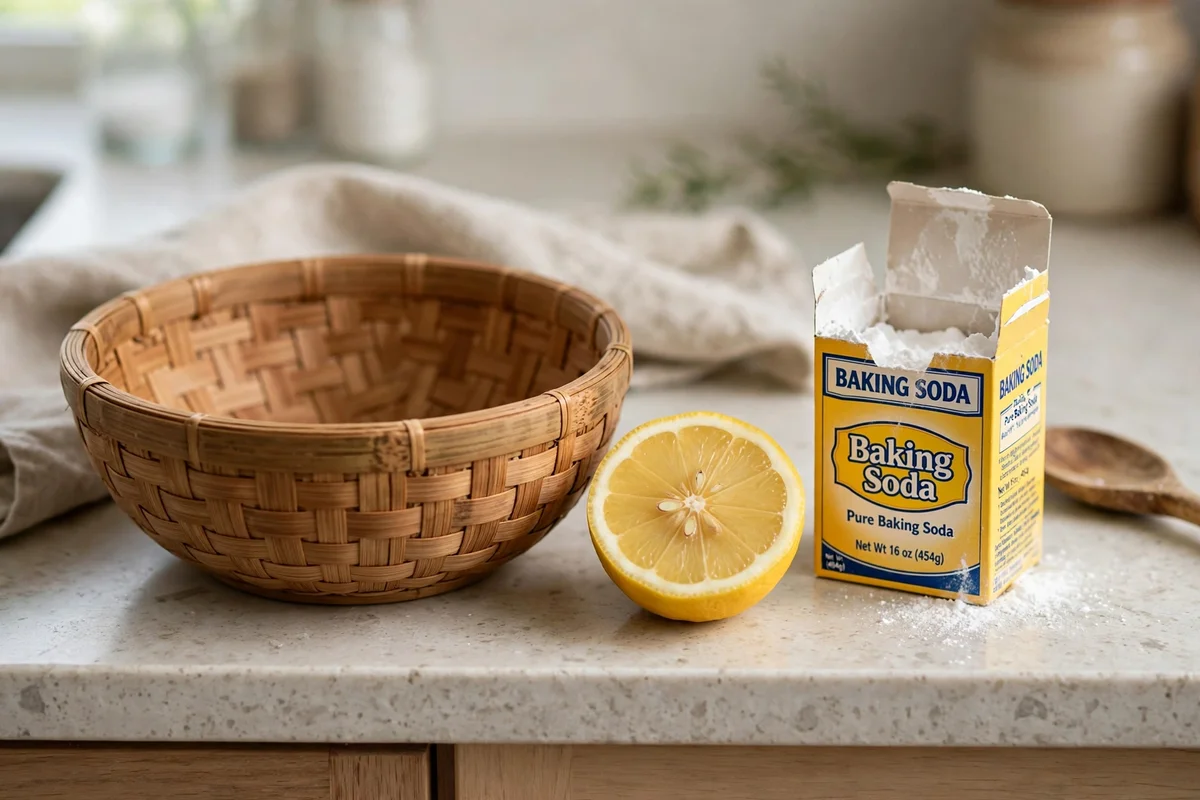
For a fresh stain, start with baking soda. Make a paste from baking soda and a little water. You can also dissolve 2 tablespoons of baking soda in warm water. Spread the paste on the stain, let it sit for a few minutes, then scrub gently with a soft sponge. Rinse the bowl well and dry it at once. Baking soda is a mild cleaner and a deodorizer, and it is safe for bamboo.
For a tougher stain, use vinegar. Mix 1 part vinegar with 4 parts water. Wipe the stained area with the solution using a soft cloth, let it sit for a few minutes, then rinse and dry. Vinegar is a natural disinfectant and it helps lift food stains. Do not soak the bowl in vinegar. A brief wipe is enough.
Lemon is another good option. Cut a lemon in half, rub it gently on the stain, leave it for 10 minutes, then rinse with water and dry the bowl. Lemon juice is a natural cleaner and it helps with both stains and odors. It is especially good for stains from berries and tomato.
The best way to prevent stains is to oil the bowl regularly. A bowl that is well oiled has a sealed surface, and stains do not soak in as easily. That is why the monthly oiling routine matters. A bowl that is dry and unoiled will stain more easily than a bowl that is oiled.
The same stain methods work for other bamboo tableware. If you own bamboo plates, the routine is the same, and our guide to bamboo plates and their uses covers plates in more detail. The same paste works on bamboo round plates, which stain the same way.
How do you remove odors from bamboo bowls?
To remove odors from a bamboo bowl, wash it with warm water and mild soap, then wipe it with lemon juice or a diluted vinegar solution, rinse it, and let it air dry fully in a ventilated place. Baking soda also helps: sprinkle it on the bowl, let it sit, then rinse and dry.
Odors come from strong foods: garlic, onion, spices, and fermented foods can leave a smell in bamboo. The smell lingers because bamboo is porous and absorbs the odor. The fix is the same as for stains: clean it promptly, use a natural deodorizer, and dry it fully.
Lemon is the best first step for odors. Rub a lemon half on the inside of the bowl, leave it for 10 minutes, then rinse and dry. Lemon juice cuts odors and leaves a fresh smell. Vinegar also works: wipe the bowl with a diluted vinegar solution, rinse, and dry. Baking soda is a deodorizer too: sprinkle it on the bowl, let it sit, then rinse and dry.
Air drying helps as well. After you clean the bowl, let it air dry in a well-ventilated place, not in a closed cupboard. Fresh air helps the odor fade. If the smell is strong, leave the bowl out in fresh air for a day before you store it.
The best prevention is prompt washing. If you wash the bowl right after use, odors do not get a chance to settle in. If you leave a bowl with garlic or onion in it overnight, the smell will be much harder to remove. Wash it promptly and the problem rarely comes up.
How should you store bamboo bowls?
Store bamboo bowls in a dry, cool place with air around them. Do not store them nested together, and do not store them in direct heat or sunlight. If bowls must be nested, place a paper towel between each bowl to prevent moisture buildup. Do not store a bamboo bowl in a damp cupboard or near a stove.
Storage is simple, but it matters. A bowl that is stored damp will grow mold. A bowl that is stored in heat will dry out and crack. A bowl that is stored nested tightly will trap moisture between the bowls. The goal is dry, cool, and ventilated.
Choose a dry cupboard or an open shelf. Make sure the bowl is fully dry before you put it away. If you stack bowls, put a paper towel or a soft cloth between each one. That lets air circulate and prevents moisture from building up. Do not stack bowls tightly and leave them for months without use. Take them out now and then, wipe them, and let them air out. Dinner plates stack the same way: a bamboo square dinner plate needs a cloth between each plate.
Keep bamboo bowls away from direct sunlight and away from heat sources like a stove, an oven, or a radiator. Sunlight fades bamboo and dries it out. Heat can warp it. A cool, dry cupboard is ideal.
Some bamboo bowls with lids are sold for storage, and a lid can help keep dust out. But a lid does not mean you can store a damp bowl. The bowl still needs to be fully dry before you put the lid on, or moisture will be trapped inside. If you use a lid, make sure the bowl is dry first.
If you do not use a bowl for a long time, wrap it in paper and store it dry. Check it now and then, and oil it lightly before you use it again.
Are bamboo bowls safe to eat from?
Yes, solid bamboo bowls are safe to eat from. Solid bamboo is a natural material with a food-safe finish, and it does not leach chemicals into food. The safety concern is bamboo fiber composite tableware, which is bamboo powder bound with melamine resin and can leach melamine and formaldehyde. That composite is a different product.
This is the safety question that matters most, and the answer depends on which kind of bowl you own. Solid bamboo is safe. It is carved or pressed from real bamboo, it has a food-safe oil or varnish finish, and it does not contain plastic or resin. It is a natural material, and it has been used for food for a long time.
Bamboo fiber composite is different. It is made by mixing bamboo powder with melamine-formaldehyde resin and molding it into plates, cups, and bowls. It is often sold as bamboo or eco tableware, but it is mostly plastic. The UK Food Standards Agency has advised consumers not to use plastic containers and utensils containing bamboo, because they do not comply with food contact safety rules. The German Federal Institute for Risk Assessment found that formaldehyde from these composites can exceed the tolerable daily intake, especially for children, when used for hot drinks or meals. The European Commission has confirmed elevated levels of both formaldehyde and melamine in bamboo plastic composite products.
Are bamboo bowls safer than plastic? Yes, solid bamboo is safer than plastic because it does not leach chemicals into food. You can tell solid bamboo apart from composite: solid bamboo has a visible grain and a natural matte finish. Composite is smooth, glossy, and often brightly colored, like plastic. If a bowl is labeled bamboo fiber, melamine, or resin, it is a composite.
The same solid versus composite distinction applies to other bamboo kitchenware. If you want to know whether bamboo cutting boards are safe, that guide covers the safety question for boards. For a full guide to boards, see our bamboo cutting boards guide. The same rule applies when you buy bamboo cooking utensils: choose solid bamboo, not composite.
Are bamboo bowls safe for kids and babies?
Yes, solid bamboo bowls are safe for kids and babies, as long as they are solid bamboo with a food-safe finish and they are cared for properly. A bamboo bowl for a child should be small, light, and easy to hold. Avoid bamboo fiber composite bowls for children, because the melamine risk is higher for small children.
Bamboo bowls for kids are popular because they are light, they do not break like ceramic, and they are a natural material. A small bamboo bowl is a good size for a toddler. It is easy to hold, it does not get hot to the touch the way a ceramic bowl can, and if it is dropped, it does not shatter.
The same care rules apply, but they matter more for kids. Hand wash the bowl after each use with warm water and mild soap, dry it fully, and do not put it in the dishwasher or the microwave. A child’s bowl is used often, so oil it once a month to keep it sealed. Check it regularly for cracks or rough spots. If a bowl cracks, replace it, because a crack can harbor bacteria and it can splinter.
For babies and toddlers, our bamboo bowls for babies and toddlers are a 4 pack, sturdy. Follow its listing for the dishwasher question. For a solid bamboo bowl, hand washing is still the safest routine.
Are bamboo bowls safe for kids? Yes, solid bamboo bowls are safe for kids. Are bamboo bowls safe for babies? Yes, solid bamboo bowls are safe for babies too. Are bamboo dishes safe for kids? Yes, bamboo dishes are safe for kids when they are solid bamboo with a food-safe finish. When you buy, read the label and choose solid bamboo, not composite.
People also ask are bamboo bowls safe for dogs, are bamboo bowls safe for cats, and are bamboo bowls safe for rabbits. Bamboo bowls are not made for pets. A pet bowl needs to be chew-proof and easy to sanitize, and a bamboo bowl is neither. A dog can chew through bamboo, a cat can scratch it, and a rabbit can gnaw it. Use a bowl made for pets instead. You will also see bamboo bowls for rabbits in search results, but that is a pet use, not a food use, and it is not what this guide recommends.
How long do bamboo bowls last?
A quality bamboo bowl can last a lifetime with proper care. The care routine in this guide, hand wash, dry fully, oil monthly, and store dry, is what makes a bowl last. A bowl that is put in the dishwasher, soaked, or left damp will last a much shorter time.
How long a bamboo bowl lasts depends on how you treat it. A bowl that is hand washed, dried fully, and oiled once a month can last for many years. Hunker, the top guide on this topic, states that properly cared for, quality bamboo bowls can last a lifetime. That guide was last updated about 16 years ago. That is a strong claim, but it holds up: bamboo is a durable material when it is cared for, and it is the care that decides the lifespan.
A bowl that is put in the dishwasher will not last as long. The heat and water wear it down, and it can warp or crack after months of dishwasher cycles. A bowl that is soaked will also fail sooner. A bowl that is stored damp can grow mold and need to be replaced.
You should replace a bamboo bowl when it shows signs of failure. Replace it if it has a deep crack, if the surface is rough and splintery, if it warps so it no longer sits flat, or if it has a smell that will not leave after cleaning. A crack is the clearest sign: a cracked bowl can harbor bacteria in the crack and it can splinter, so do not keep using it. A bowl that is darkened from age is not a problem. Darkening is normal and does not mean the bowl is worn out. The same signs apply to a small bowl: replace a 4 inch bamboo bowl when it cracks or warps.
Disposable bamboo bowls and reusable bamboo bowls
Disposable bamboo bowls and reusable bamboo bowls are different products for different jobs. A disposable bamboo bowl is made for one use and composting. A reusable bamboo bowl is made for years of use and needs the care routine in this guide. Choose disposable for parties and gatherings, and choose reusable for everyday meals at home.
A disposable bamboo bowl is made from bamboo fiber pressed into a bowl shape. It is sturdy for one meal, it holds food well, and it is compostable after use. Bamboo bowls disposable packs are sold for parties, picnics, and gatherings, where you want to serve many people and compost the bowls after. They are a good choice when you do not want to wash up. You use them once and compost them. Do not try to wash and reuse them. They are not made for that, and they will fall apart if you try.
A reusable bamboo bowl is made from solid bamboo. It is carved or pressed from real bamboo, it has a food-safe finish, and it is made to be washed and used again for years. It needs the care routine in this guide: hand wash, dry, oil, and store dry. It costs more than a disposable bowl, but it lasts far longer and it is the better choice for everyday use at home.
If you are hosting a party, disposable is the practical choice. For a gathering, bamboo serving bowls for gatherings are a good size. If you want a bowl for daily use, reusable is better.
When you buy, check whether the bowl is disposable or reusable. Our disposable bamboo bowls are sturdy and compostable. If you want a reusable bowl, look for a solid bamboo salad bowl. If you want to buy one locally, a search for bamboo salad bowl near me will show shops near you.
When you shop, you will see bamboo bowls amazon listings for both disposable and reusable bowls, so read the listing to see which kind it is. Bamboo bowls disposable amazon packs are sold for parties and gatherings. A search for bamboo bowls near me, or even for bamboo bowls new bern, can point you to a local shop. You will also see a bamboo salad bowl kmart listing, a bamboo salad bowl ikea option, and a bamboo salad bowl target listing. The care routine is the same whatever shop the bowl came from. The care routine is the same whatever shop the bowl came from. What matters is whether the bowl is solid bamboo or disposable, not where you bought it.
Are bamboo bowls good? Yes, if you choose the right kind for the job and you care for it properly. A reusable solid bamboo bowl is a good, durable, natural choice for everyday meals. A disposable bamboo bowl is a good, compostable choice for parties. Both are good when they are used for the job they were made for.
Frequently asked questions
Are bamboo bowls dishwasher safe?
No, most bamboo bowls are not dishwasher safe. A pure solid bamboo bowl should not go in the dishwasher, because high heat, long water exposure, and harsh detergent can make it swell, warp, crack, and lose its finish. Some bamboo fiber composite bowls are labeled dishwasher safe, but those are a different product. Read the label, and when in doubt, hand wash it.
Can you put bamboo bowls in the dishwasher?
You should not put a solid bamboo bowl in the dishwasher. The dishwasher uses high heat and strong detergent, and bamboo is porous, so it absorbs water and can warp or crack. Some composite bowls are labeled dishwasher safe, but hand washing is still the safer choice and it makes any bamboo bowl last longer.
How can I properly clean my bamboo bowls?
Wipe out food, wash the bowl right away in warm water with mild soap and a soft sponge, rinse it well, and dry it at once with a soft towel. Let it air dry fully before you store it. Do not use abrasive cleaners, do not use bleach, and do not leave the bowl soaking in water.
Are bamboo bowls safe to eat from?
Yes, solid bamboo bowls are safe to eat from. Solid bamboo is a natural material with a food-safe finish and it does not leach chemicals into food. The risk is bamboo fiber composite tableware, which is bamboo powder bound with melamine resin and can leach melamine and formaldehyde. That is a different product.
Can bamboo bowls go in the microwave?
No, bamboo bowls should not go in the microwave. Microwave heat can crack or char bamboo. Heat food in a microwave-safe container instead, then transfer the food to the bamboo bowl for serving.
How long do bamboo bowls last?
A quality bamboo bowl can last a lifetime with proper care: hand wash it, dry it fully, oil it once a month, and store it dry. A bowl that is put in the dishwasher or soaked will last a much shorter time. Replace a bowl if it cracks, warps, feels rough and splintery, or has a smell that will not leave.
More from The Bamboo Insider
- How to Clean a Bamboo Yoga Mat
- Bamboo Bedding Benefits and Care Guide
- Bamboo vs Cotton Sheets: Which Is Better for You
Caring for a bamboo bowl is simple once you know the routine. Hand wash it, dry it fully, oil it once a month, and store it dry. That is the whole routine, and it is what keeps a bamboo bowl in good shape for years. If you follow it, your bowl will serve you well, and it will look good doing it.