
Picture this. A Black woman walks into a job interview wearing bamboo earrings. Her interviewer tells her to take them off. They look too hood, too loud, too unprofessional.
She takes them off. She does not get the job anyway.
Now picture this. It is January 3, 2019. Alexandria Ocasio-Cortez walks into the United States Congress. She is the youngest woman ever elected. She wears a white suit, red lipstick, and large gold hoop earrings.
The internet erupts. Women of color across the country cry at their phones.
Same earrings. Two completely different stories. That contrast is the entire debate in two images.
Are bamboo earrings cultural appropriation? The honest answer is: it depends. Not on the earring. On the context, the intent, and the awareness of the person wearing them.
This article does not take easy sides. Instead, it presents every community perspective fairly. It covers every major moment in the debate. And by the end, you will have a real, informed answer to take with you.
Let us start with what the earrings actually mean to the people who made them iconic.
First, What Do Bamboo Earrings Actually Represent?
What They Mean in Black Communities
For Black women in America, bamboo earrings are not just jewelry. They are a rite of passage.
Fashion reporter Sha Ravine Spencer described it clearly. Hoop earrings in Black culture symbolize growing up, stepping into your own identity, and celebrating your ethnicity.
Historically, Black and Brown communities lacked the generational wealth to pass down fine heirlooms. There was no family silver. No diamond ring passed from grandmother to mother to daughter.
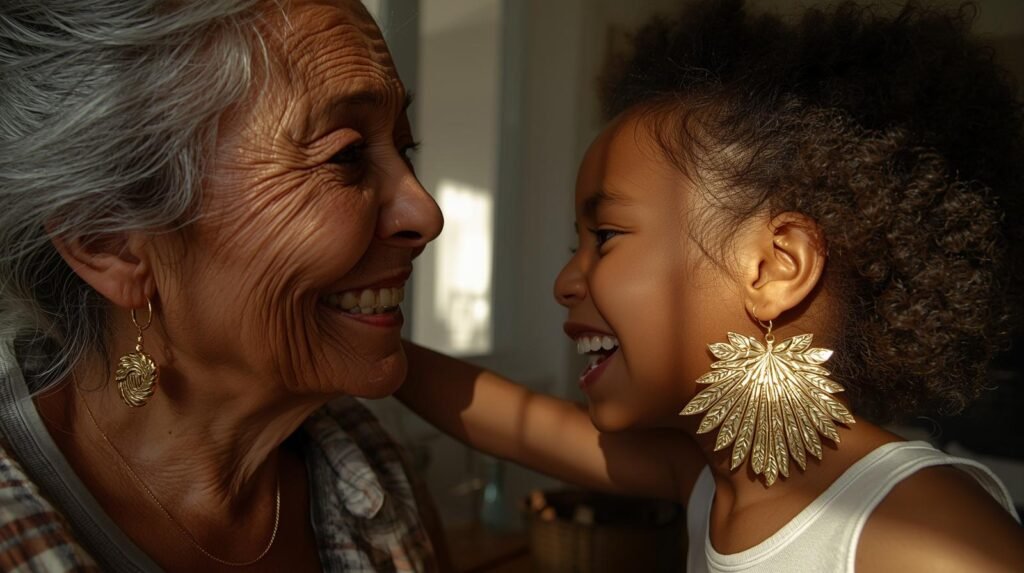
So style became the heirloom. Beauty practices became an inheritance. Statement jewelry became the thing you passed down through generations with your hands and your stories.
Bamboo earrings specifically carry layers of meaning in Black communities. They represent pride in where you come from. They represent making something beautiful from almost nothing. A pair that cost three dollars carried the same weight as a piece that cost three hundred.
The low price tag was never the problem. It was actually part of the power. These earrings said: I do not need to be wealthy to be radiant. I do not need your approval to feel beautiful.
That message, worn on two ears every single day, is what makes bamboo earrings a cultural symbol and not just an accessory.
What They Mean in Latina Communities
For Latina women, hoop earrings carry an even older tradition. One that started before the bamboo style even existed.
In many Latina families, a baby girl receives her first pair of gold hoop earrings at birth. Not at her quinceañera. Not on her birthday. At birth.
This is not fashion. This is a welcome into the community. A saying of: you are one of us. You belong here. Carry this with you.
Professor Lorena Marques, from the Department of Chicana/o Studies at UC Davis, has noted that for young Latina girls, the first pair of hoop earrings is a cultural inheritance. Passed from mothers and grandmothers with intention.
In 1960s Southern California, Latina women in the chola subculture wore large gold hoops as identity markers. They wore them in spaces that challenged their presence. They wore them anyway.
Artists like Selena Quintanilla and Jennifer Lopez further cemented large hoops as symbols of Latina femininity, sexuality, and unapologetic cultural pride.
So when bamboo earrings arrived in that cultural current in the 1980s, they were not starting something new. They were joining a tradition that already ran deep.
What They Mean in the Wider Hip-Hop Community
Beyond any single ethnic identity, bamboo earrings became community currency across the whole of hip-hop culture.
Hip-hop was born as an expression of communities that society had largely written off. The South Bronx in the 1970s was a place of poverty, neglect, and creativity. Out of that came one of the most powerful cultural movements in American history.
Within that culture, bamboo earrings meant: I am from here. I built something from nothing. I am not going to hide who I am.
The earrings crossed every line. Caribbean women wore them. West Indian women wore them. Afro-Latina women wore them. African American women wore them.
They became one of the most recognizable symbols of a shared urban identity across multiple overlapping communities of color.
That is why taking them without that context matters. You are not just borrowing a shape. You are borrowing a whole world of meaning that you did not live.
The Ghetto Label: How Society Policed Who Could Wear Them
For Decades, They Were Called Unprofessional
Here is something that runs through almost every account of bamboo earrings and women of color: the moment when someone told her to take them off.
It happened at job interviews. It happened in school hallways. It happened in office meetings. It happened on first dates.
New York Times writer Sandra Garcia wrote about it directly. She described the internal calculation she made every morning: will these earrings make people take me less seriously? Will they see me as too loud, too visible, too ghetto, too Black?
So she switched to dainty studs. She made herself smaller. She left the bamboo earrings at home.
One contributor at PureWow described being told by her boss that her gold hoops evoke a hood environment. She packed up the earrings. She wore pearl studs to work instead.
These are not isolated stories. They are a pattern. A documented, repeated pattern of Black and Latina women being told their cultural expression was a professional liability.
Meanwhile, inside their own communities, those same earrings were a crown.
Two realities existed at the same time. Inside the community: power, pride, and beauty. Outside: judgment, restriction, and ridicule.
How TV and Film Made It Worse
The double standard was not just in workplaces. It was on every screen.
When Black and Latina women wore large hoop earrings in film and television, the role was usually the same. The loud friend. The promiscuous side character. The aggressive woman you were supposed to fear or laugh at.
Think about how hoop earrings were used as visual shorthand in the 90s and 2000s media. They signaled: this woman is not the lead. She is not the one you are supposed to respect. She is the “other.”
That coded language ran for decades. And it did real damage. Young women of color watched those screens. They internalized the message. Some of them left their bamboo earrings at home not because they wanted to, but because Hollywood had taught them to.
That is the invisible cost of cultural policing. It does not just happen outside the community. Eventually, it seeps in.
What Is Cultural Appropriation? A Clear and Fair Definition
Appropriation vs Appreciation: The Core Difference
Before we go further, let us define the term clearly. Because a lot of this debate gets tangled up in confusion about what appropriation actually means.
Cultural appropriation is not simply wearing something from another culture. That is cultural exchange. And cultural exchange has been happening between human beings for all of recorded history.
Cultural appropriation is something more specific. It happens when a dominant group takes elements from a marginalized culture, strips out the original meaning, and then profits from or is praised for the very thing the originating community was punished for.
That last part is the key. The double standard is the marker.
Cultural appreciation, on the other hand, involves acknowledging where something comes from. Respecting its meaning. Not claiming ownership of something that was never yours. And actively supporting the communities that created it.
| Cultural Appropriation | Cultural Appreciation |
| Wearing bamboo earrings and calling them a trend you discovered | Wearing bamboo earrings and knowing they come from Black and Latina hip-hop culture |
| Profiting from bamboo earring sales without crediting their origins | Buying from Black-owned and Latina-owned jewelry makers |
| Being praised as edgy for a style that got other women called ghetto | Acknowledging the double standard when you see it |
| Using the style as a costume or aesthetic without context | Wearing them because you appreciate their history and beauty |
| Staying silent when others dismiss the earrings as unprofessional | Speaking up when the same style earns different reactions on different people |
Why the Double Standard Is the Real Issue
The problem is almost never the earring itself. Repeat that. The problem is almost never the earring.
The problem is the asymmetry. The way the exact same style earns opposite social reactions depending entirely on who is wearing it.
Writer Ruby Pivet documented this for Vice. White women were praised for wearing oversized hoops as an edgy, bold style choice. Women of color wearing the same earrings in the same spaces were penalized, stereotyped, and told to remove them.
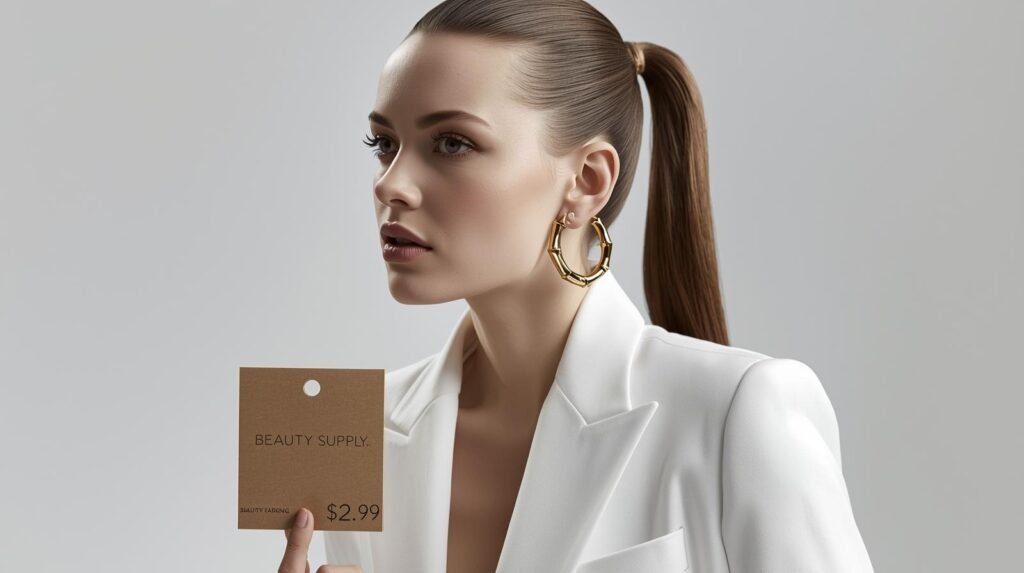
That asymmetry is what the appropriation debate is actually about. Not the earring. The inequality underneath it.
So when you see someone frame the debate as simply about who gets to wear what, they are missing the deeper question. The question is: why does wearing the same thing carry different social consequences depending on your race?
That question does not have an easy answer. But asking it honestly is where the real conversation starts.
The Moments That Sparked the Biggest Debates
Urban Outfitters Sells Bamboo Earrings for $16 (2016)
In November 2016, Urban Outfitters listed bamboo earrings on their website for $16. At that same moment, beauty supply stores in Black and Brown neighborhoods were selling the identical style for two to three dollars.
The backlash was immediate. Thousands of posts across Twitter and Instagram called it out by name.
One widely shared tweet captured the frustration with sharp clarity: cultural appropriation only hurts the people doing the appropriating, because Black girls already know the beauty supply always has these for $2.99.
The core grievance was not just the price markup. It was the pattern. A style worn by communities of color for decades gets picked up by a mainstream retailer, stripped of its cultural context, repackaged as a trend, and sold back at four times the price.
Urban Outfitters had faced multiple appropriation accusations before this incident. This one became one of the most widely discussed examples of fashion-based cultural extraction in recent years.
The communities that created the style got no credit. The company got the revenue.
Pitzer College: White Girls, Take Off Your Hoops (2017)
In March 2017, a group of Latina students at Pitzer College in Claremont, California, painted a message on the campus free speech wall.
The message read: White Girl, Take Off Your Hoops.
Student Alegria Martinez, a Resident Advisor and member of the Latinx Student Union, sent an email to fellow students explaining the message. She wrote that hoop earrings come from a historical background of oppression and exclusion.
She described how Black and Brown women who wore hoops were seen as ghetto, ratchet, and not to be taken seriously. But when white women wore them, that same style was exploited into fashion by the people who had oppressed them before.
The response was sharp and divided. Some students supported the message as a valid protest. Others called it reverse discrimination. The painting received threats. Violent messages were sent to the Latina students involved.
Pitzer College President Melvin Oliver condemned the violent responses in an open letter. He affirmed free expression but made clear that threats against students were unacceptable.
This incident put the bamboo and hoop earring debate into the national headlines. It forced a wider conversation about what cultural expression means on a college campus. And it raised questions that have not been neatly resolved since.
Taylor Swift in Shake It Off (2014)
In 2014, Taylor Swift released the music video for Shake It Off. She wore large gold hoops throughout the video.
The video featured predominantly Black backup dancers in scenes centered on twerking and hip-hop aesthetics. Swift moved through those scenes as an outsider looking in, presented as playful and self-deprecating.
Critics pointed out the combination as culturally tone-deaf. The video pulled visual elements from Black culture, including the earrings, the dance style, and the overall hip-hop energy. But it centered a white artist in a way that positioned those elements as exotic or funny.
The bamboo earrings were not the only issue. But they became a specific focal point because of their clear cultural roots.
Swift received significant criticism. It was not her last. But this video marked one of the earlier mainstream moments where the conversation about hoops and cultural borrowing entered a wide public audience.
Givenchy Chola Victorian Collection (2015)
In 2015, designer Riccardo Tisci at Givenchy presented a spring collection that Vogue magazine described using the phrase chola Victorian.
Models walked the runway wearing large hoop earrings, facial piercings, slicked-back hairstyles, and baby hairs laid flat. Elements that chola culture had worn in Southern California for decades.
Almost none of the models in the show were Latina. The majority were white.
Fashion press praised the collection as bold, edgy, and original. The chola women who had worn this aesthetic for forty years, and who had been mocked and criminalized for it, received no mention in the coverage.
This is one of the clearest examples in recent fashion history of an entire cultural aesthetic being extracted, repackaged as high art, and celebrated without any acknowledgment of its origins.
The communities that created it got a stigma. The designer who borrowed it got acclaim. That asymmetry is appropriation in its most visible form.
The Other Side: Voices That Push Back on the Debate
Anyone Can Wear Them. That Is Not the Point.
Here is where the conversation often gets oversimplified. And it is important to present this side honestly.
Many Black and Latina women have stated clearly and publicly: the earrings are not the issue. Anyone can wear them.
PureWow’s 2021 coverage of this debate included direct statements from women of color who said exactly that. Of course, you can wear bamboo earrings. The real problem is how mainstream fashion presents BIPOC-rooted trends without ever acknowledging their origins.
The issue is calling them a trend when they have been a constant for decades. The issue is the erasure of history. The issue is being praised for what communities of color were punished for.
If you wear bamboo earrings and you know where they come from and you say so when asked, most community voices say that is the difference. Wearing them does not require permission. Understanding them requires intention.
The Ancient History Argument
Some push back on the appropriation framing by pointing to ancient history. Hoop earrings go back to ancient Sumeria, Egypt, and Greece, they say. No single culture owns them. Therefore, appropriation does not apply.
This argument has real merit. Hoop earrings are genuinely multicultural across thousands of years of human history. That is true and important.
However, this argument often sidesteps the specific context. The bamboo hoop earring in its modern form was born from and popularized specifically by Black and Latina communities in 20th century urban America. Ancient history does not erase that recent and specific cultural context.
Both things can be true at the same time. Hoop earrings are ancient and multicultural AND bamboo earrings carry a specific modern cultural meaning that deserves acknowledgment.
Pointing to Cleopatra to avoid talking about the Bronx is not a full answer. It is a deflection.
The Community Itself Is Divided
Here is something that often gets left out of this conversation. The communities involved are not one voice.
Not every Black woman agrees on where the line is. Not every Latina woman shares the same view on who can wear hoop earrings.
Some women of color feel deeply protective of the style. They want its origins recognized and its meaning preserved. Others actively want it to spread. They see the global adoption of bamboo earrings as proof of the power and influence of their culture.
Some younger women say the debate has evolved. Gen Z is less interested in policing who wears what. They are more focused on crediting where styles come from and supporting the communities that created them.
No single community speaks with one voice. Listening to that multiplicity is itself a form of respect.
So when someone says Black women are not bothered by this, or Latinas do not care about hoops and appropriation, they are flattening a complex internal conversation into a single convenient narrative. That is never accurate.
The Moments That Turned the Tide: Reclaiming the Earring
AOC Wears Hoops to Congress (2019)
On January 3, 2019, Alexandria Ocasio-Cortez was sworn in as the youngest woman ever elected to the United States Congress. She represented New York’s 14th Congressional District, which covers parts of Queens and the Bronx.
She wore a white suit. Red lipstick. And large gold hoop earrings.
She later explained her choices on Twitter. The red lip and the hoops were inspired by Supreme Court Justice Sonia Sotomayor, who was advised to wear neutral nail polish at her confirmation hearings to make herself more palatable. Justice Sotomayor kept her red nails.
AOC’s message was direct: next time someone tells Bronx girls to take off their hoops, they can just say they are dressing like a Congresswoman.
The reaction from women of color was immediate and deeply emotional. Women who had been told to remove their earrings before job interviews, before school photos, before meetings with their bosses: they saw themselves in that image.
One constituent and school teacher tweeted that she thanked AOC for giving her young Bronx students someone to look up to. For showing them that their culture belonged in the highest rooms in the country.
That moment changed something. It reframed bamboo and hoop earrings in professional and political spaces. Not just as acceptable but as powerful. As a statement of where you come from and where you are going.
Tanya Melendez Photography Exhibit (2017)
In 2017, Puerto Rican photographer Tanya Melendez held a photography exhibition in New York City. The timing was deliberate.
The exhibit came directly in response to the Pitzer College debate and the broader national conversation about who gets to wear hoop earrings.
But Melendez chose a different approach. Instead of debating who owns the earring, she chose to celebrate who gave it meaning. She photographed women of color wearing their hoops. She let their faces and their stories do the talking.
That distinction matters. Where the Pitzer College message was confrontational and sparked anger, the Melendez exhibit was celebratory and sparked connection.
Both responses came from the same place of cultural pride. They just chose different tools. And both contributed to the larger shift in how bamboo earrings are understood today.
Gen Z Restores the Credit
Then came the generation that grew up with TikTok. And they handled this differently than anyone before them.
Gen Z creators, many of them young Black and Latina women, did not wait for mainstream media to credit their culture. They just did it themselves.
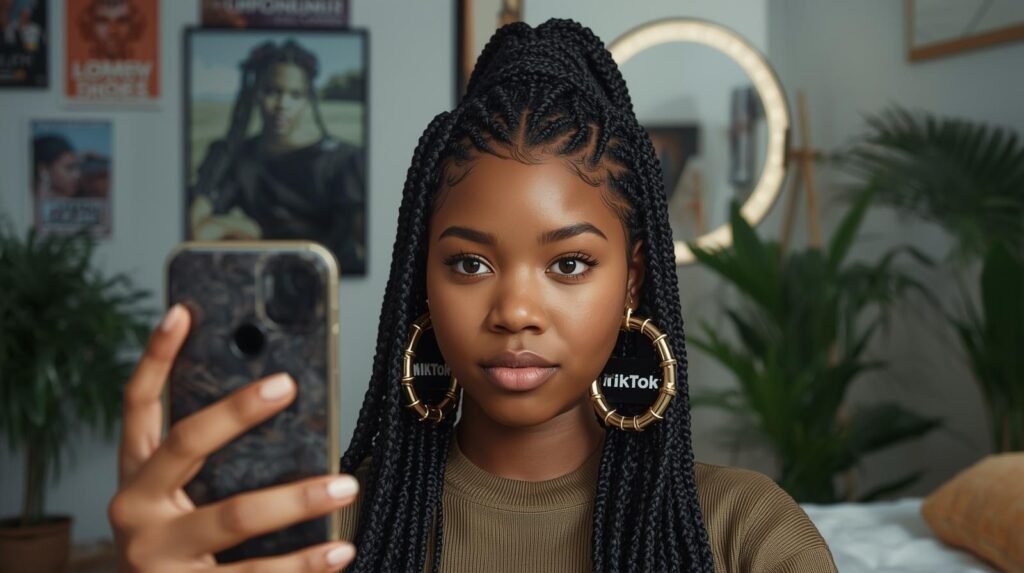
They made TikTok videos wearing bamboo earrings and explaining the history. They tagged the artists. They named the neighborhoods. They taught their followers where the style came from while wearing it with pride.
This shift is significant. The cultural restoration is not happening through debates or protests alone. It is happening through visibility and education, one video at a time.
The next generation did not ask for permission to claim their history. They just shared it. And millions of people watched and learned.
So, Can White People Wear Bamboo Earrings?
What Most Community Voices Actually Say
Let us answer the question directly. Because it deserves a direct answer.
Most Black and Latina women who have spoken publicly on this topic agree: wearing bamboo earrings is not where the line is drawn.
The line is different. It is about wearing them with no awareness. Calling them a trend you discovered in 2024 when they have existed in communities of color for decades. Profiting from them without crediting the culture. Being publicly praised for a style that got other women called ghetto.
One Latina writer summarized it simply in Vice: these earrings are my culture. Not a trend. The distinction between those two things is everything.
If you understand the history, acknowledge the origins when asked, do not claim ownership of something that was never yours, and actively support the communities that created the style: most community voices say that is cultural appreciation.
If you wear them without any of that awareness, call them a fashion find, and stay silent when others dismiss the same style on women of color: that is where the conversation becomes harder.
A Practical Framework for Wearing Them Respectfully
Here is something concrete you can actually use. Not a rule. A framework.
| What Appreciation Looks Like | What Appropriation Looks Like |
| You know bamboo earrings come from Black and Latina hip-hop culture | You think you discovered a cool trend with no cultural context |
| You say so when someone asks where your earrings are from | You take credit for the aesthetic as your personal style discovery |
| You buy from Black-owned or Latina-owned jewelry makers when you can | You buy from fast fashion brands that stripped the style of its meaning |
| You speak up when someone calls bamboo earrings ghetto on another person | You stay silent and enjoy the praise while others are penalized for the same style |
| You do not treat the earrings as a costume or an exotic touch | You wear them as one element of a stereotyped ethnic costume or look |
| You support the communities whose culture you enjoy | You enjoy the culture while ignoring the communities who created it |
That framework is not about guilt. It is about intention. And intention is something everyone can choose.
What the Bamboo Earring Debate Actually Teaches Us
It Is Not About Ownership. It Is About Power.
Nobody owns an earring shape. Let us be clear about that.
No community holds a legal or moral title to a hoop of metal. Hoop earrings have existed across cultures for thousands of years.
But the bamboo earring debate was never really about ownership. It was always about power.
Specifically, it was about who gets to decide what is beautiful and what is ghetto. Who gets praised for boldness and who gets penalized for the same thing?
Bamboo earrings became a flashpoint because they made visible a double standard that was already there. The earring did not create the inequality. It just made it impossible to ignore.
And that is why the debate matters even to people who think it is about something small.
Credit Is Not a Political Statement. It Is Just Respect.
Acknowledging that bamboo earrings come from Black and Latina communities does not mean non-BIPOC people cannot wear them.
It means: when you know something beautiful came from somewhere, you say so.
That is not a radical political position. It is basic human decency.
Fashion designer Diane von Furstenberg once said that style is something each of us already has. We just need to find it. The corollary to that is simple. When you find something beautiful in someone else’s culture, name the place where you found it. That acknowledgment costs you nothing. And it means everything to the people who gave the world that beauty in the first place.
The Conversation Is Still Happening. And That Is Progress.
Here is something worth holding onto at the end of all this.
The fact that this conversation is happening at all is a sign of progress.
Thirty years ago, nobody in mainstream media was asking whether bamboo earrings were cultural appropriation. The implicit assumption was that Black and Latina cultural expression was simply available for anyone to take. Without credit. Without acknowledgment. Without consequence.
Today, people push back. They name the origins. They credit the communities. They call out the double standard when they see it.
That is not perfect. The conversation is still messy and unresolved in many places. But it is happening. And more people are listening than ever before.
The earrings are still on the ears. Still carrying history. Still refusing to be called a trend when they have always been a tradition.
Final Thoughts
Let us come back to where we started.
A Black woman was told to remove her earrings before a job interview. And AOC walking into Congress with hers still on.
Same earrings. Two completely different stories.
The earrings did not change between those two moments. The conversation around them did. Because enough people demanded that it change. Because women of color refused to keep shrinking themselves. Because a Congresswoman from the Bronx walked into the most powerful room in the country wearing her culture on her ears.
Are bamboo earrings cultural appropriation? Not inherently. But they can be treated that way. And the difference lies entirely in whether the person wearing them carries any awareness of what they mean to the people who made them iconic.
That awareness is free. It costs nothing to have it. And it changes everything about what your earrings say when you walk into a room.
If you want to understand the full history of where bamboo earrings came from, read our complete guide on the origin and history of bamboo earrings. And if you are ready to make your own pair, our DIY guide covers every method from beginner to advanced.
But whatever you do next, now you know the story. And knowing it matters.
Frequently Asked Questions
Are bamboo earrings cultural appropriation?
Not inherently. Wearing bamboo earrings becomes appropriation when you do so with no awareness of their origins, call them a trend, profit from them without credit, or benefit from praise for a style that communities of color were punished for wearing. Understanding the history and acknowledging it is the difference.
Can white people wear bamboo earrings?
Most voices from the originating communities say wearing them is not the line. The issue is wearing them with zero cultural awareness, erasing their history, or being praised for a style that got Black and Latina women called ghetto. Knowing where they come from and saying so makes all the difference.
What do bamboo earrings represent?
Black women, they represent community pride, cultural identity, and inherited style passed down through generations. For Latinas, they carry a deep generational tradition tied to birth, coming-of-age, and cultural belonging. For the broader hip-hop community, they symbolize resilience, accessibility, and unapologetic self-expression.
Why were bamboo earrings called ghetto?
Mainstream society applied that label to stigmatize styles worn by Black and Latina women. At the same time, the identical style was praised as bold and fashionable when worn by non-BIPOC people. That double standard, not the earring itself, is the source of the appropriation debate.
What happened with Urban Outfitters and bamboo earrings?
In 2016, Urban Outfitters sold bamboo earrings for $16, roughly four to five times the beauty supply store price. Communities of color called it cultural extraction and price exploitation. The backlash was massive on social media and became one of the most widely shared examples of fashion-based cultural appropriation.
What is the difference between cultural appropriation and cultural appreciation?
Appropriation takes elements from a marginalized culture, strips their meaning, and profits while giving no credit to the originators. Appreciation involves understanding where something comes from, acknowledging its cultural significance, and actively supporting the communities that created it. The key difference is awareness and acknowledgment.
Why did AOC wearing hoops to Congress matter so much?
Because she was the youngest woman ever elected to Congress, she represented the Bronx, and she chose to wear her cultural identity into the most powerful room in the country. Women of color who had been told to remove their hoops in professional settings felt validated at the highest level. Her message was direct: Bronx girls belong everywhere.
Is the bamboo earring appropriation debate still relevant in 2026?
Yes. The conversation has evolved. Gen Z now focuses less on policing who wears what and more on making sure cultural credit is given where it belongs. The debate continues because the double standard it exposed has not fully disappeared. But more people are listening and more creators are naming their cultural roots than ever before.