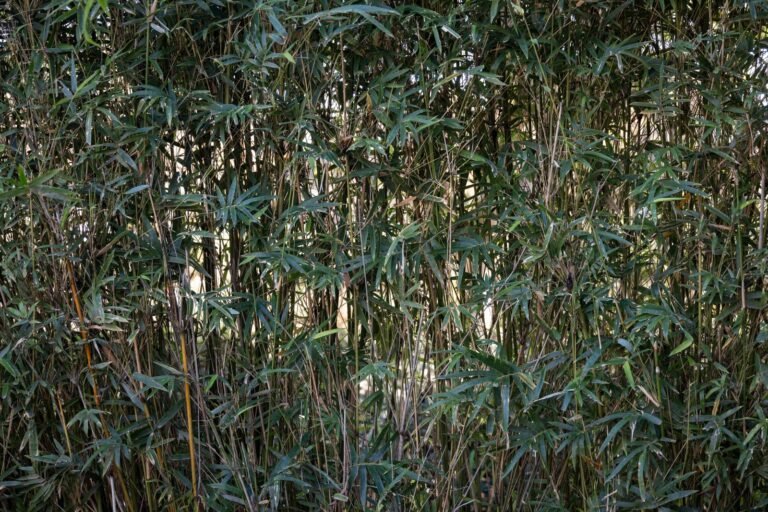


No. True bamboo (Bambusoideae, including Golden Bamboo Phyllostachys aurea) is not toxic to cats. The ASPCA lists it as non-toxic to cats, dogs, and horses. But plants sold as “bamboo” can be dangerous: Lucky Bamboo (Dracaena sanderiana) is toxic, and Heavenly Bamboo (Nandina domestica) is highly toxic. Always check the scientific name.
If your cat just chewed on a bamboo plant, take a breath. The answer is not a simple yes or no. It depends entirely on which bamboo you have at home.
Some bamboo is completely safe. Some bamboo can make your cat seriously sick. Knowing the difference could save your cat’s life.
Let’s break it down clearly.
What Is True Bamboo?
True bamboo belongs to the subfamily Bambusoideae within the grass family (Poaceae). It is a grass, not a shrub or vine.
The most common true bamboo species include Golden Bamboo and Fishpole Bamboo. Their scientific name is Phyllostachys aurea.
The ASPCA lists true bamboo as non-toxic to cats, dogs, and horses. That is the gold standard confirmation every pet owner needs. You can verify it yourself on the ASPCA’s Bamboo listing, which records Phyllostachys aurea (Golden Bamboo, Fishpole Bamboo) as non-toxic to dogs, cats, and horses.
True bamboo grows as tall, woody, jointed canes with visible nodes. That is the classic bamboo look you see in gardens, privacy screens, and flooring. True bamboo can grow indoors in a bright spot, but it is an outdoor grass at heart. It wants strong light, room for its roots, and regular water. Keep in mind that most plants sold as “indoor bamboo” in gift shops and supermarkets are not this plant at all. They are Lucky Bamboo, the Dracaena impostor covered below, which is exactly why the identification section above matters more than any care tag. The same plant, processed into kitchenware, is covered in our guide on whether bamboo cutting boards are safe and non-toxic. As a living plant around cats, though, the verdict that matters is the ASPCA’s: non-toxic.
How Can You Tell True Bamboo From the Impostors?
This is the skill that keeps cats safe. The word “bamboo” on a label tells you almost nothing, so learn to read the plant itself.
True bamboo has tall, woody, hollow canes (called culms) with clear raised nodes, like joints. The leaves are narrow and grass-like. It grows in soil, usually outdoors, and it looks like a grass that decided to become a tree.
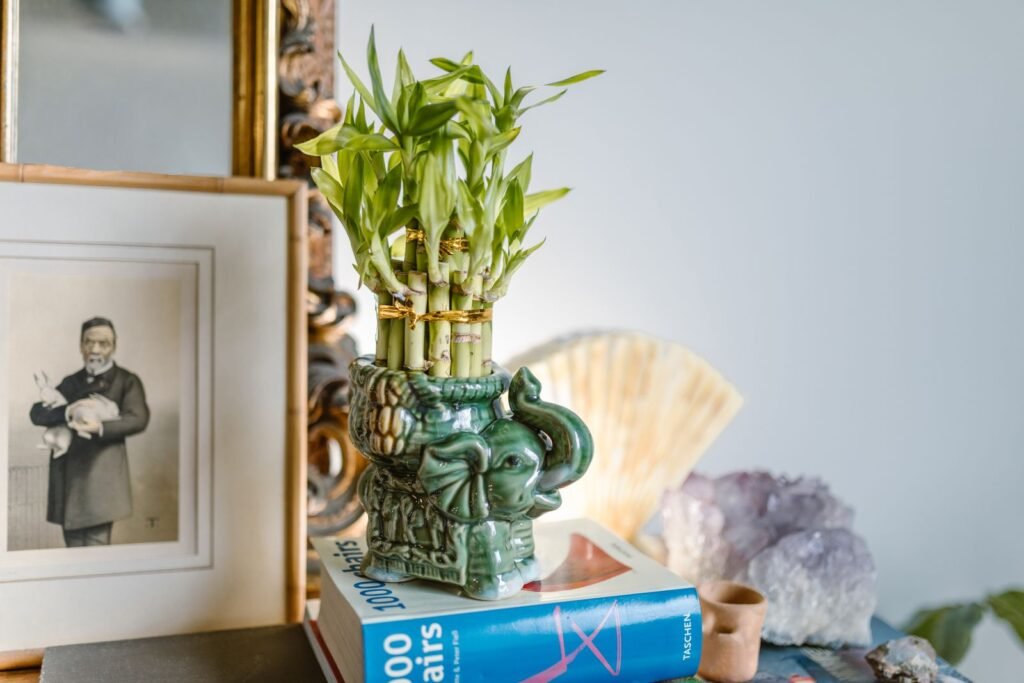
Lucky Bamboo looks completely different once you know what to check. It has soft, fleshy green stalks, not woody canes. It is usually sold growing in a vase of water with pebbles, often as a single stalk, a spiral, or a braided arrangement. The leaves sprout in a rosette from the top of the stalk. There are no bamboo-like nodes.
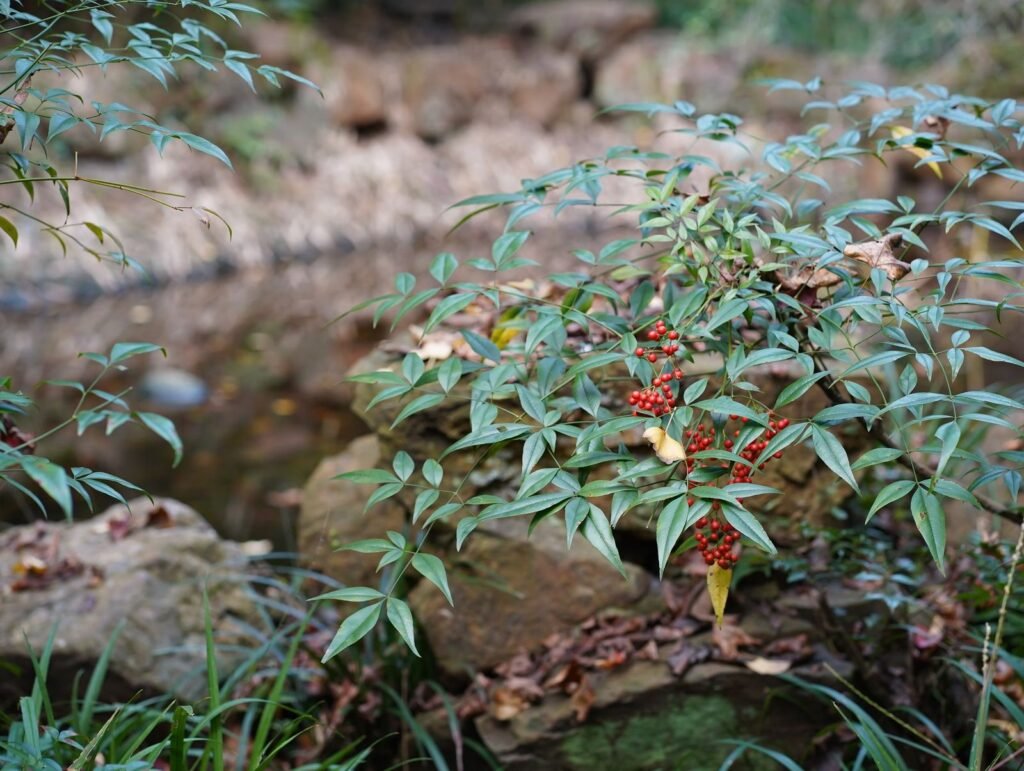
Heavenly Bamboo is a leafy shrub, not a grass at all. Its giveaway is the clusters of bright red berries it carries in fall and winter, along with compound leaves that turn reddish in cold weather. You will mostly see it in outdoor landscaping, not in living rooms.
Then there is the label test, which beats guessing every time. Check the scientific name on the tag or look it up before you buy. Phyllostachys or Bambusa (Bambusoideae) means true bamboo, and it is safe. Dracaena sanderiana means Lucky Bamboo, and it is toxic. Nandina domestica means Heavenly Bamboo, and it is highly toxic. Chamaedorea elegans means Bamboo Palm, and it is safe.
If you have already lost the label, photograph the plant and search the ASPCA toxic and non-toxic plant database by its common name, or ask your vet to help identify it. Never guess when a cat’s safety is on the line.
Can True Bamboo Still Cause Problems?
Yes, but minor ones. True bamboo is not poisonous. But eating too much of it can still upset your cat’s stomach.
The stalks are fibrous and tough. Cats cannot digest them well. Large amounts may cause vomiting or diarrhea. This is a digestive issue, not a poisoning issue. The ASPCA itself notes that eating any plant material may cause vomiting and gastrointestinal upset in cats and dogs, even plants listed as non-toxic.
If your cat nibbled a few leaves, do not panic. Monitor them for a few hours. They will likely be just fine.
Two extra cautions apply to any houseplant, bamboo included. First, pesticides and fertilizers. Many nursery plants are treated with chemicals that are far more dangerous to cats than the plant itself. When you bring a new bamboo plant home, ask the seller what it was treated with, rinse the leaves, and consider repotting it in untreated soil. Second, sharp edges. Dried bamboo canes and cut stalk ends can be sharp enough to scratch a curious cat’s mouth or paws, so keep decorative cut canes where paws cannot reach.

The Real Danger: Lucky Bamboo
Here is where most cat owners get confused. Lucky Bamboo is NOT real bamboo.
Lucky Bamboo is actually a plant called Dracaena sanderiana. It belongs to the Dracaena family, not the bamboo family at all.
It looks similar. It grows in water. It is sold everywhere, from grocery stores to office lobbies. But it is a completely different plant with very different effects on cats. Offices, reception desks, bathrooms, and gift baskets are its natural habitat. Because it often arrives as a gift or a decoration rather than a considered plant purchase, owners rarely research it. That is how it ends up on a low table next to a curious cat, with nobody suspecting the cheerful stalk in the pebble vase.
Lucky Bamboo contains compounds called saponins. These are toxic to cats. The ASPCA’s listing for Dracaena species (Ribbon Plant) records toxicity to cats, with saponins named as the toxic principle and clinical signs to match.
For the full deep dive on this plant alone, read our guide on is Lucky Bamboo toxic to cats, which covers every symptom, risk factor, and step to take in detail.
Symptoms of Lucky Bamboo Poisoning in Cats
If your cat eats Lucky Bamboo, watch for these signs:
- Drooling more than usual (hypersalivation)
- Vomiting, occasionally with blood
- Loss of appetite (anorexia)
- Lethargy, weakness, or depression
- Dilated pupils
These match the clinical signs the ASPCA lists for Dracaena species. In most cases the effects stay in the mild to moderate range: a miserable cat with an upset stomach, not a dying one. The cats at real risk are the small, the very young, the very old, and cats already dealing with illness. That is why “mild to moderate” is not a reason to relax. It is a reason to call early, while the case is still mild. Pet Poison Helpline’s Ribbon Plant page (Dracaena sanderiana, also called Lucky Bamboo) states that the leaves and stems contain saponins, that ingestion causes drooling and vomiting, and that dilated pupils and wobbly gait have been reported specifically in cats.
Signs may appear within hours of ingestion. Do not wait to see if they go away. Contact your vet promptly.
Is Lucky Bamboo Pet Friendly?
No. Lucky Bamboo is not pet friendly. This is one of the most important things to understand.
Many people buy it without knowing the risks. The name sounds harmless. The plant looks decorative. But for cats, it is a real hazard.
The signs Pet Poison Helpline describes are consistent with mild to moderate poisoning. But every cat reacts differently. A small kitten or a senior cat with health issues faces higher risk than a healthy adult cat. Do not measure the risk by how much your cat ate. Even a nibbled leaf warrants a call to your vet.
One more caution: do not let your cat drink the water from a Lucky Bamboo vase. Some cat owners have anecdotally reported mild stomach upset after cats drank vase water, though no authority source has confirmed this. The precaution costs nothing, so keep the vase where cats cannot reach it, or remove the plant.
If you own a cat, remove Lucky Bamboo from your home entirely. No safe distance exists when a curious cat is involved.
Why Is It Called Lucky Bamboo If It Is Not Bamboo?
The name is marketing, not botany. Decades ago, sellers needed a catchy name for Dracaena sanderiana, a tough tropical plant with upright stalks that vaguely resemble young bamboo canes. “Lucky Bamboo” sounded exotic and giftable, and the plant’s association with Feng Shui and good fortune did the rest. The name stuck, and it has been confusing pet owners ever since.
The confusion goes one layer deeper. Some retailers sell a related species, Dracaena braunii, under the same “lucky bamboo” label. Both are Dracaena species, and the ASPCA lists Dracaena spp. as toxic to cats, so the safety advice does not change: if it was sold as lucky bamboo, treat it as toxic and keep it away from cats.
Is Lucky Bamboo Toxic to Dogs Too?
Yes. The ASPCA’s Dracaena listing records toxicity to dogs as well as cats. Dogs that chew Lucky Bamboo can develop vomiting (occasionally with blood), depression, loss of appetite, and drooling.
Cats get one extra sign to watch for: dilated pupils, which the ASPCA notes specifically for cats. If you share your home with both cats and dogs, Lucky Bamboo is off the table for everyone.
The Most Dangerous One: Heavenly Bamboo
Heavenly Bamboo sounds beautiful. But it is the most dangerous bamboo impostor of all.
Heavenly Bamboo is actually a shrub called Nandina domestica. It is common in outdoor gardens across the United States.
It contains cyanogenic glycosides. In simple terms, these compounds can release cyanide when digested. The ASPCA lists Heavenly Bamboo (Nandina domestica) as toxic to cats, dogs, and horses, with cyanogenic glycosides named as the toxic principle.
If your cat chews the leaves or eats the red berries, severe poisoning can follow. This is a veterinary emergency. The berries deserve special attention. They ripen in bright clusters, they fall to the ground, and their color attracts curious animals. Most Nandina exposures involve the berries rather than the leaves, so a garden cleanup that ignores fallen fruit misses the main hazard.
Symptoms of Heavenly Bamboo Poisoning
- Weakness and extreme lethargy
- Loss of muscle coordination
- Difficulty breathing
- Seizures
- Collapse or coma
- In severe cases, death (rare in pets, per the ASPCA)
These are the clinical signs the ASPCA records for Nandina domestica. Do not wait. If you suspect your cat ate Heavenly Bamboo, call your vet or the ASPCA Poison Control Center at (888) 426-4435 immediately.
How Do You Keep Cats Safe From Heavenly Bamboo Outdoors?
Heavenly Bamboo is mostly an outdoor problem. It is a popular landscaping shrub across the southern United States, planted for its evergreen leaves and bright red winter berries. Those berries are the main danger: they are colorful, they drop to the ground, and a curious cat may bat them around or chew them.
If you have Nandina domestica in your garden and your cat goes outside, consider replacing it with a shrub you have verified as non-toxic in the ASPCA database. When you remove it, clear fallen berries from the soil too, since berries on the ground are easy for a cat to find.
Indoor cats are rarely exposed, but cut branches brought inside as decoration carry the same risk as the living shrub. Treat decorative Nandina clippings the way you would treat the plant: keep them out of the house.
What Bamboo Is Toxic to Cats?
This is one of the most searched questions on Google. Here is the clearest answer possible.
Non-Toxic: True bamboo (Bambusoideae subfamily) including Golden Bamboo and Bamboo Palm.
Toxic: Lucky Bamboo (Dracaena sanderiana) containing saponins. Causes vomiting, drooling, and lethargy.
Highly Toxic: Heavenly Bamboo (Nandina domestica) containing cyanogenic glycosides. Can be fatal.
The name “bamboo” alone tells you nothing. Always check the scientific name before bringing any plant into a home with cats.
Quick Reference: Bamboo Safety Chart for Cat Owners
Keep this chart in mind when plant shopping. The scientific name is the only identification you can trust.
| Plant Name | Scientific Name | Safe for Cats? | Toxic Compound | If Your Cat Eats It |
|---|---|---|---|---|
| True Bamboo | Phyllostachys aurea (Bambusoideae) | Yes | None | Monitor at home; call the vet only if vomiting repeats |
| Bamboo Palm | Chamaedorea elegans | Yes | None | Monitor at home; call the vet only if vomiting repeats |
| Lucky Bamboo | Dracaena sanderiana | No | Saponins | Remove the plant, call your vet promptly |
| Heavenly Bamboo | Nandina domestica | No, highly toxic | Cyanogenic glycosides | Emergency: call your vet or ASPCA Poison Control at (888) 426-4435 immediately |
Which Bamboo Mix-Ups Do Vets Hear About Most?
Veterinary Q&A pages show the same stories repeating. A kitten gnaws on a new “bamboo” plant the owner just brought home. A cat chews a bamboo leaf and vomits once, and the owner panics. Someone catches their cat chewing dried decorative bamboo canes. In almost every case, the vet’s first question is the same: which plant exactly?
That question is the whole story. When the plant turns out to be true bamboo, the answer is reassurance plus monitoring: non-toxic, watch for stomach upset, discourage the habit. When it turns out to be Lucky Bamboo, the advice changes to active caution: remove the plant, watch for drooling and vomiting, and call promptly.
The pattern is clear. Owners do not misjudge toxicity; they misidentify the plant. The label said “bamboo”, so they assumed one plant. Keep the nursery tag, photograph it, and check the scientific name before the plant comes home. That one habit prevents nearly every bamboo-related scare.
Is Bamboo Safe in a House With Cats?
It depends on the type, as you now know. True bamboo is safe to keep indoors with cats.
However, even safe plants can cause minor GI issues if eaten in large amounts. Place true bamboo plants out of easy reach. This protects both your plant and your cat’s stomach.
Lucky Bamboo and Heavenly Bamboo should never be inside or around a home with cats.
Bamboo also shows up around the house as a material, not just as a plant. Bamboo dinnerware and kitchen tools are a separate safety question from live plants, and our bamboo plates benefits and buying guide covers that side. For live plants, the rule stays simple: true bamboo yes, anything called “lucky” or “heavenly” bamboo no.
Why Does My Cat Eat Bamboo?
Cats are natural grazers. In the wild, they occasionally chew grass and plant material. This helps them with digestion and sometimes triggers vomiting to clear out hairballs.
Bamboo looks a lot like tall grass to a cat. The long, thin leaves are irresistible to a curious feline.
Boredom also plays a big role. A cat without enough stimulation will find entertainment in your houseplants.
If your cat keeps chewing plants, try adding cat grass or catnip to their environment. Give them a safer alternative to graze on. Pet stores sell ready-grown cat grass pots, and many cats prefer them to houseplants once they discover them. A grazing cat with its own grass is a cat that leaves your bamboo alone.
Boredom chewing also drops when the day has more play in it. A short interactive play session before meals, a puzzle feeder, and a window perch for bird-watching give a cat better outlets than your houseplants. Tired, engaged cats chew less.
Is Bamboo Palm Toxic to Cats?
No. Bamboo Palm, scientifically known as Chamaedorea elegans, is safe for cats.
Despite the name, Bamboo Palm is not true bamboo either. But this time, the impostor is actually harmless. The ASPCA confirms it as non-toxic: its Parlor Palm listing (additional common name “Bamboo Palm”, Chamaedorea elegans) records non-toxic to dogs and cats.
It is one of the best cat-friendly houseplants you can choose. It is low maintenance, air purifying, and completely safe. If you want the bamboo look without any homework, the bamboo palm is the easy answer. It tolerates low light, forgives missed waterings, and asks nothing of your cat except to be admired.
What Are the Best Cat-Safe Alternatives to Lucky Bamboo?
If you are removing Lucky Bamboo, you do not have to give up on greenery. These options are confirmed non-toxic to cats:
- True bamboo (Phyllostachys aurea): the real thing, and it looks the part.
- Bamboo Palm (Chamaedorea elegans): ASPCA non-toxic, low maintenance, and similar in feel.
- Spider Plant (Chlorophytum comosum): Pet Poison Helpline lists it as non-toxic to companion animals, it is easy to grow, and cats tend to love chewing it safely.
- Boston Fern: a lush classic that vets routinely recommend as a cat-safe houseplant.
And for the grazers, add a pot of cat grass. It gives your cat something it is allowed to chew, which protects every other plant in the house at the same time.
Do Bamboo Shoots Contain Cyanide?
You may have read that bamboo shoots contain cyanide. Here is the straight version.
Some raw bamboo shoots, mainly from large timber species harvested for human food, naturally contain cyanogenic glycosides, compounds that can release cyanide. Cooking destroys these compounds, which is why bamboo shoots are eaten safely around the world.
What does this mean for your cat? Practically nothing. The “cyanide in bamboo shoots” story is about raw shoots prepared as human food, not about the ornamental bamboo plants cats nibble. True bamboo plants remain ASPCA non-toxic to cats, and that listing is what governs your houseplant decision. Do not let a scary-sounding food fact override the actual plant listing.
One common-sense note: never feed your cat raw bamboo shoots. They are not cat food, and the tough fibrous shoots can cause digestive upset. This is a feeding mistake to avoid, not a poisoning risk from your houseplant. Cooked bamboo shoots are a normal human food in many cuisines, but normal for humans does not mean suitable for cats. When in doubt about any human food, the answer for cats is to skip it.
What to Do If Your Cat Ate a Bamboo Plant
Act fast, but act in order. Panic skips steps, and skipped steps waste the minutes that matter. Follow these four in sequence.
Step 1: Identify the plant. Do not guess. Check the label, search the scientific name, or look it up on the ASPCA website. True bamboo versus Lucky Bamboo changes everything about how urgent this is.
Step 2: Remove access immediately. Move the plant far away from your cat right now. If it is Lucky Bamboo growing in water, take the whole vase out of the room.
Step 3: Check for symptoms. Look for drooling, vomiting, lethargy, or dilated pupils. Note what your cat ate, which part of the plant, roughly how much, and when. Your vet will ask for exactly this information.
Step 4: Call for help. Contact your vet or the ASPCA Animal Poison Control Center at (888) 426-4435. Have the plant name ready when you call. A consultation fee may apply for the poison control hotline.
Do not wait for symptoms to get worse before you act. And do not try to make your cat vomit unless a vet or poison control explicitly tells you to. Whether that helps or harms depends on what was eaten, and only a professional should make that call.
What Will the Vet Ask You When You Call?
Knowing what is coming makes the call calmer and faster. Your vet or the poison control center will typically ask for:
- The plant’s name, common and scientific if you have it
- Which part your cat ate: leaves, stalk, berries, or roots
- Roughly how much, and when it happened
- Your cat’s age, weight, and any health conditions
- What symptoms you see right now, if any
This is why identifying the plant and noting the details comes before calling. A photo of the plant and its nursery label answers half these questions instantly. Keep the nursery tag instead of throwing it away.
When Should You Call the Vet Immediately?
Call your vet or an emergency animal hospital right away if you see any of these after your cat chewed a plant:
- Repeated vomiting, or vomiting with blood
- Difficulty breathing
- Seizures, collapse, or extreme lethargy
- Loss of coordination or wobbly walking
- Dilated pupils that do not return to normal
These are the signs that separate “monitor at home” from “go now”. When in doubt, call. A false alarm costs a phone call. Waiting can cost much more. Keep your vet’s number and the ASPCA hotline at (888) 426-4435 saved in your phone now, before you need them. Emergencies are bad moments to go searching for numbers.
How Do You Bamboo-Proof a Home With Cats?
A short checklist covers nearly every risk in this guide:
- Identify every plant in the house by its scientific name. Use the ASPCA database for any you are unsure about.
- Rehome or discard any Lucky Bamboo and any Heavenly Bamboo, including cut branches and fallen berries.
- Keep true bamboo and bamboo palms in heavy, stable pots a cat cannot tip over.
- Set up a cat grass station so grazing has an approved target.
- Check every new plant’s label before it crosses the threshold, and keep the nursery tag.
Do this once, and the daily worry disappears. The dangerous plants are gone, the safe ones are identified, and the cat has its own grass to chew.
What real users found
We did not test these plants ourselves. Every finding below comes from real cat owners, veterinary Q&A pages, and published guides, named with their source, so you can check the original report before you act.
Dial A Vet. On Dial A Vet, an owner who caught their cat chewing lucky bamboo was told by the site’s veterinary team that the plant is mildly toxic, with drooling, vomiting, or appetite loss the likely signs. The advice was to monitor the cat closely and seek veterinary help if symptoms were severe or persistent.
Source: Dial A Vet, owner Q&A on a cat chewing lucky bamboo
Dial A Vet. Another Dial A Vet owner asked whether true bamboo was safe for an indoor cat that nibbles plants. The veterinary team warned that many houseplants sold as bamboo are actually Dracaena species, which can cause vomiting, drooling, and loss of appetite, and advised confirming the species before letting the cat near it.
Source: Dial A Vet, owner Q&A on an indoor cat nibbling bamboo
Maryland Biodiversity Project. The Maryland Biodiversity Project records that heavenly bamboo berries are extremely toxic to birds, and that cedar waxwings have died in groups after eating large quantities late in winter, when other food is scarce. The berries contain compounds that break down into hydrogen cyanide.
Source: Maryland Biodiversity Project, heavenly bamboo species account
PlantAddicts. PlantAddicts notes that nandina is potentially fatal to adult cats and kittens in high enough quantities, though the bitter taste usually keeps cats from eating much. Symptoms can advance quickly, and one warning sign is breath that smells like bitter almond, so any cat seen eating nandina needs a vet fast.
Source: PlantAddicts, nandina toxicity guide
PlantAThat. PlantAThat, a site that fact-checks houseplants against veterinary sources, calls the parlor palm one of the most recommended pet-safe houseplants specifically because cats tend to chew it. Chewing the fronds is safe, with only mild stomach upset possible if a cat eats a very large amount.
Source: PlantAThat, parlor palm safety page
The Vet Desk. The Vet Desk, a vet-approved guide updated in 2025, says all species in the Bambusoideae family are safe for cats to nibble, and that bamboo foliage is healthy for cats since it contains protein. Its only warning is about chemical fertilizers on garden bamboo, which it calls the real risk around the plant.
Source: The Vet Desk, vet-approved bamboo safety guide
Frequently Asked Questions
What should I do if my cat ate lucky bamboo?
Remove the plant from your cat’s reach immediately. Note how much was eaten, which part, and when. Then call your vet. Lucky Bamboo (Dracaena sanderiana) contains saponins that cause drooling, vomiting, and lethargy in cats. Do not wait for symptoms to worsen. If your vet is unavailable, call the ASPCA Animal Poison Control Center at (888) 426-4435.
Is true bamboo safe for cats to chew on?
Yes. True bamboo (Bambusoideae, such as Phyllostachys aurea) is listed by the ASPCA as non-toxic to cats. A few nibbled leaves are not a poisoning risk, though large amounts of fibrous stalk can cause vomiting or diarrhea from digestive irritation.
Can cats eat bamboo leaves?
True bamboo leaves are non-toxic, so an occasional nibble is not dangerous. But leaves are not food for cats, and eating a lot can upset the stomach. If the plant is actually Lucky Bamboo (Dracaena sanderiana), the leaves ARE toxic, so confirm the species first.
Is lucky bamboo toxic to dogs too?
Yes. The ASPCA lists Dracaena species as toxic to dogs as well as cats. Keep Lucky Bamboo away from all pets, not just cats.
Is bamboo palm toxic to cats?
No. Bamboo Palm (Chamaedorea elegans) is non-toxic to cats according to the ASPCA, which lists it under the common name on its Parlor Palm page. It is a genuinely cat-safe houseplant.
Can I keep lucky bamboo in a house with cats if it is out of reach?
We do not recommend it. Cats climb, jump, and knock things over. “Out of reach” is a temporary condition with a determined cat. Leaves also fall, and cats investigate fallen leaves. If you love the look, swap it for true bamboo or a bamboo palm. Both are confirmed non-toxic.
How soon do symptoms appear after a cat eats a toxic plant?
Signs may appear within hours of ingestion, but the exact timing varies by plant, the amount eaten, and the individual cat. Do not use timing to decide whether to call the vet. Call as soon as you know or suspect ingestion.
Is indoor bamboo safe for cats?
True bamboo grown indoors is as safe as the same plant outdoors: non-toxic per the ASPCA. Just confirm it is actually true bamboo (check the scientific name on the label) and not Lucky Bamboo, which is the plant most often sold as “indoor bamboo”.
My cat chewed bamboo and vomited once. Should I worry?
If the plant is true bamboo, a single vomit after chewing is most likely simple stomach irritation. The ASPCA notes that eating any plant material can cause this, even from non-toxic plants. Watch your cat for a few hours. If vomiting repeats, if your cat stops eating, or if you are not sure the plant is true bamboo, call your vet.
Is dried bamboo safe for cats?
Dried bamboo canes and decorative stalks are not toxic, since true bamboo is non-toxic. The risk is physical, not chemical: dried canes can splinter or have sharp cut ends. Keep decorative dried bamboo where cats cannot chew or bat it around.
Are bamboo shoots safe for cats to eat?
Do not feed bamboo shoots to cats. Raw shoots of some timber species contain cyanogenic glycosides (destroyed by cooking for humans), and even cooked shoots are tough, fibrous, and not cat food. True bamboo plants remain ASPCA non-toxic, but shoots belong on human plates, not in cat bowls.
Can a cat die from eating lucky bamboo?
Death from Lucky Bamboo is uncommon in healthy adult cats. The signs described by poison control sources are consistent with mild to moderate poisoning. But uncommon is not impossible. Kittens, seniors, and cats with existing health problems are more vulnerable, and any ingestion can turn serious if repeated vomiting leads to dehydration. Heavenly Bamboo is the one with documented fatal potential (the ASPCA notes death as rare in pets), which is why identifying the plant matters more than guessing the odds.
How do I know if my “bamboo” is actually lucky bamboo?
Check three things. First, the growing medium: Lucky Bamboo usually sits in water with pebbles, while true bamboo grows in soil. Second, the stalk: Lucky Bamboo stalks are soft, fleshy, and green, while true bamboo canes are woody with hard raised nodes. Third, the label: Dracaena sanderiana means Lucky Bamboo, and it is toxic. When the checks are unclear, treat the plant as suspicious and keep the cat away until you have identified it.
What plants are mistaken for bamboo?
The two big impostors are Lucky Bamboo (Dracaena sanderiana) and Heavenly Bamboo (Nandina domestica). Other names that confuse people include Bamboo Palm (Chamaedorea elegans, safe), Heavenly Bamboo as covered above (toxic), and various “bamboo” houseplants that are actually dracaenas. The scientific name is the only reliable way to know.
Is lucky bamboo poisonous to cats if they drink the water?
Pet sources flag the plant’s foliage and stems as the documented toxic parts. Still, the water a Dracaena sits in can leach plant compounds, and stagnant vase water is generally unsafe for cats. Keep cats away from the whole arrangement, water included.
Can cats be around lucky bamboo if they do not chew it?
Mere presence in the room is not the same as ingestion. The danger is chewing, drinking the vase water, or playing with fallen leaves. But cats being cats, “will not chew it” is a promise no cat signs. If you keep it, watch constantly. Removing it is simpler and safer.
Is bamboo grass safe for cats?
“Bamboo grass” is usually a marketing name for ornamental grasses or young bamboo shoots. True bamboo in any growth stage is ASPCA non-toxic. But the name is loose, so confirm the actual species before treating it as safe.
Is heavenly bamboo toxic to dogs as well?
Yes. The ASPCA lists Nandina domestica as toxic to dogs, cats, and horses. The red berries that attract birds are especially dangerous for curious dogs.
Why is heavenly bamboo still sold if it is toxic?
It is a hardy, attractive landscaping shrub, and toxicity mostly matters to pet owners, not to landscapers. Nurseries rarely volunteer the risk. This is why checking the scientific name yourself matters: the supply chain will not do it for you.
My cat ate a plant and I do not know what it is. What now?
Photograph the plant from several angles, including any label or pot markings. Save a sample of the chewed leaves if you can. Then call your vet or the ASPCA Animal Poison Control Center at (888) 426-4435 with the photos ready. Do not try to induce vomiting unless they tell you to.
Are there any bamboo species that are toxic to cats?
True bamboos (Bambusoideae) are not listed as toxic to cats. The dangerous “bamboos” are plants with bamboo in their common name that are not bamboo at all: Lucky Bamboo (Dracaena) and Heavenly Bamboo (Nandina). Within genuine bamboo, no species stands out as a cat toxin.
Is bamboo mulch or bamboo bedding safe around cats?
Bamboo as a material, mulch, bedding, or fiber, is not a plant toxin. The concern with mulch is always what was added to it: pesticides, fertilizers, or cocoa-based mulches mixed in. Buy untreated products and check the label for additives.
Can kittens be around bamboo plants?
Kittens chew everything, so the plant-identification rule matters even more for them. True bamboo is safe. But kittens are more vulnerable to any poisoning because of their small size, so remove Lucky Bamboo and Heavenly Bamboo from kitten spaces entirely.
How can I stop my cat from chewing houseplants?
Offer an approved target: a pot of cat grass or catnip. Increase interactive play so boredom does not drive grazing. Move tempting plants out of reach during the retraining period, and make the approved greens easy to find. Most cats redirect within a couple of weeks.
Is spider plant a good alternative to lucky bamboo for cat owners?
Yes. Spider Plants (Chlorophytum comosum) are listed as non-toxic to companion animals by Pet Poison Helpline, and vets routinely recommend them as cat-safe houseplants. They are hardy, easy to grow, and forgiving of neglect, which makes them a practical Lucky Bamboo replacement.
What is the ASPCA hotline number for pet poisoning?
The ASPCA Animal Poison Control Center is at (888) 426-4435. Save it in your phone now. A consultation fee may apply. Your own vet’s emergency number belongs right next to it.
Final Word
So, is bamboo toxic to cats? True bamboo: no. Lucky Bamboo: yes, and it is the plant sitting in half the homes on your street. Heavenly Bamboo: the most dangerous of all, hiding in plain sight in suburban gardens.
The single habit that protects your cat is checking the scientific name before any bamboo plant enters your home. Common names lie. Labels do not. Two minutes of verification buys years of peace.
If you already own Lucky Bamboo, swap it for a bamboo palm or a spider plant today. And if your cat chews anything you have not identified, photograph it and call your vet, or reach the ASPCA database and the ASPCA’s searchable toxic and non-toxic plant list before you guess.
For the full breakdown on the trickiest impostor, see our dedicated guide: Is Lucky Bamboo Toxic to Cats? Symptoms, Risks & What To Do.